
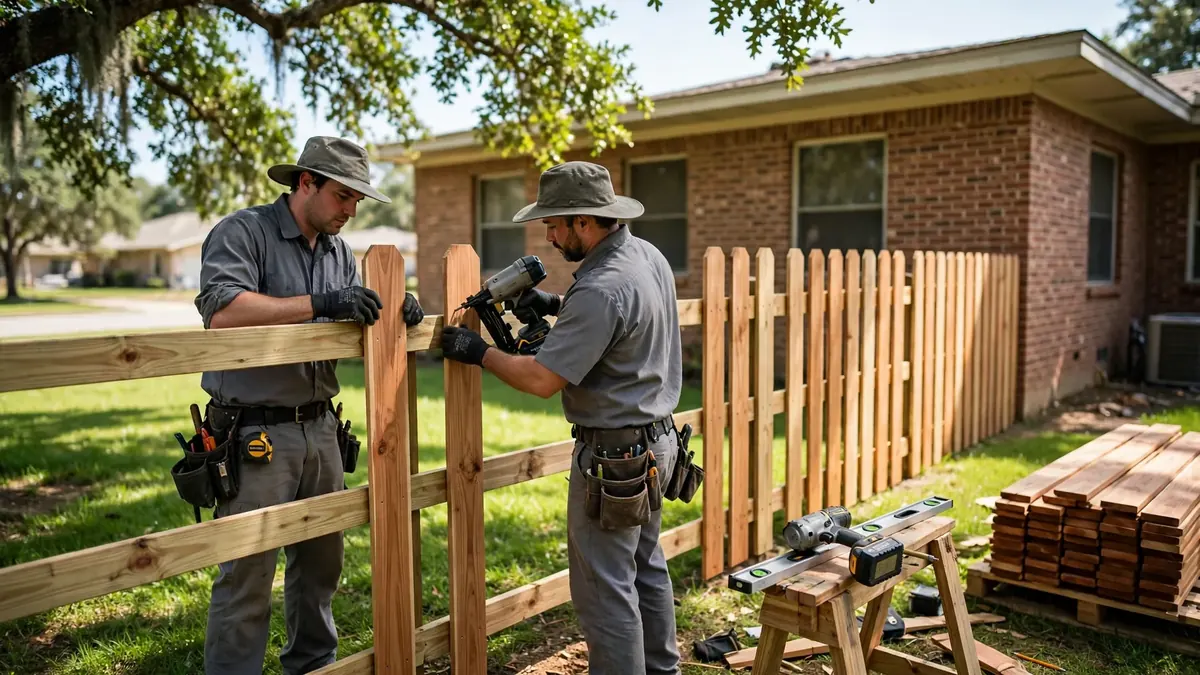
Local Conditions That Shape Fence Staining in League City
League City sits between Houston and Galveston near Clear Lake. League City is a Galveston and Harris county city.
Most homes are in newer subdivisions on flat, low ground. In League City, building for tropical storm winds means deeper posts, stronger connections and closer spacing. Salt air is a common thread between League City and Kemah.
- Municipal codes cover height, setbacks and visibility at corners, which can change a fence plan.
- Humidity keeps wood damp longer, so rot at the base of posts is the most common failure.
Choosing Materials in League City
Cedar fences with stainless or hot-dip galvanized fasteners, aluminum instead of steel for ornamental fencing, and vinyl where salt air is heavy. City codes in League City may set limits that affect your design.
When to Restain
Spring and fall are popular staining seasons because temperatures are moderate. A maintenance coat goes on faster than the first coat because the wood is already protected.
Sun-facing sides wear out first, so some homeowners restain those sides more often. League City's damp conditions reward materials and details that let wood dry out.
Worth knowing before you call: Ask who handles permits, utility locates and HOA paperwork so nothing falls through the cracks.
Cleaning and Prep Before Stain
Gray surface fibers, mildew and pollen need to come off first, usually with a wood cleaner and a careful pressure wash. Low-pressure washing avoids raising fibers or gouging the wood.
Mildew under stain will keep growing, so killing it first matters.
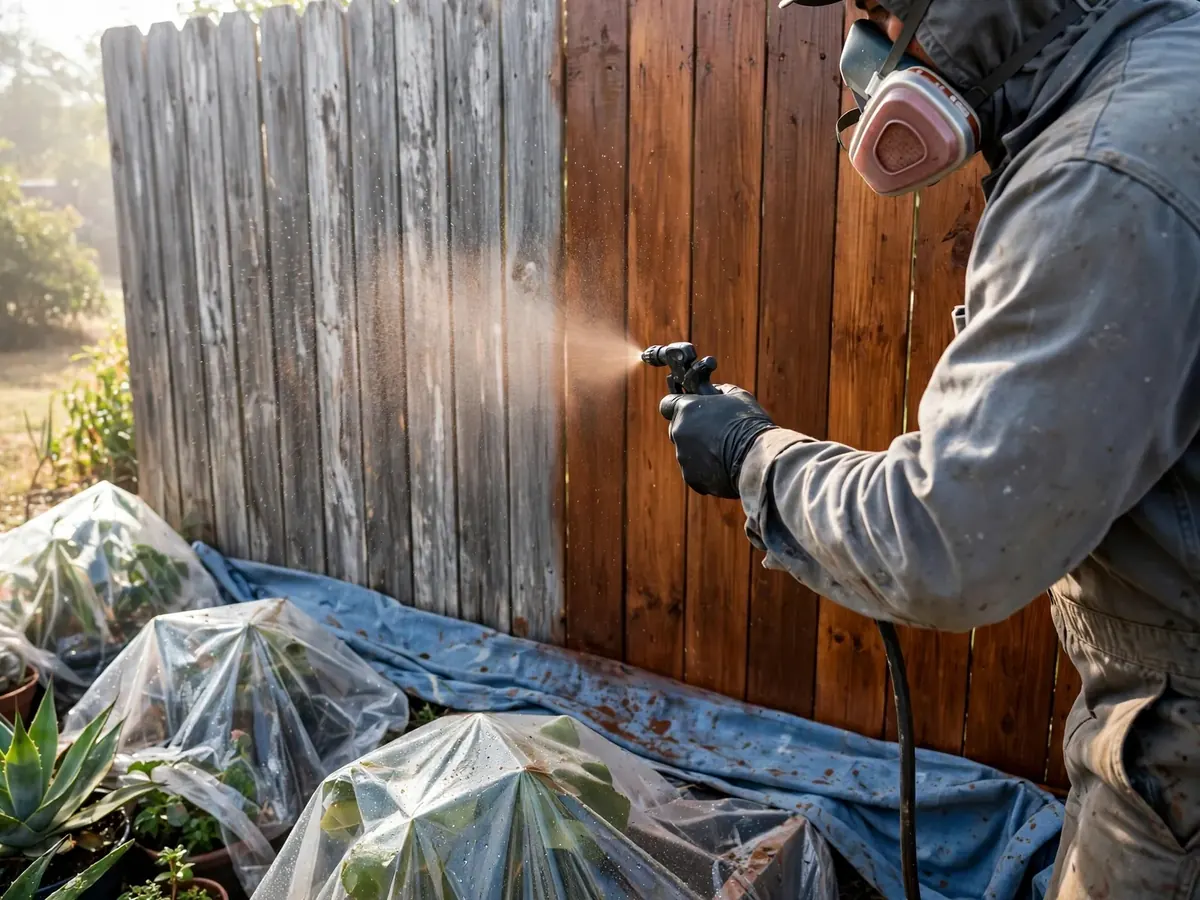
Why Texas Fences Gray So Fast
Unstained cedar in full sun can start to gray within months. Clear sealers look nice at first but fade quickly in Texas sun.
A gray fence can usually be cleaned back to near its original color before staining. League City has its own rules on height, setbacks and permits, so check before building.
A frequent worry, answered: Lifespan comes down to water: keep wood dry at the ground line and the fence lasts.
Spraying vs. Brushing
Most crews spray stain on a fence and then back-brush it into the wood for better penetration. Most professional crews spray and back-brush for the best of both.
Calm, mild days give the best results for spraying.
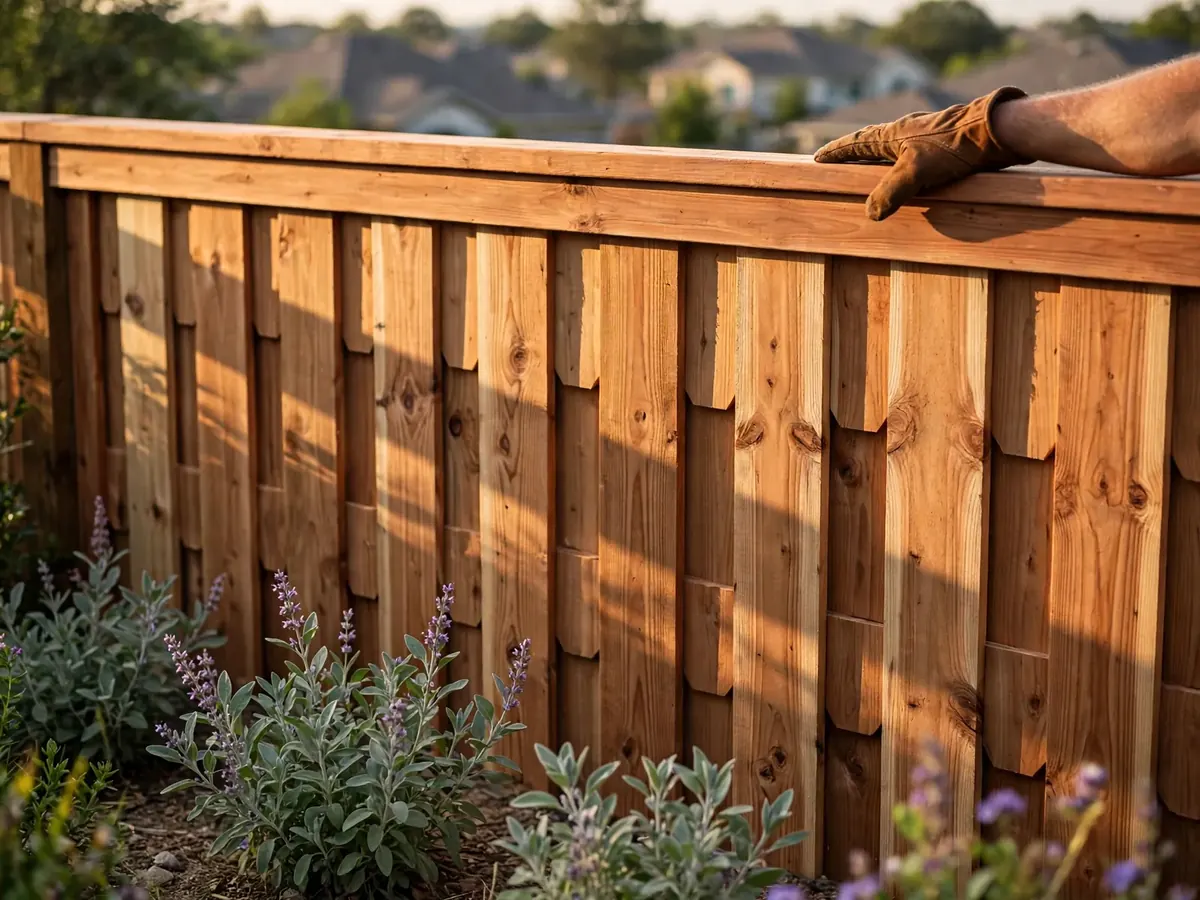
Choosing a Stain Color and Type
Test a stain on a hidden section first. Solid stains hide grain completely and behave more like paint.
Lighter stains show weathering sooner; medium tones hide it longer.
One practical point: Many neighbors are happy to share the cost of a shared fence when asked early.
Common Reasons League City Homeowners Call
Watch for these around your League City property:
- Splintering pickets
- Gray, faded wood
- Mildew or black spots
Quick Checks Before the Call
- Check HOA-approved stain colors
- Trim plants back from the fence
- Plan to move cars and outdoor furniture
- Note corner-lot sight lines if your property is on a corner
- Note where water stands after heavy rain near the work area
Fence Staining in League City: Talk to a Local Fence Staining Pro
Ready to talk it through? Dial 877-753-1892, mention you're in League City, and share photos if you have them. You'll hear what the job involves before anything is scheduled. Don't wait for the next storm; call today and book your fence stain project.
877-753-1892Fence Stain Questions From League City Homeowners
Should I use a clear sealer or a stain?
Choose a pigmented semi-transparent stain; the pigment blocks UV, so it lasts longer than a clear sealer in strong sun. For a League City home, it's worth confirming this before work starts.
Is a fence stain a good DIY project in League City?
If you DIY, consider hiring out just the posts and footings, which is where experience matters most. DIY makes the most sense for short runs and simple designs.
What should League City homeowners know about fence stain projects?
Near the coast, League City's salt air shortens the life of ordinary fasteners, so stainless or hot-dip galvanized hardware pays off. These towns sit along Galveston Bay and the Brazoria County coast, where salt air corrodes fasteners and steel faster than inland.