
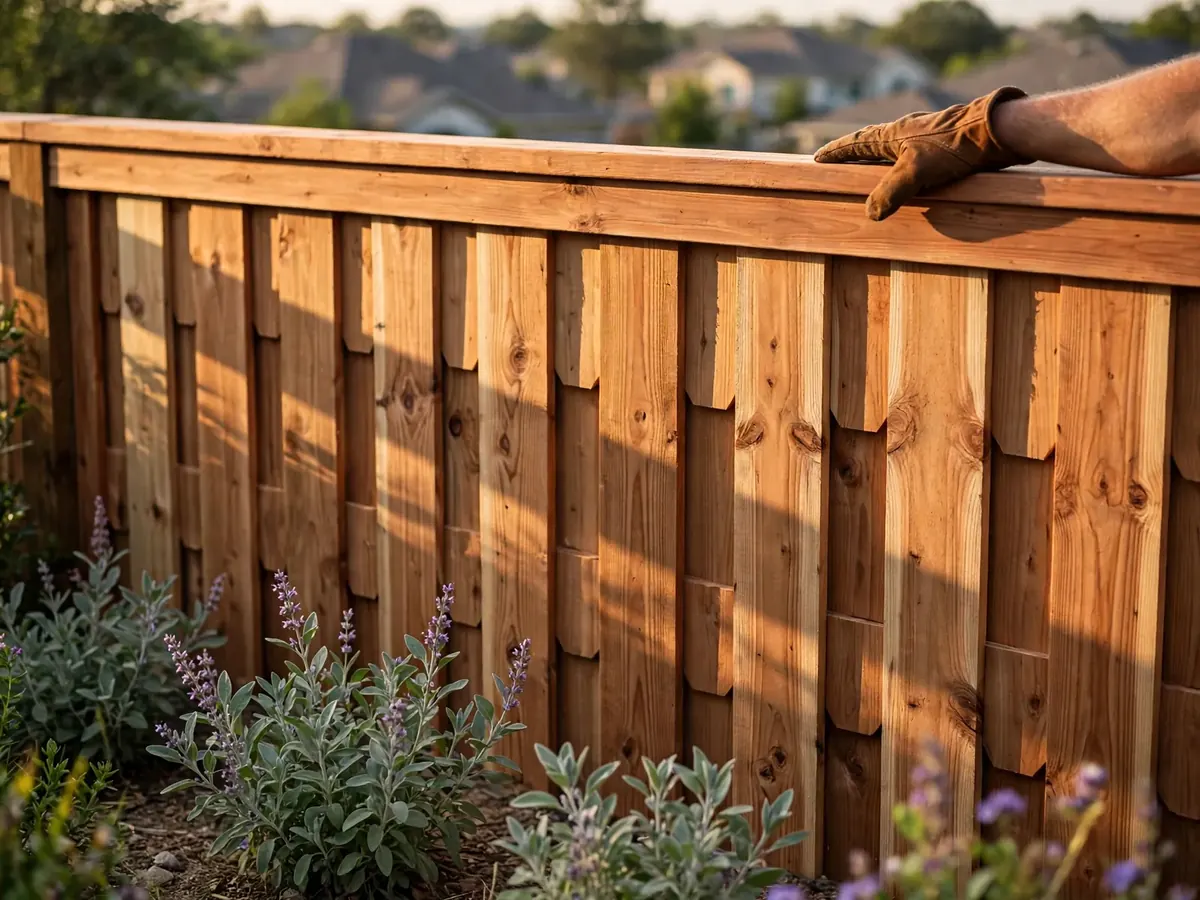
Fence Staining in Austin: Local Conditions
Austin splits along I-35: rocky Hill Country limestone to the west and Blackland Prairie clay to the east. Older central bungalows, hillside homes to the west and new subdivisions to the east and north all call for different approaches.
Austin is the state capital and the Travis County seat, on the Colorado River. On Austin's clay, it's worth asking how deep each footing will go before comparing anything else. Shallow limestone is a common thread between Austin and Georgetown.
- First-generation fences in newer neighborhoods are reaching the age where repairs give way to replacement.
- Local codes can affect how tall the fence can be and where it can sit, especially near streets.
Materials That Suit Austin
Cedar privacy fences on steel posts lead, modern horizontal designs are popular closer to the urban core, and pipe or wire fencing appears on acreage to the east and northwest. Most Austin HOAs publish guidelines that settle style questions before you start.
Spraying vs. Brushing
Many homeowners stain only their side. Most professional crews spray and back-brush for the best of both.
On windy days spraying wastes stain and risks drift onto cars and houses, so crews often brush or wait. Austin has its own rules on height, setbacks and permits, so check before building.
If you're weighing it up: Lifespan comes down to water: keep wood dry at the ground line and the fence lasts.
Why Texas Fences Gray So Fast
Clear sealers look nice at first but fade quickly in Texas sun. In Austin, a new fence usually needs to dry out for a few weeks to a couple of months before staining. After that, the first coat goes on early, and maintenance coats every few years keep it protected.
Graying is mostly cosmetic at first, but once the surface fibers loosen, water soaks in deeper and speeds up rot. Many Austin homes are on their first fence stain, and builder-grade materials show their age quickly.
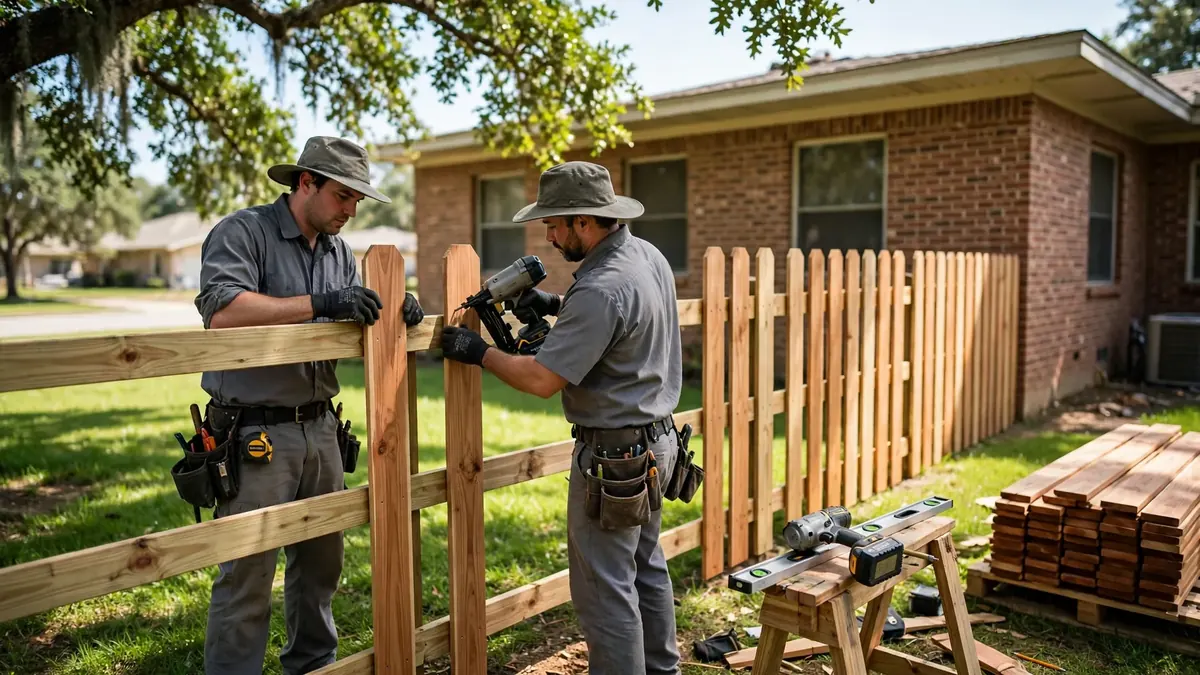
Choosing a Stain Color and Type
Darker stains hide weathering longer but can make a fence hotter to the touch. HOA-approved colors are often listed by brand and name, which makes ordering easy.
Lighter stains show weathering sooner; medium tones hide it longer. If your Austin neighborhood has an HOA, approval is usually the first step and sets the style.
A frequent worry, answered: Ask who handles permits, utility locates and HOA paperwork so nothing falls through the cracks.
When to Restain
Waiting too long means more cleaning and more stain to bring the wood back. When water stops beading on the wood and the color fades, it's time for another coat. In full sun, that may be every two years; in shade, longer.
Sun-facing sides wear out first, so some homeowners restain those sides more often.
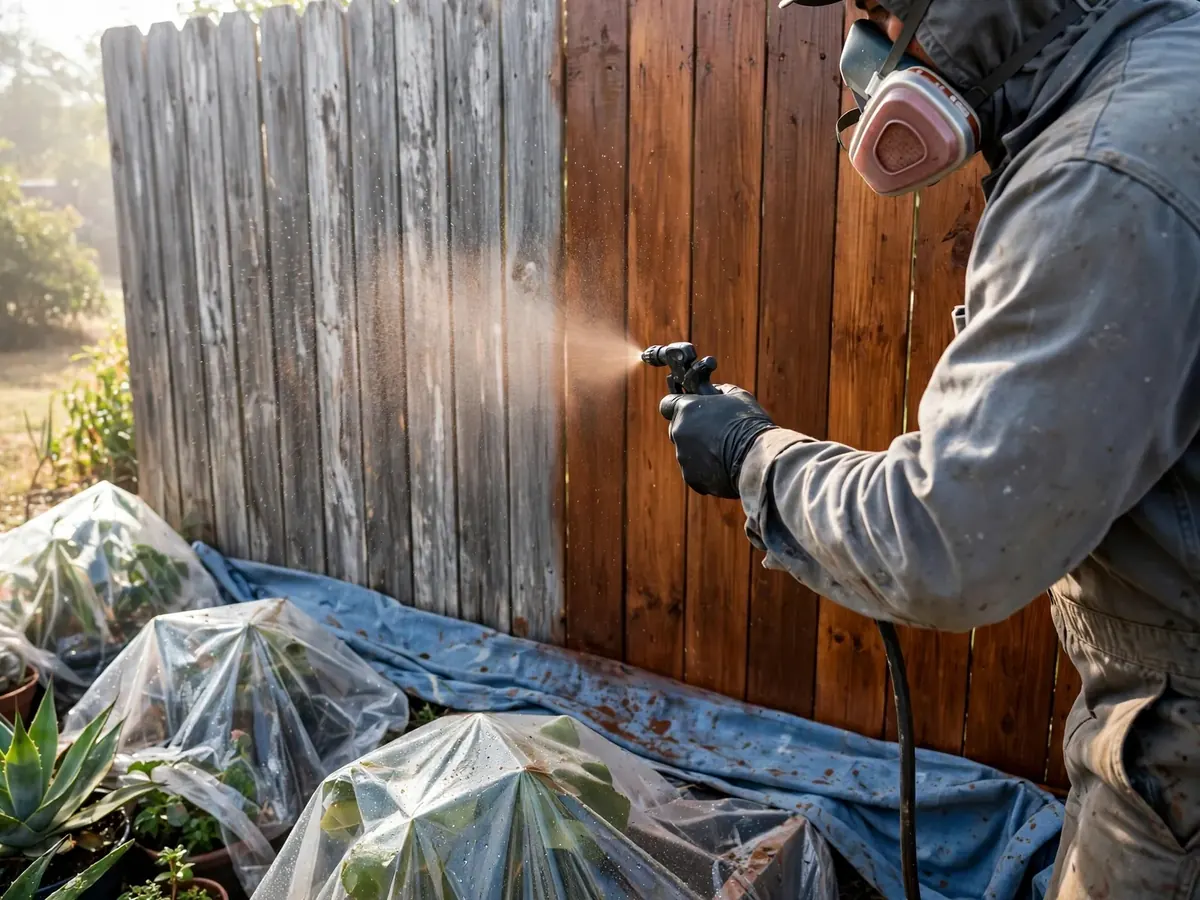
Cleaning and Prep Before Stain
Low-pressure washing avoids raising fibers or gouging the wood. Repairs should be done before staining so new boards get the same coat.
Masking hardware and gate latches keeps them clean and working.
A common concern: Rain delays are common in the spring storm season, so build a little slack into your plans.
Common Reasons Austin Homeowners Call
Around Austin, a call usually follows one of these:
- Water soaking in instead of beading
- Splintering pickets
- Mildew or black spots
Quick Checks Before the Call
- Check HOA-approved stain colors
- Trim plants back from the fence
- Note whether you want one or both sides stained
- Mention any leaning or settling you've seen nearby
- Note whether rock shows at the surface where work will happen
Fence Staining in Austin: Talk to a Local Fence Staining Pro
When you call 877-753-1892, start with the address area in Austin, what you want built or fixed and when you'd like it done. A fence staining pro can then explain the options and what drives the price. Call now to schedule your fence stain work in Austin.
877-753-1892Fence Stain Questions From Austin Homeowners
How soon can a new fence be stained in Austin?
Usually after the wood has dried out for a few weeks to a couple of months, depending on the lumber and weather. Ask about this on your first call, since conditions vary across Austin.
How can I keep a Austin fence stain project within budget?
Price is usually driven by length, height, post type and gates, so a shorter run of a better fence often beats a longer run of a cheaper one. If budget is the sticking point, consider phasing the work: replace the sections that face the street or the dog run first, and finish the rest when it makes sense.
What should Austin homeowners know about fence stain projects?
Austin's limestone holds footings firmly once they're set, which is one advantage of the hard digging. West of I-35, Austin sits on Hill Country limestone that often needs a rock auger to set posts; east of I-35, Blackland Prairie clay swells and shrinks.