
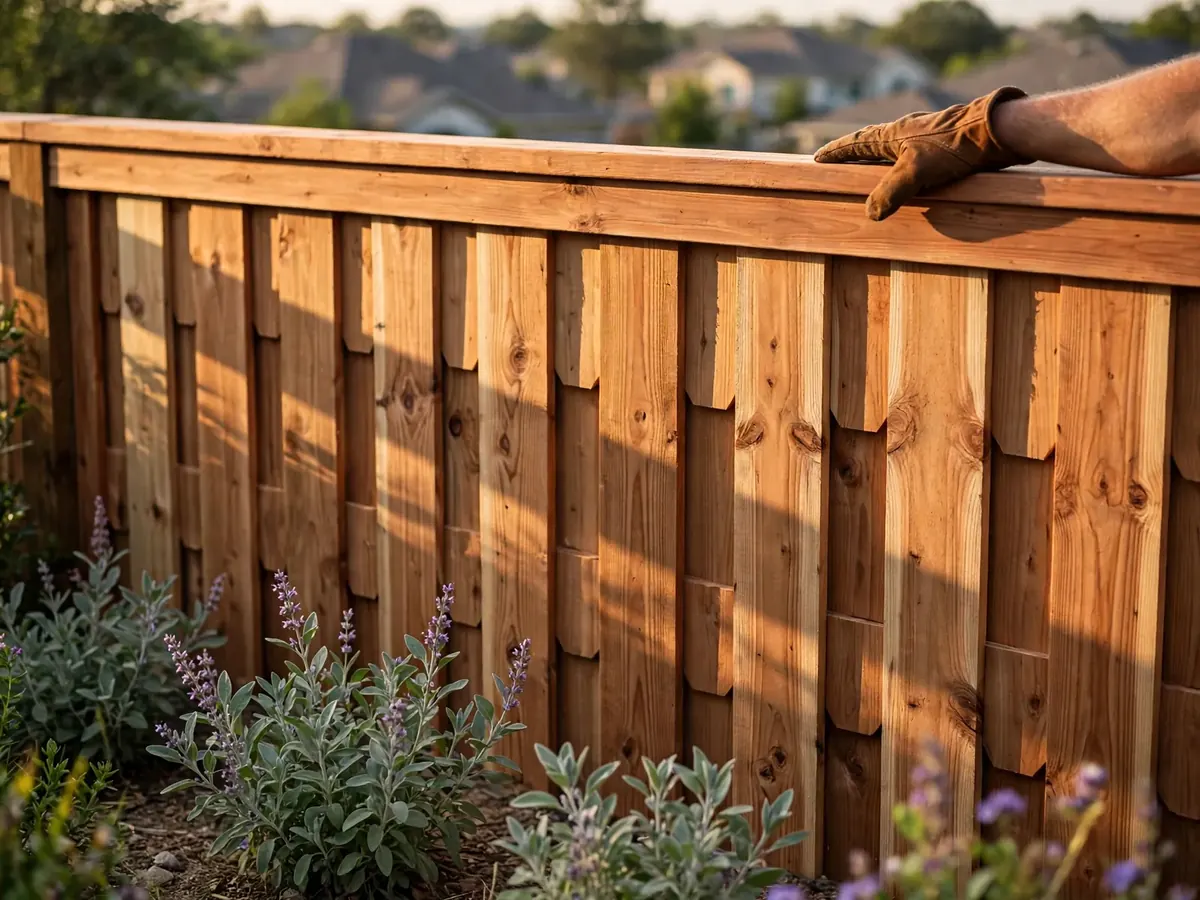
Fence Staining in Longview: Local Conditions
Longview sits in the East Texas Piney Woods, where tall pines and storms make fallen-tree damage common. Longview is the Gregg County seat and one of East Texas's main cities.
Its older neighborhoods have mature pines and oaks, and the soils hold moisture. Before finalizing plans, confirm Longview's requirements for height and placement. Longview shares sandy soil with Tyler, so solutions that work well there usually suit Longview too.
- Municipal codes cover height, setbacks and visibility at corners, which can change a fence plan.
- Damp air slows drying after every rain, so the base of wood posts stays wet longer and rots sooner.
Choosing Materials in Longview
Pine and cedar privacy fences are common, with treated posts or steel posts in sandy soil; wire and wood fencing on acreages. Termites are active around Longview, so keeping wood off the soil and using treated lumber helps.
Cleaning and Prep Before Stain
Stain sticks to clean, dry wood. Too much pressure raises the grain and gouges soft cedar.
Mildew under stain will keep growing, so killing it first matters. Longview's humidity keeps wood damp longer, so rot resistance and airflow deserve extra attention.
A common concern: Ask what the fence staining pro expects to fail first on your lot, and how they've built to delay it.
When to Restain
Waiting too long means more cleaning and more stain to bring the wood back. Regular maintenance coats are faster and cheaper than restoring a fence that has gone fully gray.
Spot-checking the most sun-exposed sections tells you when the whole fence is due.
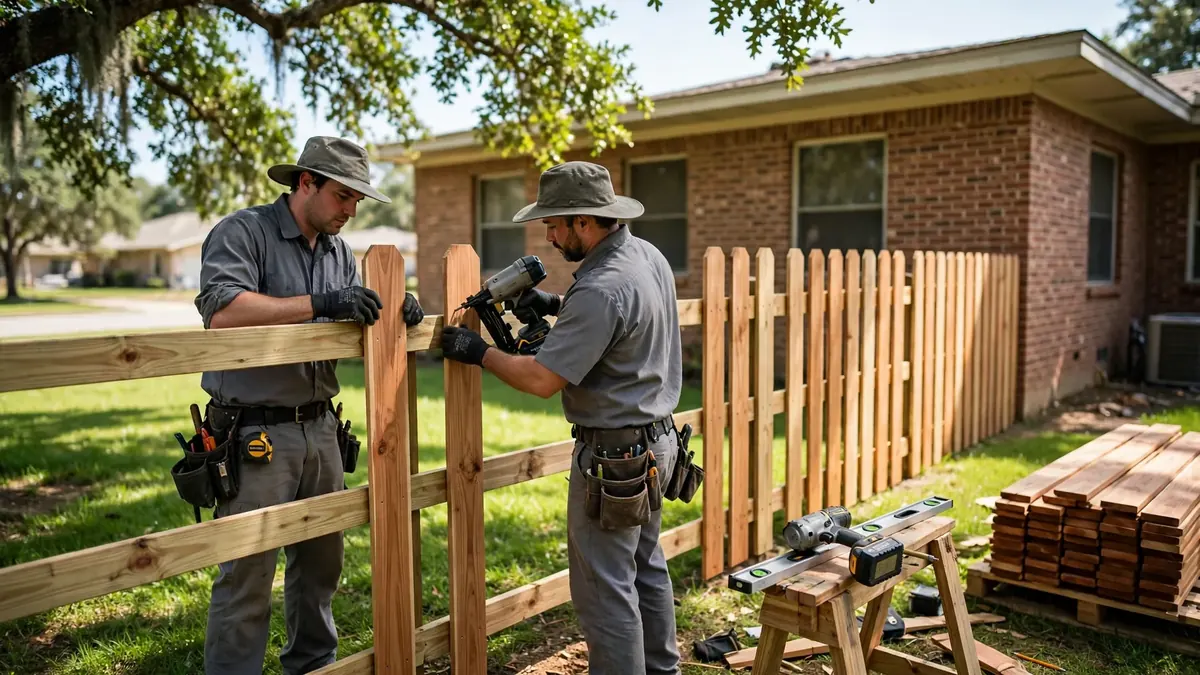
Spraying vs. Brushing
Many homeowners stain only their side. Hot sun dries the stain too fast to soak in, and wind carries overspray onto cars and neighboring houses.
Calm, mild days give the best results for spraying.
Concerned about timing? Most of the wait is scheduling and approvals; once a crew starts, many residential fence stain projects take only a few days.
Choosing a Stain Color and Type
Darker stains hide weathering longer but can make a fence hotter to the touch. Solid stains hide grain completely and behave more like paint.
Darker and more opaque stains last longer in the sun but hide more of the wood grain.
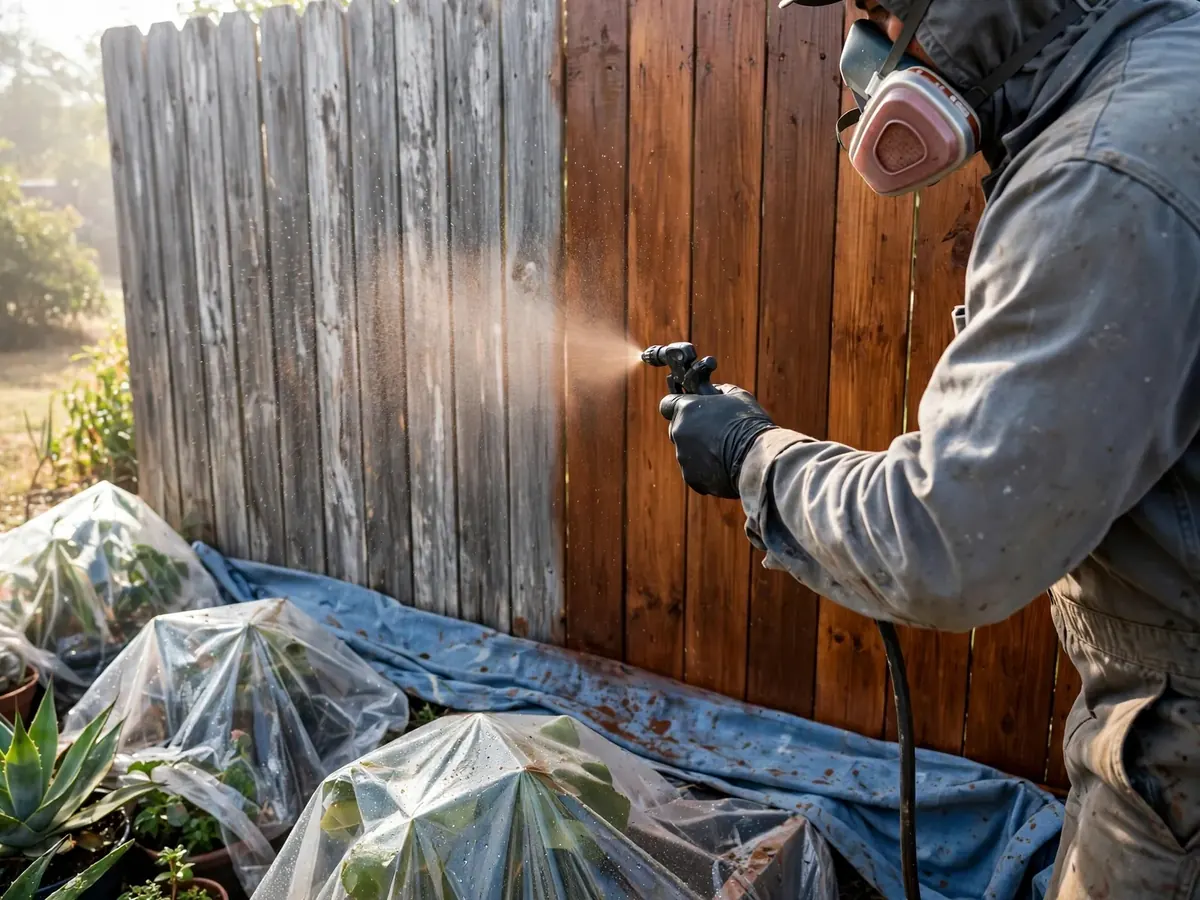
Why Texas Fences Gray So Fast
A pigmented, semi-transparent stain blocks much of that UV. Fences facing south and west get the most sun and gray fastest.
A pigmented stain acts like sunscreen for wood: the more pigment, the more UV it blocks.
A common concern: DIY can save labor, but renting augers, hauling concrete and disposing of the old fence add up, so compare honestly.
Signs It's Time to Call in Longview
Longview homeowners usually reach out when one of these shows up:
- Splintering pickets
- Mildew or black spots
- Gray, faded wood
Quick Checks Before the Call
- Check HOA-approved stain colors
- Trim plants back from the fence
- Plan to move cars and outdoor furniture
- Mark where vehicles, trailers and animals need to pass
- Look up your city's height and setback rules, or ask the fence staining pro to
Getting Fence Staining in Longview Started
The quickest next step is a call to 877-753-1892. Describe the project and mention Longview; a fence staining pro will ask a few questions and talk through options. Call today to ask your questions or book your fence stain project.
877-753-1892Fence Stain Questions From Longview Homeowners
How soon can a new fence be stained in Longview?
Usually after the wood has dried out for a few weeks to a couple of months, depending on the lumber and weather. Ask about this on your first call, since conditions vary across Longview.
How do I choose a fence staining pro in Longview?
Ask who handles permits, utility locates and HOA paperwork so nothing falls through the cracks. Not sure who to trust? Ask how long they've worked locally, whether they carry insurance, and who you'll deal with once work starts.
What should Longview homeowners know about fence stain projects?
In Longview's sandy ground, setting posts and footings deeper makes up for the looser soil. Falling limbs and trees during storms are a common cause of fence and deck damage here.