
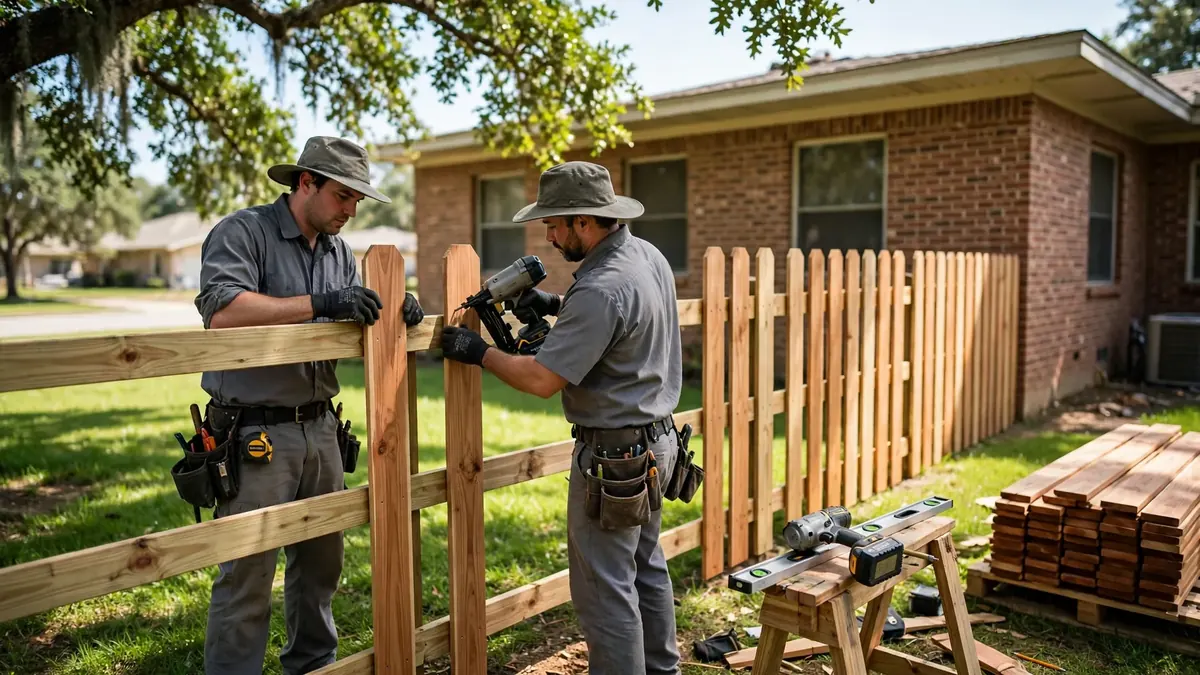
What to Know About Fence Staining in McKinney
McKinney combines a historic downtown with large newer subdivisions on its edges. McKinney is the Collin County seat.
Its historic district has older homes with their own preservation rules. In McKinney's newer neighborhoods, upgrades often replace the original builder materials. Shifting clay is a common thread between McKinney and Allen.
- Municipal codes cover height, setbacks and visibility at corners, which can change a fence plan.
- Builder-installed fences in newer subdivisions often reach the end of their first life after 10 to 15 years.
What Holds Up Around McKinney
Expect HOA-specified cedar privacy fences with caps in back, ornamental iron where yards face greenbelts and ponds, and brick or stone columns at the corners. City codes in McKinney may set limits that affect your design.
Choosing a Stain Color and Type
Test a stain on a hidden section first. Semi-transparent stains show wood grain while still blocking much of the sun's UV.
Lighter stains show weathering sooner; medium tones hide it longer. Many McKinney neighborhoods have HOAs, so check their guidelines before choosing styles and colors.
Before you decide: Spring is busy for fence crews; booking a little ahead of the season gives you more scheduling choices.
Spraying vs. Brushing
Hot sun dries the stain too fast to soak in, and wind carries overspray onto cars and neighboring houses. Most professional crews spray and back-brush for the best of both.
Calm, mild days give the best results for spraying. Before finalizing plans, confirm McKinney's requirements for height and placement.
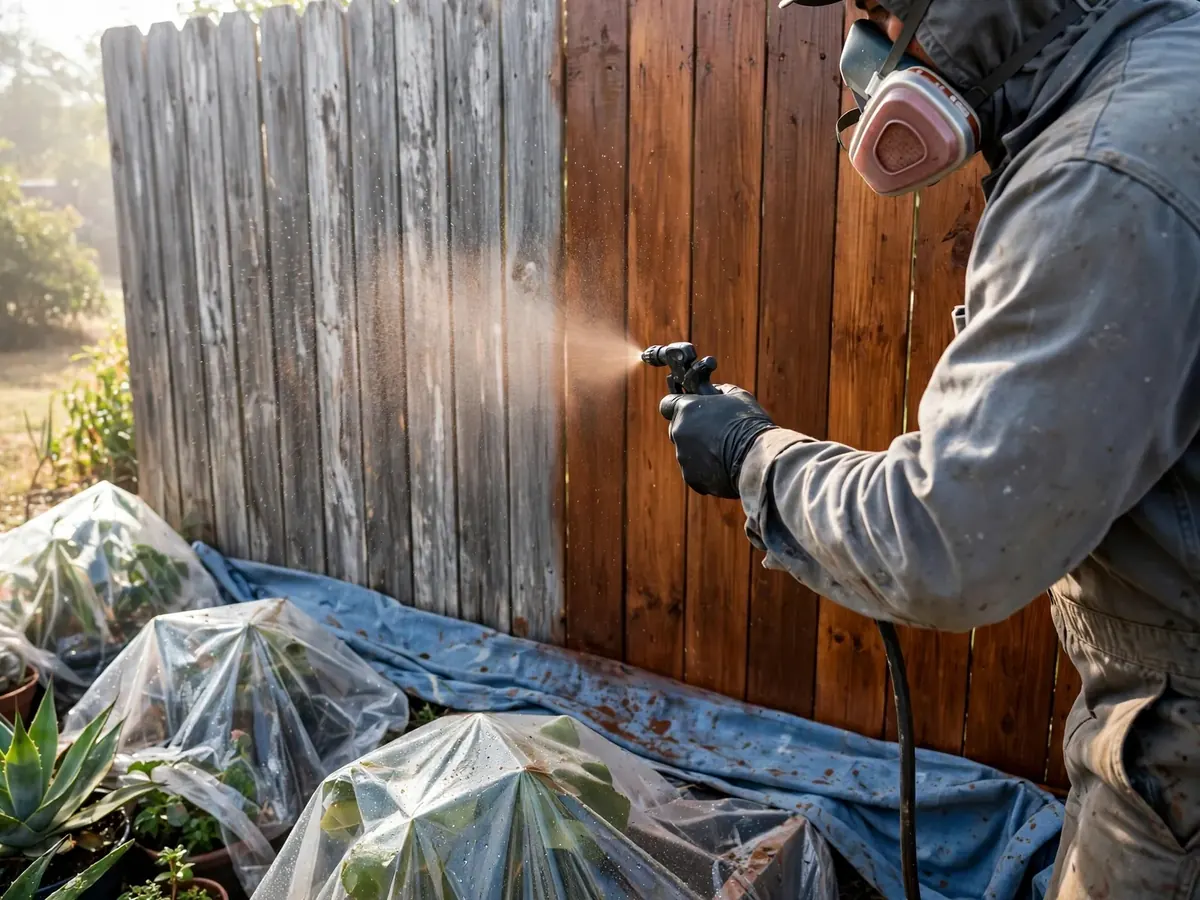
Why Texas Fences Gray So Fast
A pigmented, semi-transparent stain blocks much of that UV. Graying is a surface change; the wood underneath is often still sound.
A gray fence can usually be cleaned back to near its original color before staining.
A common concern: If the fence is on the property line, talk to your neighbor before work starts about access and debris.
Cleaning and Prep Before Stain
Stain sticks to clean, dry wood. Low-pressure washing avoids raising fibers or gouging the wood.
Mildew under stain will keep growing, so killing it first matters.
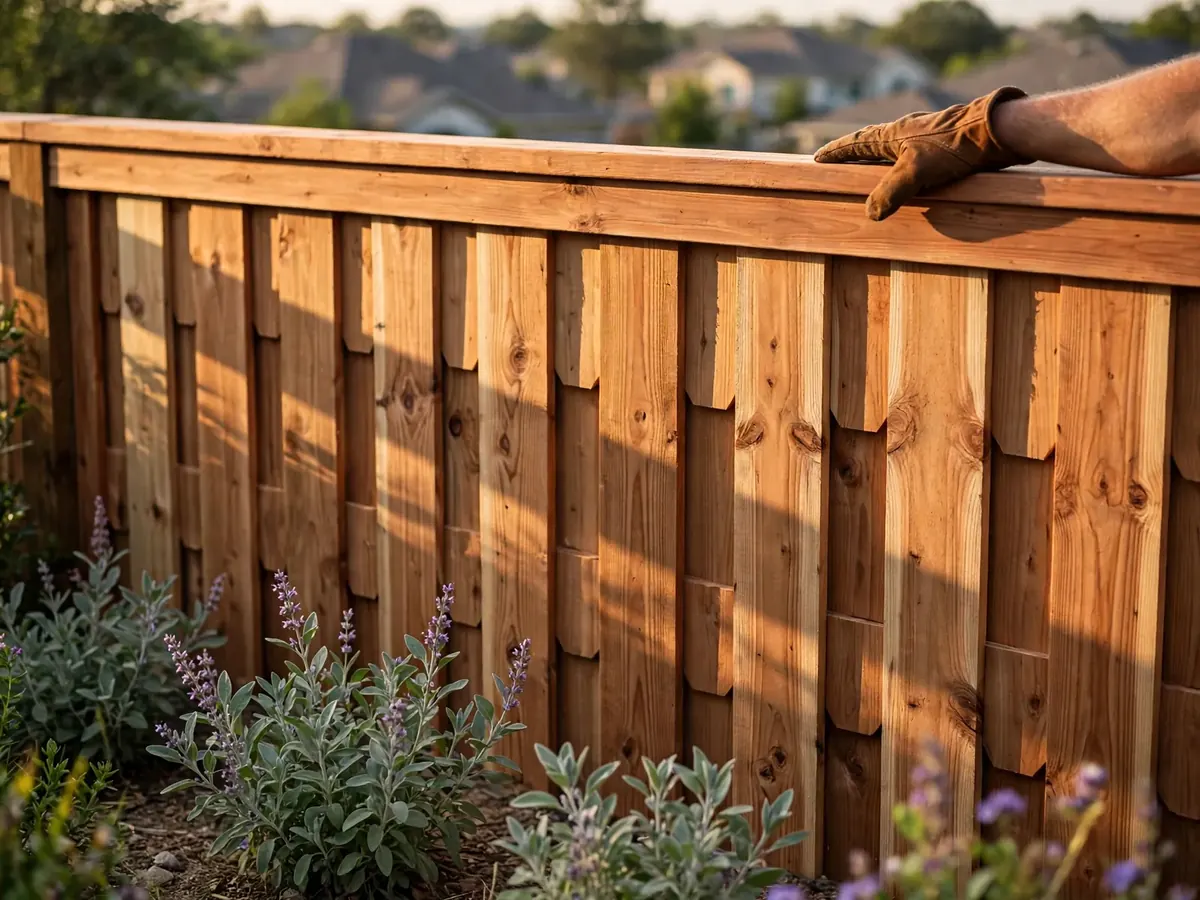
When to Restain
Regular maintenance coats are faster and cheaper than restoring a fence that has gone fully gray. Spring and fall are popular staining seasons because temperatures are moderate.
Sun-facing sides wear out first, so some homeowners restain those sides more often.
A question many homeowners raise: A fence on steel posts, kept stained, often outlives two fences built on wood posts.
Signs It's Time to Call in McKinney
In McKinney, these are the signs that most often lead to a call:
- Water soaking in instead of beading
- HOA notice about fence color
- Splintering pickets
What to Have Ready
- Check HOA-approved stain colors
- Trim plants back from the fence
- Plan to move cars and outdoor furniture
- Pull your HOA's architectural guidelines and the approval form; most McKinney associations want them before work is scheduled
- Look up your city's height and setback rules, or ask the fence staining pro to
Planning Fence Staining in McKinney: What to Expect
Call 877-753-1892 when you're ready. Sharing photos and a rough measurement of your McKinney project makes the conversation more specific. Call now and get your McKinney fence stain project moving.
877-753-1892Fence Stain Questions From McKinney Homeowners
Should I use a clear sealer or a stain?
Pigmented semi-transparent stains block more UV and last longer than clear sealers in Texas sun. In McKinney, that comes down to your lot and how the fence stain is built.
Should I build the fence stain myself?
Setting a long line of posts straight and plumb takes practice; many DIY fences wander and lean within a few years. If you DIY, consider hiring out just the posts and footings, which is where experience matters most.
What should McKinney homeowners know about fence stain projects?
McKinney's clay is the reason so many local fence stains lean; building deeper avoids joining them. The area shares North Texas's expansive clay and frequent spring hail.