
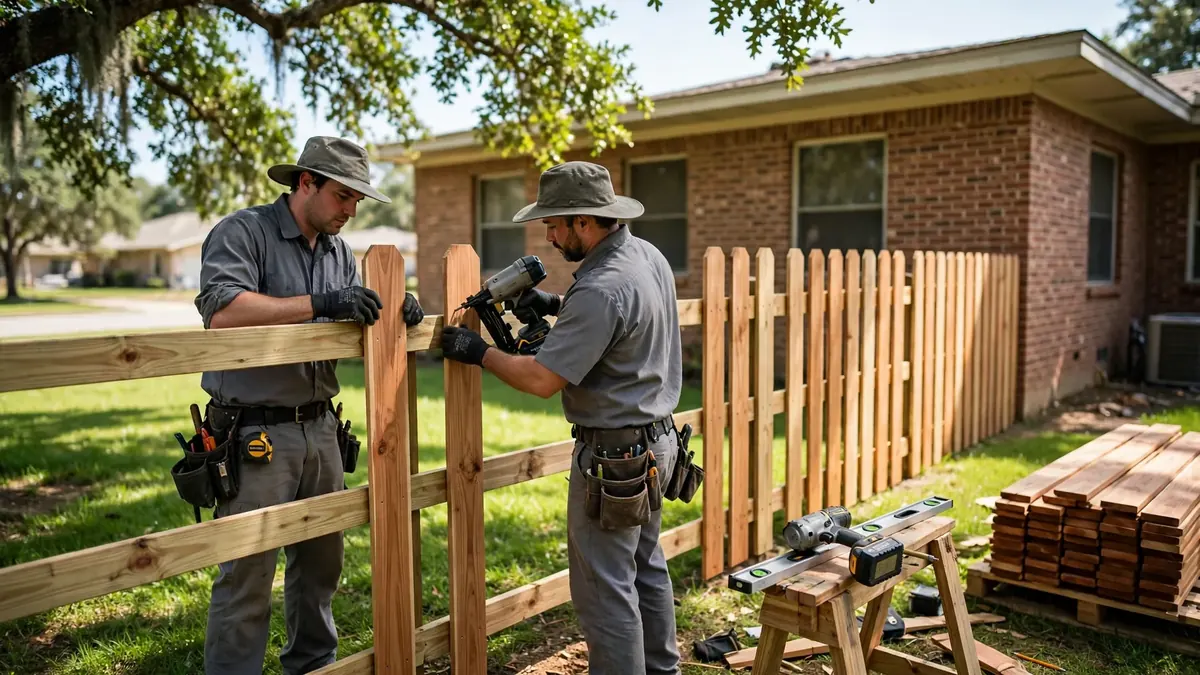
Fence Staining in Wylie: Local Conditions
Most homes are newer houses in HOA subdivisions. The area shares North Texas's expansive clay and frequent spring hail.
Wylie is a Collin County city near Lake Lavon. Estate lots around Wylie often call for custom designs that match the house. Shifting clay is a common thread between Wylie and McKinney.
- City ordinances cover fence height, front-yard placement and sight lines at intersections.
- Builder fences in newer subdivisions often reach the end of their first life within 10 to 15 years.
Materials That Suit Wylie
HOA-approved cedar privacy fences with a top cap, ornamental iron along greenbelts and ponds, and masonry columns at corners are the usual mix here. Wylie's permit and zoning rules can shape the design, so check them early.
Choosing a Stain Color and Type
Darker stains hide weathering longer but can make a fence hotter to the touch. HOA-approved colors are often listed by brand and name, which makes ordering easy.
Testing a small area first shows how the color looks on your fence, which can be very different from the can. Many Wylie neighborhoods have HOAs, so check their guidelines before choosing styles and colors.
A common concern: DIY makes the most sense for short runs and simple designs.
Spraying vs. Brushing
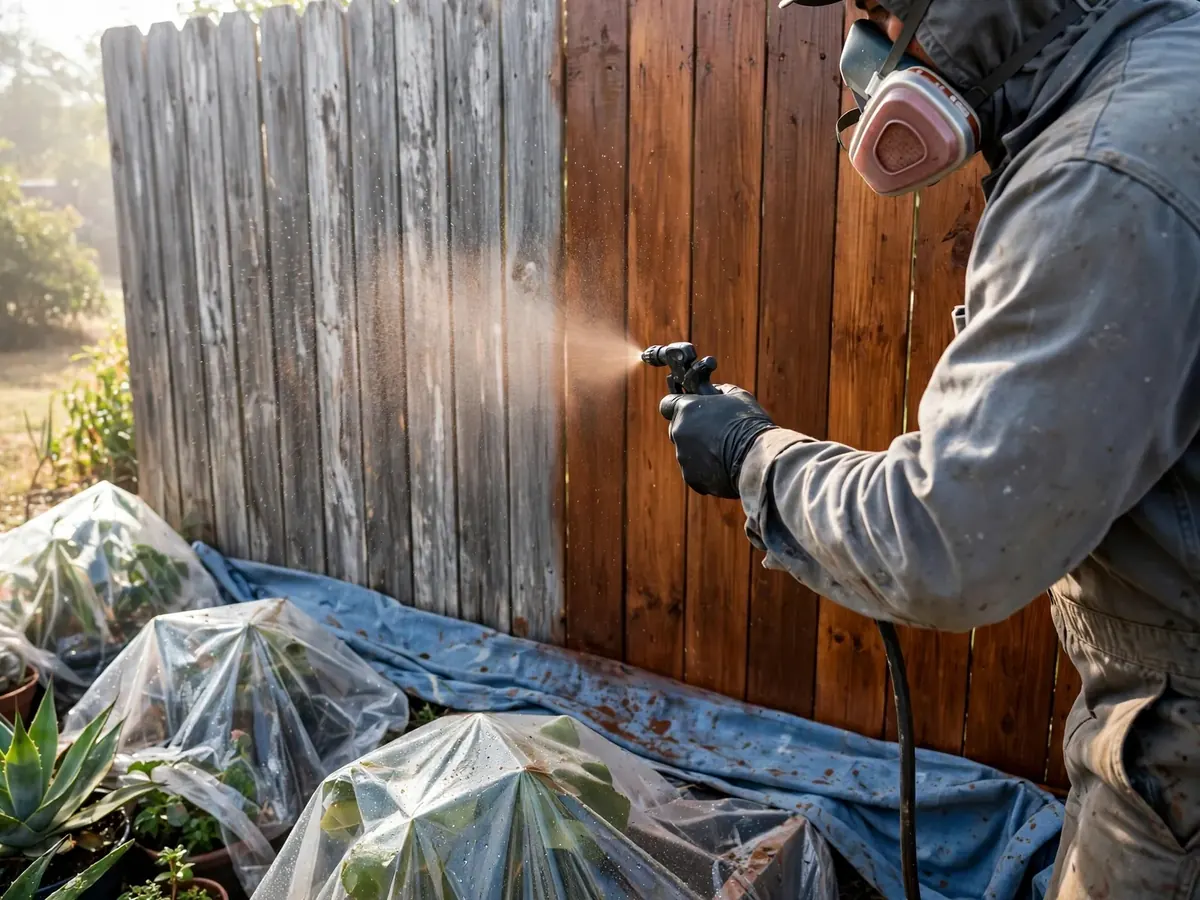
Many homeowners stain only their side. Most crews spray stain on a fence and then back-brush it into the wood for better penetration.
Calm, mild days give the best results for spraying. Before finalizing plans, confirm Wylie's requirements for height and placement.
Why Texas Fences Gray So Fast
Graying is a surface change; the wood underneath is often still sound. Clear sealers look nice at first but fade quickly in Texas sun.
Staining early protects the color you liked when the fence was new. In Wylie's newer neighborhoods, upgrades often replace the original builder materials.
If you're weighing it up: Rain delays are common in the spring storm season, so build a little slack into your plans.
When to Restain
Waiting too long means more cleaning and more stain to bring the wood back. Spring and fall are popular staining seasons because temperatures are moderate.
Sun-facing sides wear out first, so some homeowners restain those sides more often.
Cleaning and Prep Before Stain
Stain sticks to clean, dry wood. Too much pressure raises the grain and gouges soft cedar.
Wood needs a few dry days after washing before stain goes on; trapped moisture causes blotching and peeling.
Before you decide: Ask who handles permits, utility locates and HOA paperwork so nothing falls through the cracks.
Signs It's Time to Call in Wylie
Around Wylie, a call usually follows one of these:
- HOA notice about fence color
- Splintering pickets
- Mildew or black spots
What to Have Ready
- Note whether you want one or both sides stained
- Check HOA-approved stain colors
- Plan to move cars and outdoor furniture
- Look up your city's height and setback rules, or ask the fence staining pro to
- Note your HOA's approved colors and styles so the fence staining pro can quote the right materials
Fence Staining in Wylie: Talk to a Local Fence Staining Pro
Call 877-753-1892 when you're ready. Sharing photos and a rough measurement of your Wylie project makes the conversation more specific. Whether you're ready to book or just comparing options, call today.
877-753-1892Fence Stain Questions From Wylie Homeowners
How often should a fence be restained?
In Texas sun, many fences need a maintenance coat every two to three years. For a Wylie home, it's worth confirming this before work starts.
How long will a fence stain last in Wylie?
A fence on steel posts, kept stained, often outlives two fences built on wood posts. A fence stain that's built well and stained on schedule can last many years; one built on shallow wood posts may start leaning within a few seasons.
What should Wylie homeowners know about fence stain projects?
In Wylie's clay, a fence stain that looks perfect on day one can drift out of line within a few seasons if the footings are shallow. Homeowners associations are the norm in these subdivisions, and most set rules on fence height, stain color and which side of the pickets faces out.