
Local Conditions That Shape Porch Installation in Dripping Springs
Dripping Springs is a Hill Country town west of Austin with large lots and rocky limestone ground. Wedding venues, wineries and acreage homesites surround the town.
Dripping Springs is a Hays County city known as the Gateway to the Hill Country. Freeze events in Dripping Springs can crack concrete that holds water, so drainage helps. Shallow limestone is a common thread between Dripping Springs and Bandera.
- Larger homes often add outdoor kitchens and fireplaces to porches.
- Afternoon sun is the main reason homeowners add covered porches.
Porch Floors, Fans and Lighting
Floors should slope slightly away from the house so water drains. Plan switch locations near the door.
Plan switches near the door so lights and fans are easy to use. In dry Dripping Springs, wood needs regular sealing to keep from cracking and graying.
Something to keep in mind: Screening an existing porch can be a reasonable DIY project.
Gable, Shed and Hip Porch Roofs
Hip roofs handle wind well. Gable roofs add headroom and a more finished look.
A shed roof slopes one way and is the simplest to tie into a house. On larger Dripping Springs properties, the porch is part of the home's curb appeal, so design and materials get more attention.
Covered Back Porches in Dripping Springs
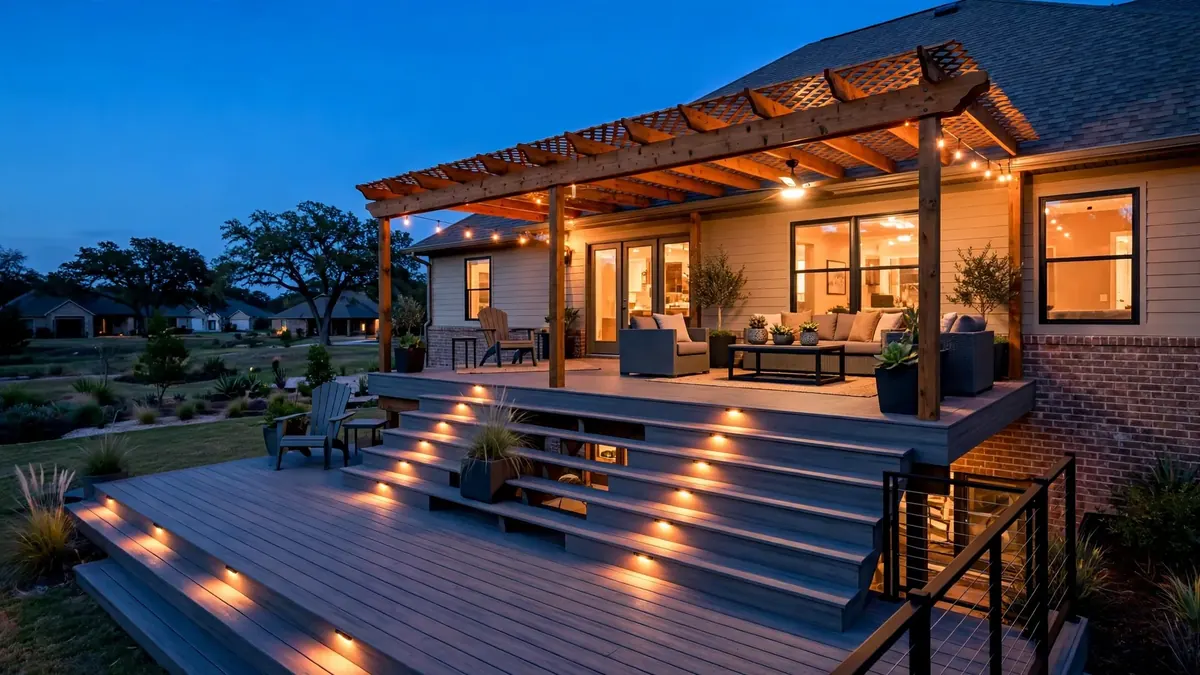
The roof can tie into the existing roofline or stand as a separate structure. West- and south-facing yards around Dripping Springs take the hardest afternoon sun.
Ceiling height affects airflow and light; taller ceilings feel more open and keep fans higher.
Worth knowing before you call: Matching roofing materials to the house can take time to source.
Front Porches on New and Older Homes
Front porches often need railings if the floor sits well above the ground. Check setback rules before extending the front of the house; cities limit how close structures can come to the street.
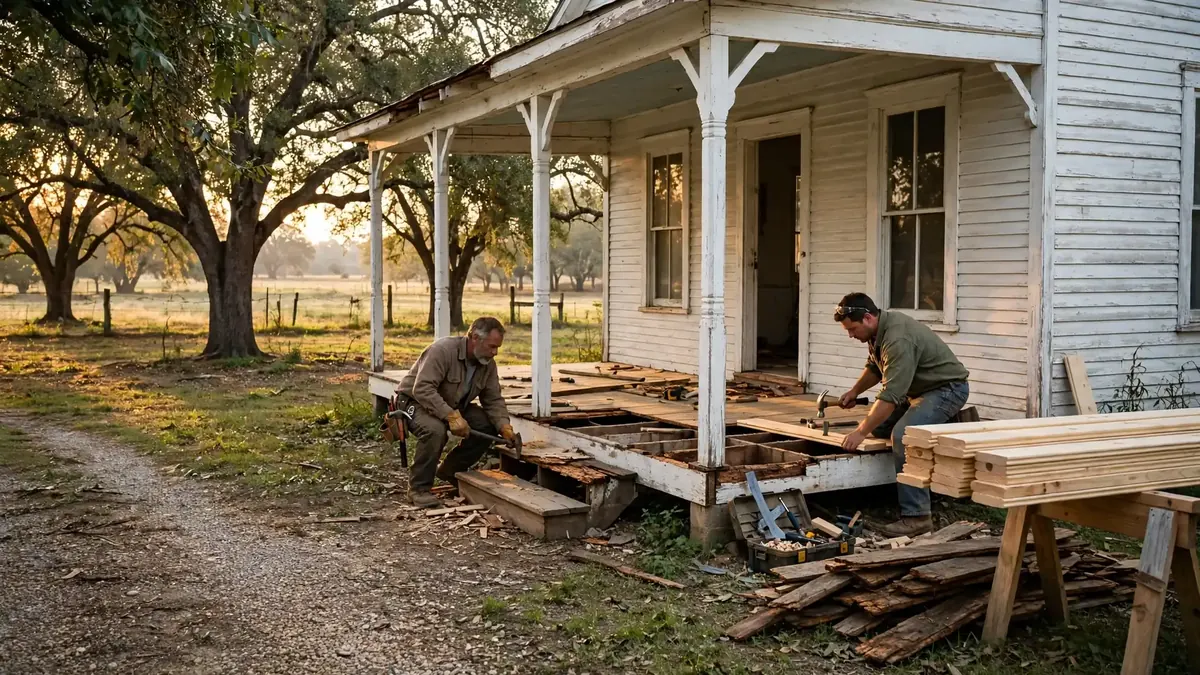
On older homes, matching columns, trim and roof lines keeps the porch from looking added on. Older Dripping Springs homes often have quirks, like settled ground or old footings, that affect new work.
Posts, Beams and Wind Uplift
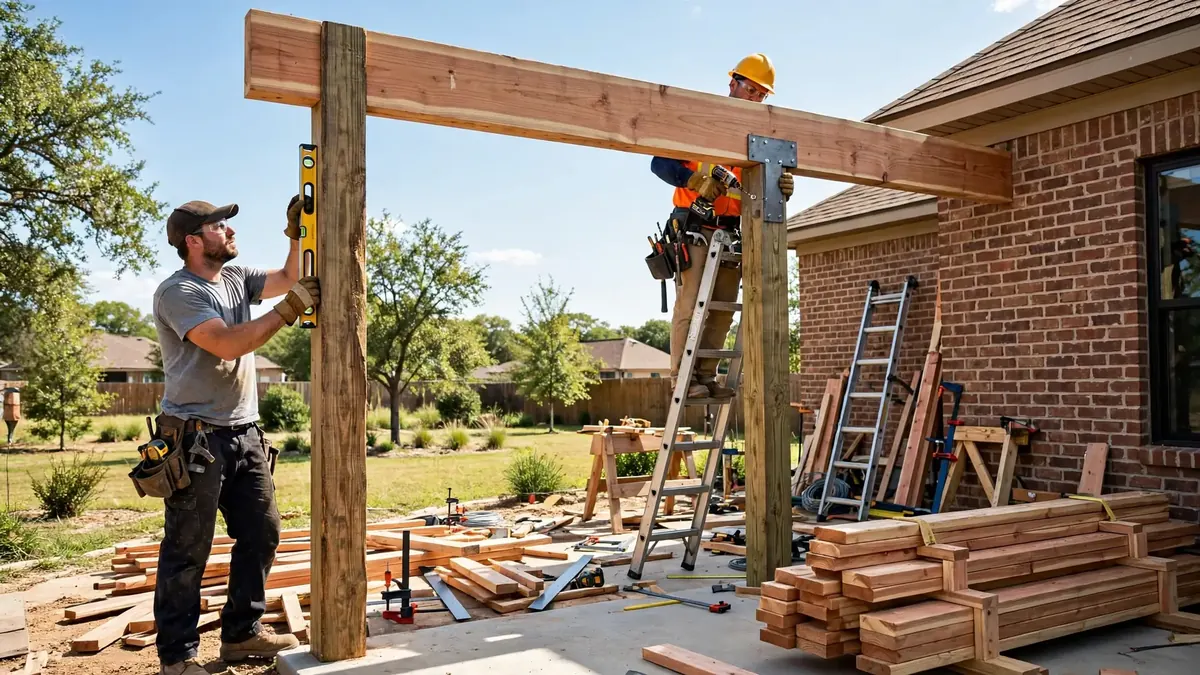
A porch roof can catch wind like a sail. Footings for porch posts are sized for the roof weight they carry.
Post bases that hold wood off concrete help prevent rot at the bottom. Dripping Springs' limestone holds footings firmly once they're set, which is one advantage of the hard digging.
If you're weighing it up: Permits for roof additions are common and usually straightforward.
Other Porch Situations in Dripping Springs
Permits and HOA Approval
Covered porches add a roof structure, so most cities require a permit and many HOAs require plan approval.
Signs It's Time to Call in Dripping Springs
These are the moments that push Dripping Springs homeowners to pick up the phone:
- Too much sun on the patio
- Front entry with no shelter from rain
- Wanting more outdoor living space
Before You Call
- Check HOA rules and get approval
- Plan fans, lighting and outlets
- Decide on size and roof style
- Walk the property line or gate location and note slopes, creeks and rock outcrops
- Note whether rock shows at the surface where work will happen
Getting Porch Installation in Dripping Springs Started
Dial 877-753-1892 to talk to a porch builder who works in Dripping Springs. Have your questions ready, from permits to materials, and take notes. Call now and get your Dripping Springs porch project moving.
877-753-1892Porch Questions From Dripping Springs Homeowners
Do I need a permit for a covered porch in Dripping Springs?
Usually yes, since it adds a roof structure. Check with your city and HOA. Ask about this on your first call, since conditions vary across Dripping Springs.
How long will a porch last in Dripping Springs?
Good flashing at the house wall prevents most porch problems. Painted or sealed wood needs touch-ups every few years.
What should Dripping Springs homeowners know about porch projects?
Rural Dripping Springs properties often need longer runs and sturdier gates than suburban lots. The Hill Country has thin soil over limestone, so setting posts often means drilling into rock.