
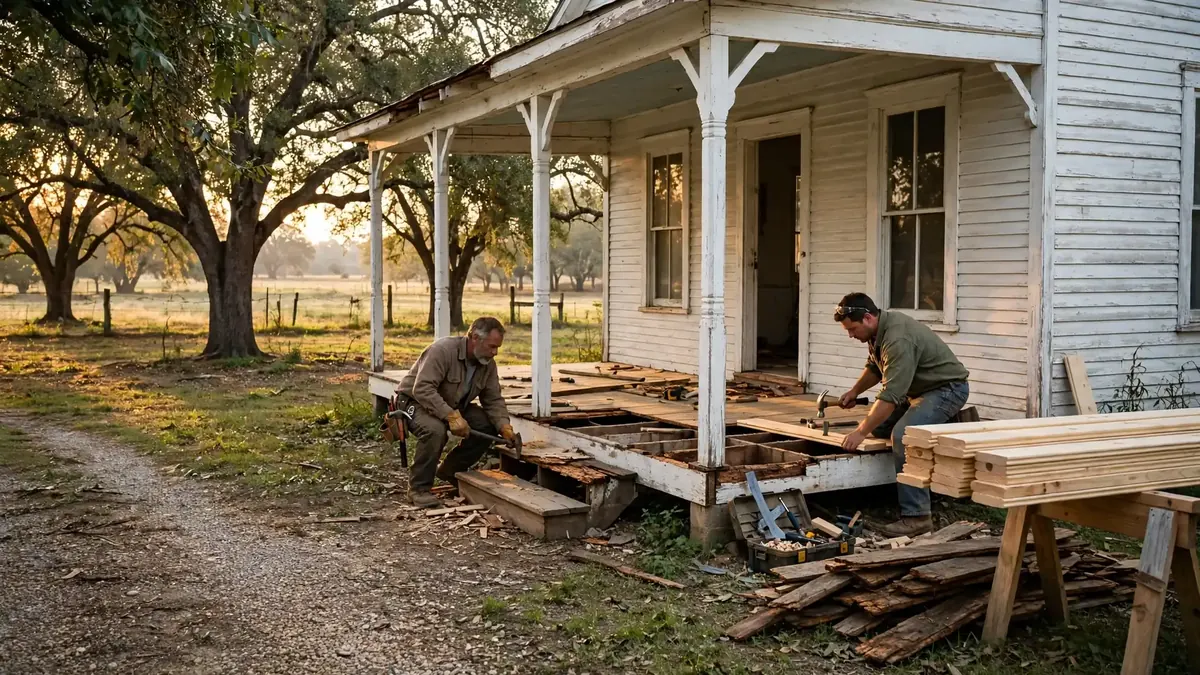
What to Know About Porch Installation in Austin
Austin splits along I-35: rocky Hill Country limestone to the west and Blackland Prairie clay to the east. Older central bungalows, hillside homes to the west and new subdivisions to the east and north all call for different approaches.
Austin is the state capital and the Travis County seat, on the Colorado River. Most Austin HOAs publish guidelines that settle style questions before you start. Unlike Taylor, where older homes drives most decisions, in Austin it's shallow limestone that deserves the closest attention.
- Small builder patios on newer homes are often extended into covered porches.
- Associations typically approve porch additions before work starts.
Permits and HOA Approval
Partial submissions often get sent back and slow the project. Inspections often cover footings, framing and roofing.
HOAs often want porch roofing to match the house. Many Austin homes are on their first porch, and builder-grade materials show their age quickly.
A frequent worry, answered: Get the plan, materials and scope in writing.
Posts, Beams and Wind Uplift
Footings for porch posts are sized for the roof weight they carry. Posts need solid footings and metal connectors that tie the roof to the posts and the posts to the footings.
Beams must be sized for the span between posts; longer spans need bigger beams. On Austin's clay, it's worth asking how deep each footing will go before comparing anything else.
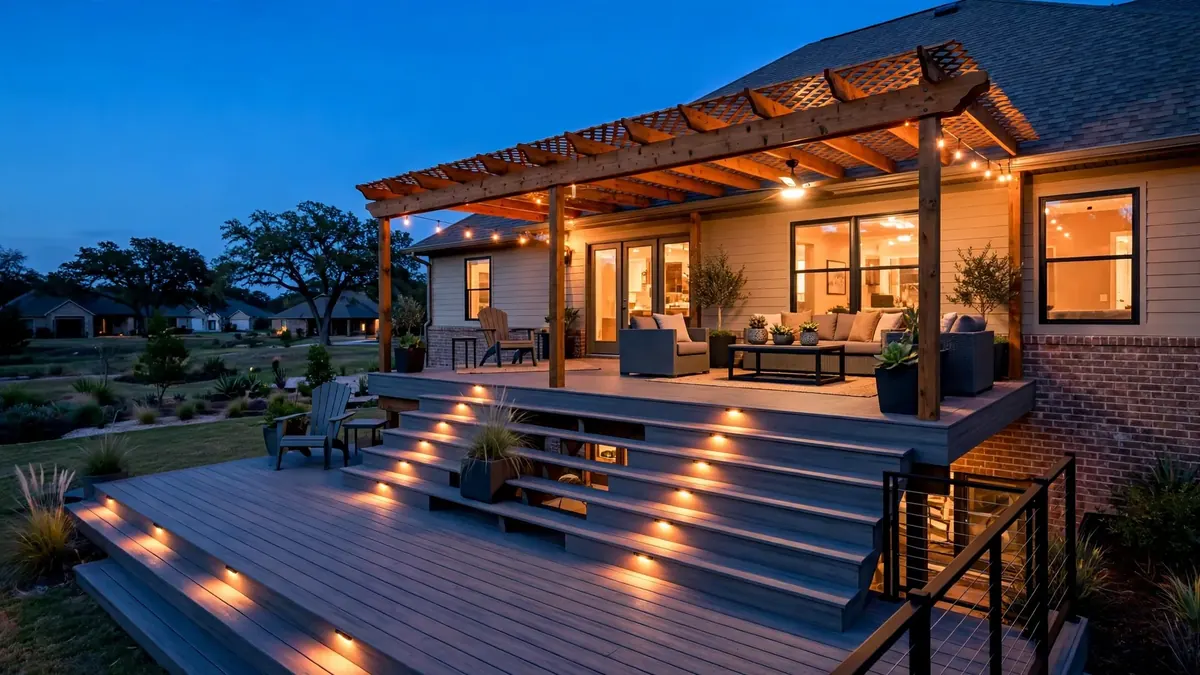
Covered Back Porches in Austin
A covered porch on that side of the house can make the yard usable on summer evenings and cut heat gain through the back windows. A covered porch can extend from an existing patio slab or be built on new footings.
Ceiling height affects airflow and light; taller ceilings feel more open and keep fans higher.
Worth knowing before you call: HOAs often review porch roofs to make sure they match the house.
Gable, Shed and Hip Porch Roofs
Match the roof pitch to the house where possible. A porch roof that looks borrowed from another house stands out from the street. The choice depends on the house's existing roofline and how much height you have to work with.
A shed roof slopes one way and is the simplest to tie into a house. Spring hail around Austin makes it worth choosing materials that are easy to repair.
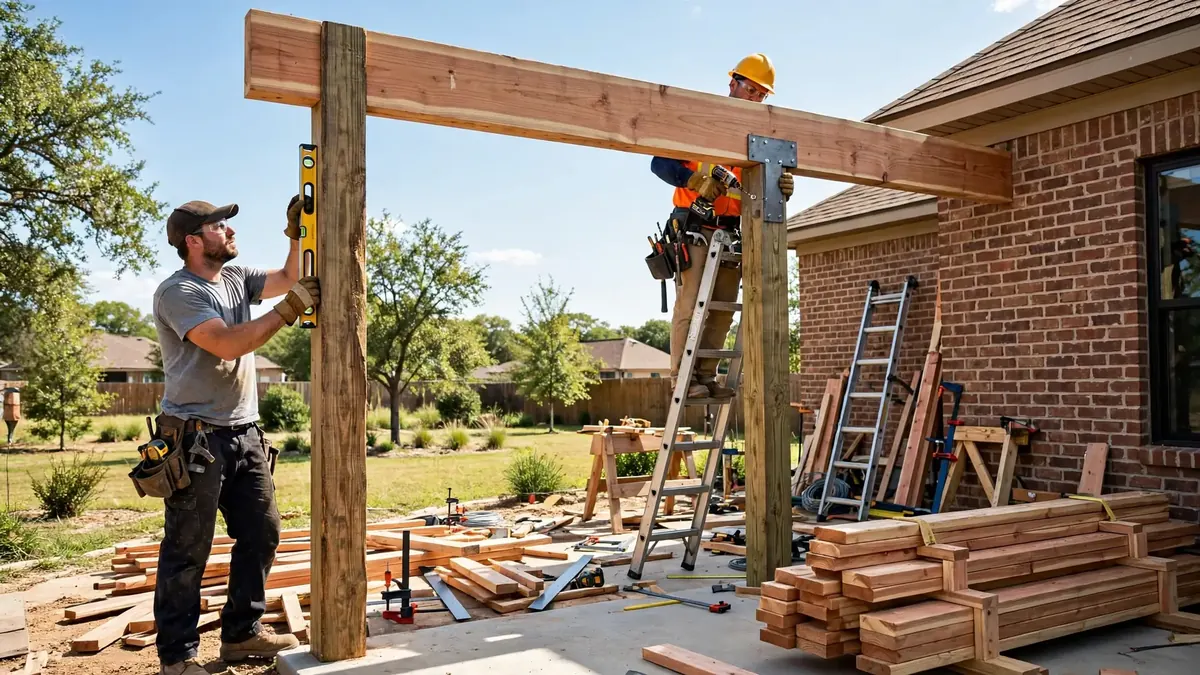
Front Porches on New and Older Homes
Columns sized in proportion to the house look more natural. Front porches often need railings if the floor sits well above the ground.
On older homes, matching columns, trim and roof lines keeps the porch from looking added on.
Worth knowing before you call: Screens wear out sooner than the structure; plan to replace them over time.
Porch Floors, Fans and Lighting
A ceiling fan or two makes a big difference in Texas heat, so plan wiring before the ceiling is finished. Floors should slope slightly away from the house so water drains.
Outdoor-rated fans and fixtures are built to handle humidity.
Common Reasons Austin Homeowners Call
Austin homeowners usually reach out when one of these shows up:
- Back door opens to an unshaded slab
- Planning an outdoor kitchen area
- Wanting more outdoor living space
Quick Checks Before the Call
- Plan fans, lighting and outlets
- Decide on size and roof style
- Check HOA rules and get approval
- Look up your city's height and setback rules, or ask the porch builder to
- Note whether rock shows at the surface where work will happen
Getting Porch Installation in Austin Started
Ready to talk it through? Dial 877-753-1892, mention you're in Austin, and share photos if you have them. You'll hear what the job involves before anything is scheduled. Have a question about your porch? A quick call is the fastest way to get it answered.
877-753-1892Porch Questions From Austin Homeowners
Can a covered porch tie into my existing roof?
Often, with matching roofing and careful flashing at the wall. Your porch builder can tell you what applies on your specific Austin property.
How can I keep a Austin porch project within budget?
Worried about cost? A porch's roof, size and finish level drive most of the price, so a simpler roof line can make a big difference. A simple shed roof is often the most economical way to add a covered porch.
What should Austin homeowners know about porch projects?
Austin's limestone holds footings firmly once they're set, which is one advantage of the hard digging. West of I-35, Austin sits on Hill Country limestone that often needs a rock auger to set posts; east of I-35, Blackland Prairie clay swells and shrinks. Austin and Rockdale sit in the same part of the state, but Austin deals more with shallow limestone, while Rockdale contends with older homes.