
Local Conditions That Shape Fence Installation in Azle
Many homeowners here need fencing for livestock or pets as much as for privacy. West and south of Fort Worth, the land opens into acreages, horse properties and ranches, with rocky limestone ground in many spots.
- Strong winds push on solid privacy fences, so closer post spacing and steel posts help them stay upright.
- Shrink-swell clay moves posts every season, so post depth, footing shape and steel posts matter more than picket style.
Choosing Materials in Azle
Pipe fencing, pipe-and-cable, no-climb horse wire and barbed wire are common on acreages, with cedar privacy fences closer to town.
Ranch, Pipe and Wire Fencing on Acreage
Pipe fencing is strong and long-lasting and is often welded on site. Wire fences cost less per foot but need well-built H-braces at corners and gates to stay tight. Ask the fence builder how they'll handle long runs and changes in grade.
Steel Posts vs. Wood Posts
If you want the look of wood all the way down, steel posts can be wrapped or hidden behind the pickets. In Azle, where the ground and the weather work against posts, steel is worth the added cost over the life of the fence.
Building a Fence That Stands Up to Wind
If fences in your part of Azle tend to blow over in storms, the fix is in the structure: posts, footings and rails. Ask the builder how they design for wind and whether steel posts are an option.
Cedar Privacy Fences in Azle
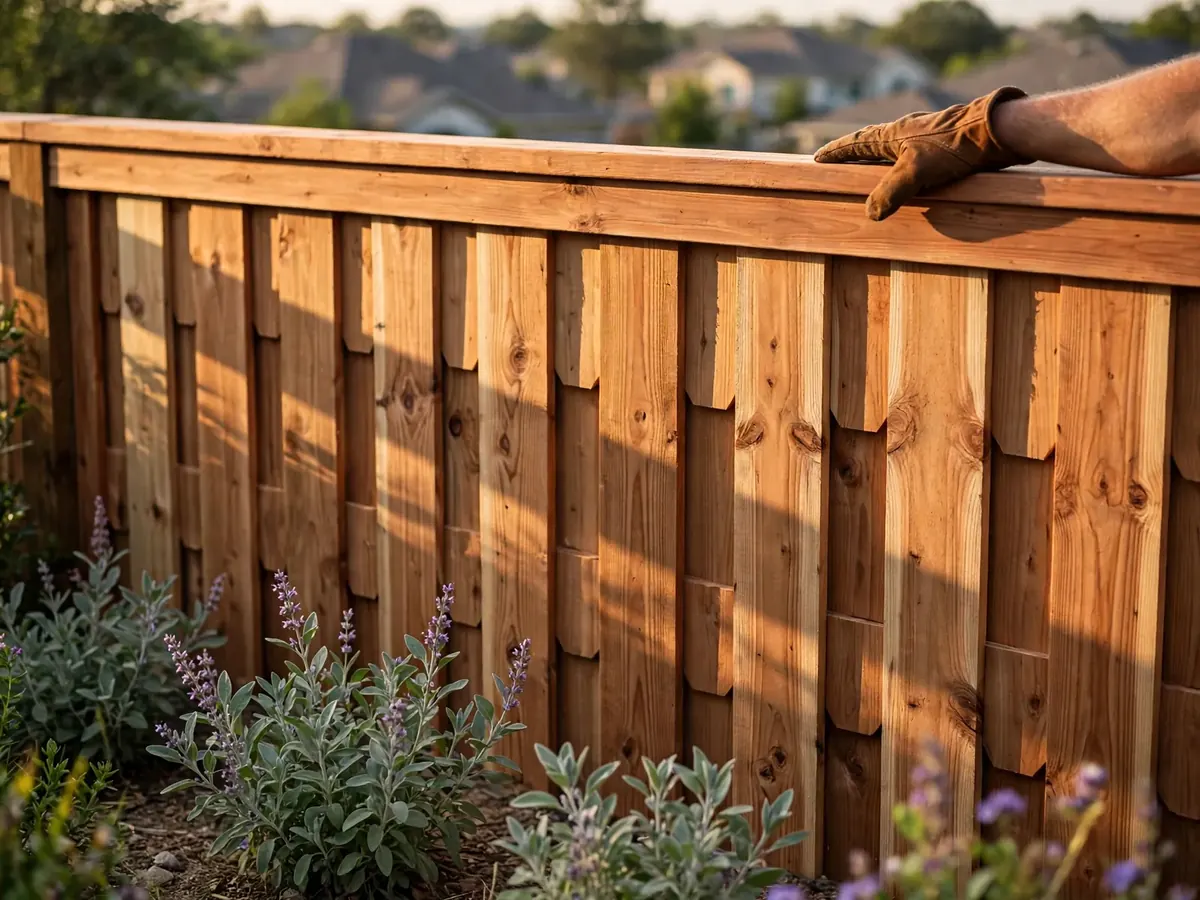
Six-foot cedar privacy fences are the standard backyard choice around Azle. Cedar's natural oils slow rot and insects, it moves less than pine in the heat, and it takes a semi-transparent stain well. Western red cedar costs more than the more common Texas or Japanese cedar but holds its shape better; ask which species you're getting.
Setting Posts in Shifting Clay Soil
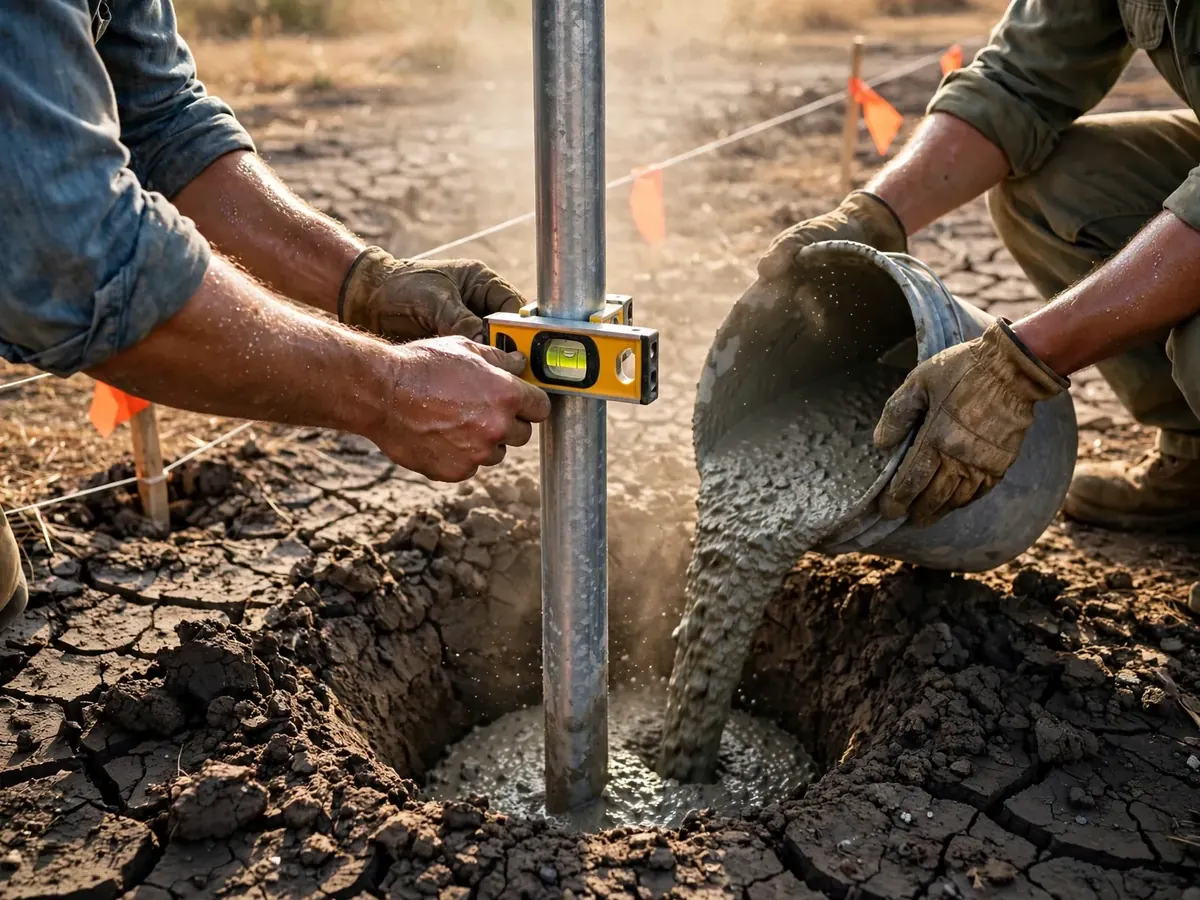
Clay soil swells when it's wet and shrinks and cracks in drought. Over a few seasons that movement lifts and tilts posts, which is why so many fences around Azle lean. Deeper post holes, concrete footings that sit below the most active layer and a little gravel at the bottom for drainage all help.
Board-on-Board and Shadowbox Styles
If your fence faces strong wind, a shadowbox design takes some load off the posts by letting air pass between the pickets. Board-on-board gives complete privacy but acts more like a solid wall in a storm, so post spacing and depth matter more.
More Fence Questions Around Azle
Drilling Posts Into Limestone and Caliche
Rocky ground needs a rock auger or core drill, which changes the equipment, time and cost of setting posts.
Vinyl and Composite Fences in Texas Heat
Vinyl and composite resist rot and insects; in sustained heat, choose products rated for high temperatures.
Wrought Iron and Aluminum Fences
Ornamental iron and aluminum mark boundaries, secure pools and keep views open; aluminum resists rust near the coast.
Common Reasons Azle Homeowners Call
- Neighbors replacing a shared fence
- Moving onto acreage that needs livestock fencing
- Planning a pool, a dog or new privacy
- Old fence leaning or sagging
Quick Checks Before the Call
- Check HOA fence guidelines and stain colors
- Measure the rough length of fence needed
- Call 811 to have utility lines marked before digging
- Find your survey or plat showing property lines
- Mark gates and where you need access for mowers or vehicles
Planning Fence Installation in Azle: What to Expect
Call 877-753-1892 and describe the project, your city and your timeline. You'll be pointed to a fence builder who works in Azle. Ask about scheduling, permits and how the job will be priced before work begins.
877-753-1892Fence Questions From Azle Homeowners
Do I need a permit for a fence in Azle?
Texas has no statewide fence permit, but cities set rules on height, front-yard fences and masonry, and HOAs add their own. Check with your city and HOA before building.
What fence material is best near the coast?
Aluminum, vinyl and cedar with stainless or galvanized fasteners hold up best in salt air and humidity.
What should Azle homeowners know about fence projects?
Rock close to the surface means posts are drilled rather than dug, which affects equipment and timing. Acreages around town need fences sized for pets, horses or livestock rather than just privacy.