
Fence Installation in Bridgeport: Local Conditions
Many homeowners here need fencing for livestock or pets as much as for privacy. West and south of Fort Worth, the land opens into acreages, horse properties and ranches, with rocky limestone ground in many spots.
- Strong winds push on solid privacy fences, so closer post spacing and steel posts help them stay upright.
- Shrink-swell clay moves posts every season, so post depth, footing shape and steel posts matter more than picket style.
Materials That Suit Bridgeport
Pipe fencing, pipe-and-cable, no-climb horse wire and barbed wire are common on acreages, with cedar privacy fences closer to town.
Ranch, Pipe and Wire Fencing on Acreage
On acreage near Bridgeport, the right fence depends on what it needs to hold. Horses do best with pipe or no-climb wire; cattle with barbed wire or pipe-and-cable; goats with tight field fence; and deer with tall game fencing. Corner and brace posts carry the load, so they deserve the most attention.
Steel Posts vs. Wood Posts
If you want the look of wood all the way down, steel posts can be wrapped or hidden behind the pickets. In Bridgeport, where the ground and the weather work against posts, steel is worth the added cost over the life of the fence.
Building a Fence That Stands Up to Wind
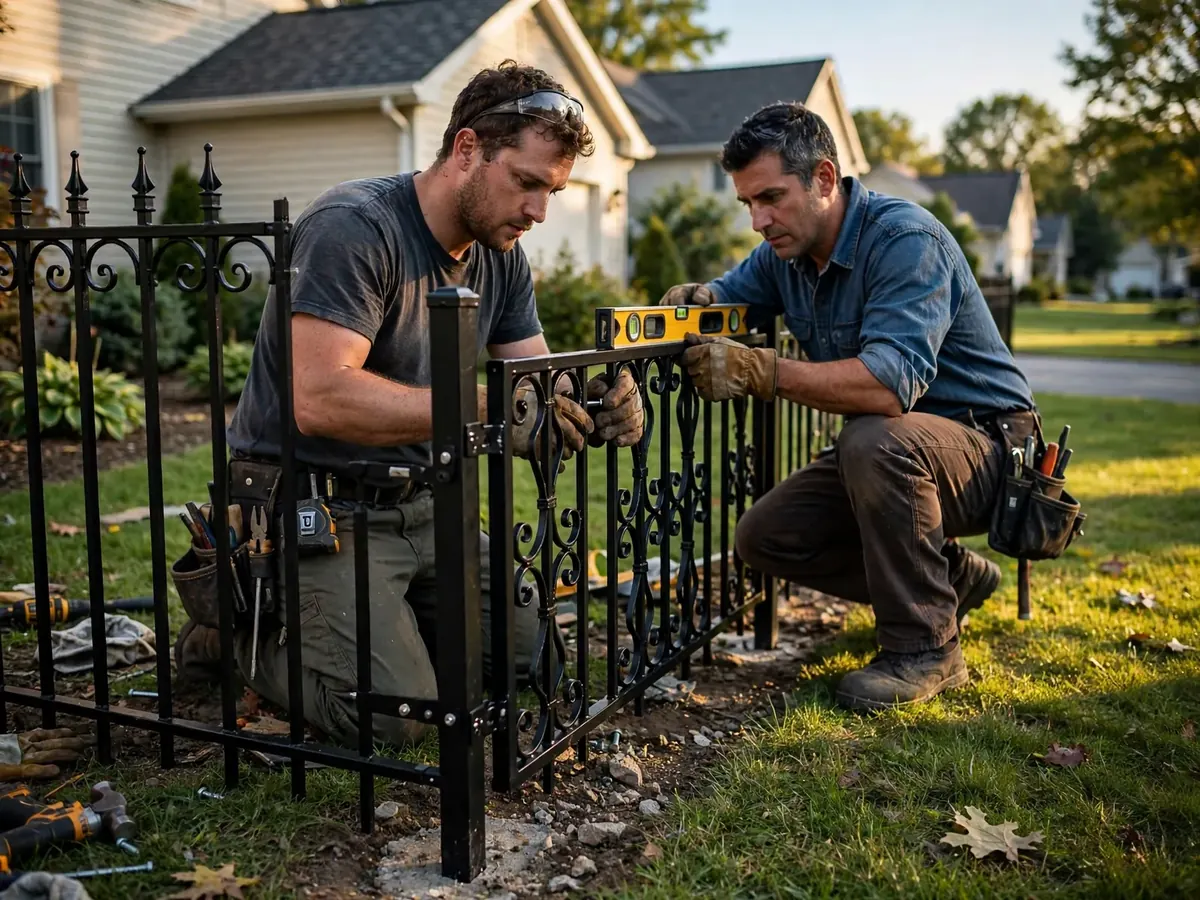
A 6-foot solid fence acts like a sail in a storm. In windy parts of Texas, closer post spacing, deeper footings, steel posts and three rails instead of two help it ride out gusts. Shadowbox or gapped designs let some wind pass through.
Cedar Privacy Fences in Bridgeport
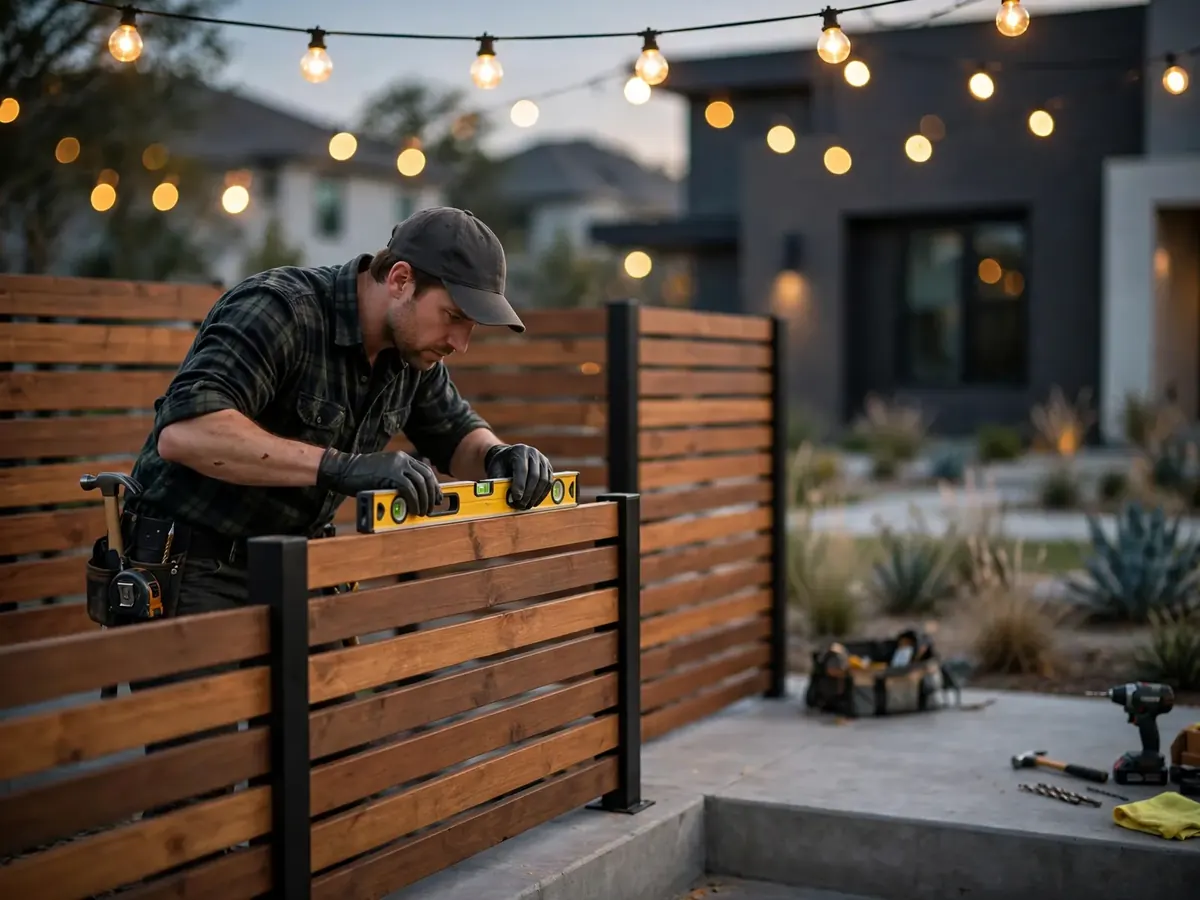
If privacy is the goal, cedar pickets on a 6-foot frame are what most Bridgeport homeowners choose. The details that make it last are the post type, the number of rails (three rails reduce sagging on taller fences) and whether the bottom of the pickets sits slightly above the soil so it doesn't wick up moisture.
Setting Posts in Shifting Clay Soil
When a crew sets posts in clay, the concrete should be shaped so water runs away from the post, not into a cup around it. Water trapped against a wood post in clay is the fastest way to rot it.
More Fence Questions Around Bridgeport
Drilling Posts Into Limestone and Caliche
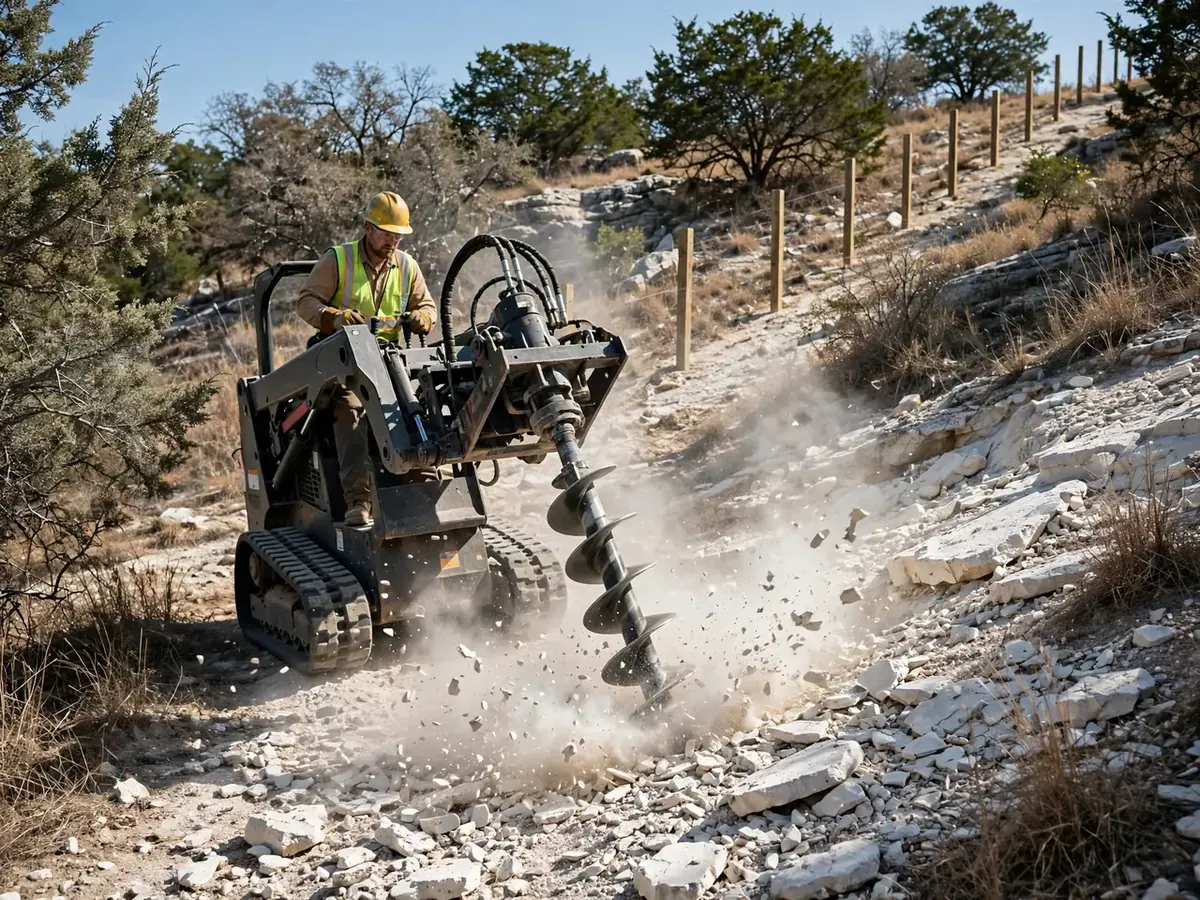
Rocky ground needs a rock auger or core drill, which changes the equipment, time and cost of setting posts.
Board-on-Board and Shadowbox Styles
Overlapping board-on-board pickets close gaps as wood shrinks; shadowbox alternates sides so both neighbors see a finished face.
Vinyl and Composite Fences in Texas Heat
Vinyl and composite resist rot and insects; in sustained heat, choose products rated for high temperatures.
Signs It's Time to Call in Bridgeport
- Neighbors replacing a shared fence
- Planning a pool, a dog or new privacy
- Old fence leaning or sagging
- HOA requires an approved style
What to Have Ready
- Call 811 to have utility lines marked before digging
- Check HOA fence guidelines and stain colors
- Measure the rough length of fence needed
- Mark gates and where you need access for mowers or vehicles
- Find your survey or plat showing property lines
Planning Fence Installation in Bridgeport: What to Expect
Call 877-753-1892 and describe the project, your city and your timeline. You'll be pointed to a fence builder who works in Bridgeport. Ask about scheduling, permits and how the job will be priced before work begins.
877-753-1892Fence Questions From Bridgeport Homeowners
Are steel posts worth it?
In most of Texas, yes. Galvanized steel posts don't rot or attract termites and resist movement in clay soil better than wood posts.
What fence material is best near the coast?
Aluminum, vinyl and cedar with stainless or galvanized fasteners hold up best in salt air and humidity.
What should Bridgeport homeowners know about fence projects?
Rock close to the surface means posts are drilled rather than dug, which affects equipment and timing. Pipe, pipe-and-cable and barbed wire fences are common on surrounding ranch land.