
What to Know About Fence Installation in Coldspring
Katy, Cypress, Tomball, Spring, The Woodlands and Conroe include some of the fastest-growing master-planned communities in Texas. North of Houston the land is wooded, so storm-felled pines and oaks are a frequent cause of fence damage. West toward Waller, Hempstead and Sealy, the suburbs turn into acreages and ranchland.
- HOA guidelines often set fence height, style, stain color and which side faces out.
- Builder-installed fences in newer subdivisions often reach the end of their first life after 10 to 15 years.
What Holds Up Around Coldspring
HOA-approved cedar privacy fences with a top cap in subdivisions; wire, pipe and wood rail fencing on acreages farther out.
Steel Posts vs. Wood Posts
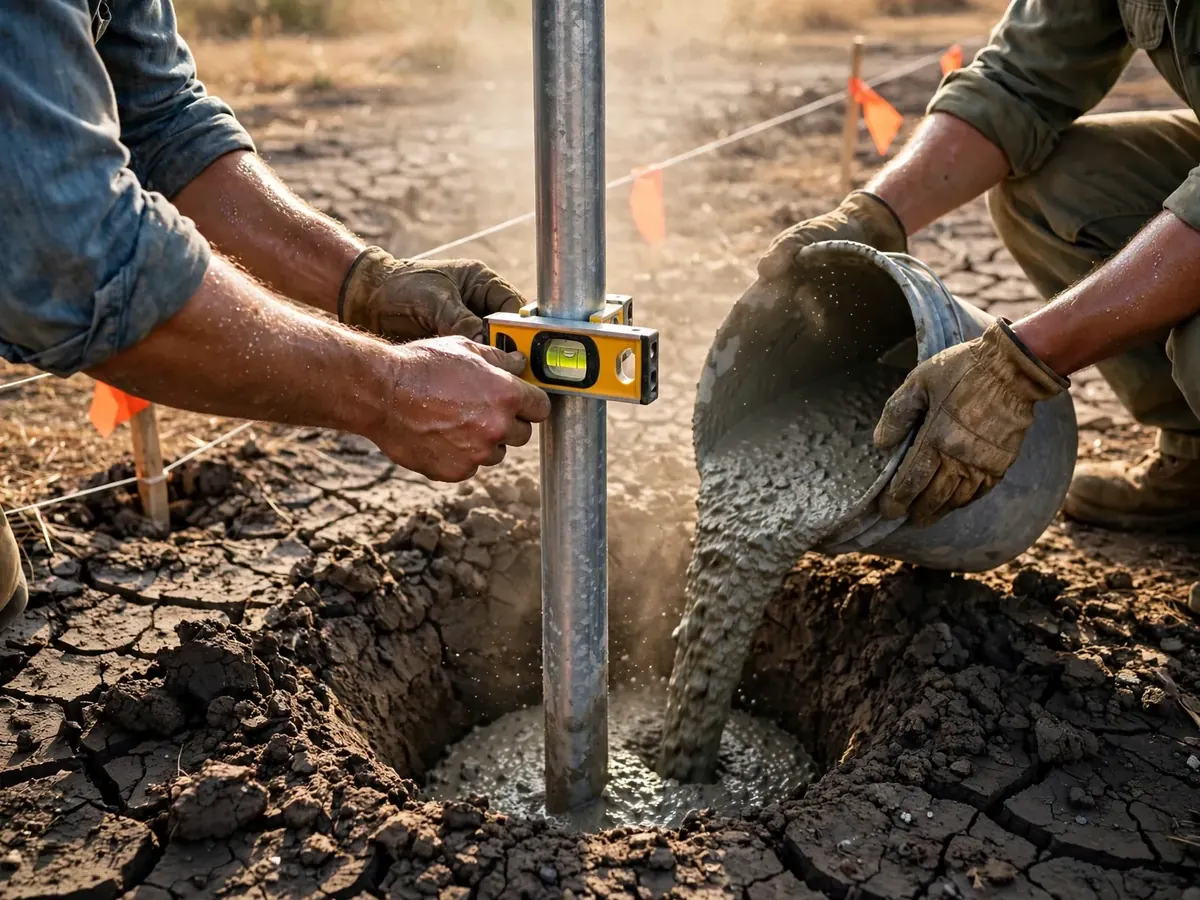
Most fence failures in Texas start at the posts, not the pickets. Wood posts rot at ground level, especially in wet clay, and termites go after them. Galvanized steel posts set in concrete, with wood rails and pickets attached by brackets, are now the common upgrade and usually outlast the wood they hold up.
Cedar Privacy Fences in Coldspring
If privacy is the goal, cedar pickets on a 6-foot frame are what most Coldspring homeowners choose. The details that make it last are the post type, the number of rails (three rails reduce sagging on taller fences) and whether the bottom of the pickets sits slightly above the soil so it doesn't wick up moisture.
Pet and Pool Fencing
Pool fences usually need a specific height, limited gaps between pickets and a gate that closes and latches on its own. Ornamental aluminum panels are a common choice because they're designed around those rules.
Board-on-Board and Shadowbox Styles
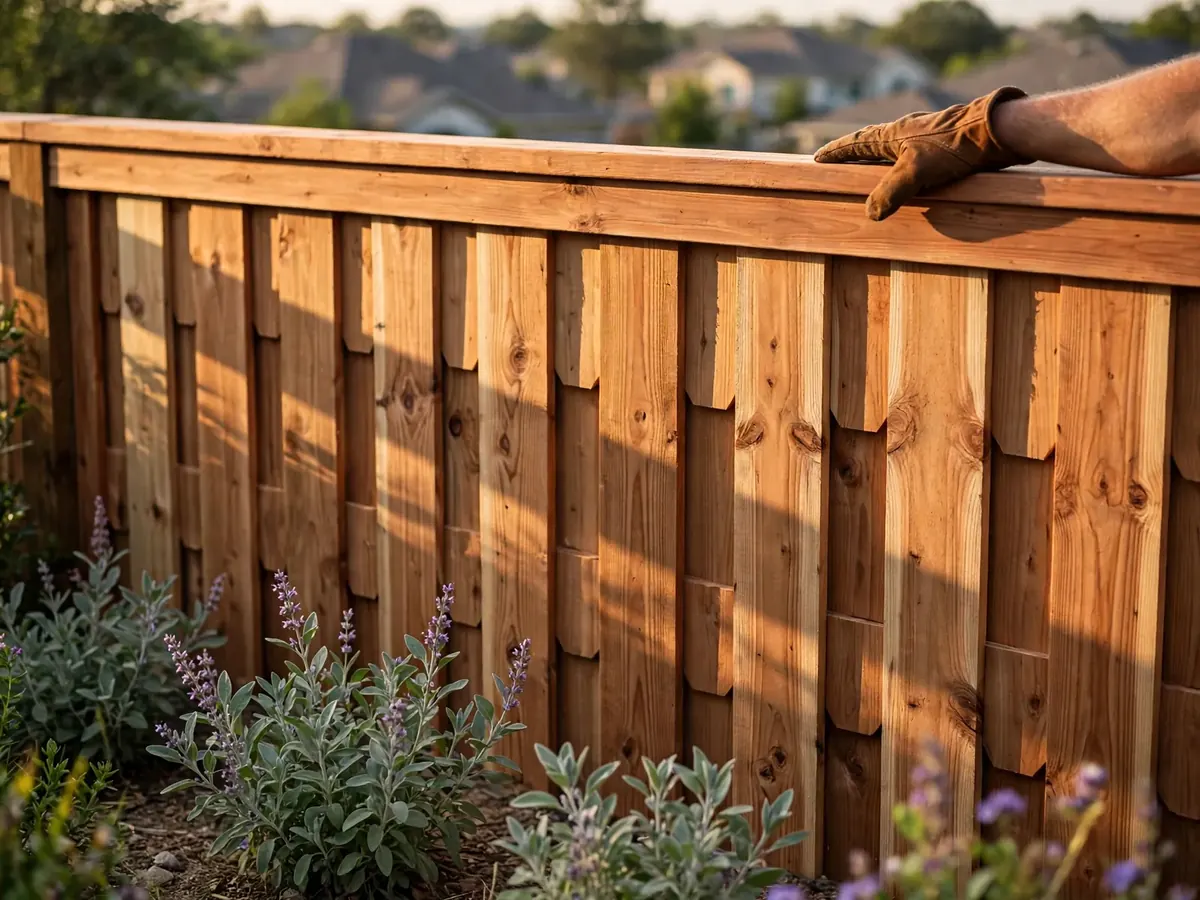
Standard side-by-side pickets shrink in Texas heat and open small gaps. Board-on-board overlaps each picket so there's no see-through even after the wood dries out. Shadowbox alternates pickets on each side of the rails, which looks good from both yards and lets some breeze through, helpful where wind is strong.
Vinyl and Composite Fences in Texas Heat
Composite and vinyl fences cost more up front than cedar but skip the staining every few years. Around Coldspring, they make the most sense where moisture, termites or salt air are hard on wood.
More Fence Questions Around Coldspring
HOA Rules, Permits and Property Lines
Cities set height and front-yard rules, HOAs add style and color rules, and a survey prevents building on the wrong side of the line.
Setting Posts in Shifting Clay Soil
Expansive clay swells and shrinks with moisture, slowly pushing posts out of plumb unless they're set deep.
Wrought Iron and Aluminum Fences
Ornamental iron and aluminum mark boundaries, secure pools and keep views open; aluminum resists rust near the coast.
Signs It's Time to Call in Coldspring
- Old fence leaning or sagging
- Planning a pool, a dog or new privacy
- Neighbors replacing a shared fence
- HOA requires an approved style
What to Have Ready
- Find your survey or plat showing property lines
- Check HOA fence guidelines and stain colors
- Call 811 to have utility lines marked before digging
- Mark gates and where you need access for mowers or vehicles
- Measure the rough length of fence needed
Fence Installation in Coldspring: Talk to a Local Fence Builder
Call 877-753-1892 and describe the project, your city and your timeline. You'll be pointed to a fence builder who works in Coldspring. Ask about scheduling, permits and how the job will be priced before work begins.
877-753-1892Fence Questions From Coldspring Homeowners
Do I need a permit for a fence in Coldspring?
Texas has no statewide fence permit, but cities set rules on height, front-yard fences and masonry, and HOAs add their own. Check with your city and HOA before building.
What fence material is best near the coast?
Aluminum, vinyl and cedar with stainless or galvanized fasteners hold up best in salt air and humidity.
What should Coldspring homeowners know about fence projects?
Humidity keeps wood damp longer, so rot at the base of posts is the most common failure. Low ground that stays wet after storms speeds up rot at the base of wood posts.