
Local Conditions That Shape Fence Installation in Colleyville
Colleyville is a Tarrant County city known for large homes on big lots. Housing ranges from early 1900s homes near downtown Fort Worth to newer master-planned communities to the north.
Wrought iron and upscale wood fences are common. Hail storms are common enough in Colleyville that many owners plan for occasional repairs. Colleyville and Roanoke sit in the same part of the state, but Colleyville deals more with estate-size lots, while Roanoke contends with larger acreage lots.
- HOA guidelines often set fence height, style, stain color and which side faces out.
- City ordinances cover fence height, front-yard placement and sight lines at intersections.
What Holds Up Around Colleyville
Backyards are mostly cedar privacy; ornamental iron and aluminum handle front yards and pools, and the most upscale areas favor iron with masonry. Wind in Colleyville pushes hard on solid structures, so post spacing and depth deserve extra thought.
Cedar Privacy Fences in Colleyville
Western red cedar costs more than the more common Texas or Japanese cedar but holds its shape better; ask which species you're getting. Six-foot cedar privacy fences are the standard backyard choice around Colleyville.
A top cap and trim board add a finished look and also shed rain off the end grain of the pickets, which is where cedar takes on water first. Colleyville's permit and zoning rules can shape the design, so check them early.
A frequent worry, answered: If you DIY, consider hiring out just the posts and footings, which is where experience matters most.
HOA Rules, Permits and Property Lines
A survey or plat shows where the line is. Many fence disputes start with a few inches.
Most HOAs need a written approval before work starts, so build their review time into your schedule rather than booking a crew first. In HOA communities around Colleyville, approval comes before scheduling a crew.
Board-on-Board and Shadowbox Styles
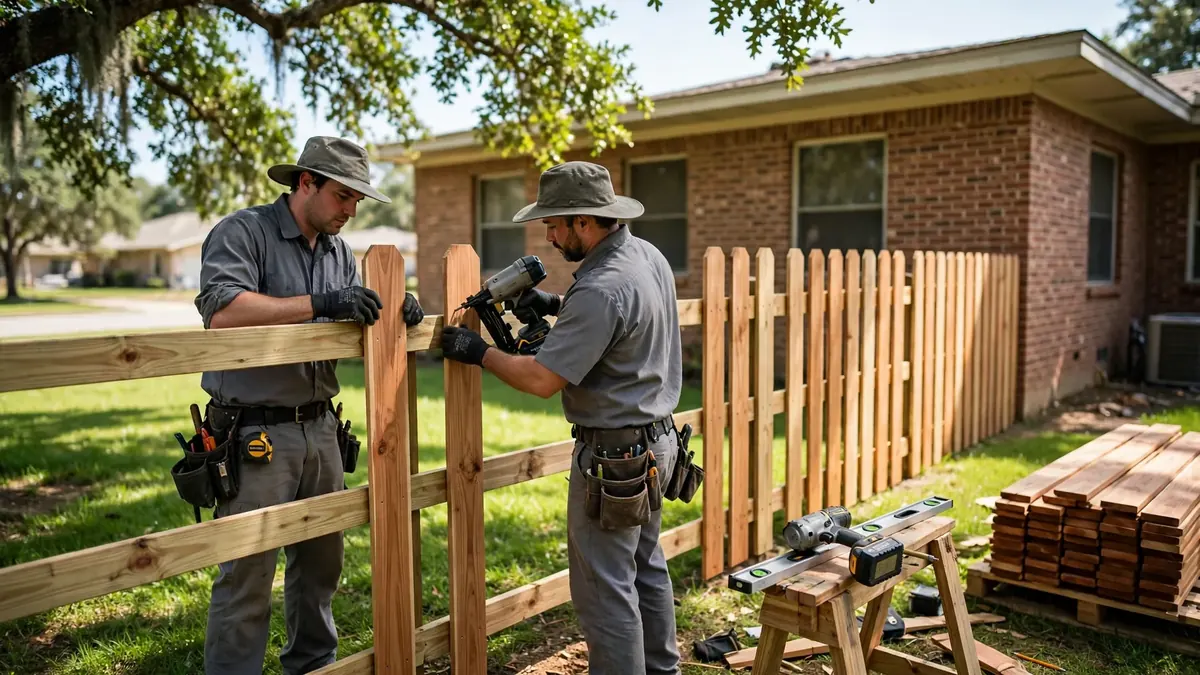
If your fence faces strong wind, a shadowbox design takes some load off the posts by letting air pass between the pickets. Board-on-board gives complete privacy but acts more like a solid wall in a storm, so post spacing and depth matter more.
Think of board-on-board as overlapping shingles on a roof: the overlap is what keeps the gaps closed as each board moves. On larger Colleyville properties, the fence is part of the home's curb appeal, so design and materials get more attention.
Not sure who to trust? Ask how long they've worked locally, whether they carry insurance, and who you'll deal with once work starts.
Wrought Iron and Aluminum Fences
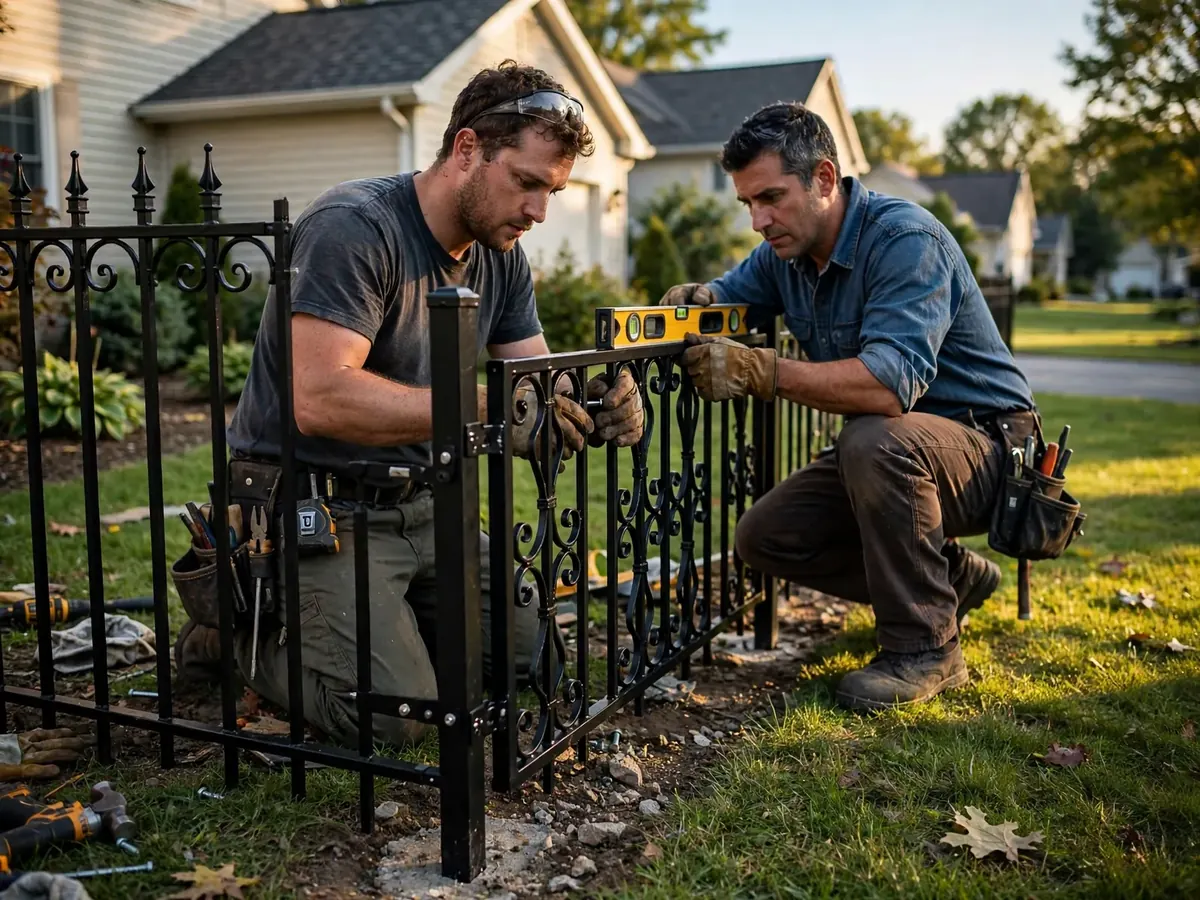
Iron and aluminum fences go up as panels between posts set in concrete. Ornamental fencing is often combined with wood privacy sections where a view is wanted in one place and privacy in another.
Choosing taller posts than the panels lets you add masonry caps or lights later.
Pet and Pool Fencing
A rot board or a strip of wire along the bottom stops diggers, and smooth, tall pickets discourage climbers. Dog owners often choose taller fences or add a lean-in top on sections where jumping is a problem.
For climbers, avoid horizontal rails on the outside of the fence, since they act like a ladder.
A frequent worry, answered: A fence on steel posts, kept stained, often outlives two fences built on wood posts.
Steel Posts vs. Wood Posts
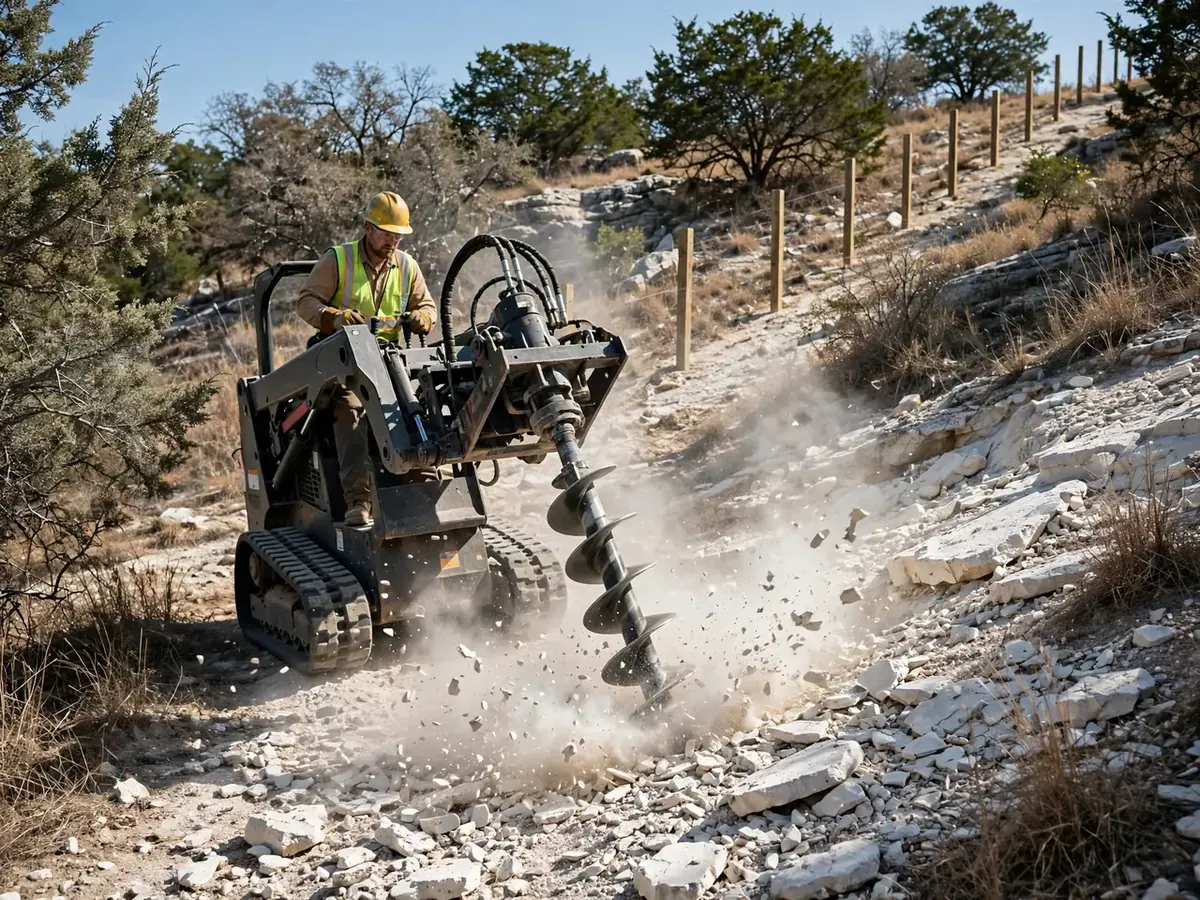
Wood posts are typically 4x4 pressure-treated pine or cedar, and the part just below the soil line is where they fail first. In shifting soil and high wind, depth matters as much as the post material.
Steel posts are usually 2 3/8-inch galvanized pipe; ask about the wall thickness, because heavier-gauge pipe resists bending in a storm. On Colleyville's clay, it's worth asking how deep each footing will go before comparing anything else.
More Fence Questions Around Colleyville
Building a Fence That Stands Up to Wind
Solid privacy fences catch wind like a sail, so post depth, spacing and rail strength matter in storm-prone areas.
Ranch, Pipe and Wire Fencing on Acreage
Mixing materials is common: pipe near the house and barn where looks and strength matter, wire along back pastures where distance matters more.
Setting Posts in Shifting Clay Soil
A post set roughly a third of its above-ground height into the ground, with a bell-shaped or wider footing, resists that seasonal heave far better than a shallow one.
Common Reasons Colleyville Homeowners Call
Watch for these around your Colleyville property:
- Planning a pool, a dog or new privacy
- Neighbors replacing a shared fence
- Old fence leaning or sagging
Quick Checks Before the Call
- Find your survey or plat showing property lines
- Measure the rough length of fence needed
- Call 811 to have utility lines marked before digging
- Note corner-lot sight lines if your property is on a corner
- Notice whether nearby fences or the house foundation show signs of soil movement
Getting Fence Installation in Colleyville Started
Have the details from the checklist above ready, then call 877-753-1892. A fence builder serving Colleyville can tell you what the job involves, what affects the cost and whether anything needs attention right away. Whether you're ready to book or just comparing options, call today.
877-753-1892Fence Questions From Colleyville Homeowners
How long does a cedar fence last in Colleyville?
It depends mostly on the posts and upkeep. Cedar pickets on galvanized steel posts, stained every few years, outlast the same pickets on wood posts in damp or shifting ground by a wide margin. For a Colleyville home, it's worth confirming this before work starts.
How can I keep a Colleyville fence project within budget?
Price is usually driven by length, height, post type and gates, so a shorter run of a better fence often beats a longer run of a cheaper one. A cheaper fence that needs new posts in a few years can cost more in the end than a sturdier one built once.
What should Colleyville homeowners know about fence projects?
In windy Colleyville, designs that let some air through can last longer. Fort Worth and the Mid-Cities share North Texas clay soils and some of the heaviest spring hail in the state. Colleyville and Kennedale sit in the same part of the state, but Colleyville deals more with estate-size lots, while Kennedale contends with larger acreage lots.