
What to Know About Fence Installation in Bedford
Fort Worth and the Mid-Cities share North Texas clay soils and some of the heaviest spring hail in the state. Housing ranges from early 1900s homes near downtown Fort Worth to newer master-planned communities to the north.
- Cities set rules on front-yard fence height, corner-lot sight lines and masonry walls, so check before building.
- HOA guidelines often set fence height, style, stain color and which side faces out.
Choosing Materials in Bedford
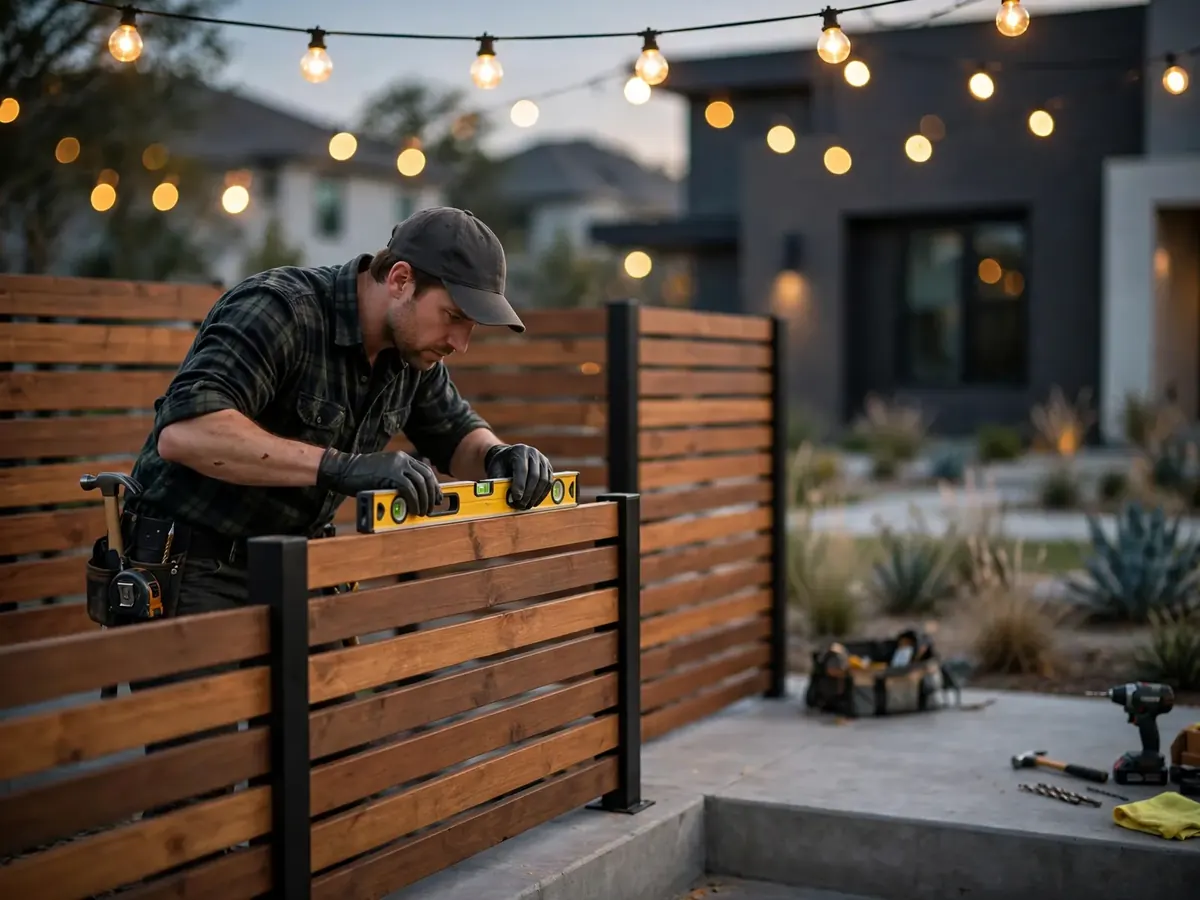
Cedar privacy fences dominate backyards, with wrought iron and aluminum in front yards and around pools; Southlake, Colleyville and Westlake lean toward ornamental iron and masonry.
Cedar Privacy Fences in Bedford
If privacy is the goal, cedar pickets on a 6-foot frame are what most Bedford homeowners choose. The details that make it last are the post type, the number of rails (three rails reduce sagging on taller fences) and whether the bottom of the pickets sits slightly above the soil so it doesn't wick up moisture.
Steel Posts vs. Wood Posts
Most fence failures in Texas start at the posts, not the pickets. Wood posts rot at ground level, especially in wet clay, and termites go after them. Galvanized steel posts set in concrete, with wood rails and pickets attached by brackets, are now the common upgrade and usually outlast the wood they hold up.
Building a Fence That Stands Up to Wind
A 6-foot solid fence acts like a sail in a storm. In windy parts of Texas, closer post spacing, deeper footings, steel posts and three rails instead of two help it ride out gusts. Shadowbox or gapped designs let some wind pass through.
Wrought Iron and Aluminum Fences
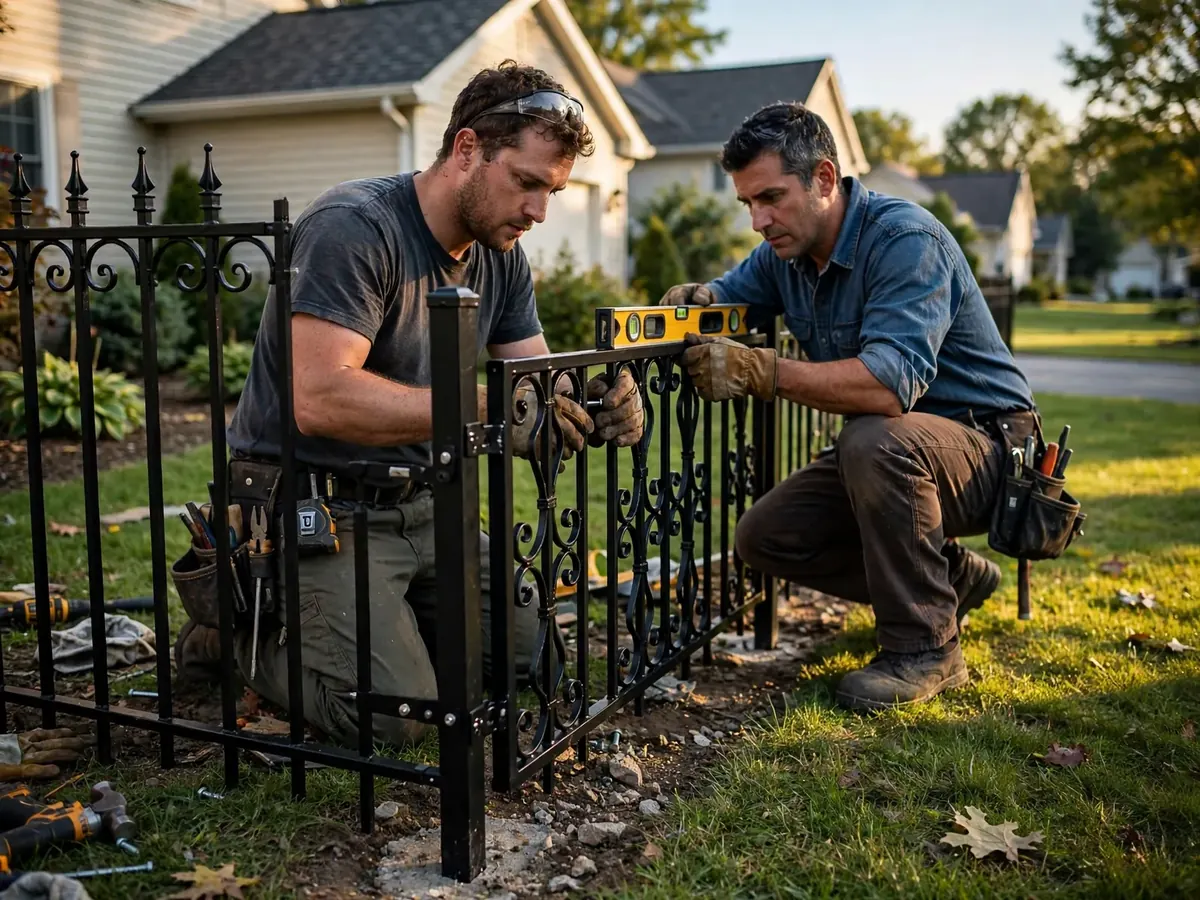
Iron and aluminum fences go up as panels between posts set in concrete. On sloped lots, panels are either racked to follow the grade or stepped. Ask which the builder recommends for your yard.
HOA Rules, Permits and Property Lines
Fences belong a few inches inside your property line unless you and your neighbor agree otherwise. A survey or plat shows where the line is. If you're replacing a shared fence, talk with the neighbor first about style, cost and which side faces whom.
Board-on-Board and Shadowbox Styles
Many HOAs around Bedford specify board-on-board with a top cap and require the finished side to face the street or the neighbor. Check your HOA's fence guidelines before choosing a style; they often list the approved stain color too.
More Fence Questions Around Bedford
Pet and Pool Fencing
Dogs need fences without gaps at the bottom or footholds to climb; pools need barriers with self-closing gates.
Setting Posts in Shifting Clay Soil
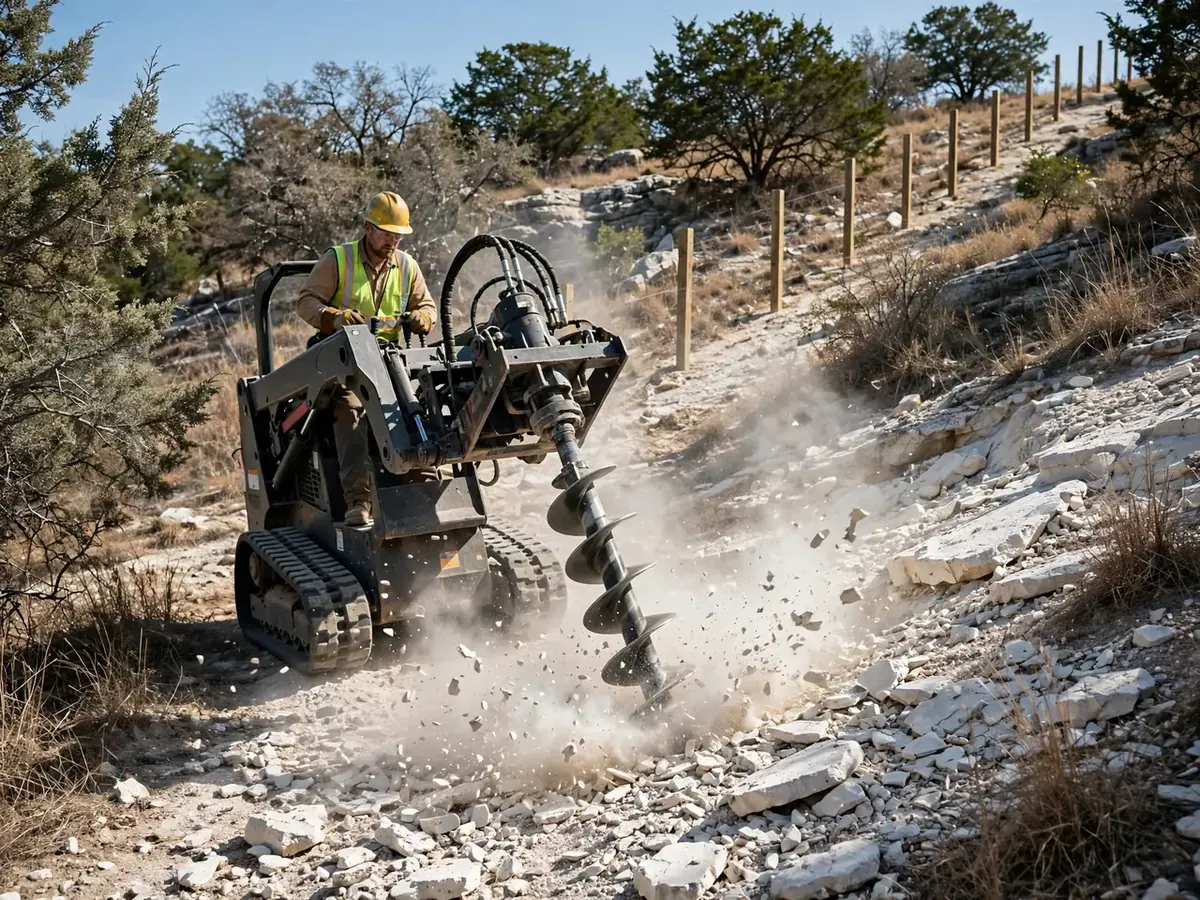
Expansive clay swells and shrinks with moisture, slowly pushing posts out of plumb unless they're set deep.
Ranch, Pipe and Wire Fencing on Acreage
Acreages use pipe, pipe-and-cable, barbed wire or no-climb wire depending on livestock, pets and budget.
Signs It's Time to Call in Bedford
- Planning a pool, a dog or new privacy
- Old fence leaning or sagging
- HOA requires an approved style
- Moving onto acreage that needs livestock fencing
Quick Checks Before the Call
- Find your survey or plat showing property lines
- Check HOA fence guidelines and stain colors
- Measure the rough length of fence needed
- Mark gates and where you need access for mowers or vehicles
- Call 811 to have utility lines marked before digging
Planning Fence Installation in Bedford: What to Expect
Have the details from the checklist above ready, then call 877-753-1892. A fence builder serving Bedford can tell you what the job involves, what affects the cost and whether anything needs attention right away.
877-753-1892Fence Questions From Bedford Homeowners
Are steel posts worth it?
In most of Texas, yes. Galvanized steel posts don't rot or attract termites and resist movement in clay soil better than wood posts.
Do I need a permit for a fence in Bedford?
Texas has no statewide fence permit, but cities set rules on height, front-yard fences and masonry, and HOAs add their own. Check with your city and HOA before building.
What should Bedford homeowners know about fence projects?
Strong winds push on solid privacy fences, so closer post spacing and steel posts help them stay upright. Shrink-swell clay moves posts every season, so post depth, footing shape and steel posts matter more than picket style.