
What to Know About Fence Installation in Dickinson
Low-lying neighborhoods flooded badly in Hurricane Harvey. These towns sit along Galveston Bay and the Brazoria County coast, where salt air corrodes fasteners and steel faster than inland.
Dickinson is a Galveston County city on Dickinson Bayou. Hurricane season makes wind resistance a practical concern in Dickinson, not just a design detail. Like Texas City in the same region, Dickinson has to plan around salt air.
- With humidity this high, rot at the ground line is the usual way wood fences fail.
- Salt air near the coast corrodes ordinary nails and steel, so stainless or hot-dip galvanized hardware is worth it.
What Holds Up Around Dickinson
Near the coast, cedar goes up with stainless or hot-dip galvanized fasteners, ornamental sections switch from steel to aluminum, and vinyl appears where salt is heaviest. Around Dickinson, choose finishes and hardware rated for salt exposure.
Vinyl and Composite Fences in Texas Heat
Posts and rail connections are designed differently from wood fences, and the installation instructions matter for any manufacturer coverage. Composite fencing is denser and handles heat better than most vinyl, at a higher cost.
Dark-colored vinyl absorbs more heat than white or tan, which is why light colors are the safer choice under strong Texas sun. In humid Dickinson, pressure-treated or naturally rot-resistant materials make a real difference.
A question many homeowners raise: If you're working around an event or a new pet, say so on the first call; it helps the fence builder plan materials and crew time.
Steel Posts vs. Wood Posts
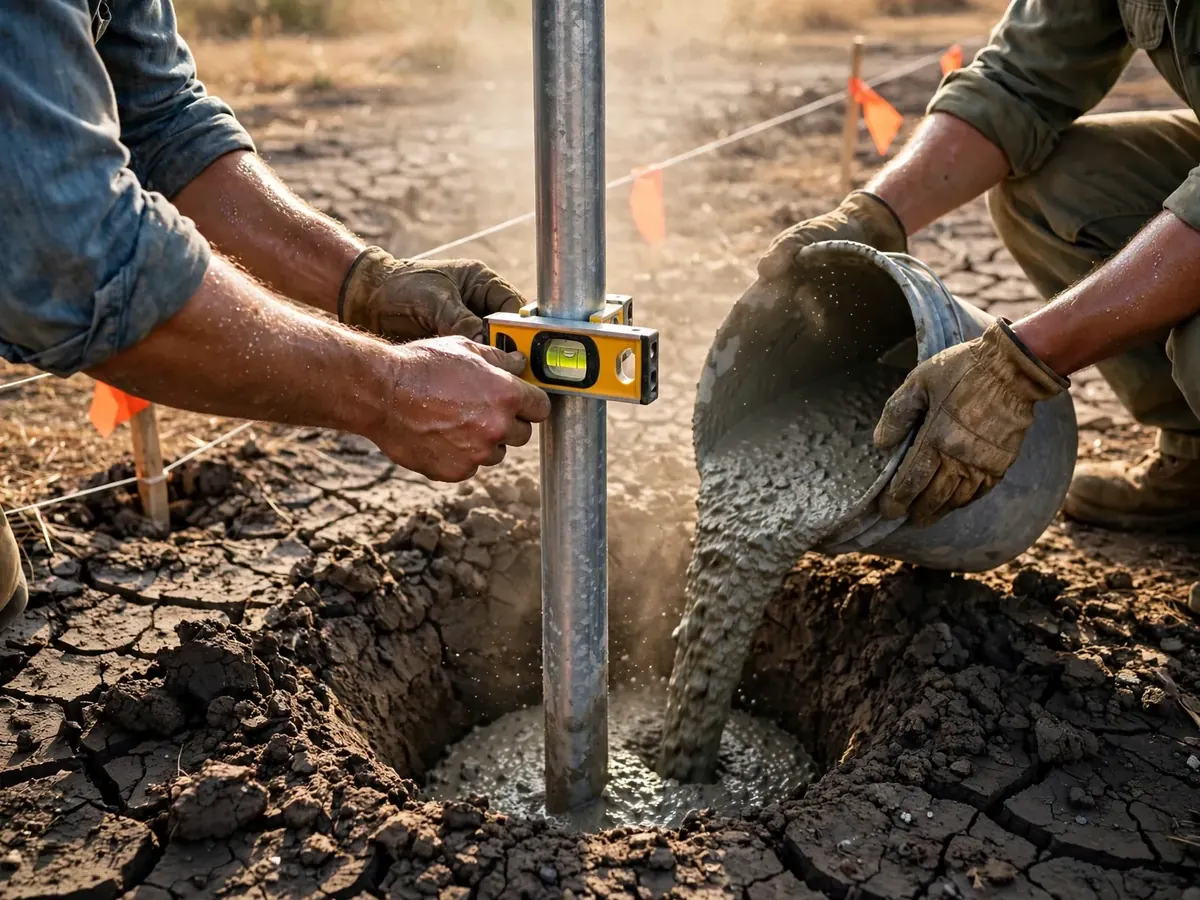
Ask how deep the posts will go and how much concrete each one gets. Galvanized steel posts set in concrete, with wood rails and pickets attached by brackets, are now the common upgrade and usually outlast the wood they hold up.
A good way to picture it: a wood post is a sponge planted in the ground, while a galvanized steel post is closer to a pipe that water can't soak into. Termites are active around Dickinson, so keeping wood off the soil and using treated lumber helps.
Building a Fence That Stands Up to Wind
Steel posts at closer spacing are the most reliable upgrade for windy sites. Ask the builder how they design for wind and whether steel posts are an option.
Bracing corners and ends is especially important on long, solid runs exposed to open fields. Coastal air in Dickinson corrodes steel faster, which tilts the choice toward aluminum, vinyl or well-coated metal.
Before you decide: If you DIY, consider hiring out just the posts and footings, which is where experience matters most.
Wrought Iron and Aluminum Fences
Ornamental fencing is common in Dickinson for front yards, along greenbelts and around pools. On sloped lots, panels are either racked to follow the grade or stepped. Ask which the builder recommends for your yard.
Choosing taller posts than the panels lets you add masonry caps or lights later. Around Dickinson, choose finishes and hardware rated for salt exposure.
Cedar Privacy Fences in Dickinson
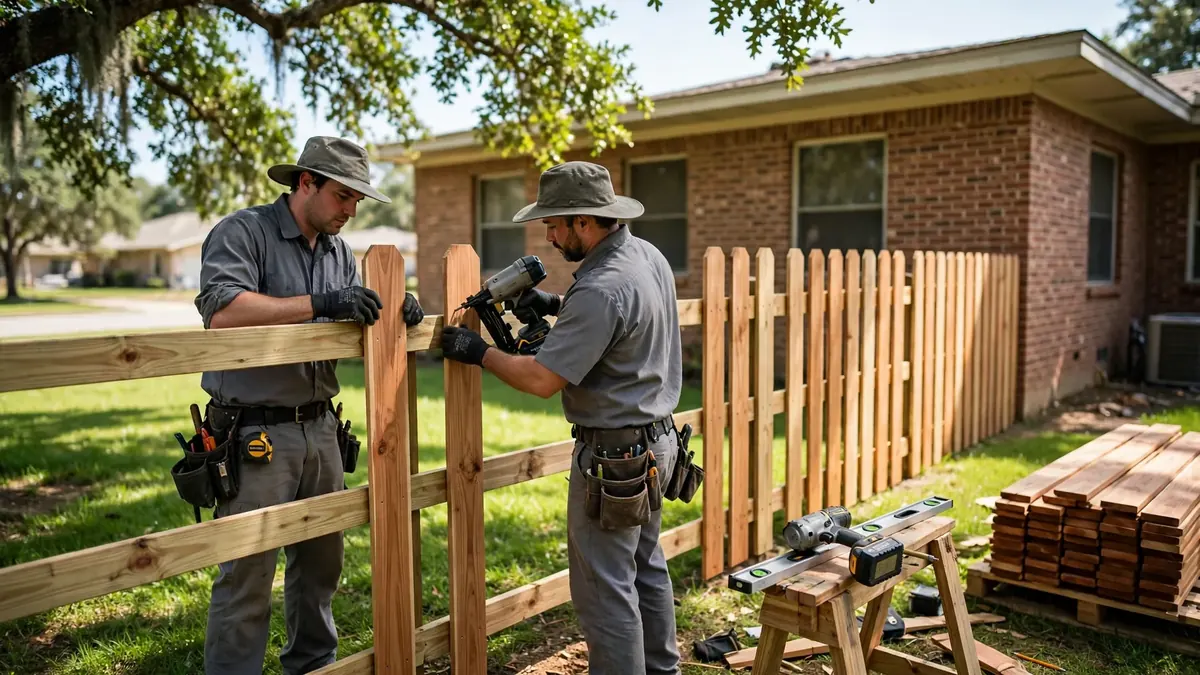
Cedar is popular for good reasons: it's lighter than pine, resists insects and rot, and weathers to a silver gray if you don't stain it. Pre-stained or kiln-dried cedar can be stained sooner after installation than green lumber, which needs time to dry first.
Ask for ring-shank or screw fasteners rather than smooth nails; as cedar dries and swells through the seasons, smooth nails slowly back out and pickets start to rattle.
If you're weighing it up: Ask what the fence builder expects to fail first on your lot, and how they've built to delay it.
Setting Posts in Shifting Clay Soil
Clay soil swells when it's wet and shrinks and cracks in drought. Even a well-set post in clay can shift slightly; adjustable brackets make small corrections simple.
Fences on clay that are watered evenly through droughts tend to move less than those left to dry out. Dickinson lots that hold water need materials that tolerate wet conditions.
More Fence Questions Around Dickinson
Board-on-Board and Shadowbox Styles
Think of board-on-board as overlapping shingles on a roof: the overlap is what keeps the gaps closed as each board moves.
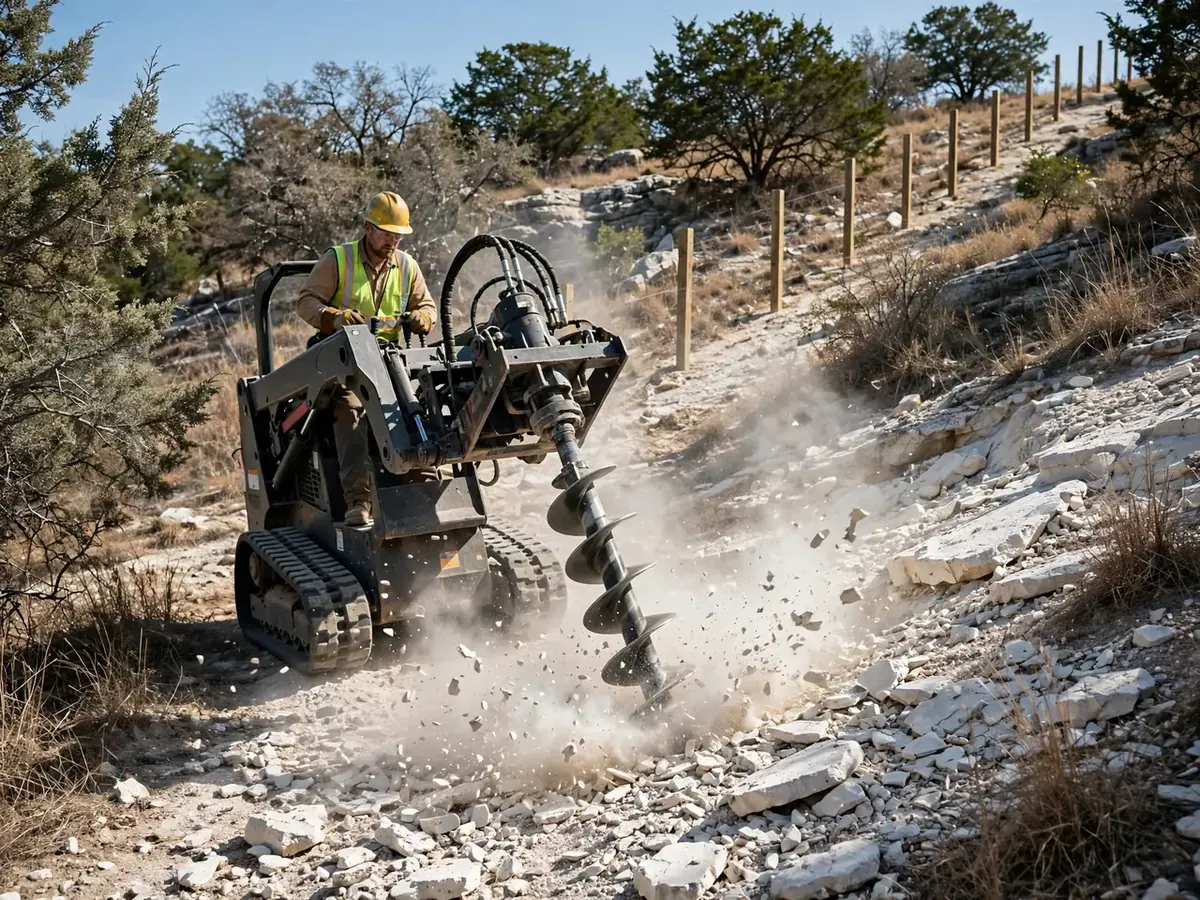
Drilling Posts Into Limestone and Caliche
If rock is only under part of the line, the crew may use different methods on different sections.
Ranch, Pipe and Wire Fencing on Acreage
Long fences are built in stages: corners and braces first, then line posts, then wire or rails.
Signs It's Time to Call in Dickinson
In Dickinson, these are the signs that most often lead to a call:
- Moving onto acreage that needs livestock fencing
- Planning a pool, a dog or new privacy
- HOA requires an approved style
What to Have Ready
- Find your survey or plat showing property lines
- Check HOA fence guidelines and stain colors
- Measure the rough length of fence needed
- Mention any rusted hardware on the existing structure
- Note where water stands after heavy rain near the work area
Fence Installation in Dickinson: Talk to a Local Fence Builder
The quickest next step is a call to 877-753-1892. Describe the project and mention Dickinson; a fence builder will ask a few questions and talk through options. Don't wait for the next storm; call today and book your fence project.
877-753-1892Fence Questions From Dickinson Homeowners
Are steel posts worth it?
In most of Texas, yes. Galvanized steel posts don't rot or attract termites and resist movement in clay soil better than wood posts. For a Dickinson home, it's worth confirming this before work starts.
How do I choose a fence builder in Dickinson?
Good fence builders explain how they'll set posts and handle your soil without being asked; vague answers are a warning sign. A good fence builder will tell you what they don't know until they start digging, such as rock or roots.
What should Dickinson homeowners know about fence projects?
Hurricane Ike in 2008 and Hurricane Harvey in 2017 caused widespread wind and flood damage here, and Hurricane Beryl hit the area in 2024.