
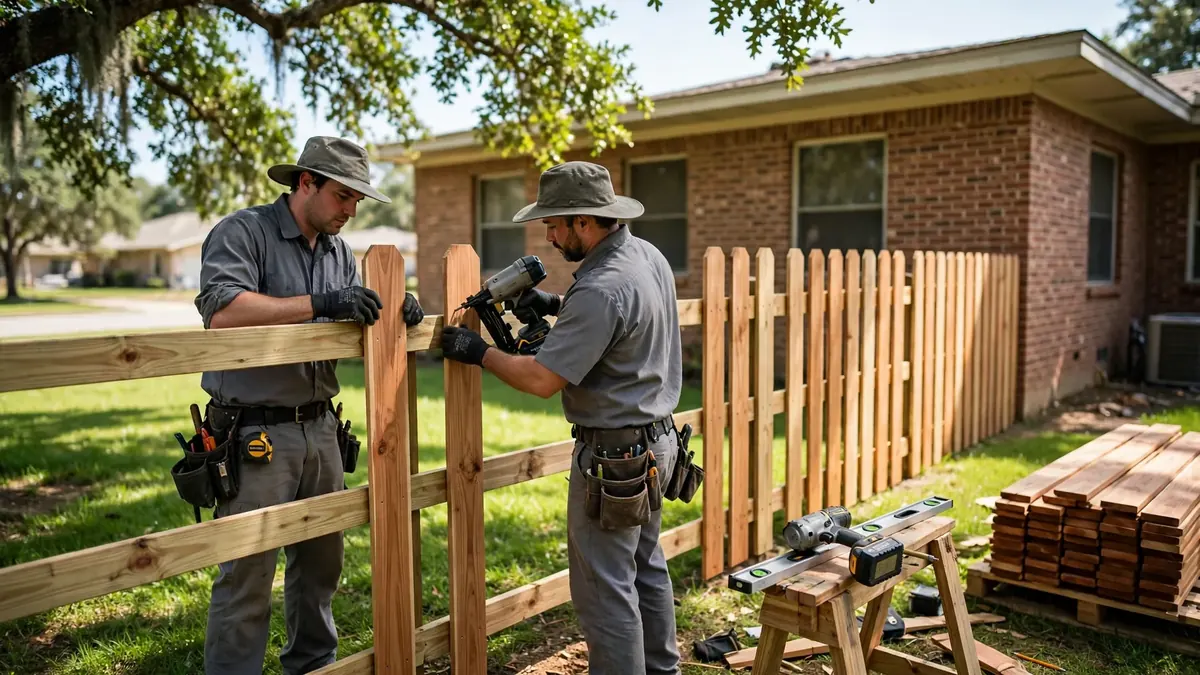
Local Conditions That Shape Fence Installation in Overton
Falling limbs and trees during storms are a common cause of fence and deck damage here. Humidity and shade keep wood damp longer, so rot and termites matter more than in drier parts of the state. East Texas is Piney Woods country, with sandy and red clay soils, tall pines and hardwoods, and more rain than the rest of North Texas.
- Humidity keeps wood damp longer, so rot at the base of posts is the most common failure.
- Termites go after wood posts in the ground, another reason steel posts are popular.
What Holds Up Around Overton
Pine and cedar privacy fences are common, with treated posts or steel posts in sandy soil; wire and wood fencing on acreages.
Cedar Privacy Fences in Overton
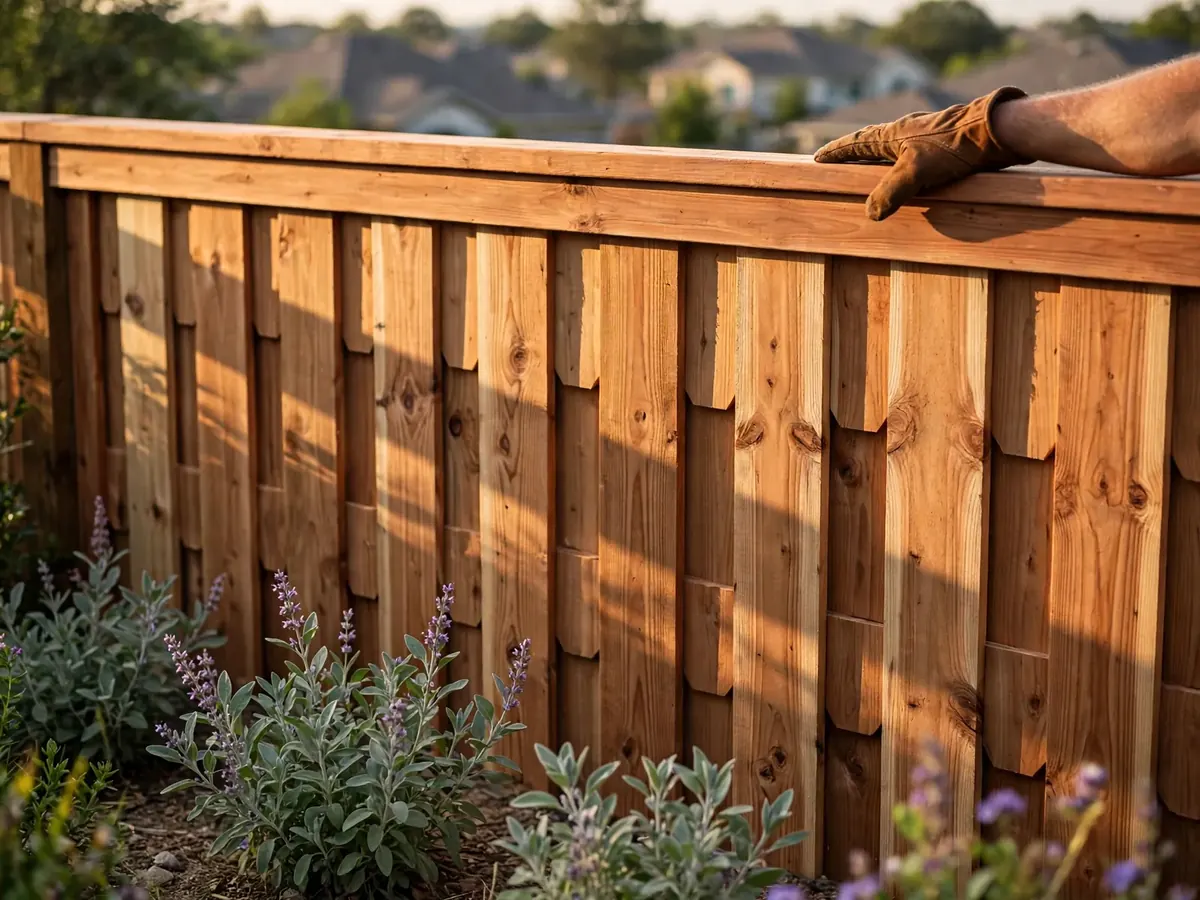
Cedar is popular for good reasons: it's lighter than pine, resists insects and rot, and weathers to a silver gray if you don't stain it. On a typical Overton lot the main decisions are picket style, rail count and whether to add a top cap and trim board for a finished look.
Vinyl and Composite Fences in Texas Heat
Vinyl doesn't rot or need stain, which appeals in humid areas with termites. In Texas sun, though, cheaper vinyl can sag or become brittle. Look for heavier-gauge, UV-stabilized products, and lighter colors that absorb less heat. Composite fencing is denser and handles heat better than most vinyl, at a higher cost.
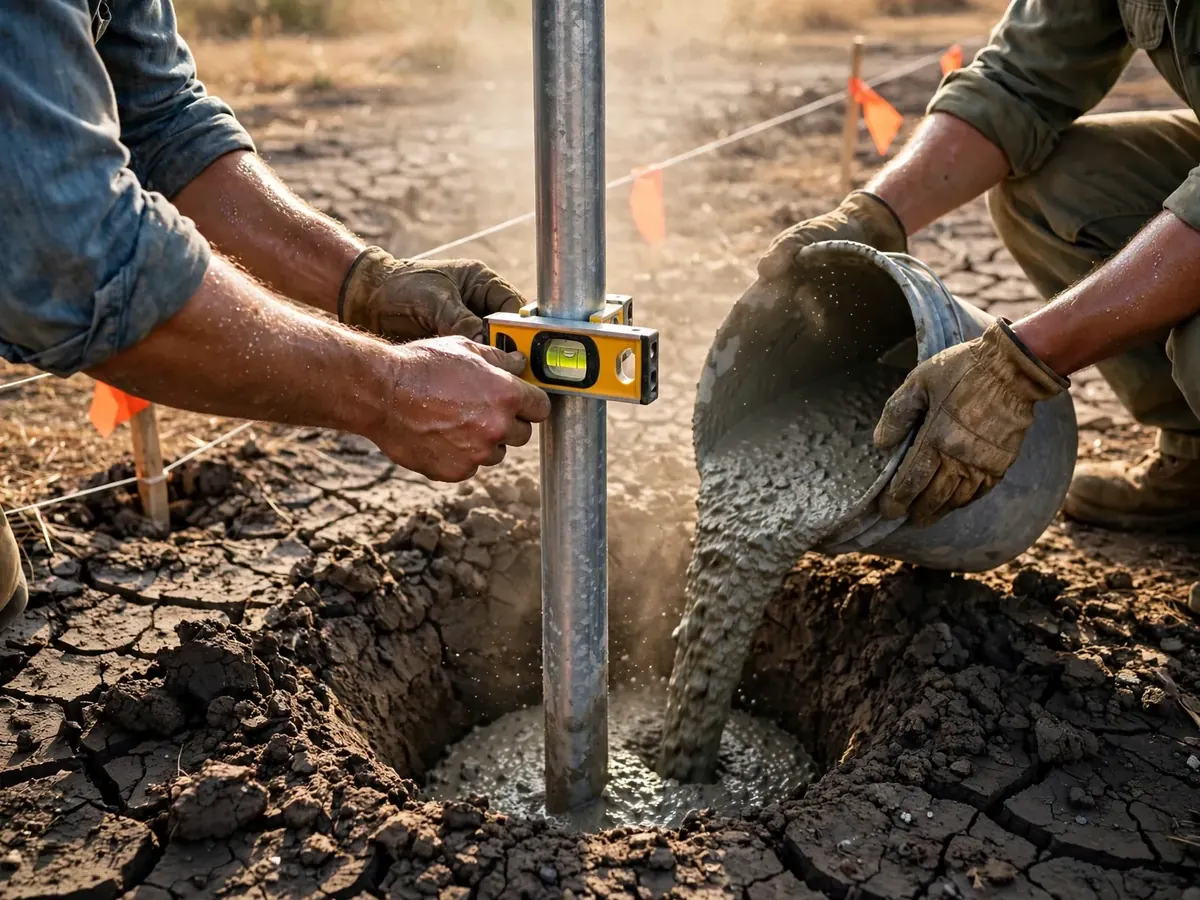
Steel Posts vs. Wood Posts
Most fence failures in Texas start at the posts, not the pickets. Wood posts rot at ground level, especially in wet clay, and termites go after them. Galvanized steel posts set in concrete, with wood rails and pickets attached by brackets, are now the common upgrade and usually outlast the wood they hold up.
Ranch, Pipe and Wire Fencing on Acreage
On acreage near Overton, the right fence depends on what it needs to hold. Horses do best with pipe or no-climb wire; cattle with barbed wire or pipe-and-cable; goats with tight field fence; and deer with tall game fencing. Corner and brace posts carry the load, so they deserve the most attention.
HOA Rules, Permits and Property Lines
Fences belong a few inches inside your property line unless you and your neighbor agree otherwise. A survey or plat shows where the line is. If you're replacing a shared fence, talk with the neighbor first about style, cost and which side faces whom.
Other Fence Situations in Overton
Setting Posts in Shifting Clay Soil
Expansive clay swells and shrinks with moisture, slowly pushing posts out of plumb unless they're set deep.
Drilling Posts Into Limestone and Caliche
Rocky ground needs a rock auger or core drill, which changes the equipment, time and cost of setting posts.
Wrought Iron and Aluminum Fences
Ornamental iron and aluminum mark boundaries, secure pools and keep views open; aluminum resists rust near the coast.
When to Pick Up the Phone
- Old fence leaning or sagging
- Neighbors replacing a shared fence
- HOA requires an approved style
- Moving onto acreage that needs livestock fencing
Quick Checks Before the Call
- Measure the rough length of fence needed
- Find your survey or plat showing property lines
- Mark gates and where you need access for mowers or vehicles
- Check HOA fence guidelines and stain colors
- Call 811 to have utility lines marked before digging
Getting Fence Installation in Overton Started
One call to 877-753-1892 gets the conversation started with a fence builder who works around Overton. Bring your measurements, photos and any HOA requirements.
877-753-1892Fence Questions From Overton Homeowners
How long does a cedar fence last in Overton?
A well-built cedar fence often lasts many years, longer with steel posts and regular staining. Wood posts and unstained pickets in wet or shifting soil wear out sooner.
What fence material is best near the coast?
Aluminum, vinyl and cedar with stainless or galvanized fasteners hold up best in salt air and humidity.
What should Overton homeowners know about fence projects?
Older neighborhoods often have fences on wood posts that are near the end of their life. Acreages around town need fences sized for pets, horses or livestock rather than just privacy.