
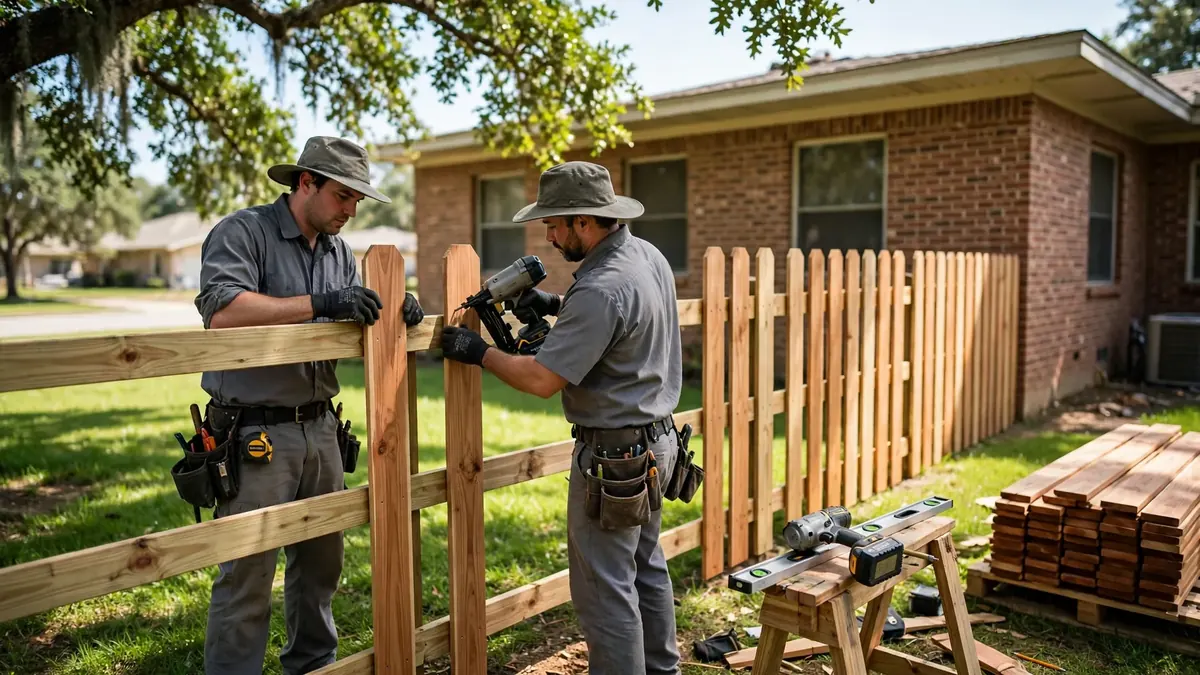
What to Know About Fence Installation in Schertz
Beyond the city, towns like Floresville, Pleasanton, Hondo and Devine are surrounded by ranchland. North San Antonio sits on limestone and caliche, while the south and east sides have heavier clay soils. Summers are long and hot, which dries out and grays wood fences quickly without stain.
- Cities set rules on front-yard fence height, corner-lot sight lines and masonry walls, so check before building.
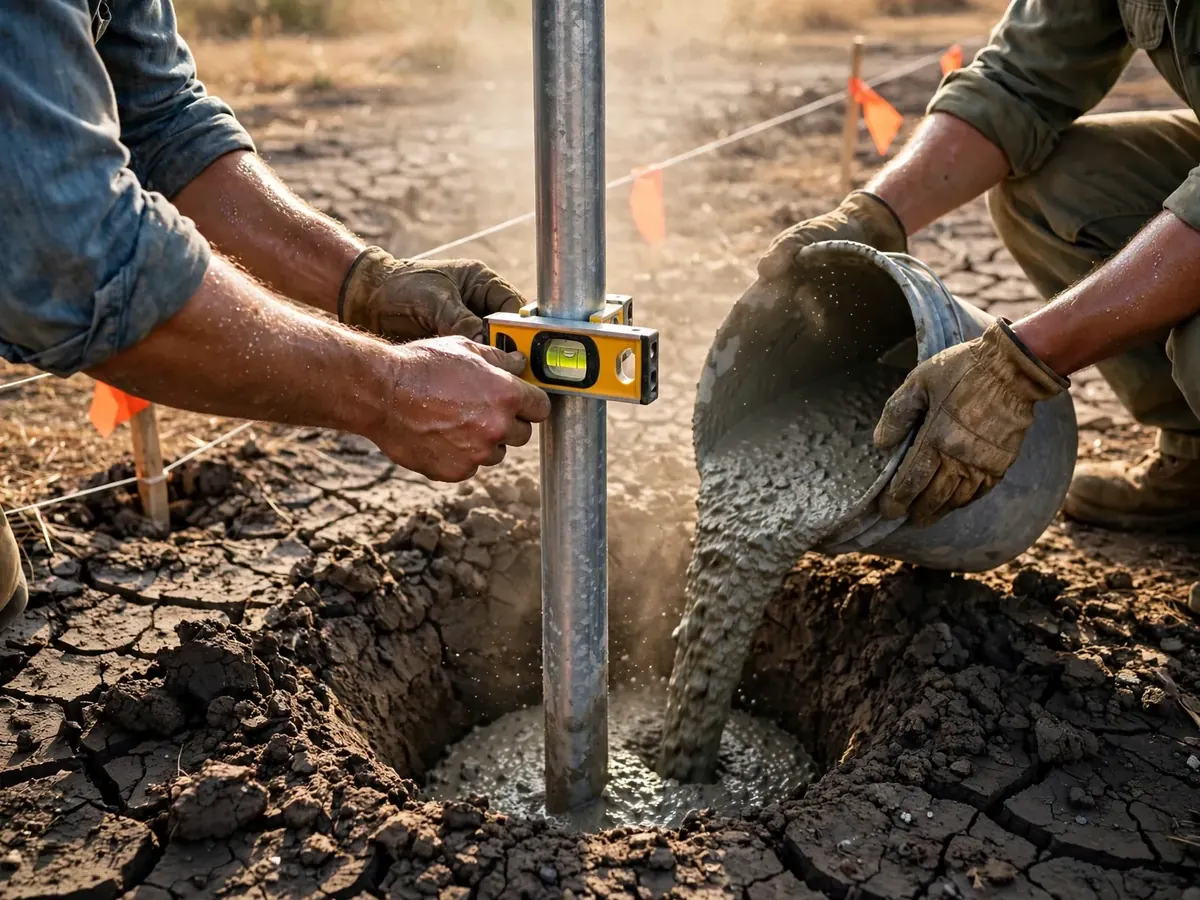
- Shrink-swell clay moves posts every season, so post depth, footing shape and steel posts matter more than picket style.
Choosing Materials in Schertz
Cedar privacy fences and wrought iron in the city; pipe, wire and pipe-and-cable fencing on ranch land to the south and west.
Drilling Posts Into Limestone and Caliche
Expect a crew working on rocky ground around Schertz to bring heavier equipment, sometimes a track loader with a rock auger. Ask whether rock drilling is included in the estimate or charged separately once they see what's underground.
Ranch, Pipe and Wire Fencing on Acreage
For larger properties, a fence builder will walk the line, mark corners and gates, and plan around creeks, slopes and rock before quoting. Having a survey or plat helps avoid building on the wrong side of a property line.
Cedar Privacy Fences in Schertz
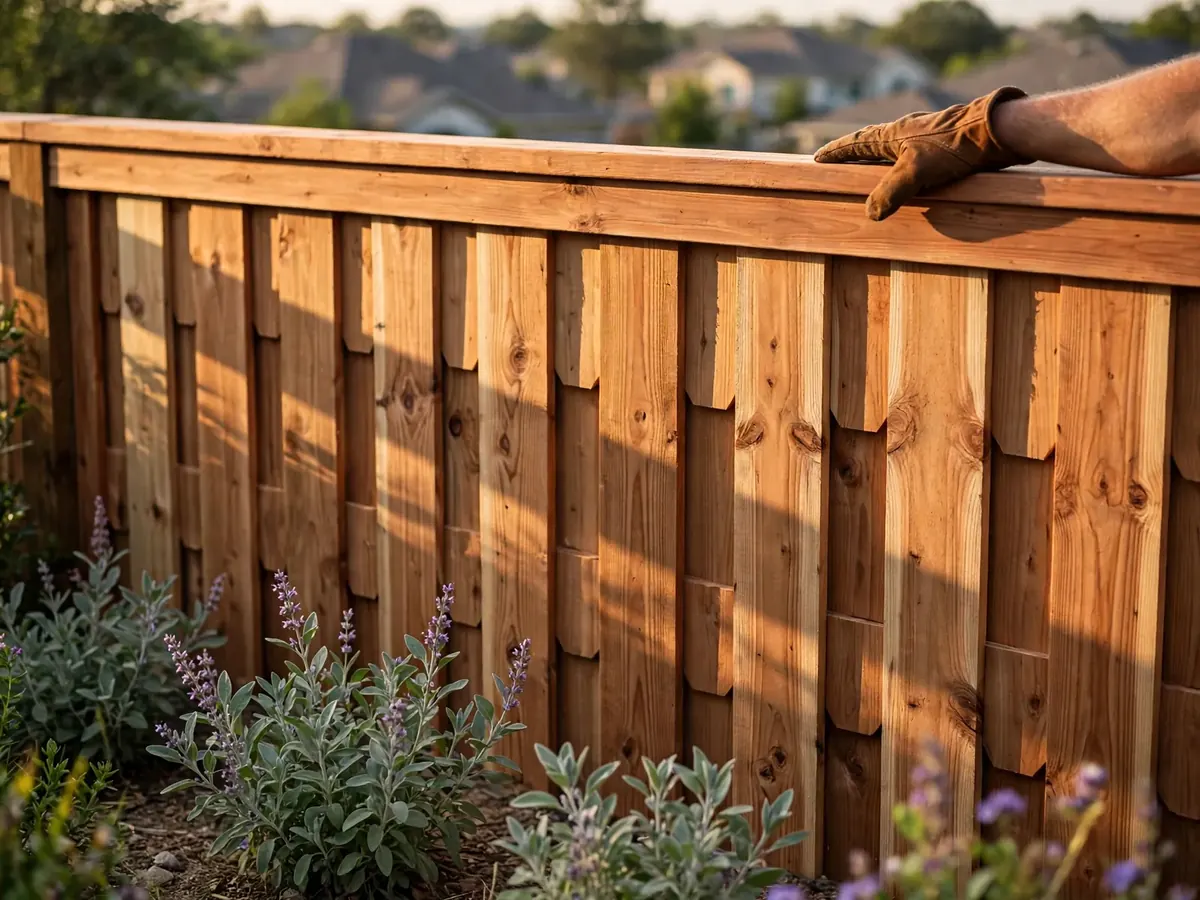
Six-foot cedar privacy fences are the standard backyard choice around Schertz. Cedar's natural oils slow rot and insects, it moves less than pine in the heat, and it takes a semi-transparent stain well. Western red cedar costs more than the more common Texas or Japanese cedar but holds its shape better; ask which species you're getting.
Steel Posts vs. Wood Posts
If you want the look of wood all the way down, steel posts can be wrapped or hidden behind the pickets. In Schertz, where the ground and the weather work against posts, steel is worth the added cost over the life of the fence.
Wrought Iron and Aluminum Fences
If the fence surrounds a pool, it usually has to meet pool barrier rules for height, picket spacing and self-closing gates. Ornamental aluminum and steel panels are designed with those rules in mind; confirm the requirements with your city.
Vinyl and Composite Fences in Texas Heat
Composite and vinyl fences cost more up front than cedar but skip the staining every few years. Around Schertz, they make the most sense where moisture, termites or salt air are hard on wood.
Other Fence Situations in Schertz
Horizontal and Modern Fence Designs
Horizontal slat fences give a modern look but need tighter post spacing to keep long boards from sagging.
Building a Fence That Stands Up to Wind
Solid privacy fences catch wind like a sail, so post depth, spacing and rail strength matter in storm-prone areas.
HOA Rules, Permits and Property Lines
Cities set height and front-yard rules, HOAs add style and color rules, and a survey prevents building on the wrong side of the line.
Common Reasons Schertz Homeowners Call
- Moving onto acreage that needs livestock fencing
- Planning a pool, a dog or new privacy
- HOA requires an approved style
- Old fence leaning or sagging
Quick Checks Before the Call
- Mark gates and where you need access for mowers or vehicles
- Check HOA fence guidelines and stain colors
- Find your survey or plat showing property lines
- Call 811 to have utility lines marked before digging
- Measure the rough length of fence needed
Planning Fence Installation in Schertz: What to Expect
One call to 877-753-1892 gets the conversation started with a fence builder who works around Schertz. Bring your measurements, photos and any HOA requirements.
877-753-1892Fence Questions From Schertz Homeowners
Are steel posts worth it?
In most of Texas, yes. Galvanized steel posts don't rot or attract termites and resist movement in clay soil better than wood posts.
How long does a cedar fence last in Schertz?
A well-built cedar fence often lasts many years, longer with steel posts and regular staining. Wood posts and unstained pickets in wet or shifting soil wear out sooner.
What should Schertz homeowners know about fence projects?
Intense sun dries and grays unprotected wood quickly, so staining every few years pays off. Hard caliche layers make post holes slow to dig and can trap water around wood posts.