
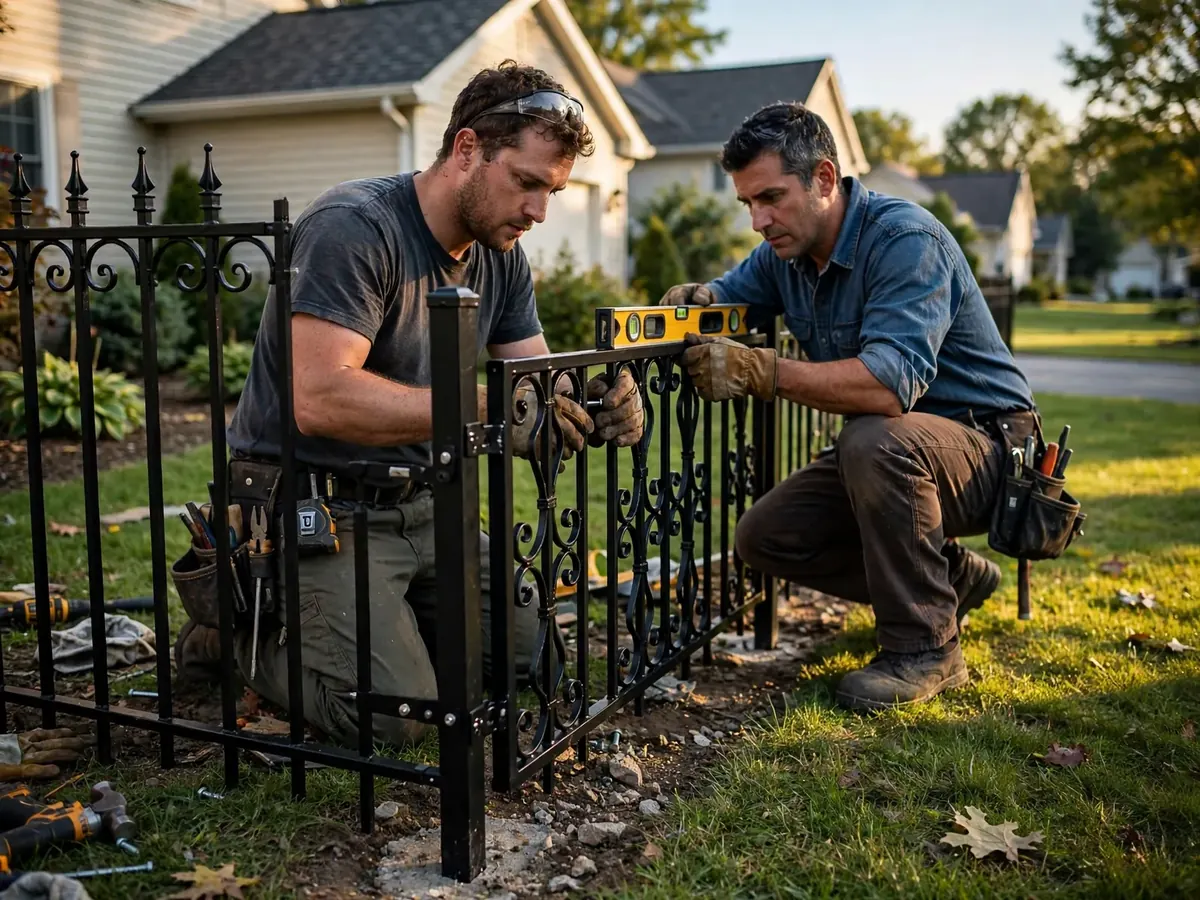
What to Know About Fence Installation in White Oak
Humidity and shade keep wood damp longer, so rot and termites matter more than in drier parts of the state. East Texas is Piney Woods country, with sandy and red clay soils, tall pines and hardwoods, and more rain than the rest of North Texas. Falling limbs and trees during storms are a common cause of fence and deck damage here.
- Humidity keeps wood damp longer, so rot at the base of posts is the most common failure.
- Termites go after wood posts in the ground, another reason steel posts are popular.
What Holds Up Around White Oak
Pine and cedar privacy fences are common, with treated posts or steel posts in sandy soil; wire and wood fencing on acreages.
Vinyl and Composite Fences in Texas Heat
If you choose vinyl or composite, ask how the panels handle thermal expansion and wind. Posts and rail connections are designed differently from wood fences, and the installation instructions matter for any manufacturer coverage.
Steel Posts vs. Wood Posts
Ask how deep the posts will go and how much concrete each one gets. In shifting soil and high wind, depth matters as much as the post material. Deeper holes with a concrete footing that's crowned at the top to shed water help any post last longer.
Cedar Privacy Fences in White Oak
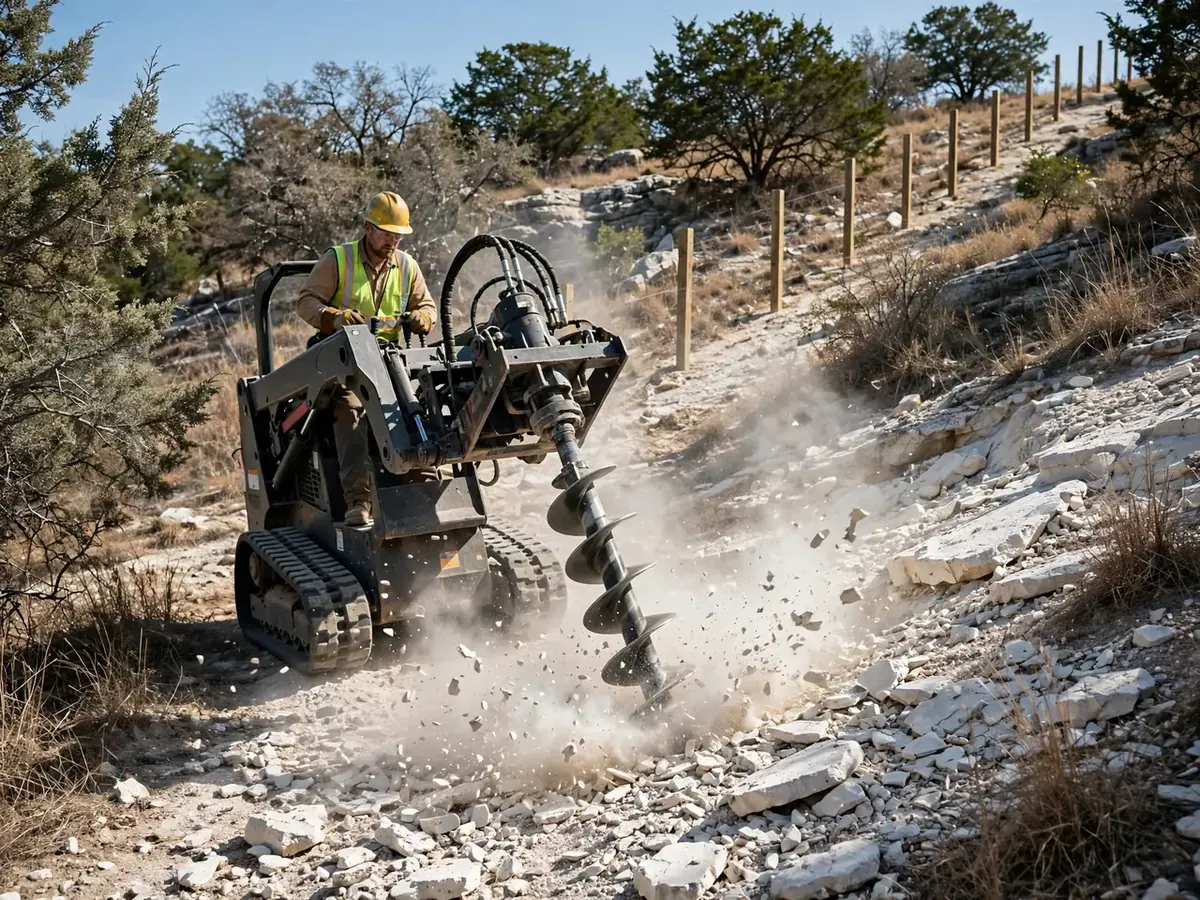
If privacy is the goal, cedar pickets on a 6-foot frame are what most White Oak homeowners choose. The details that make it last are the post type, the number of rails (three rails reduce sagging on taller fences) and whether the bottom of the pickets sits slightly above the soil so it doesn't wick up moisture.
Ranch, Pipe and Wire Fencing on Acreage
For larger properties, a fence builder will walk the line, mark corners and gates, and plan around creeks, slopes and rock before quoting. Having a survey or plat helps avoid building on the wrong side of a property line.
Setting Posts in Shifting Clay Soil
Clay soil swells when it's wet and shrinks and cracks in drought. Over a few seasons that movement lifts and tilts posts, which is why so many fences around White Oak lean. Deeper post holes, concrete footings that sit below the most active layer and a little gravel at the bottom for drainage all help.
Other Fence Situations in White Oak
Board-on-Board and Shadowbox Styles
Overlapping board-on-board pickets close gaps as wood shrinks; shadowbox alternates sides so both neighbors see a finished face.
HOA Rules, Permits and Property Lines
Cities set height and front-yard rules, HOAs add style and color rules, and a survey prevents building on the wrong side of the line.
Drilling Posts Into Limestone and Caliche
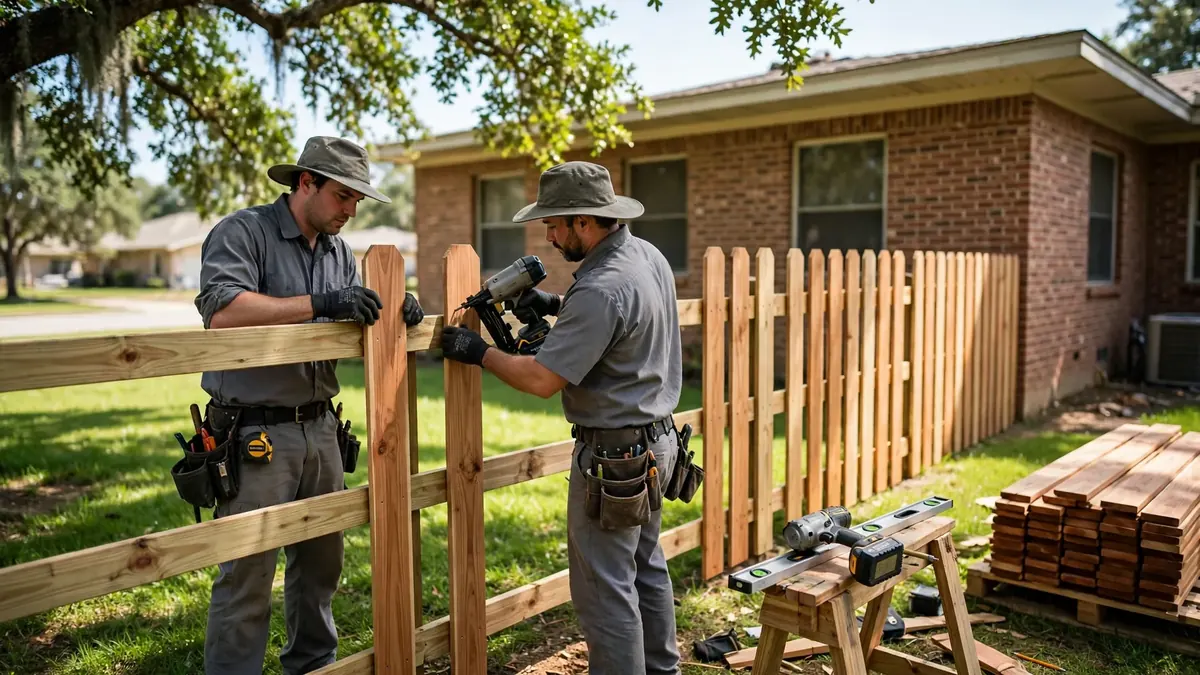
Rocky ground needs a rock auger or core drill, which changes the equipment, time and cost of setting posts.
Signs It's Time to Call in White Oak
- Planning a pool, a dog or new privacy
- HOA requires an approved style
- Old fence leaning or sagging
- Moving onto acreage that needs livestock fencing
Quick Checks Before the Call
- Find your survey or plat showing property lines
- Check HOA fence guidelines and stain colors
- Mark gates and where you need access for mowers or vehicles
- Measure the rough length of fence needed
- Call 811 to have utility lines marked before digging
Planning Fence Installation in White Oak: What to Expect
Call 877-753-1892 and describe the project, your city and your timeline. You'll be pointed to a fence builder who works in White Oak. Ask about scheduling, permits and how the job will be priced before work begins.
877-753-1892Fence Questions From White Oak Homeowners
Do I need a permit for a fence in White Oak?
Texas has no statewide fence permit, but cities set rules on height, front-yard fences and masonry, and HOAs add their own. Check with your city and HOA before building.
What fence material is best near the coast?
Aluminum, vinyl and cedar with stainless or galvanized fasteners hold up best in salt air and humidity.
What should White Oak homeowners know about fence projects?
Older neighborhoods often have fences on wood posts that are near the end of their life. Acreages around town need fences sized for pets, horses or livestock rather than just privacy.