
Local Conditions That Shape Fence Installation in Whitesboro
Ranches and horse properties are common. North Texas storms here bring hail, high winds and the occasional tornado.
Whitesboro is a Grayson County town near Lake Texoma. Hail storms are common enough in Whitesboro that many owners plan for occasional repairs. Whitesboro shares larger acreage lots with Bells, so solutions that work well there usually suit Whitesboro too.
- First-generation fences in newer neighborhoods are reaching the age where repairs give way to replacement.
- Steady wind loads a privacy fence day after day, which is why post strength matters as much as picket style.
Choosing Materials in Whitesboro
New subdivisions favor cedar privacy fences, while the many acreages rely on pipe and wire. Larger Whitesboro properties often need a mix of fence types for different areas.
Ranch, Pipe and Wire Fencing on Acreage
For larger properties, a fence builder will walk the line, mark corners and gates, and plan around creeks, slopes and rock before quoting. Wire fences on rolling ground need extra braces at the bottoms and tops of slopes to keep the wire tight.
For long runs, plan gates where animals and equipment actually move, such as near water troughs, barns and the driveway, rather than where it's convenient to build. Around Whitesboro's ranches, strong corners and gates matter most.
Before you decide: Neighbors usually care most about access during the work and which side gets the finished face, so settle both up front.
Board-on-Board and Shadowbox Styles
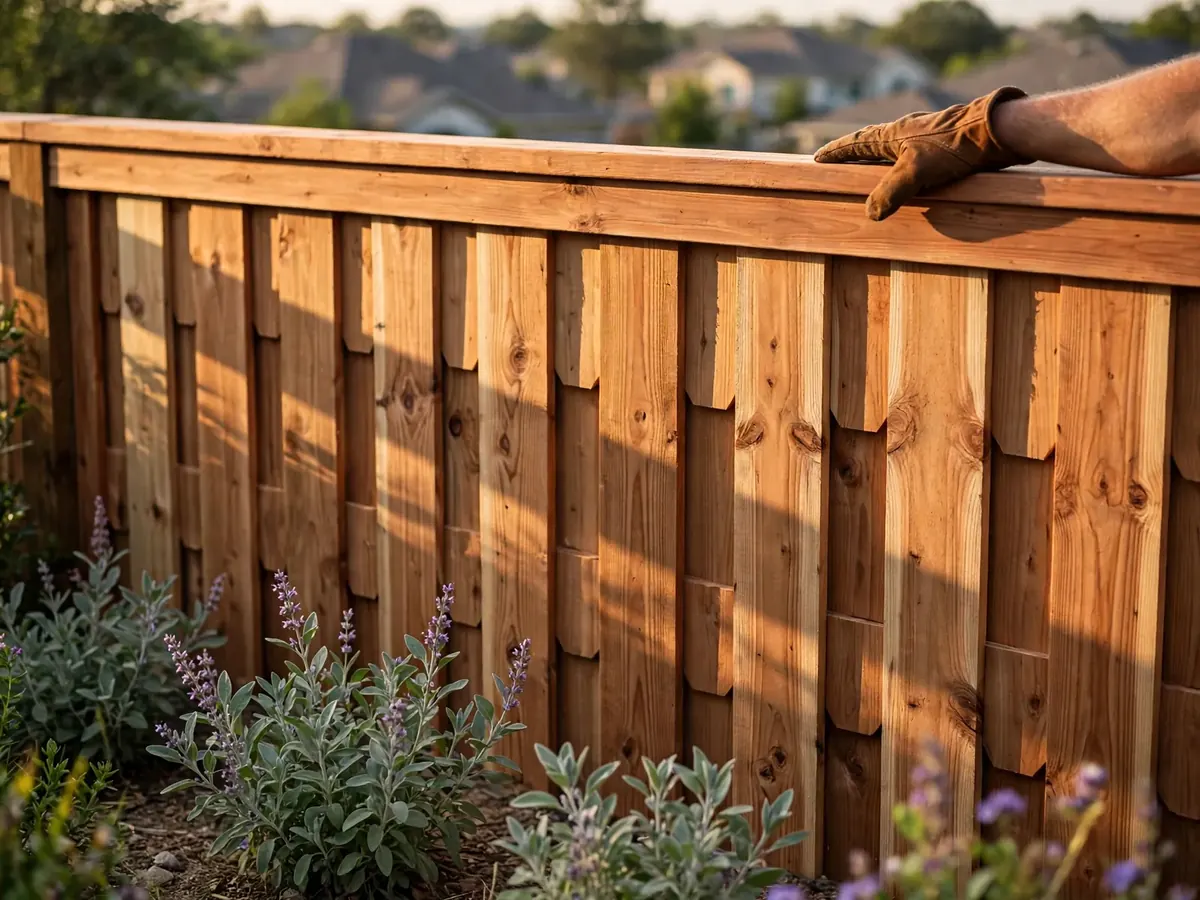
Standard side-by-side pickets shrink in Texas heat and open small gaps. With board-on-board, each picket overlaps the next by an inch or so, so even fully dried wood leaves no gap to see through.
If you plan to stain, board-on-board takes longer to coat because the overlaps hide surfaces a sprayer has to reach from two angles. In Whitesboro's newer neighborhoods, upgrades often replace the original builder materials.
Cedar Privacy Fences in Whitesboro
Six-foot cedar privacy fences are the standard backyard choice around Whitesboro. Western red cedar costs more than the more common Texas or Japanese cedar but holds its shape better; ask which species you're getting.
A top cap and trim board add a finished look and also shed rain off the end grain of the pickets, which is where cedar takes on water first. Whitesboro's clay is the reason so many local fences lean; building deeper avoids joining them.
One practical point: DIY can save labor, but renting augers, hauling concrete and disposing of the old fence add up, so compare honestly.
Steel Posts vs. Wood Posts
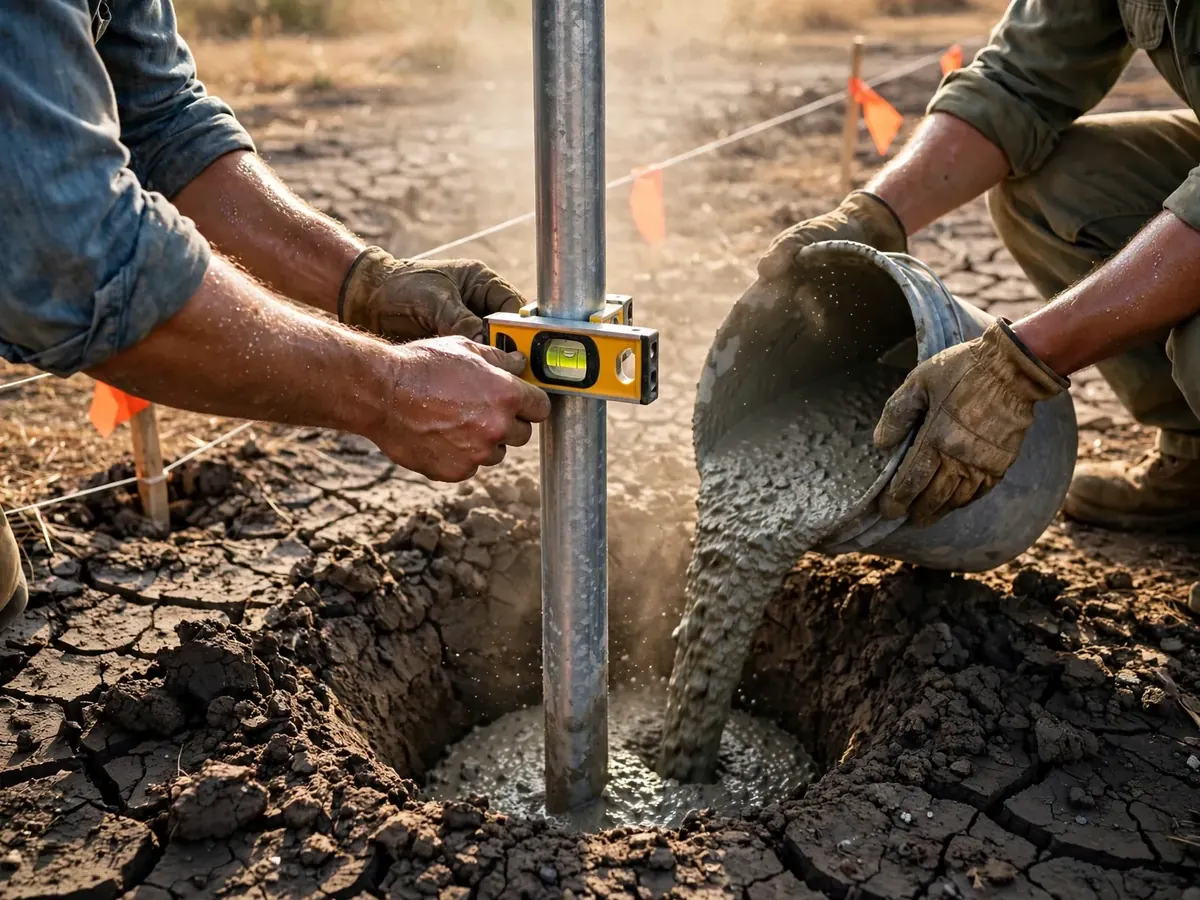
Galvanized steel posts set in concrete, with wood rails and pickets attached by brackets, are now the common upgrade and usually outlast the wood they hold up. Steel posts connect to wood rails with brackets or lag screws, and many builders place the posts on the inside so they're hidden from the street.
If the budget is tight, some homeowners use steel only at corners, ends and gate openings, where the loads are highest, and wood for the line posts in between. Wind in Whitesboro pushes hard on solid structures, so post spacing and depth deserve extra thought.
Building a Fence That Stands Up to Wind
Leaving a small gap at the bottom of the fence lets some wind pass and keeps pickets dry. Shadowbox or gapped designs let some wind pass through.
Closer post spacing, deeper footings and steel posts each reduce how much any single post has to resist in a gust.
Worth knowing before you call: Good fence builders explain how they'll set posts and handle your soil without being asked; vague answers are a warning sign.
Other Fence Situations in Whitesboro
Pet and Pool Fencing
Dogs need fences without gaps at the bottom or footholds to climb; pools need barriers with self-closing gates.
Horizontal and Modern Fence Designs
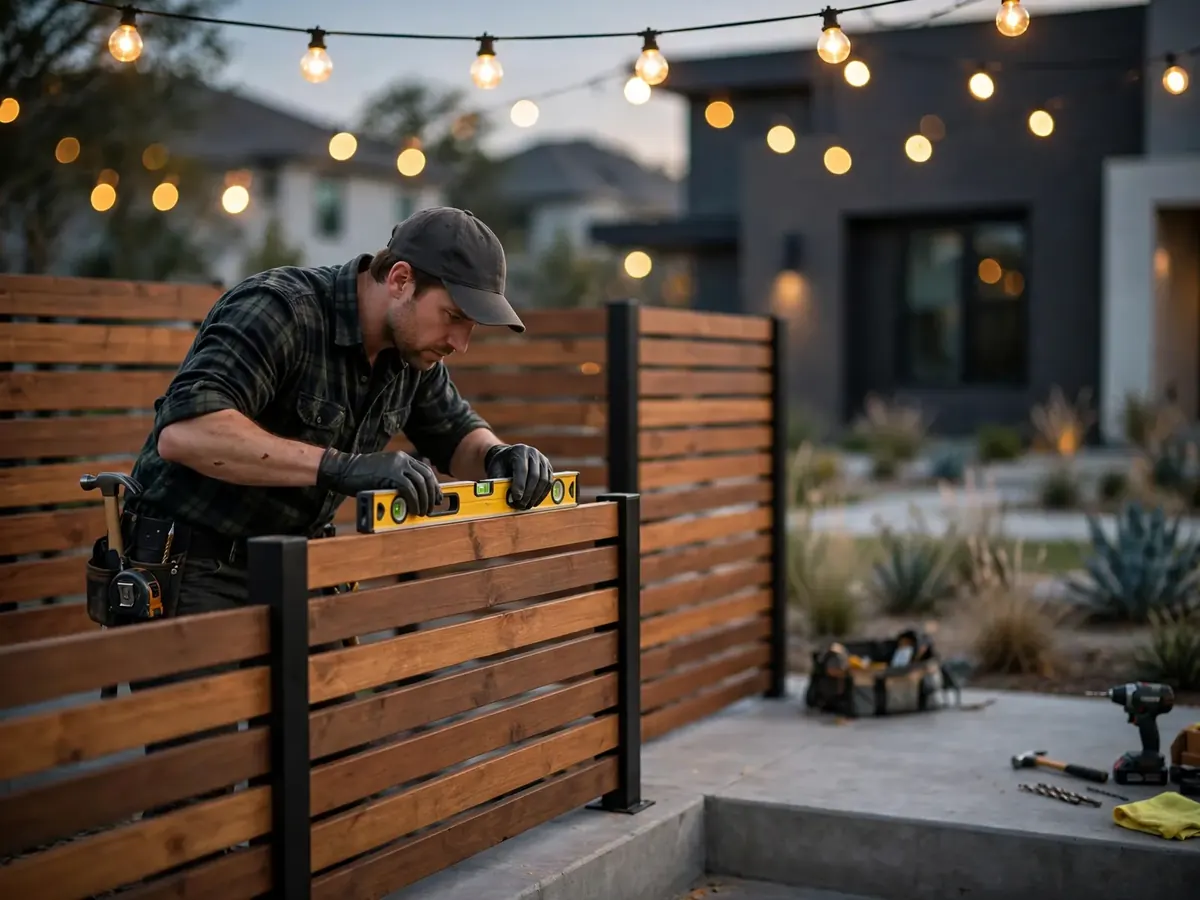
Because the boards span between posts, a 6-foot post spacing is common for horizontal fences instead of the usual 8 feet.
Setting Posts in Shifting Clay Soil
Fences on clay that are watered evenly through droughts tend to move less than those left to dry out.
Common Reasons Whitesboro Homeowners Call
Whitesboro homeowners usually reach out when one of these shows up:
- Moving onto acreage that needs livestock fencing
- Planning a pool, a dog or new privacy
- Neighbors replacing a shared fence
Before You Call
- Check HOA fence guidelines and stain colors
- Measure the rough length of fence needed
- Mark gates and where you need access for mowers or vehicles
- Note any corner or brace posts that already exist and their condition
- Walk the property line or gate location and note slopes, creeks and rock outcrops
Fence Installation in Whitesboro: Talk to a Local Fence Builder
Dial 877-753-1892 to talk to a fence builder who works in Whitesboro. Have your questions ready, from permits to materials, and take notes. Pick up the phone today and get your fence project on the calendar.
877-753-1892Fence Questions From Whitesboro Homeowners
Are steel posts worth it?
For most Texas yards, yes. Galvanized steel doesn't rot, termites ignore it and it resists the soil movement that pushes wood posts out of line. Ask about this on your first call, since conditions vary across Whitesboro.
What makes a fence last longer in Whitesboro?
A fence on steel posts, kept stained, often outlives two fences built on wood posts. Lifespan comes down to water: keep wood dry at the ground line and the fence lasts.
What should Whitesboro homeowners know about fence projects?
Larger Whitesboro properties often need a mix of fence types for different areas. Grayson County towns near Lake Texoma sit on the Oklahoma border and are growing quickly as the Dallas suburbs push north.