
Fence Repair in Friendswood: Local Conditions
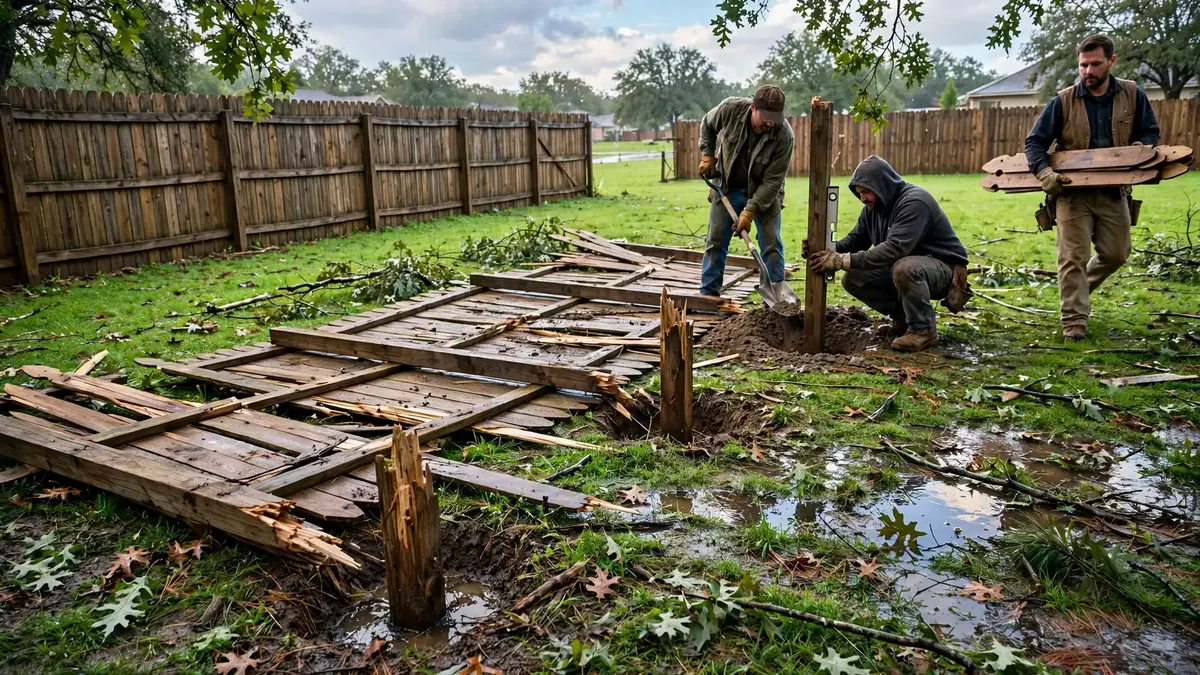
Hurricane Ike in 2008 and Hurricane Harvey in 2017 caused widespread wind and flood damage here, and Hurricane Beryl hit the area in 2024. These towns sit along Galveston Bay and the Brazoria County coast, where salt air corrodes fasteners and steel faster than inland.
- Humidity keeps wood damp longer, so rot at the base of posts is the most common failure.
- Low ground that stays wet after storms speeds up rot at the base of wood posts.
Materials That Suit Friendswood
Cedar fences with stainless or hot-dip galvanized fasteners, aluminum instead of steel for ornamental fencing, and vinyl where salt air is heavy.
Rotted Post Replacement
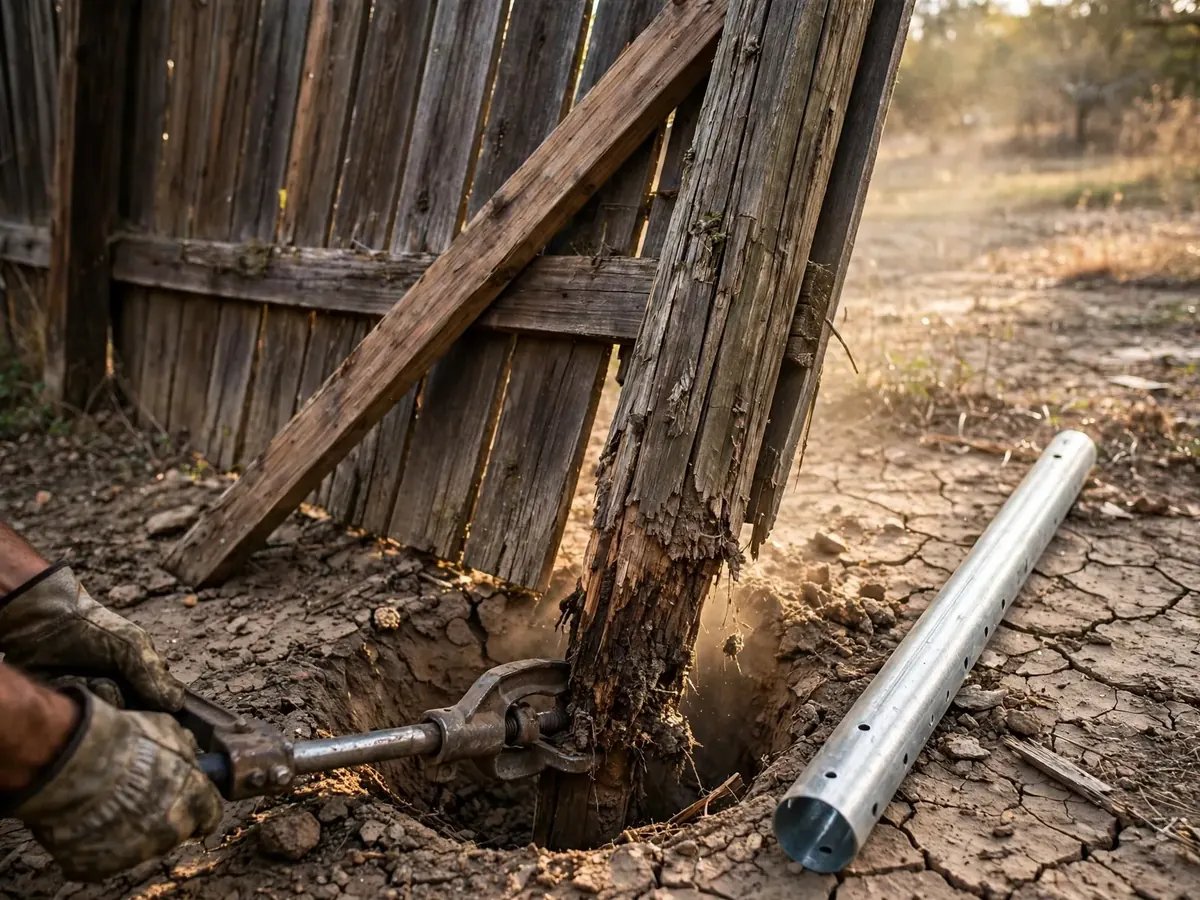
Push on the fence near each post. If it moves more at the base than at the top, the post is likely rotted at ground level. A post can often be replaced without removing the panels: the old post comes out, a new one goes in with concrete, and the rails are reattached.
Leaning Fences and Shifting Posts
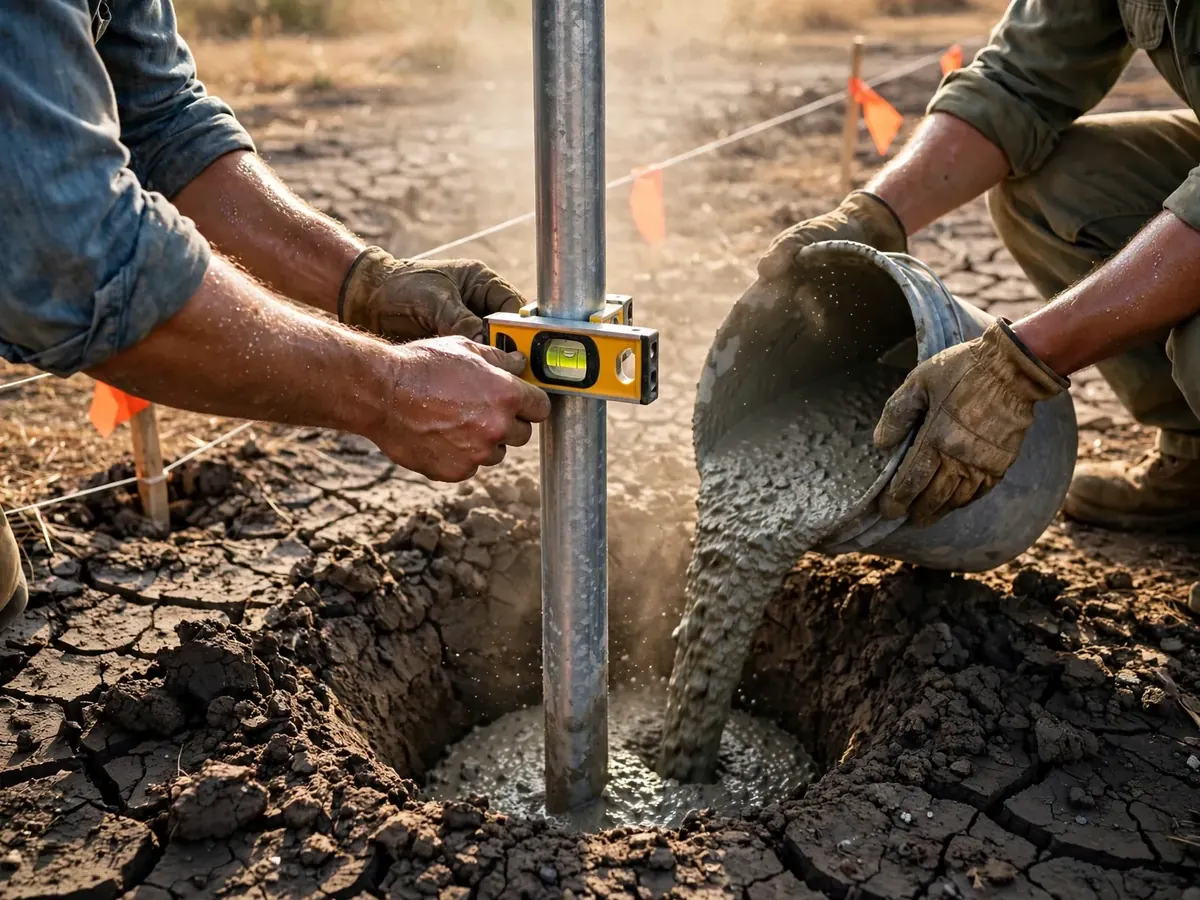
In shifting clay, posts can lean even when they're not rotted. If a section around Friendswood leans more every year, ask about deeper footings or steel posts set below the most active soil layer.
Storm-Damaged Fences in Friendswood
After a strong storm, look at where the fence failed. Posts snapped at ground level usually mean rot; posts pulled out with the concrete mean shallow footings or saturated soil. Replacing only the broken posts with steel posts can make the repaired section stronger than the rest.
Fence Damage From Trees and Roots
Big trees near a fence line are beautiful but hard on fences. Roots lift posts and footings, and storms drop limbs onto panels. A fence repair pro can reroute posts around roots and rebuild crushed sections.
Repair or Replace?
The answer depends on the posts. If most are solid and only a few sections are damaged, repair makes sense. If half the posts are rotten, pickets are gray and brittle, and the fence leans everywhere, replacement usually costs less over time.
Broken Pickets, Rails and Sagging Sections
Loose pickets usually come from nails that rusted or backed out as the wood dried. Refastening with exterior screws and replacing cracked boards keeps the fence tight without a full rebuild.
When to Pick Up the Phone
- Sections leaning or swaying
- Storm or tree damage
- Sagging between posts
- Broken or missing pickets
Before You Call
- Note how many posts and feet of fence are affected
- Find your survey if posts must be moved
- Check whether pets can get out
- Photograph damaged sections
Getting Fence Repair in Friendswood Started
Have the details from the checklist above ready, then call 877-753-1892. A fence repair pro serving Friendswood can tell you what the job involves, what affects the cost and whether anything needs attention right away.
877-753-1892Fence Questions From Friendswood Homeowners
Why does my fence keep leaning?
Rot at the base of wood posts and shifting clay soil are the usual causes. Deeper footings or steel posts fix it.
Can one rotted post be replaced without replacing the fence?
Usually. The panels are detached, the old post and concrete are removed, a new post is set and the rails are reattached.
What should Friendswood homeowners know about fence projects?
Hurricane and tropical storm winds flatten weak fences, so post depth and spacing are the first line of defense. Salt air near the coast corrodes ordinary nails and steel, so stainless or hot-dip galvanized hardware is worth it.