
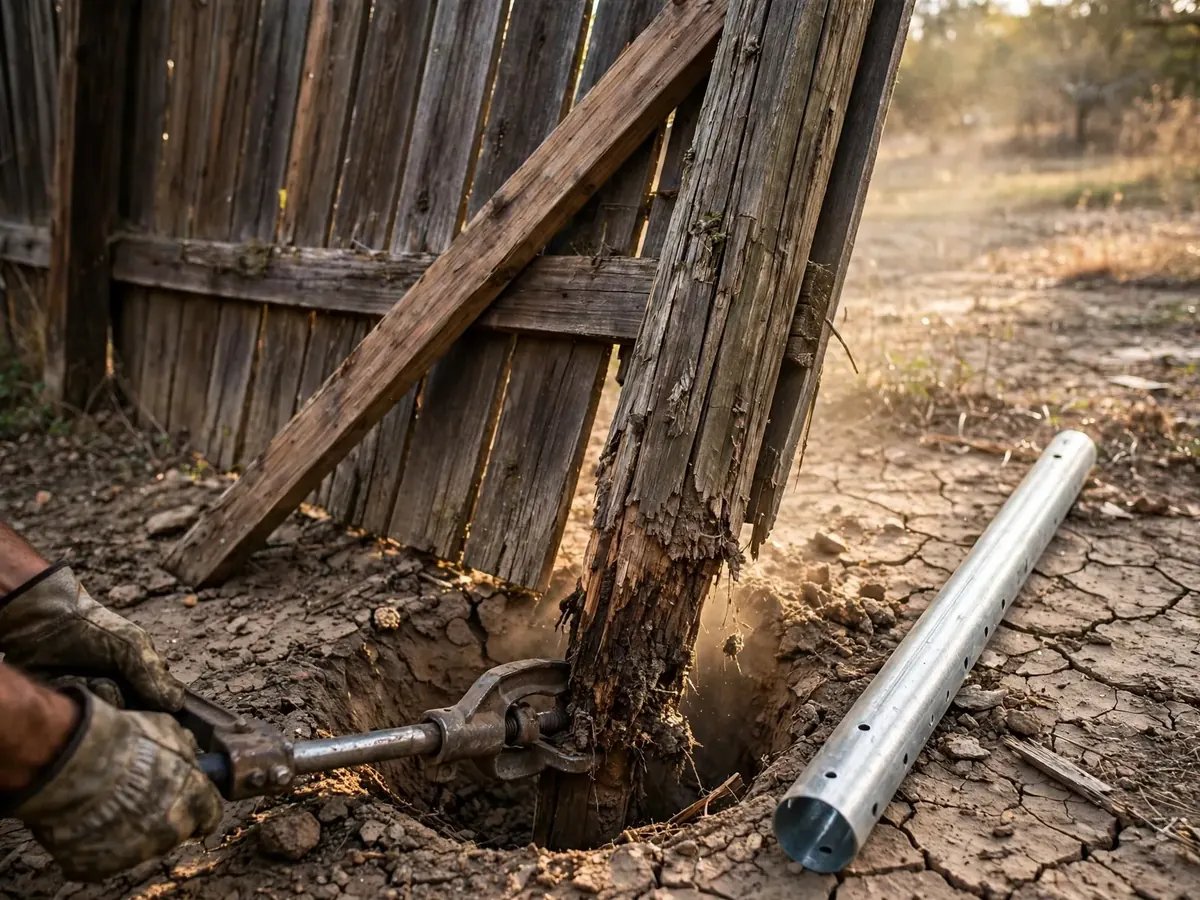
Fence Repair in Grand Prairie: Local Conditions
Much of Dallas County sits on Blackland Prairie clay that swells when wet and shrinks in drought, which slowly pushes fence posts and deck footings out of line. North Texas is one of the most hail-prone metro areas in the country, and spring storms regularly bring damaging straight-line winds. Older neighborhoods here mix 1950s–1970s ranch homes with alley-access lots, where the back fence often runs along a shared alley.
- Older neighborhoods often have fences on wood posts that are near the end of their life.
- Cities set rules on front-yard fence height, corner-lot sight lines and masonry walls, so check before building.
What Holds Up Around Grand Prairie
Board-on-board cedar on steel posts is the default backyard fence here; ornamental iron or aluminum shows up in front yards and around pools, and masonry columns are common in newer subdivisions.
Repair or Replace?
Ask the fence repair pro to check a few posts at the ground line and give you an honest read on how much life the fence has left.
Broken Pickets, Rails and Sagging Sections
A sagging section between posts usually has a broken or undersized rail. Adding a third rail or a center support stops the sag.
Storm-Damaged Fences in Grand Prairie
Take photos of storm damage before cleanup if you plan to file an insurance claim; many homeowner policies cover fences damaged by wind or falling trees. A fence repair pro can document what failed and why.
Leaning Fences and Shifting Posts
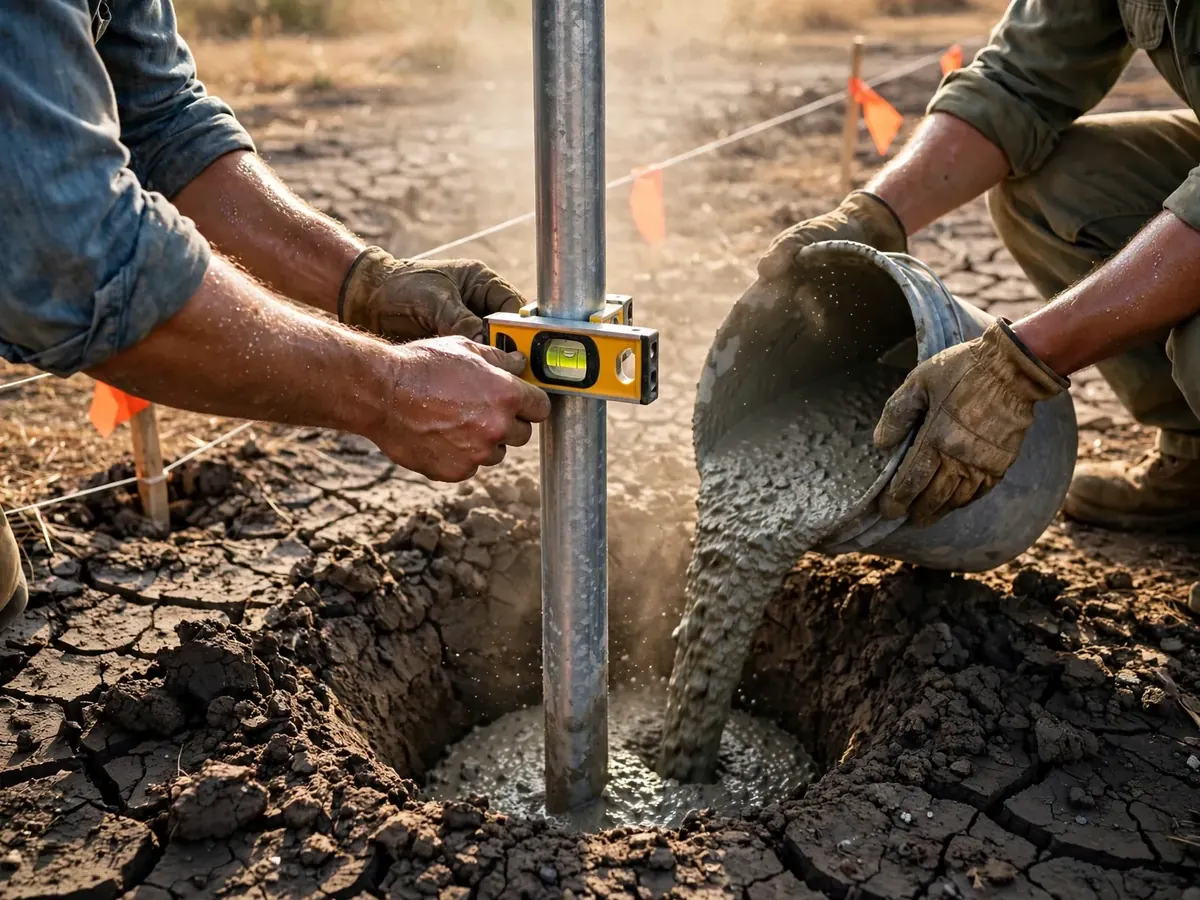
A fence that leans a little more each summer is telling you something about the ground underneath. Resetting the worst posts deeper, or switching them to steel, usually stops the drift without replacing the whole run.
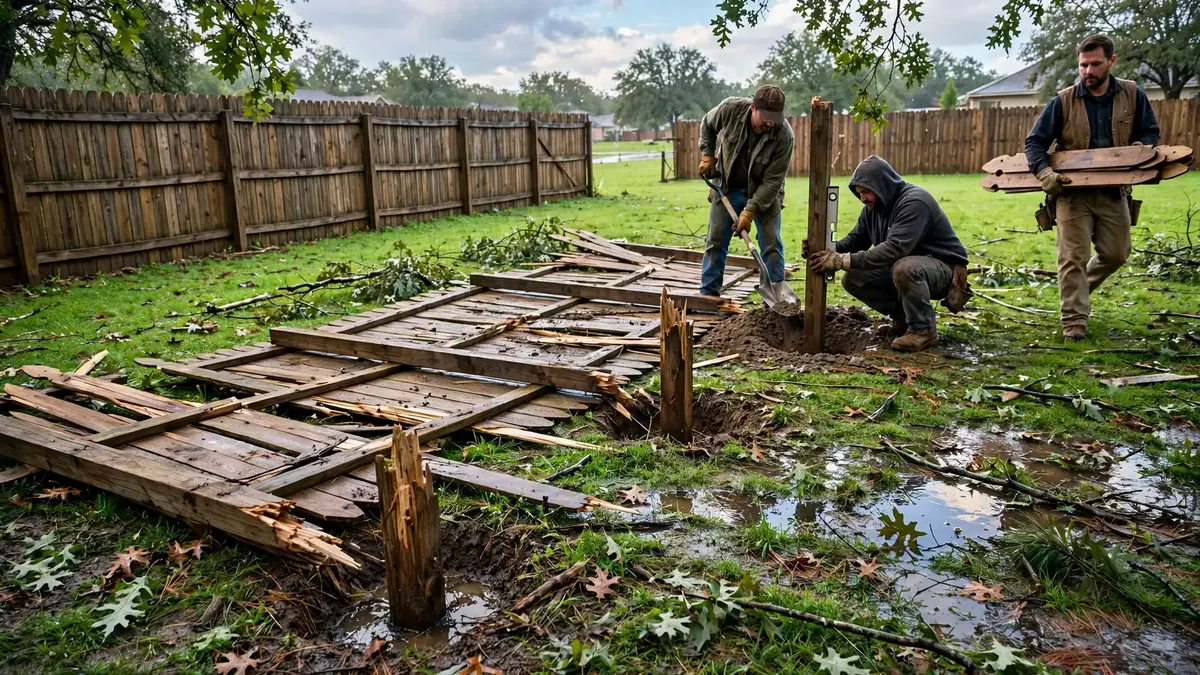
Fence Damage From Trees and Roots
Big trees near a fence line are beautiful but hard on fences. Roots lift posts and footings, and storms drop limbs onto panels. A fence repair pro can reroute posts around roots and rebuild crushed sections.
Rotted Post Replacement
Push on the fence near each post. If it moves more at the base than at the top, the post is likely rotted at ground level. A post can often be replaced without removing the panels: the old post comes out, a new one goes in with concrete, and the rails are reattached.
When to Pick Up the Phone
- Storm or tree damage
- Sections leaning or swaying
- Sagging between posts
- Broken or missing pickets
Before You Call
- Find your survey if posts must be moved
- Photograph damaged sections
- Check whether pets can get out
- Note how many posts and feet of fence are affected
Fence Repair in Grand Prairie: Talk to a Local Fence Repair Pro
One call to 877-753-1892 gets the conversation started with a fence repair pro who works around Grand Prairie. Bring your measurements, photos and any HOA requirements.
877-753-1892Fence Questions From Grand Prairie Homeowners
Can one rotted post be replaced without replacing the fence?
Usually. The panels are detached, the old post and concrete are removed, a new post is set and the rails are reattached.
Is storm damage to my fence covered by insurance in Grand Prairie?
Many homeowner policies cover fences damaged by wind or falling trees. Check your policy and document the damage.
What should Grand Prairie homeowners know about fence projects?
HOA guidelines often set fence height, style, stain color and which side faces out. Strong winds push on solid privacy fences, so closer post spacing and steel posts help them stay upright.