
Local Conditions That Shape Fence Installation in Grand Prairie
Grand Prairie stretches across Dallas, Tarrant and Ellis counties and borders Joe Pool Lake. Older neighborhoods here mix 1950s–1970s ranch homes with alley-access lots, where the back fence often runs along a shared alley.
Older neighborhoods in the north contrast with new subdivisions in the south. Hail storms are common enough in Grand Prairie that many owners plan for occasional repairs. Shifting clay is a common thread between Grand Prairie and Dallas.
- HOA guidelines often set fence height, style, stain color and which side faces out.
- City ordinances cover fence height, front-yard placement and sight lines at intersections.
Choosing Materials in Grand Prairie
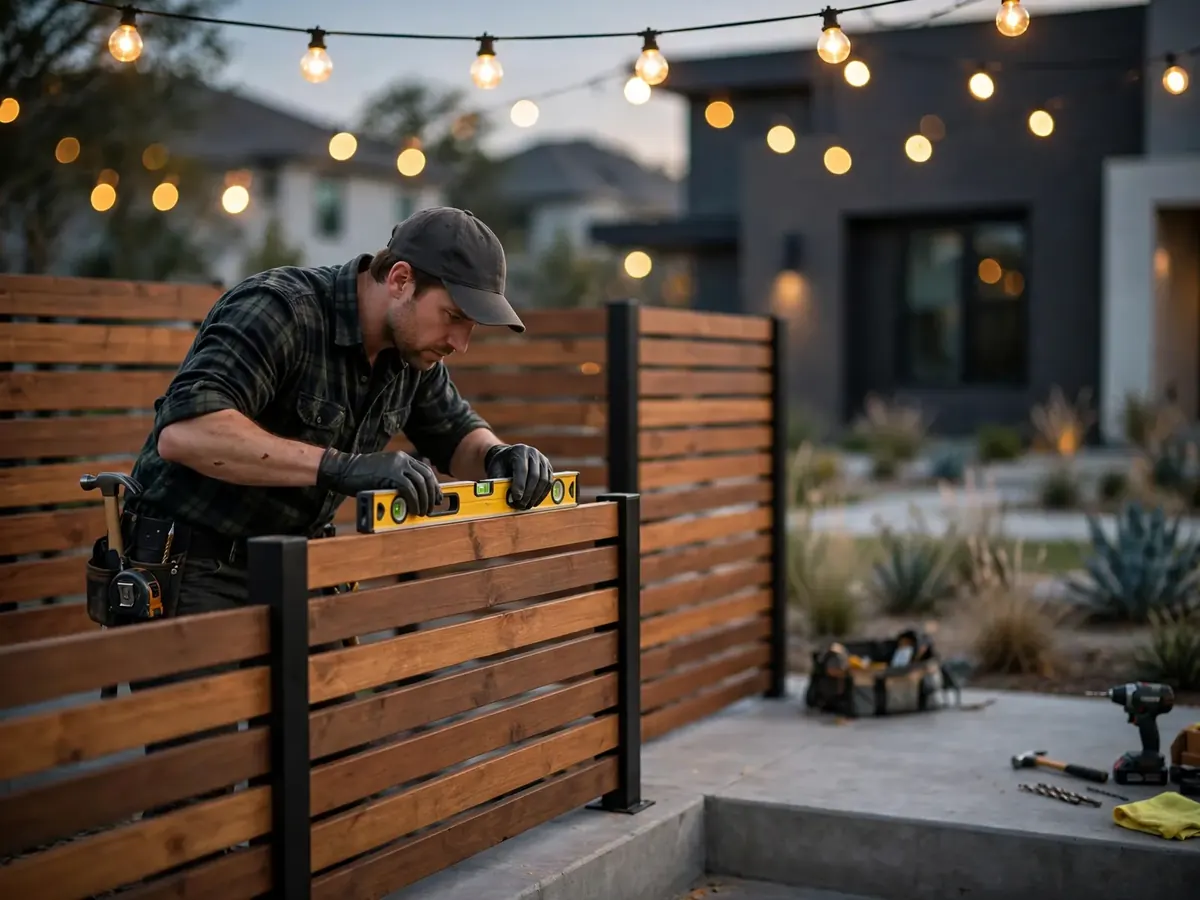
Most backyards here get board-on-board cedar, increasingly on steel posts, while front yards and pools lean toward ornamental aluminum or iron with masonry columns in newer neighborhoods. Wind in Grand Prairie pushes hard on solid structures, so post spacing and depth deserve extra thought.
Cedar Privacy Fences in Grand Prairie
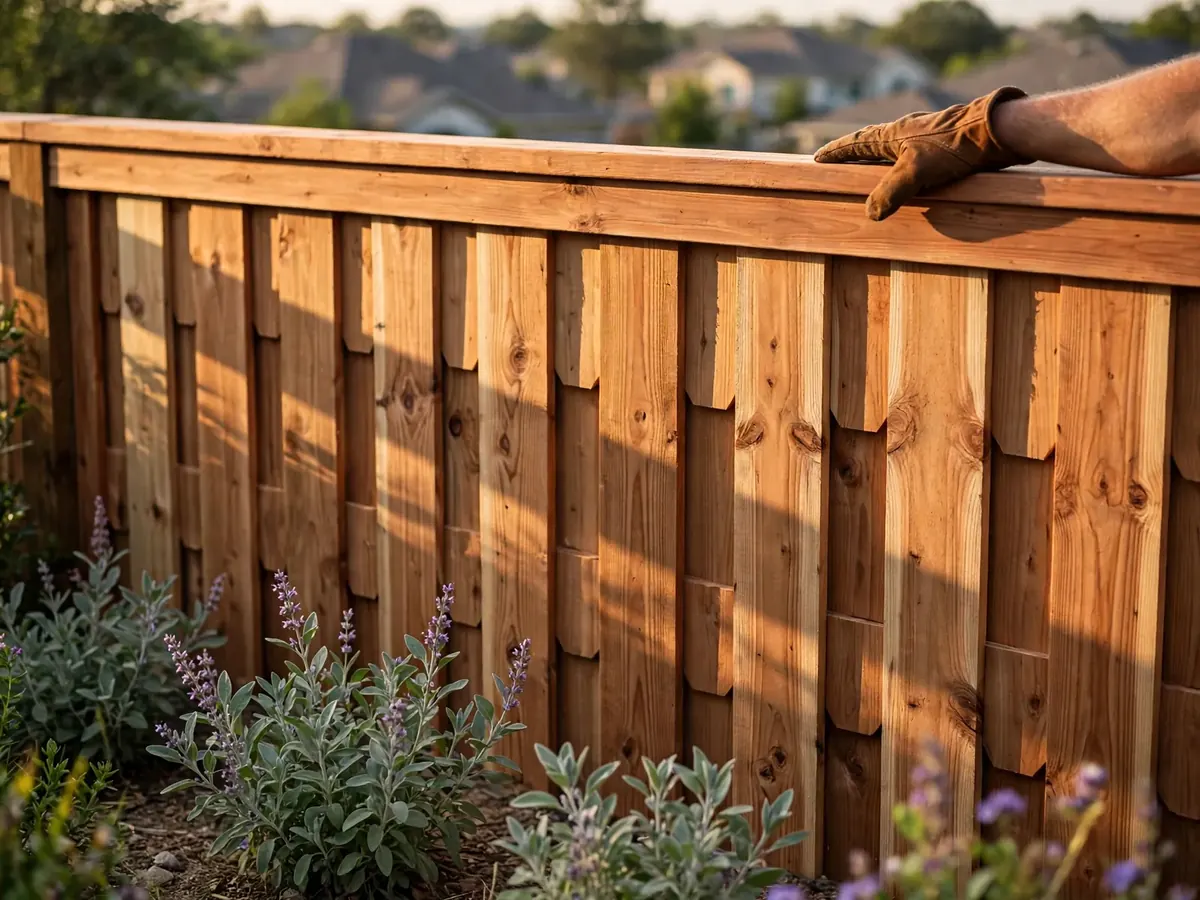
Cedar's natural oils slow rot and insects, it moves less than pine in the heat, and it takes a semi-transparent stain well. Pre-stained or kiln-dried cedar can be stained sooner after installation than green lumber, which needs time to dry first.
If you're comparing estimates, check whether both quote the same picket thickness and rail count; those two details explain many price differences. Before finalizing plans, confirm Grand Prairie's requirements for height and placement.
Thinking about doing it yourself? Pickets are easy; setting posts plumb and deep enough to survive the spring storm season is the part most DIY fences get wrong.
Steel Posts vs. Wood Posts
Concrete around a post should be crowned so rain sheds away instead of pooling against the post. Galvanized steel posts set in concrete, with wood rails and pickets attached by brackets, are now the common upgrade and usually outlast the wood they hold up.
Steel posts can be painted to match the stain or hidden behind a wood wrap if you don't want them to show. In Grand Prairie's clay, a fence that looks perfect on day one can drift out of line within a few seasons if the footings are shallow.
Wrought Iron and Aluminum Fences
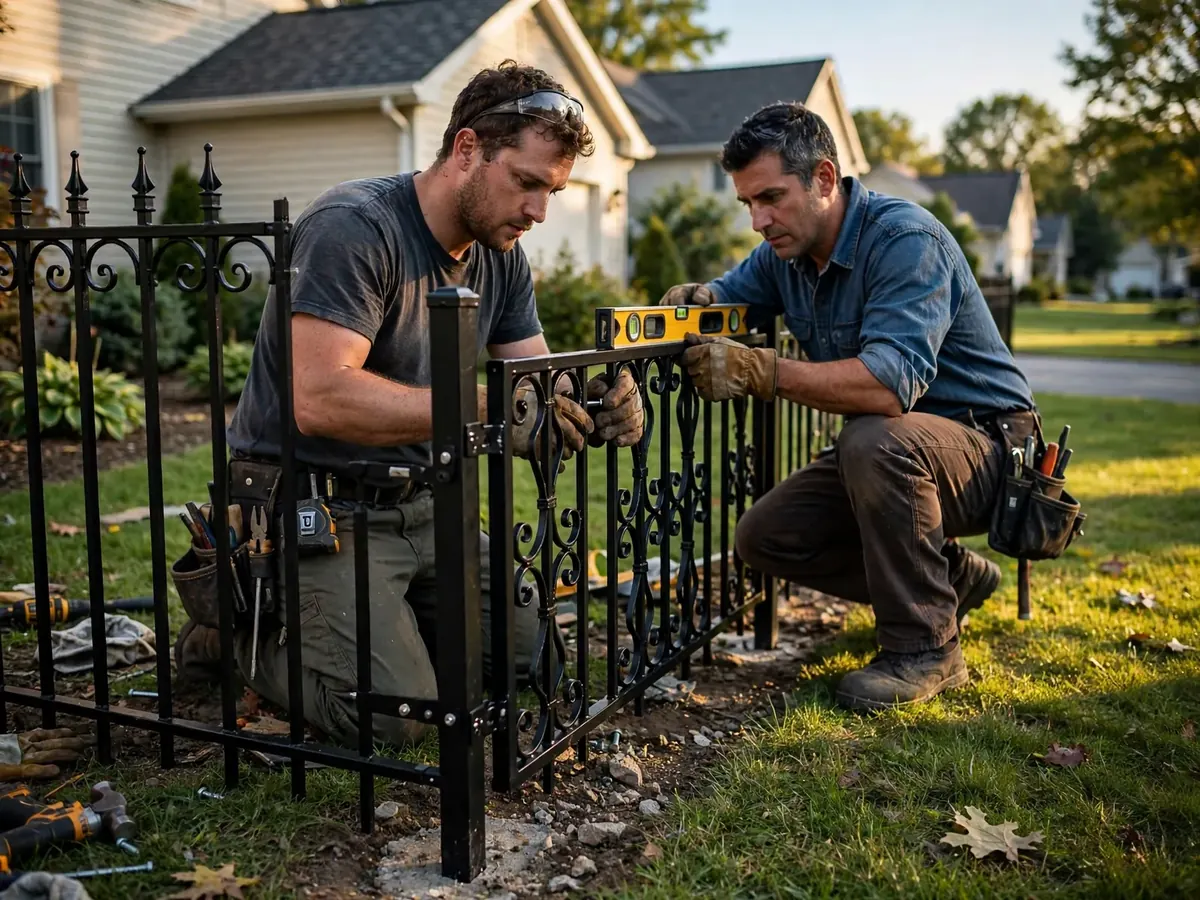
Ornamental panels are typically sold in 6- or 8-foot sections, so the layout is planned around those widths. On sloped lots, panels are either racked to follow the grade or stepped. Ask which the builder recommends for your yard.
Picket spacing matters if you have small dogs or children: many ornamental styles come with tighter spacing or a pressed-spear top for that reason. In HOA communities around Grand Prairie, approval comes before scheduling a crew.
Worried a new fence will cost more than it's worth? Ask for an itemized estimate that separates posts, panels, gates and haul-off, so you can see where the money goes and trim the parts that matter least to you.
Building a Fence That Stands Up to Wind
Leaving a small gap at the bottom of the fence lets some wind pass and keeps pickets dry. Steel posts at closer spacing are the most reliable upgrade for windy sites.
Bracing corners and ends is especially important on long, solid runs exposed to open fields. In windy Grand Prairie, designs that let some air through can last longer.
Pet and Pool Fencing
Pool fences usually need a specific height, limited gaps between pickets and a gate that closes and latches on its own. Pool barrier rules often specify minimum height, maximum gaps and how gates open and latch.
Dogs that dig can be stopped with a buried wire apron or a concrete mow strip along the base of the fence.
One practical point: Good fence builders explain how they'll set posts and handle your soil without being asked; vague answers are a warning sign.
Board-on-Board and Shadowbox Styles
Standard side-by-side pickets shrink in Texas heat and open small gaps. Check your HOA's fence guidelines before choosing a style; they often list the approved stain color too.
On windy lots, shadowbox gives a little relief to the posts while still blocking most views.
Other Fence Situations in Grand Prairie
HOA Rules, Permits and Property Lines
A survey or plat shows where the property line runs; many homeowners set the fence a few inches inside it to avoid disputes.
Setting Posts in Shifting Clay Soil
Builders who know clay talk about depth and drainage before they talk about pickets; that's a good sign.
Ranch, Pipe and Wire Fencing on Acreage
For long runs, plan gates where animals and equipment actually move, such as near water troughs, barns and the driveway, rather than where it's convenient to build.
Common Reasons Grand Prairie Homeowners Call
Around Grand Prairie, a call usually follows one of these:
- Old fence leaning or sagging
- Neighbors replacing a shared fence
- Moving onto acreage that needs livestock fencing
What to Have Ready
- Check HOA fence guidelines and stain colors
- Call 811 to have utility lines marked before digging
- Measure the rough length of fence needed
- Note your HOA's approved colors and styles so the fence builder can quote the right materials
- Check whether old footings or posts will need to be removed
Getting Fence Installation in Grand Prairie Started
Calling 877-753-1892 puts you in touch with a fence builder who knows Grand Prairie. Expect questions about length, height, access and soil; the more you can answer, the more useful the conversation. Don't wait for the next storm; call today and book your fence project.
877-753-1892Fence Questions From Grand Prairie Homeowners
Do I need a permit for a fence in Grand Prairie?
Texas has no statewide fence permit, but cities set rules on height, front-yard fences and masonry, and HOAs add their own. Check with your city and HOA before building. For a Grand Prairie home, it's worth confirming this before work starts.
Do I need to talk to my neighbor before replacing a shared fence in Grand Prairie?
If a neighbor wants to split the cost, get the agreement in writing, even an email, before the old fence comes down. If the fence is on the property line, talk to your neighbor before work starts about access and debris.
What should Grand Prairie homeowners know about fence projects?
Grand Prairie's older homes often reveal surprises, like buried footings or old posts, once work begins. Much of Dallas County sits on Blackland Prairie clay that swells when wet and shrinks in drought, which slowly pushes fence posts and deck footings out of line.