
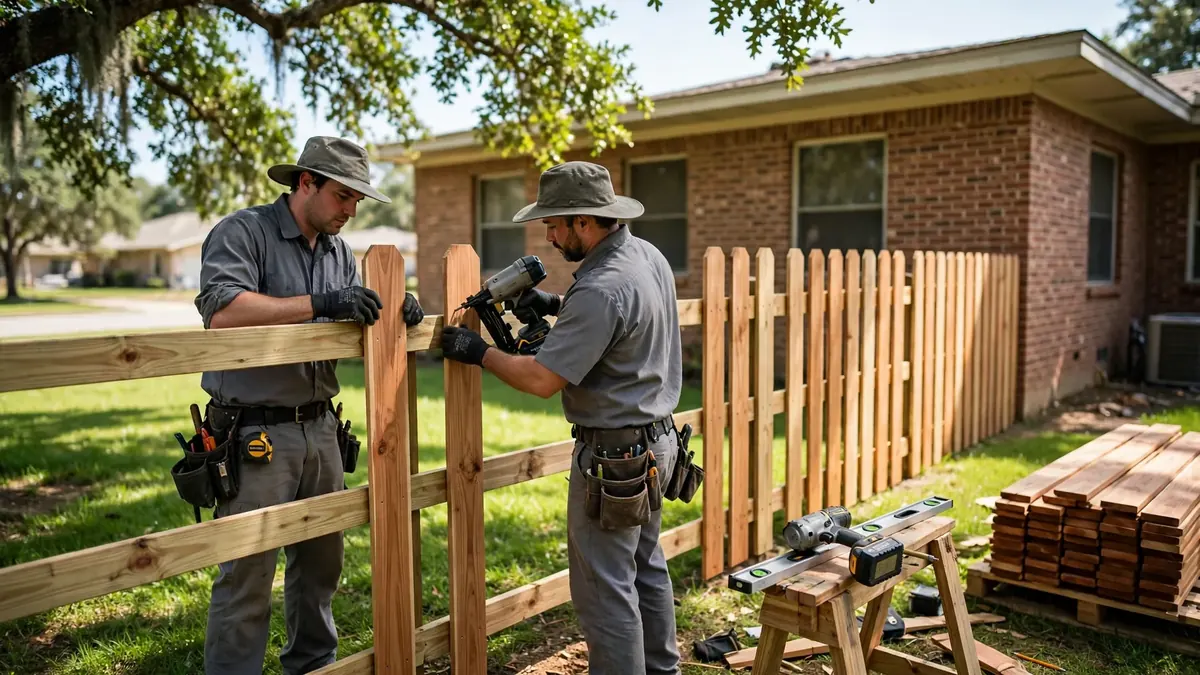
What to Know About Fence Staining in Grand Prairie
Older neighborhoods here mix 1950s–1970s ranch homes with alley-access lots, where the back fence often runs along a shared alley. Much of Dallas County sits on Blackland Prairie clay that swells when wet and shrinks in drought, which slowly pushes fence posts and deck footings out of line. North Texas is one of the most hail-prone metro areas in the country, and spring storms regularly bring damaging straight-line winds.
- Cities set rules on front-yard fence height, corner-lot sight lines and masonry walls, so check before building.
- HOA guidelines often set fence height, style, stain color and which side faces out.
Choosing Materials in Grand Prairie
Board-on-board cedar on steel posts is the default backyard fence here; ornamental iron or aluminum shows up in front yards and around pools, and masonry columns are common in newer subdivisions.
Spraying vs. Brushing
Calm, mild days are best for staining. Hot sun dries the stain too fast to soak in, and wind carries overspray onto cars and neighboring houses.
Why Texas Fences Gray So Fast
In Grand Prairie, a new fence usually needs to dry out for a few weeks to a couple of months before staining. After that, the first coat goes on early, and maintenance coats every few years keep it protected.
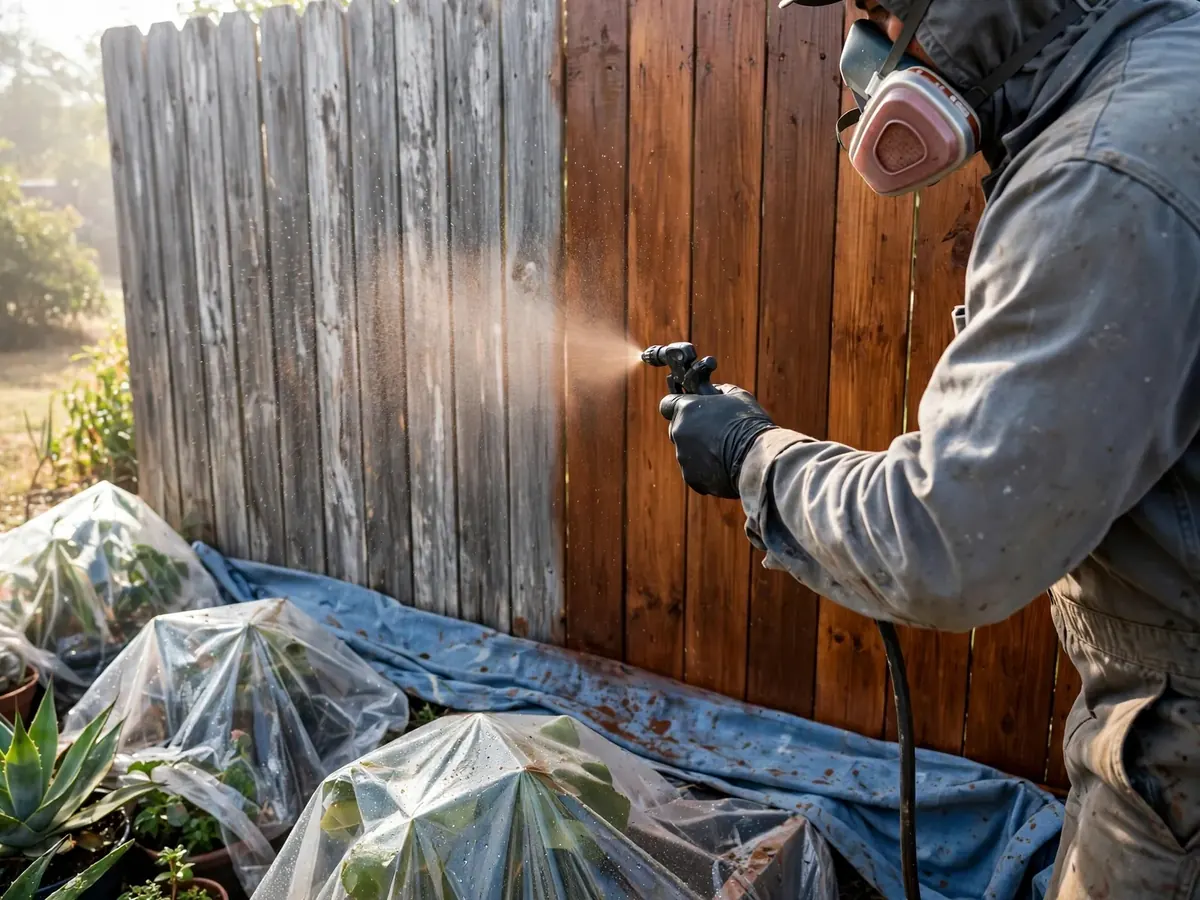
Cleaning and Prep Before Stain
Stain sticks to clean, dry wood. Gray surface fibers, mildew and pollen need to come off first, usually with a wood cleaner and a careful pressure wash. Too much pressure raises the grain and gouges soft cedar.
Choosing a Stain Color and Type
Test a stain on a hidden section first. The same color looks different on new cedar, weathered cedar and pine, and the HOA's sample may not match your fence.
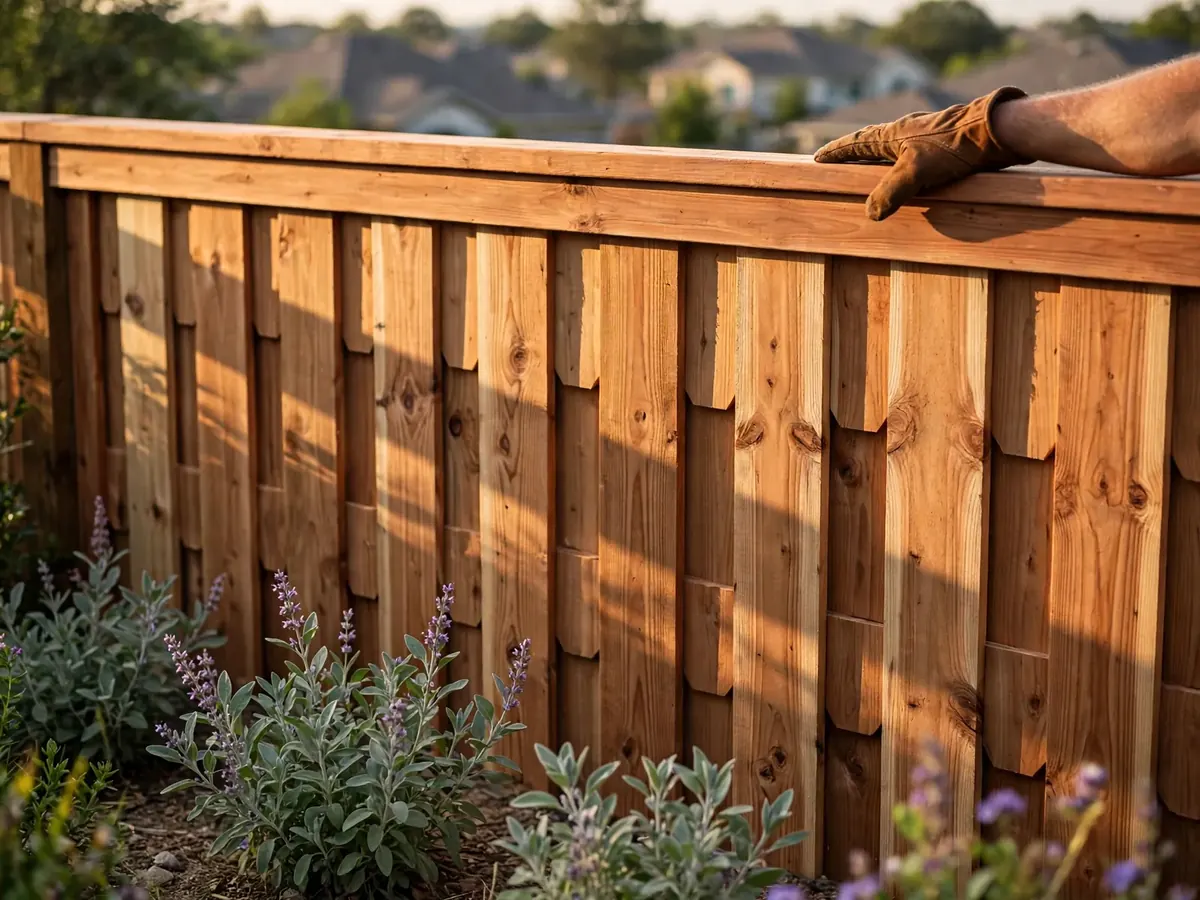
When to Restain
When water stops beading on the wood and the color fades, it's time for another coat. In full sun, that may be every two years; in shade, longer. Regular maintenance coats are faster and cheaper than restoring a fence that has gone fully gray.
Common Reasons Grand Prairie Homeowners Call
- Gray, faded wood
- Mildew or black spots
- HOA notice about fence color
- Water soaking in instead of beading
What to Have Ready
- Trim plants back from the fence
- Note whether you want one or both sides stained
- Check HOA-approved stain colors
- Plan to move cars and outdoor furniture
Planning Fence Staining in Grand Prairie: What to Expect
Call 877-753-1892 and describe the project, your city and your timeline. You'll be pointed to a fence staining pro who works in Grand Prairie. Ask about scheduling, permits and how the job will be priced before work begins.
877-753-1892Fence Stain Questions From Grand Prairie Homeowners
How soon can a new fence be stained in Grand Prairie?
Usually after the wood has dried out for a few weeks to a couple of months, depending on the lumber and weather.
How often should a fence be restained?
In Texas sun, many fences need a maintenance coat every two to three years.
What should Grand Prairie homeowners know about fence stain projects?
Older neighborhoods often have fences on wood posts that are near the end of their life. Occasional hard freezes, like February 2021, can crack concrete footings that were poured without drainage.