
What to Know About Fence Staining in College Station
College Station is home to Texas A&M University, with many rental homes near campus. Rental properties and family neighborhoods sit on clay.
College Station is a Brazos County city. Hail storms are common enough in College Station that many owners plan for occasional repairs. Shifting clay is a common thread between College Station and Killeen.
- Local codes can affect how tall the fence can be and where it can sit, especially near streets.
- Older neighborhoods often have fences on wood posts that are near the end of their life.
Choosing Materials in College Station
Towns favor cedar privacy fencing, acreages use wire and pipe, and newer subdivisions often add ornamental iron. College Station has its own rules on height, setbacks and permits, so check before building.
Cleaning and Prep Before Stain
A wood cleaner or brightener removes gray fibers and restores color before staining. Too much pressure raises the grain and gouges soft cedar.
Wood needs a few dry days after washing before stain goes on; trapped moisture causes blotching and peeling. In established College Station neighborhoods, matching the character of the street matters.
One practical point: DIY makes the most sense for short runs and simple designs.
Spraying vs. Brushing
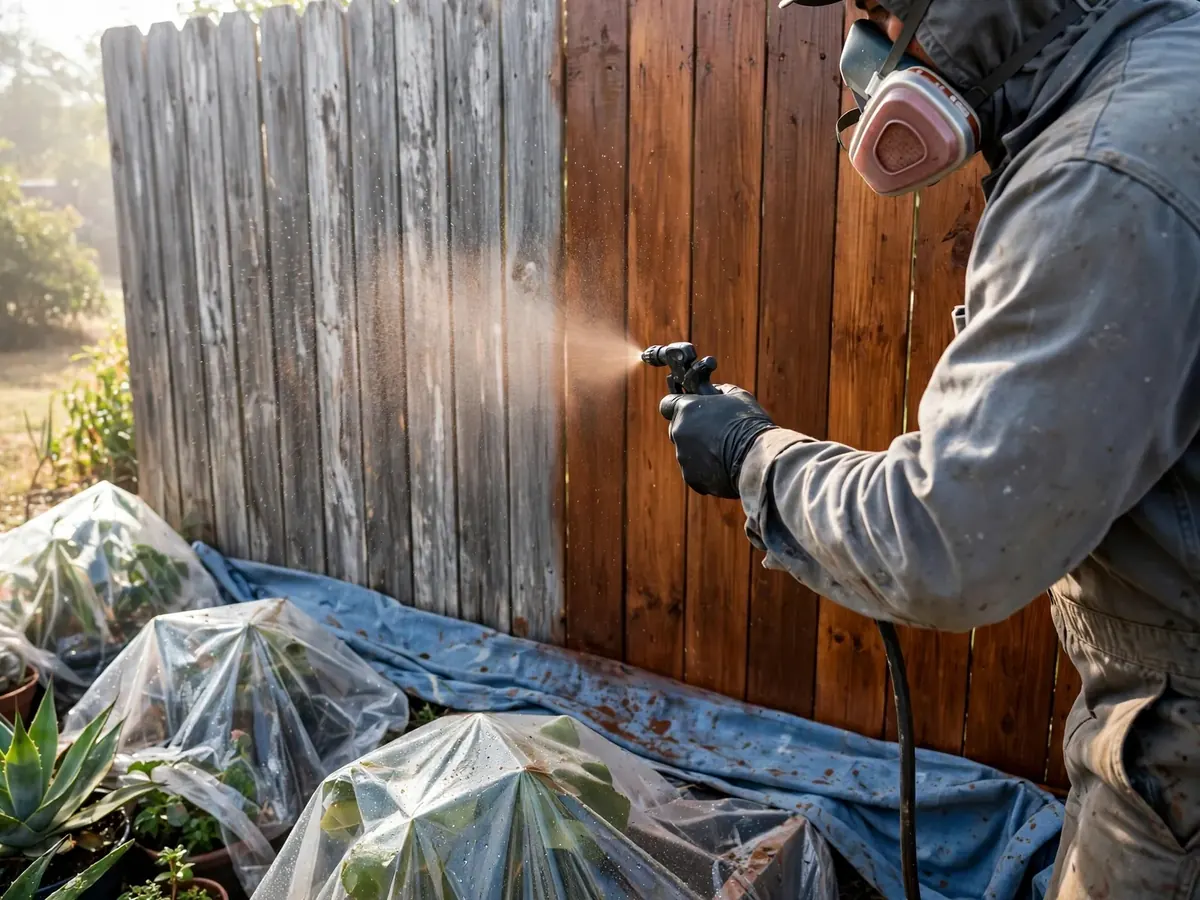
Calm, mild days are best for staining. Spraying gets stain into the gaps between pickets that brushes miss.
Calm, mild days give the best results for spraying. City codes in College Station may set limits that affect your design.
When to Restain
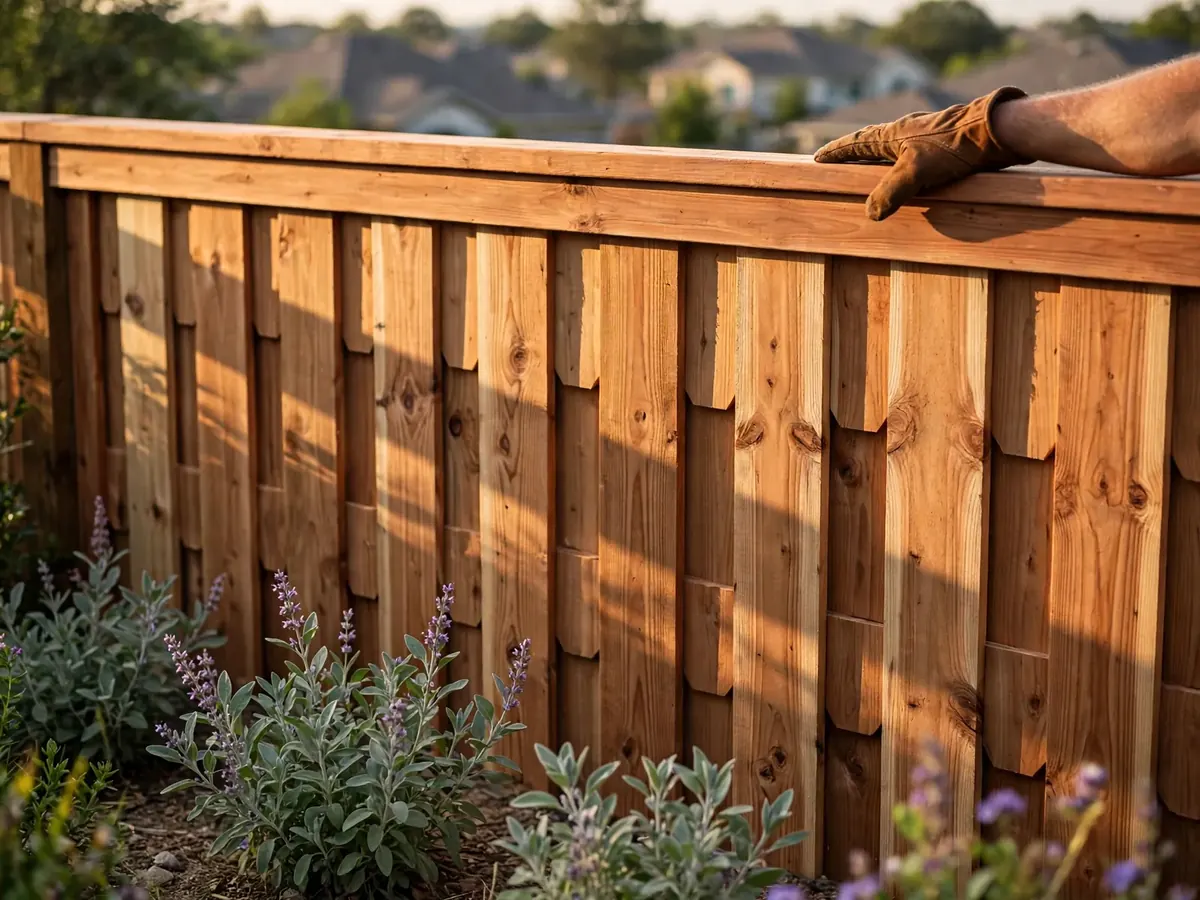
Spring and fall are popular staining seasons because temperatures are moderate. Restaining is a good time to check for loose pickets and rotted posts. Fixing them before the stain goes on saves redoing the work.
Sun-facing sides wear out first, so some homeowners restain those sides more often.
A common concern: Good fence staining pros explain how they'll set posts and handle your soil without being asked; vague answers are a warning sign.
Why Texas Fences Gray So Fast
A pigmented, semi-transparent stain blocks much of that UV. Graying is a surface change; the wood underneath is often still sound.
Staining early protects the color you liked when the fence was new.
Choosing a Stain Color and Type
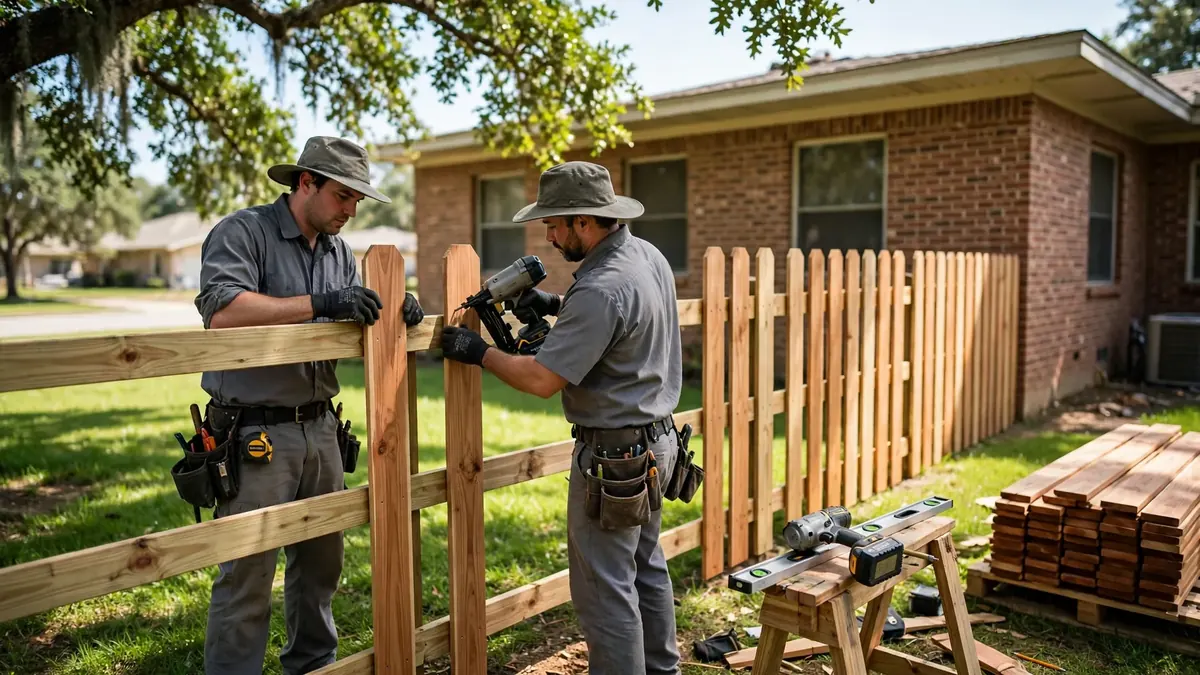
Semi-transparent stains show the grain while blocking UV; solid stains cover more but can peel. Semi-transparent stains show wood grain while still blocking much of the sun's UV.
Lighter stains show weathering sooner; medium tones hide it longer.
Concerned about timing? Most of the wait is scheduling and approvals; once a crew starts, many residential fence stain projects take only a few days.
Common Reasons College Station Homeowners Call
College Station homeowners usually reach out when one of these shows up:
- Splintering pickets
- HOA notice about fence color
- Gray, faded wood
What to Have Ready
- Note whether you want one or both sides stained
- Check HOA-approved stain colors
- Trim plants back from the fence
- Note any corner or brace posts that already exist and their condition
- Check whether old footings or posts will need to be removed
Fence Staining in College Station: Talk to a Local Fence Staining Pro
Calling 877-753-1892 puts you in touch with a fence staining pro who knows College Station. Expect questions about length, height, access and soil; the more you can answer, the more useful the conversation. Call to book your project or simply ask what your College Station property needs.
877-753-1892Fence Stain Questions From College Station Homeowners
How soon can a new fence be stained in College Station?
Once the wood has dried enough to absorb stain, often a few weeks to a couple of months depending on the lumber and the weather. Ask about this on your first call, since conditions vary across College Station.
How long will a fence stain last in College Station?
Wondering how long it will last? In College Station's conditions, posts and drainage decide that more than the pickets, so ask about both. A fence stain that's built well and stained on schedule can last many years; one built on shallow wood posts may start leaning within a few seasons.
What should College Station homeowners know about fence stain projects?
College Station's clay is the reason so many local fence stains lean; building deeper avoids joining them. Spring storms bring hail and tornado risk to the I-35 corridor.