
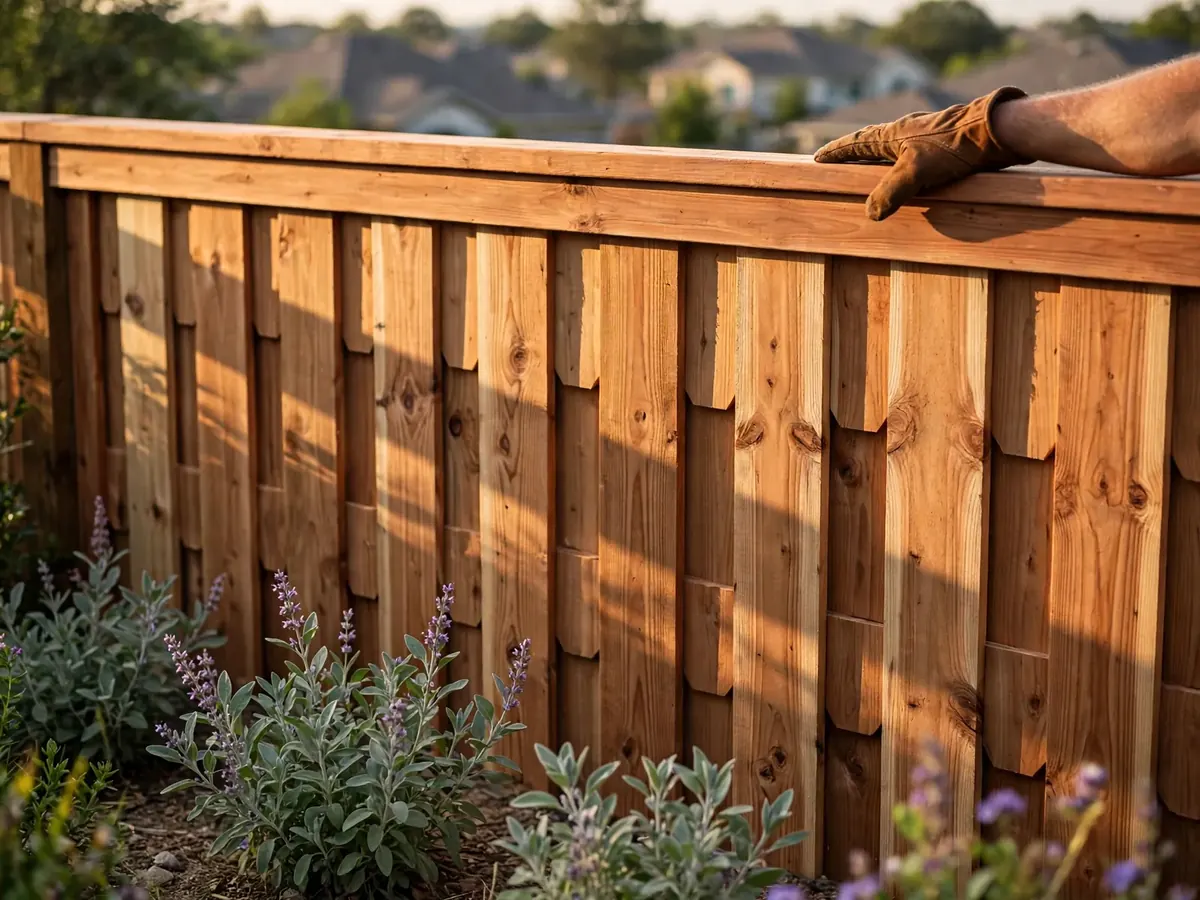
Local Conditions That Shape Fence Staining in Waco
Waco sits on the Brazos River in Central Texas, on Blackland Prairie clay. Older neighborhoods and new subdivisions both sit on clay.
Waco is the McLennan County seat and home to Baylor University. Open exposure in Waco means the fence stain should be built for gusts. Like College Station in the same region, Waco has to plan around shifting clay.
- Municipal codes cover height, setbacks and visibility at corners, which can change a fence plan.
- Many fences in older neighborhoods still stand on original wood posts that are near the end of their life.
Choosing Materials in Waco
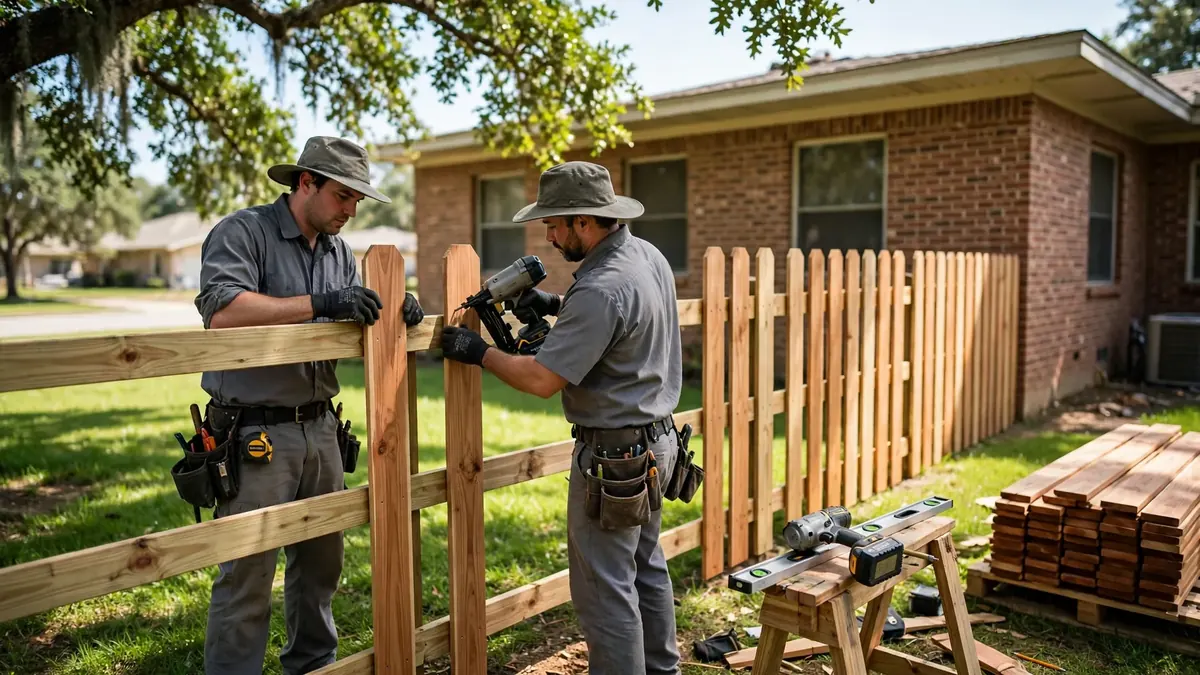
Towns favor cedar privacy fencing, acreages use wire and pipe, and newer subdivisions often add ornamental iron. Around Waco's ranches, strong corners and gates matter most.
Cleaning and Prep Before Stain
Stain sticks to clean, dry wood. Low-pressure washing avoids raising fibers or gouging the wood.
Mildew under stain will keep growing, so killing it first matters. Older Waco homes often have quirks, like settled ground or old footings, that affect new work.
If you're weighing it up: DIY makes the most sense for short runs and simple designs.
Why Texas Fences Gray So Fast
A pigmented, semi-transparent stain blocks much of that UV. The south- and west-facing sides of a fence gray first, because they get the most afternoon sun. Staining those sides more often keeps the whole fence looking even.
A pigmented stain acts like sunscreen for wood: the more pigment, the more UV it blocks. Before finalizing plans, confirm Waco's requirements for height and placement.
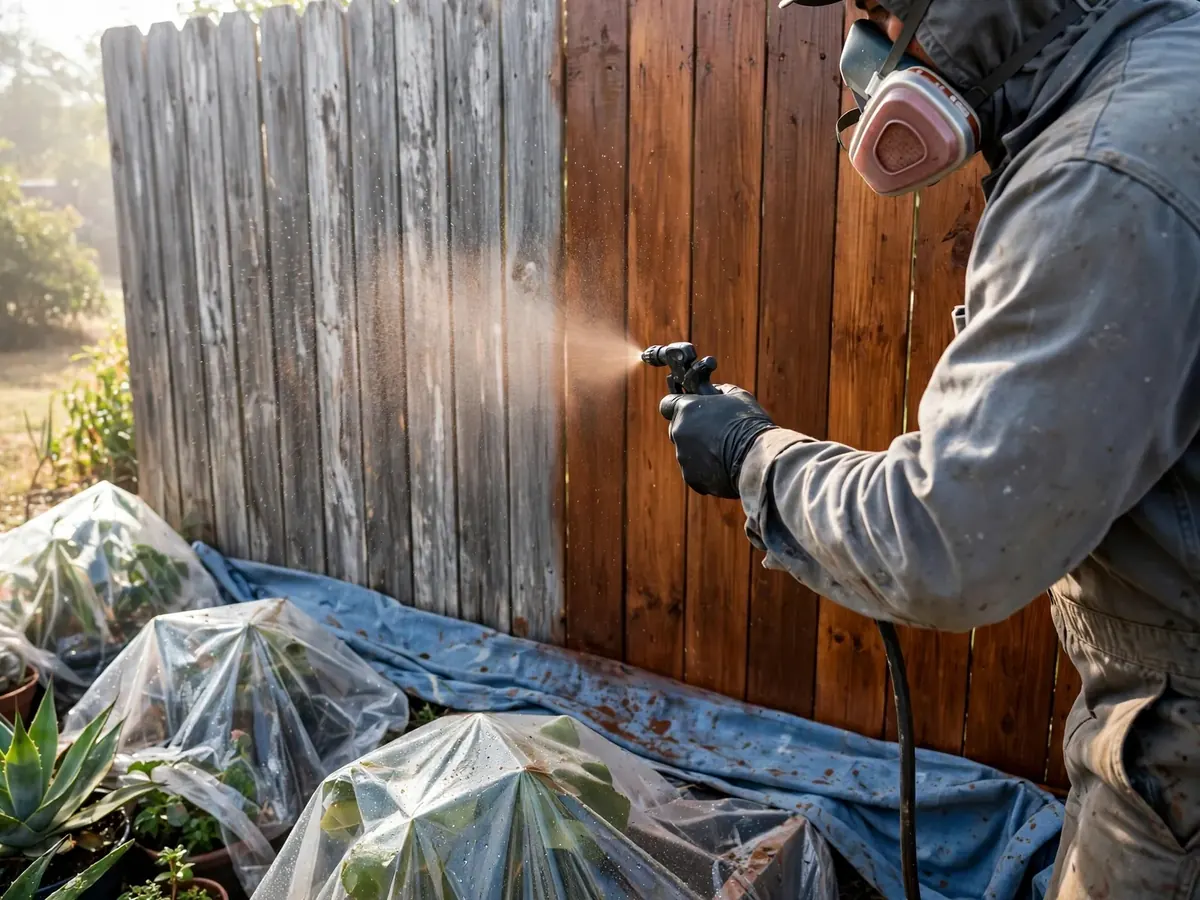
Spraying vs. Brushing
Calm, mild days are best for staining. Many homeowners stain only their side.
Ask the crew how they'll protect cars, plants and the house from overspray.
A frequent worry, answered: A cheaper fence that needs new posts in a few years can cost more in the end than a sturdier one built once.
When to Restain
Waiting too long means more cleaning and more stain to bring the wood back. Spring and fall are popular staining seasons because temperatures are moderate.
Restaining before the wood turns fully gray takes less prep and less product.
Choosing a Stain Color and Type
HOA-approved colors are often listed by brand and name, which makes ordering easy. Darker stains hide weathering longer but can make a fence hotter to the touch.
Lighter stains show weathering sooner; medium tones hide it longer.
A frequent worry, answered: A good fence builder will tell you what they don't know until they start digging, such as rock or roots.
Common Reasons Waco Homeowners Call
Around Waco, a call usually follows one of these:
- Water soaking in instead of beading
- Gray, faded wood
- Mildew or black spots
Quick Checks Before the Call
- Check HOA-approved stain colors
- Note whether you want one or both sides stained
- Trim plants back from the fence
- Note corner-lot sight lines if your property is on a corner
- Note any corner or brace posts that already exist and their condition
Fence Staining in Waco: Talk to a Local Fence Staining Pro
When you call 877-753-1892, start with the address area in Waco, what you want built or fixed and when you'd like it done. A fence staining pro can then explain the options and what drives the price. Call now to schedule your fence stain work in Waco.
877-753-1892Fence Stain Questions From Waco Homeowners
How often should a fence be restained?
Under strong Texas sun, a maintenance coat every two to three years is typical. In Waco, that comes down to your lot and how the fence stain is built.
When is the best time to schedule fence stain work in Waco?
If your HOA needs to approve the plan, start that first, since crews can't begin without it. Spring is busy for fence crews; booking a little ahead of the season gives you more scheduling choices.
What should Waco homeowners know about fence stain projects?
Waco's clay is the reason so many local fence stains lean; building deeper avoids joining them. Spring storms bring hail and tornado risk to the I-35 corridor.