
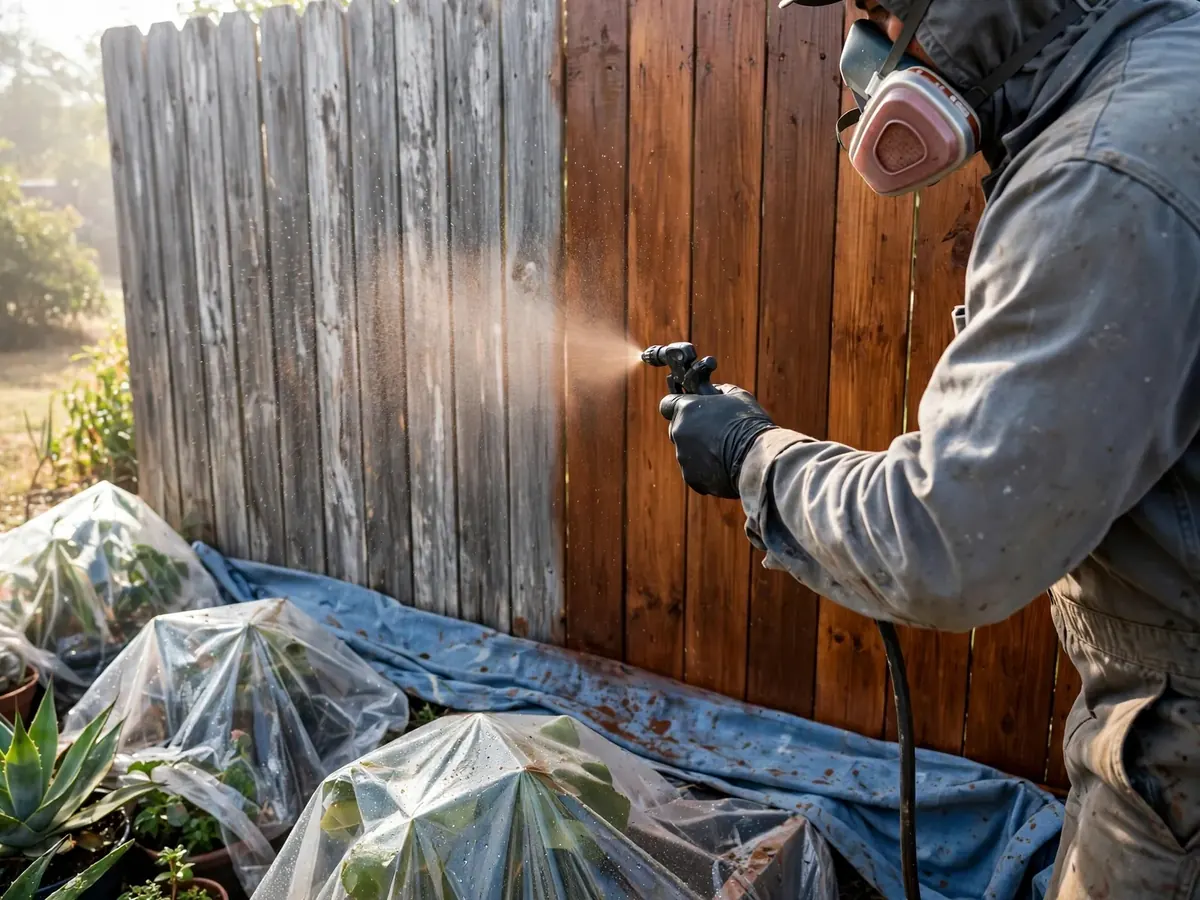
Fence Staining in Temple: Local Conditions
Neighborhoods range from older homes to new subdivisions on clay. Spring storms bring hail and tornado risk to the I-35 corridor.
Temple is a Bell County city known for its major medical center. In established Temple neighborhoods, matching the character of the street matters. Temple shares shifting clay with Killeen, so solutions that work well there usually suit Temple too.
- City ordinances cover fence height, front-yard placement and sight lines at intersections.
- Older fences frequently stand on posts set decades ago, without gravel or crowned concrete.
Materials That Suit Temple
Towns favor cedar privacy fencing, acreages use wire and pipe, and newer subdivisions often add ornamental iron. City codes in Temple may set limits that affect your design.
Cleaning and Prep Before Stain
Too much pressure raises the grain and gouges soft cedar. Repairs should be done before staining so new boards get the same coat.
Masking hardware and gate latches keeps them clean and working.
If you're weighing it up: DIY makes the most sense for short runs and simple designs.
Why Texas Fences Gray So Fast
Fences facing south and west get the most sun and gray fastest. A pigmented, semi-transparent stain blocks much of that UV.
A gray fence can usually be cleaned back to near its original color before staining. Before finalizing plans, confirm Temple's requirements for height and placement.
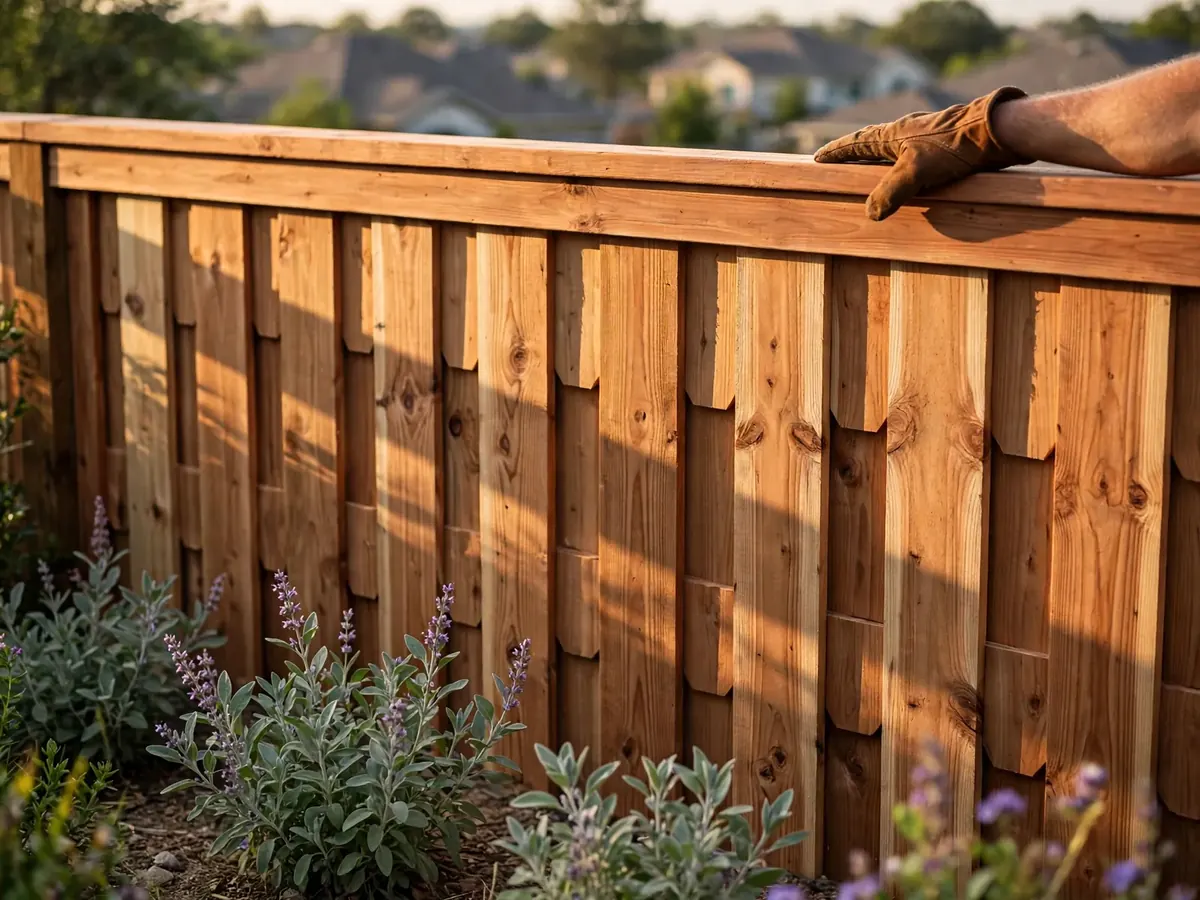
Spraying vs. Brushing
Many homeowners stain only their side. Calm, mild days are best for staining.
On windy days spraying wastes stain and risks drift onto cars and houses, so crews often brush or wait.
One practical point: Rain delays are common in the spring storm season, so build a little slack into your plans.
When to Restain
Waiting too long means more cleaning and more stain to bring the wood back. A maintenance coat goes on faster than the first coat because the wood is already protected.
Keeping a simple record of when the fence was last stained makes it easy to plan the next coat.
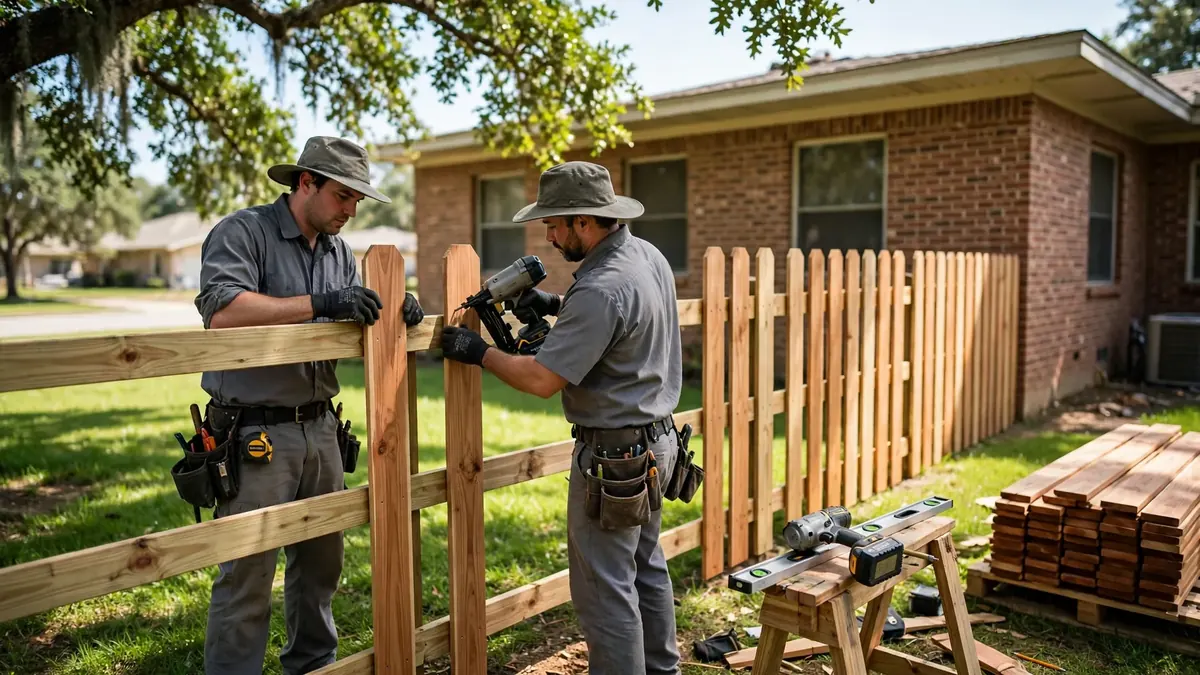
Choosing a Stain Color and Type
Test a stain on a hidden section first. Solid stains hide grain completely and behave more like paint.
Oil-based stains soak into the wood and fade gradually, while many water-based stains sit closer to the surface and are easier to clean up.
A frequent worry, answered: If a neighbor wants to split the cost, get the agreement in writing, even an email, before the old fence comes down.
When to Pick Up the Phone
Temple homeowners usually reach out when one of these shows up:
- Water soaking in instead of beading
- Splintering pickets
- Gray, faded wood
Quick Checks Before the Call
- Check HOA-approved stain colors
- Trim plants back from the fence
- Plan to move cars and outdoor furniture
- Check whether old footings or posts will need to be removed
- Walk the property line or gate location and note slopes, creeks and rock outcrops
Getting Fence Staining in Temple Started
A quick call to 877-753-1892 is the easiest way to get a Temple-specific answer. Ask about timelines, permits and how materials affect cost. The sooner you call, the sooner your fence stain work can be scheduled.
877-753-1892Fence Stain Questions From Temple Homeowners
Do I need my neighbor's permission to stain the fence?
To stain their side or work from their yard, yes. Many homeowners stain only their side. In Temple, that comes down to your lot and how the fence stain is built.
How can I keep a Temple fence stain project within budget?
A cheaper fence that needs new posts in a few years can cost more in the end than a sturdier one built once. If budget is the sticking point, consider phasing the work: replace the sections that face the street or the dog run first, and finish the rest when it makes sense.
What should Temple homeowners know about fence stain projects?
On Temple's clay, it's worth asking how deep each footing will go before comparing anything else. Waco, Temple, Belton, Killeen and Bryan–College Station sit on Blackland Prairie clay, with rolling ranch land between them.