
Local Conditions That Shape Ranch Fencing in Dripping Springs
Dripping Springs is a Hill Country town west of Austin with large lots and rocky limestone ground. Flash flooding along creeks and rivers is a known risk in this part of Texas. The Hill Country has thin soil over limestone, so setting posts often means drilling into rock.
- Acreages around town need fences sized for pets, horses or livestock rather than just privacy.
- Pipe, pipe-and-cable and barbed wire fences are common on surrounding ranch land.
Materials That Suit Dripping Springs
Cedar post and wire, game fencing, pipe fencing and stone columns on acreages; cedar privacy and ornamental iron near town.
Pipe and Pipe-and-Cable Fences Near Dripping Springs
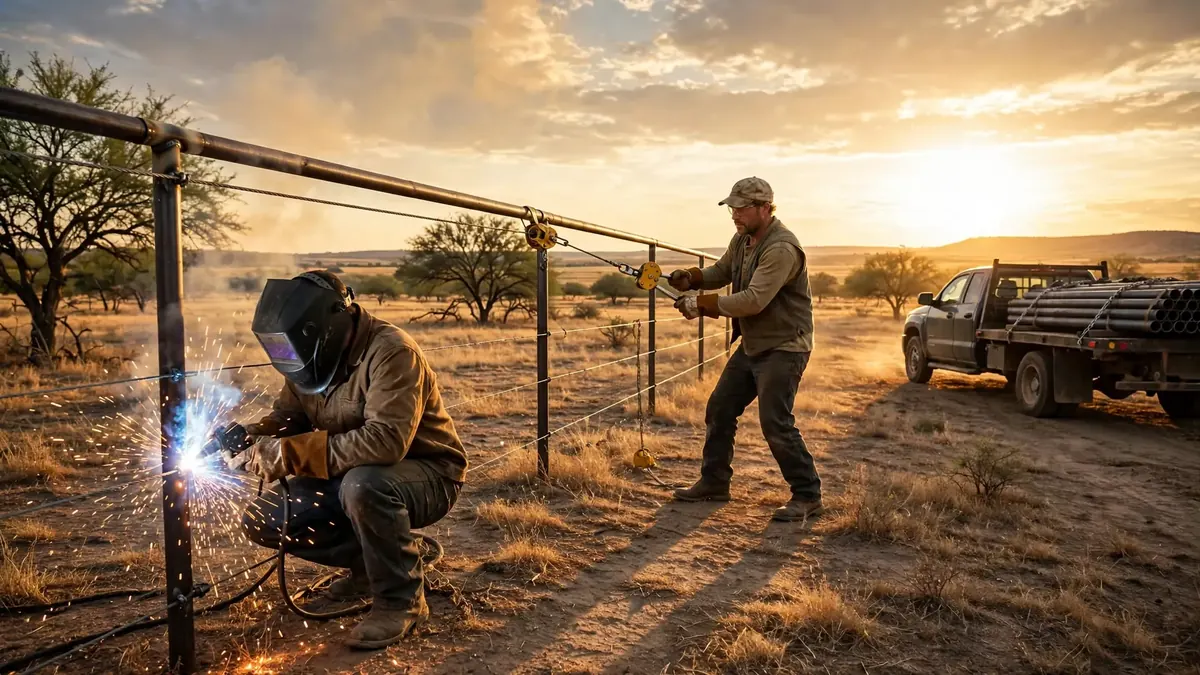
Pipe fencing is a Texas ranch tradition, often built from steel pipe welded on site and set in concrete or driven. It lasts for decades and handles cattle and horses. Pipe-and-cable uses pipe posts with tensioned steel cables between them, which costs less per foot than full pipe rails.
Horse Fencing
Horses can injure themselves on barbed wire, so pipe, no-climb wire with a top rail or board, and vinyl or wood rail fences are better choices. A visible top rail helps horses see the fence. Gates should be wide enough for trailers and equipment.
Game and Deer Fencing
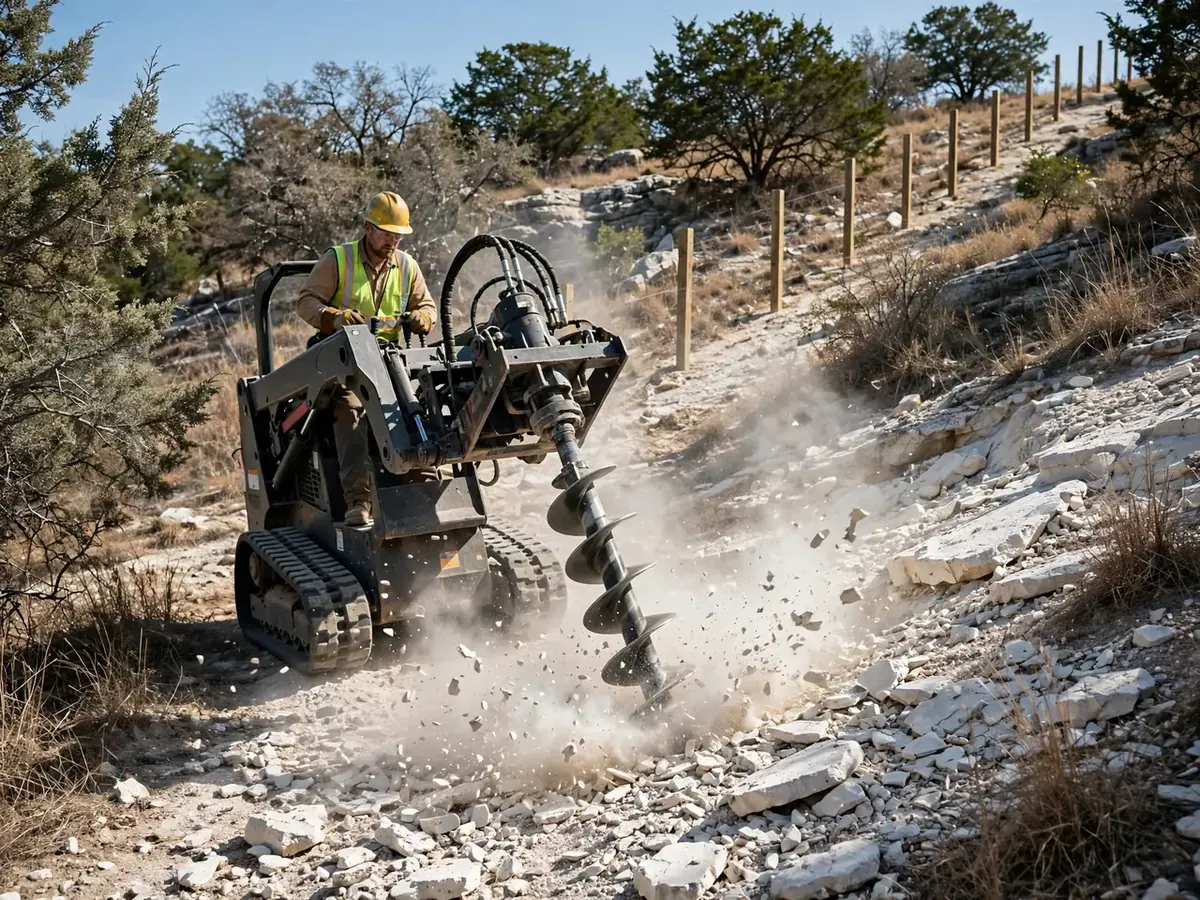
Rocky Hill Country ground makes tall fence posts harder to set; rock drilling is often part of the job.
Barbed Wire and Field Fence
For cattle, four or five strands of barbed wire on steel T-posts with wood or pipe corners is common. For goats, sheep and dogs, woven field fence holds them better. Either way, the H-braces at corners and gates keep the wire tight; when they fail, the whole run sags.
Corners, Braces and Gates
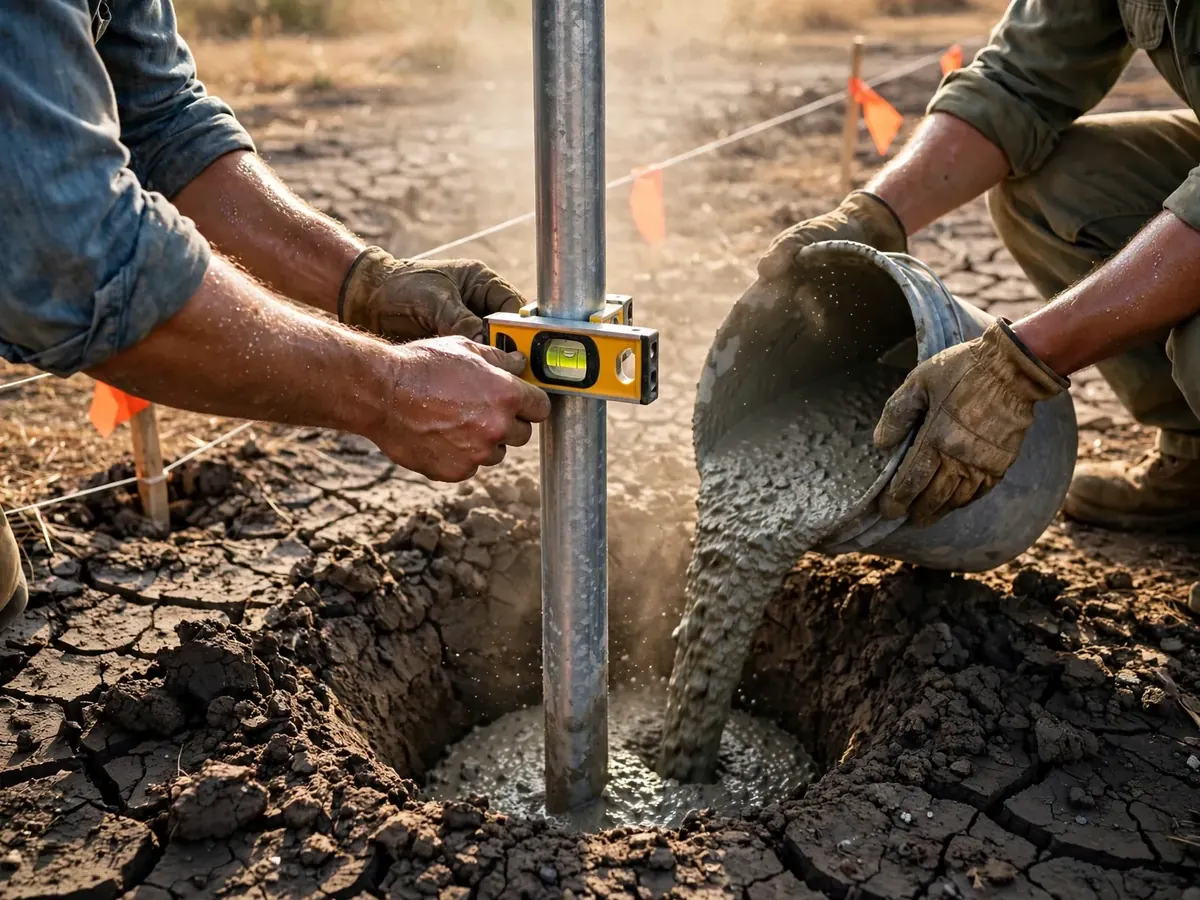
Most ranch fence repairs start at a corner that moved. When a new fence is built, putting extra effort into corner and gate assemblies saves rebuilding them later.
More Ranch Fence Questions Around Dripping Springs
Clearing the Fence Line and Marking Boundaries
Brush clearing, surveys and access planning come before the first post on rural land.
Signs It's Time to Call in Dripping Springs
- Deer damaging gardens or orchards
- Planning wider gates for equipment
- Sagging wire and failing corner braces
- New acreage without livestock fencing
Before You Call
- Identify creeks, rock and brush along the line
- Note the animals you need to hold
- Know the property boundaries or have a survey
- Mark gate locations and widths
Planning Ranch Fencing in Dripping Springs: What to Expect
One call to 877-753-1892 gets the conversation started with a ranch fence builder who works around Dripping Springs. Bring your measurements, photos and any HOA requirements.
877-753-1892Ranch Fence Questions From Dripping Springs Homeowners
Is barbed wire safe for horses?
No. Pipe, no-climb wire or rail fencing is safer for horses.
Do I need a survey for ranch fencing?
It's strongly recommended so the fence goes on the right line.
What should Dripping Springs homeowners know about ranch fence projects?
Intense sun dries and grays unprotected wood quickly, so staining every few years pays off. Larger lots and estate homes often pair cedar privacy fencing with ornamental iron and masonry columns. Many properties here are acreages with deer, goats or horses, which changes fence height and wire choice.