
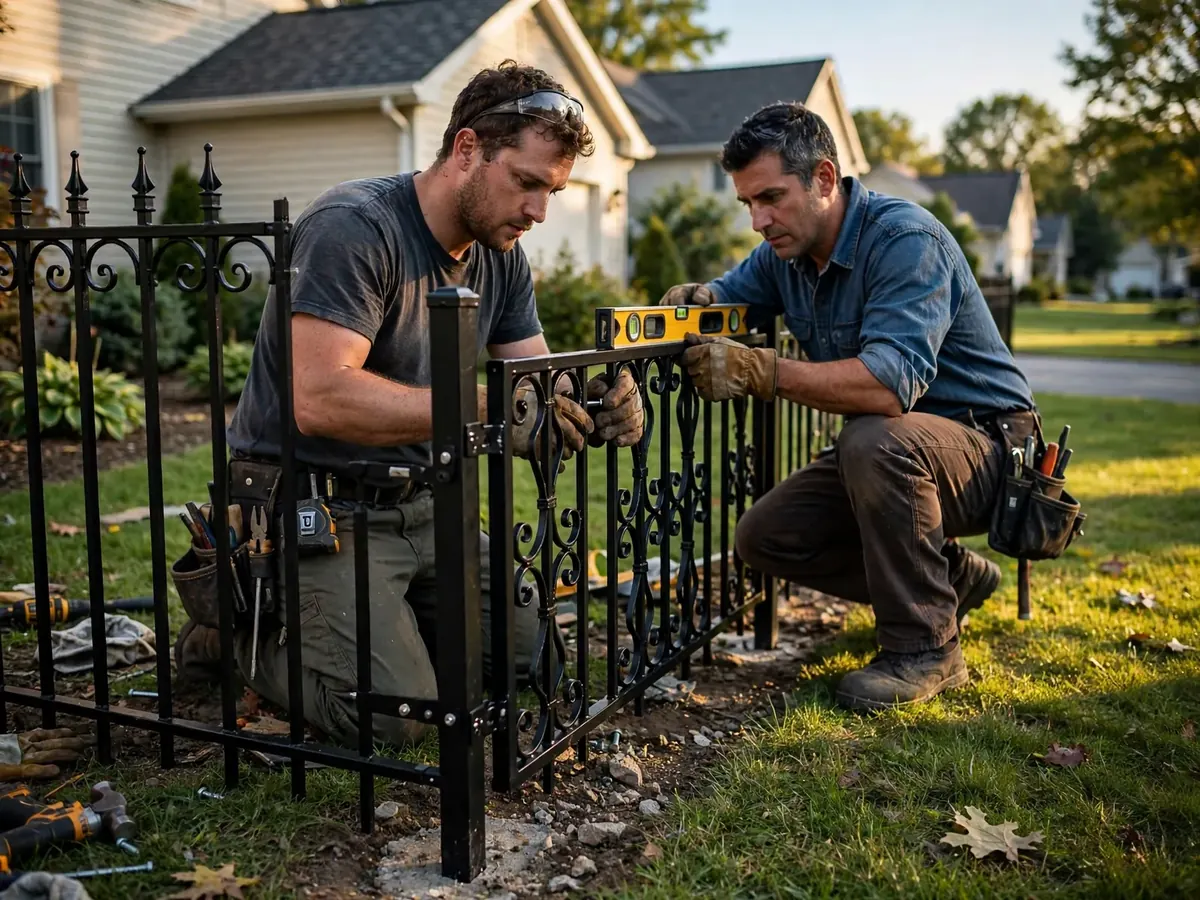
Local Conditions That Shape Wrought Iron Fence Installation in Austin
Austin splits along I-35: rocky Hill Country limestone to the west and Blackland Prairie clay to the east. West of I-35, Austin sits on Hill Country limestone that often needs a rock auger to set posts; east of I-35, Blackland Prairie clay swells and shrinks. Round Rock, Pflugerville, Leander, Cedar Park, Georgetown and Hutto have grown rapidly, so many homes have builder-installed fences reaching the end of their first life.
- Builder-installed fences in newer subdivisions often reach the end of their first life after 10 to 15 years.
- HOA guidelines often set fence height, style, stain color and which side faces out.
What Holds Up Around Austin
Cedar privacy fences dominate, often on steel posts; horizontal modern fences are popular in central Austin, and pipe or wire fencing appears on acreages toward Elgin, Bastrop and Liberty Hill.
Posts, Footings and Slopes
Ornamental panels are rigid, so the posts must be precisely spaced and plumb. On uneven ground, the installer will decide panel by panel whether to rack or step to keep the bottom gap even.
Pool Fences and Barriers
Pool fences are inspected in many cities, so plan the gate locations and hardware first, then fit the panels around them.
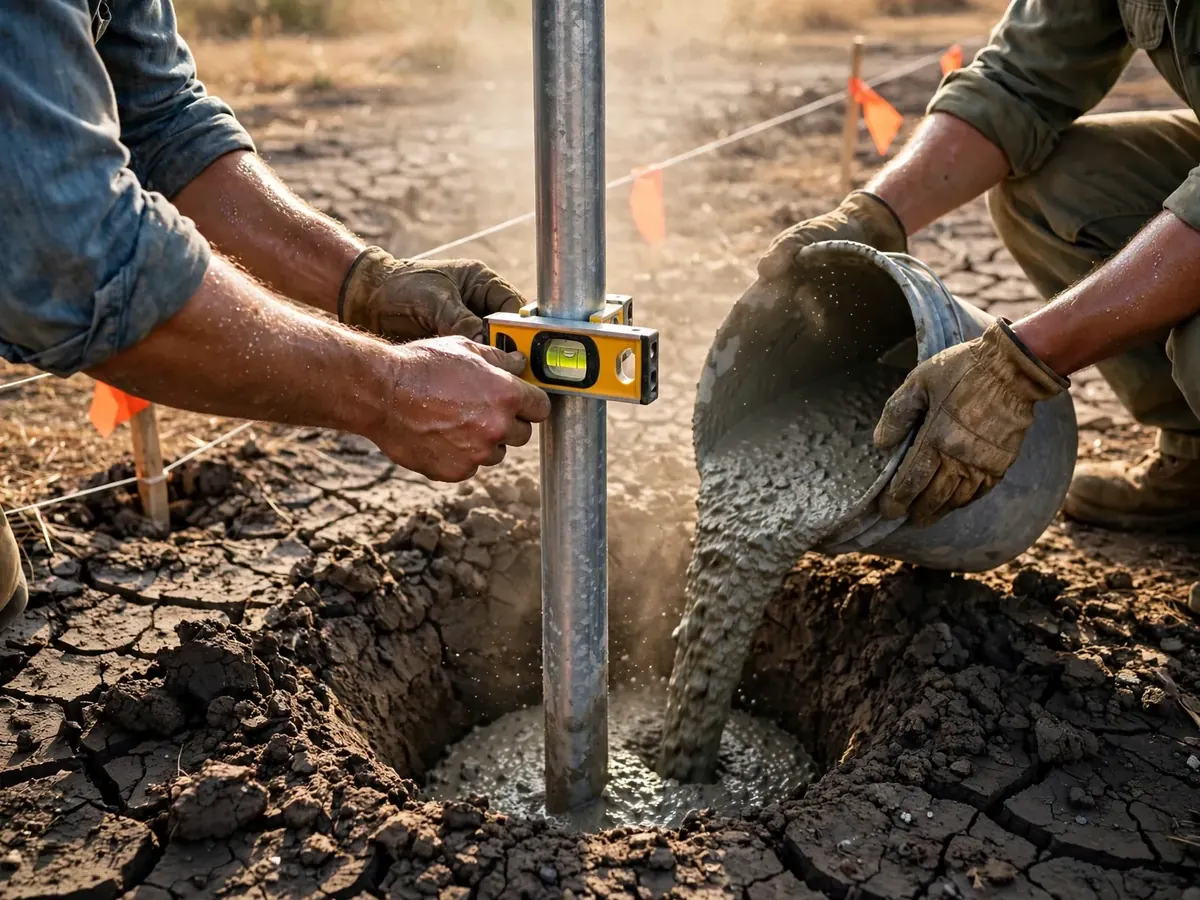
Front-Yard Iron Fences in Austin
Front-yard fences in many Texas cities are limited in height, often around 4 feet, and some require them to be see-through. Ornamental iron fits those rules while adding security and curb appeal. Check your city's front-yard rules and any HOA guidelines before choosing a height.
Wrought Iron vs. Steel vs. Aluminum
Most fences called wrought iron today are welded steel, which is strong and affordable but rusts if the coating is scratched. Powder-coated aluminum is lighter, doesn't rust and suits humid or coastal areas like Austin's, though it's less rigid. Ask the installer which you're getting.
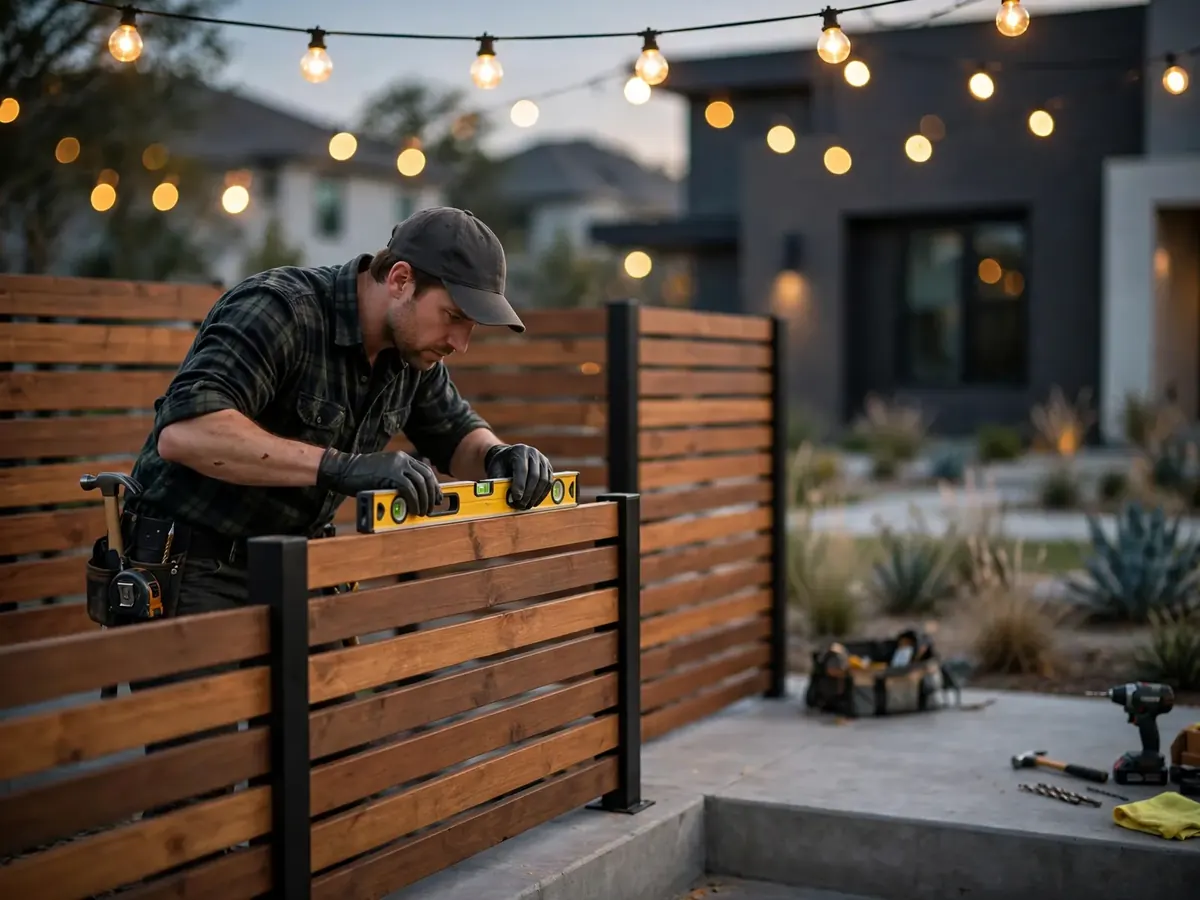
Rust, Repainting and Upkeep
Scratches and weld spots are where rust starts on steel fences. Touching up the finish when you see it keeps rust from spreading. Sprinklers that spray the fence daily speed up rust, so adjust them if you can.
Common Reasons Austin Homeowners Call
- Rust on an existing iron fence
- Planning a pool
- Wanting security without blocking the view
- Adding a matching driveway gate
Before You Call
- Measure the run and mark gate locations
- Check city front-yard and pool barrier rules
- Note slopes in the yard
- Decide on steel or aluminum
Planning Wrought Iron Fence Installation in Austin: What to Expect
Have the details from the checklist above ready, then call 877-753-1892. A ornamental fence installer serving Austin can tell you what the job involves, what affects the cost and whether anything needs attention right away.
877-753-1892Iron Fence Questions From Austin Homeowners
How tall can a front-yard iron fence be?
Many Texas cities limit front-yard fences to around 4 feet. Check your city's rules.
Do pool fences have special requirements?
Usually yes: minimum height, limited gaps and self-closing, self-latching gates. Check your city's pool barrier rules.
What should Austin homeowners know about iron fence projects?
Cities set rules on front-yard fence height, corner-lot sight lines and masonry walls, so check before building. Rock close to the surface means posts are drilled rather than dug, which affects equipment and timing. Winter Storm Uri in February 2021 brought days of hard freeze across Central Texas.