
Deck Installation in Austin: Local Conditions
Austin splits along I-35: rocky Hill Country limestone to the west and Blackland Prairie clay to the east. Austin is the state capital and the Travis County seat, on the Colorado River.
Older central bungalows, hillside homes to the west and new subdivisions to the east and north all call for different approaches. Builder-grade work in newer Austin subdivisions often wears out sooner than homeowners expect. A deck that suits Thorndale's older homes isn't automatically right for Austin, where shallow limestone matters more.
- Many newer homes have bare backyards that are well suited to a first deck.
- Associations often review deck plans, colors and railings.
Railings, Stairs and Code Requirements
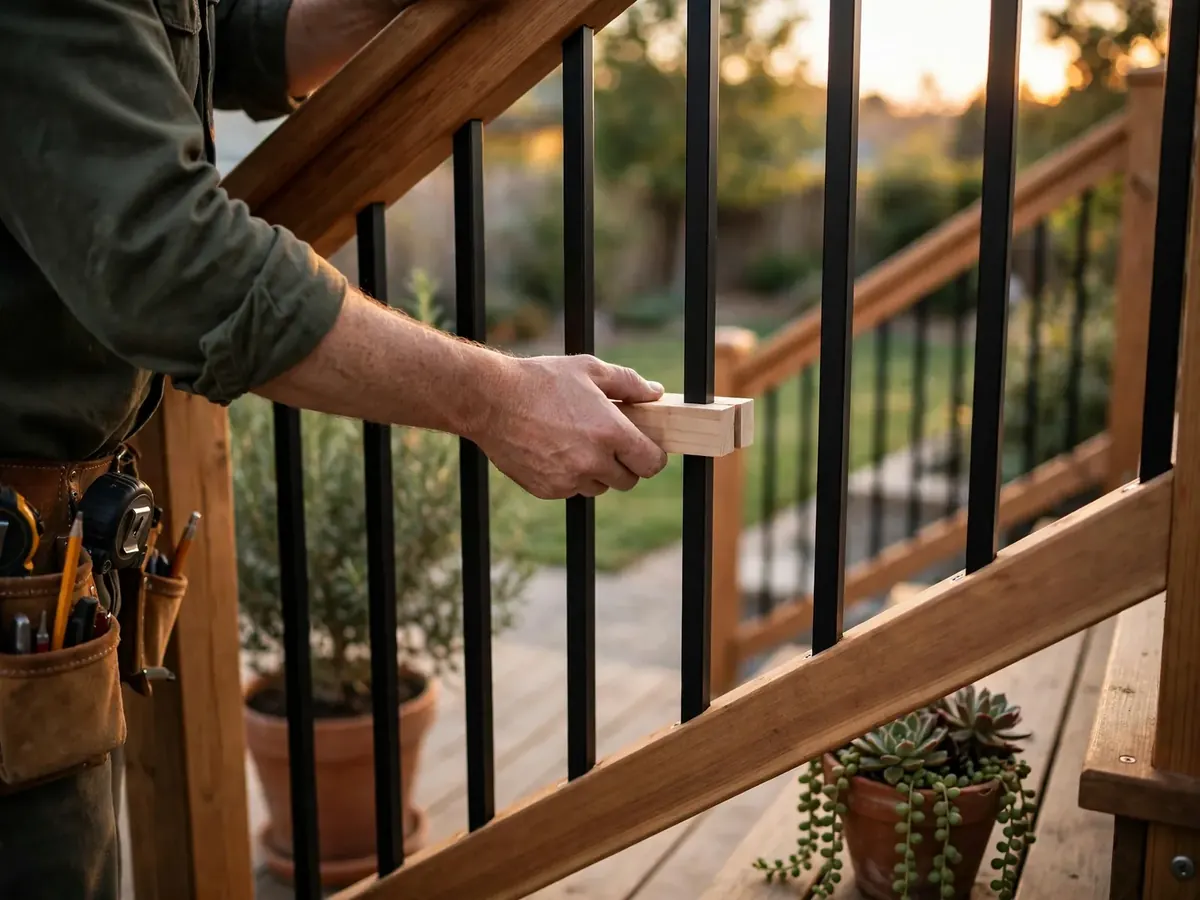
Wide stairs with a landing make a deck feel connected to the yard. Railings are commonly required to be at least 36 inches high on residential decks.
Decks more than about 30 inches above grade usually need railings. Many Austin neighborhoods have HOAs, so check their guidelines before choosing styles and colors.
A frequent worry, answered: Ask how they flash the ledger and what fasteners they use.
Permits and HOA Approval
A deck builder typically handles permits and inspections, but confirm before work starts. Getting HOA approval and city permits started early keeps the project on schedule.
Permit review can take longer than building the deck, so start early. City codes in Austin may set limits that affect your design.
Composite vs. Wood Decking in Austin
Ask the deck builder about heat ratings and surface temperatures. Pressure-treated pine and cedar cost less but need sealing every year or two to resist cracking and graying.
Many homeowners use pressure-treated framing with composite boards on top. Austin's limestone holds footings firmly once they're set, which is one advantage of the hard digging.
A frequent worry, answered: A smaller deck built well is often better value than a large one built cheaply.
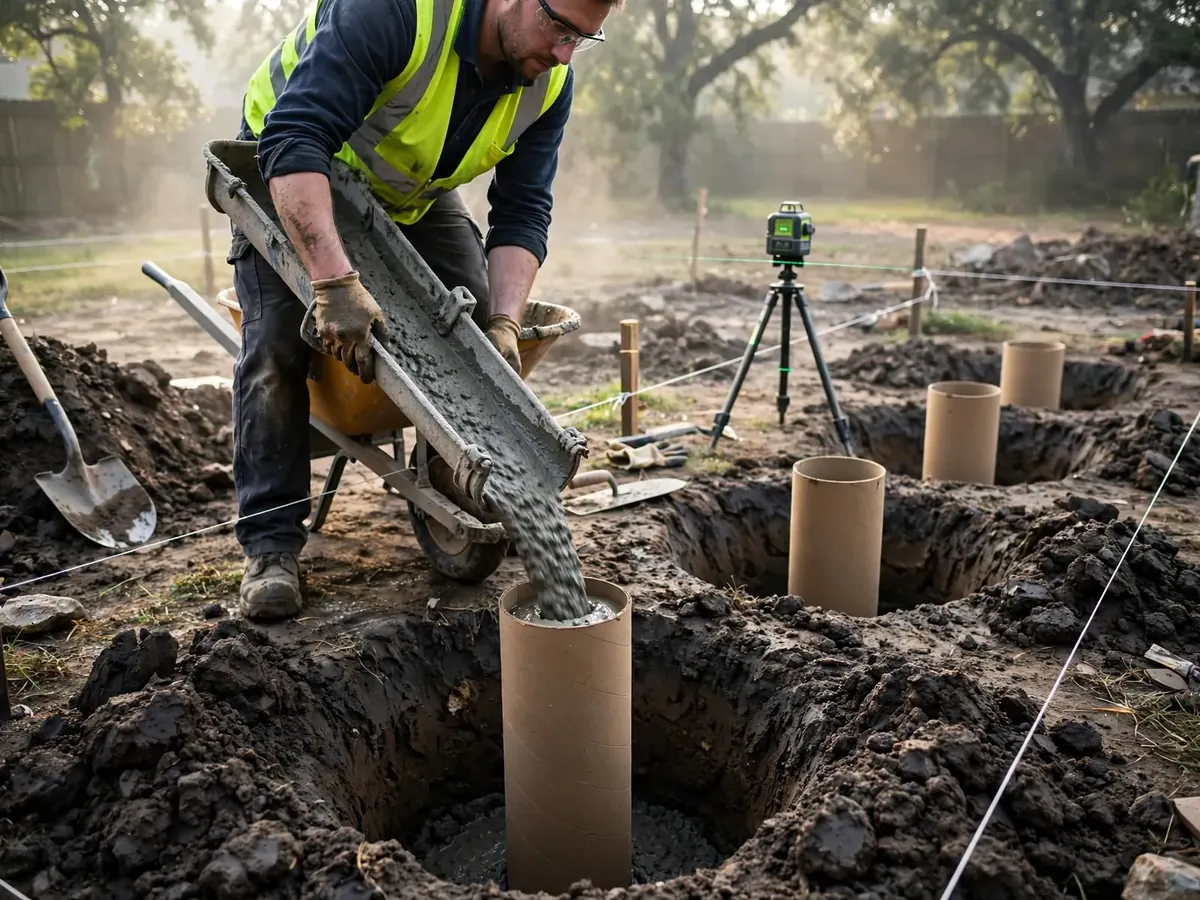
Footings in Clay and Limestone
Ask how deep the footings will go and how they'll handle the soil on your lot. Footings are the part of a deck nobody sees and everybody relies on. Their depth and size are usually set by the permit plans, so ask to see them.
On rock, footings are often pinned into the stone instead of dug deep. In Austin's clay, a deck that looks perfect on day one can drift out of line within a few seasons if the footings are shallow.
Framing, Joists and the Ledger
Blocking between joists stiffens the deck and reduces bounce. Joist hangers and structural screws make connections stronger than nails alone.
Joist spacing affects how the deck feels underfoot; closer spacing feels firmer, especially with composite boards.
A common concern: Framing and footings are where most DIY decks have problems.
Shade, Covers and Outdoor Living
Retractable shades let you adjust sun and privacy throughout the day. Track the sun on your yard for a day before choosing where shade goes. A cover in the wrong spot leaves the deck hot when you want to use it.
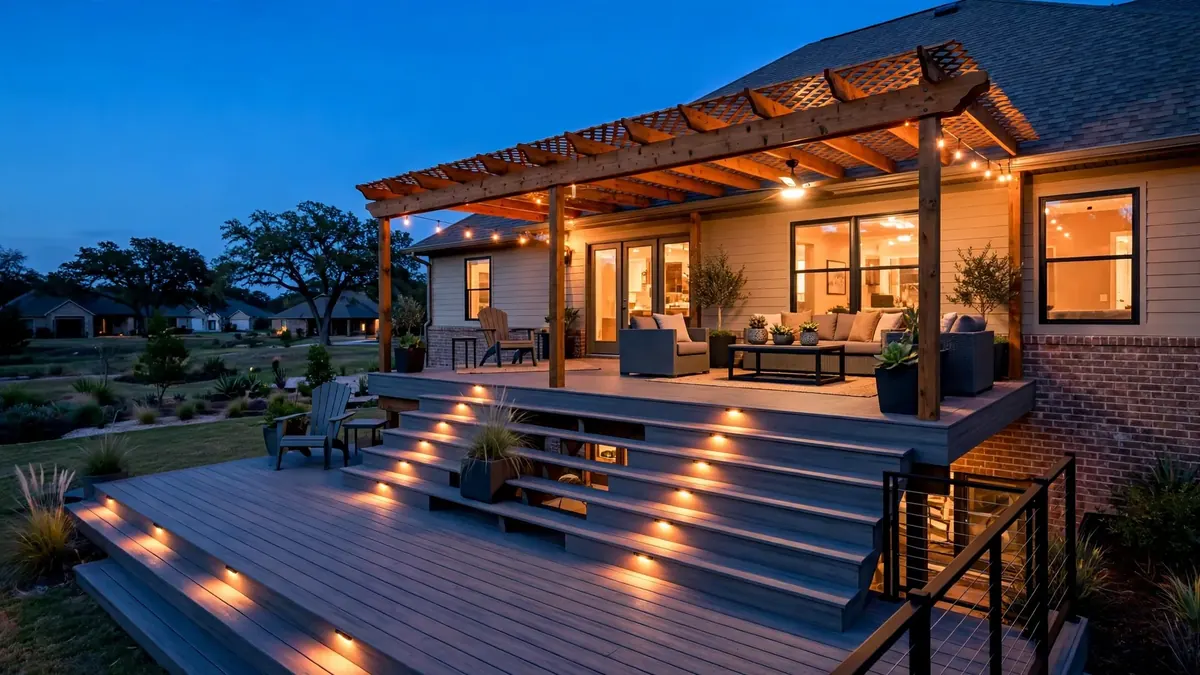
A pergola cuts sun without enclosing the deck; a solid roof gives full shade and rain cover.
Common Reasons Austin Homeowners Call
If any of these sound familiar at your Austin home, it's a good time to talk to a deck builder:
- HOA-approved plans in hand
- Bare backyard with no outdoor living space
- Planning for shade and entertaining
Quick Checks Before the Call
- Choose wood or composite
- Note where the sun hits in the afternoon
- Check HOA rules and get approval
- Ask neighbors whether they hit rock when they built
- Note corner-lot sight lines if your property is on a corner
Getting Deck Installation in Austin Started
Pick up the phone and dial 877-753-1892. A deck builder familiar with Austin can talk through materials, timing and what affects the price. Have a question about your deck? A quick call is the fastest way to get it answered.
877-753-1892Deck Questions From Austin Homeowners
Is composite decking too hot for Texas?
It can get hot in full sun, especially darker colors. Lighter colors and shade help. Your deck builder can tell you what applies on your specific Austin property.
When is the best time to schedule deck work in Austin?
Once approved, many decks are built in a week or two. Permits and HOA approval often take longer than the build itself, so start that paperwork first.
What should Austin homeowners know about deck projects?
Spring hail around Austin makes it worth choosing materials that are easy to repair. Winter Storm Uri in February 2021 brought days of hard freeze across Central Texas. Austin and Taylor sit in the same part of the state, but Austin deals more with shallow limestone, while Taylor contends with older homes.