
What to Know About Fence Installation in Austin
Austin splits along I-35: rocky Hill Country limestone to the west and Blackland Prairie clay to the east. West of I-35, Austin sits on Hill Country limestone that often needs a rock auger to set posts; east of I-35, Blackland Prairie clay swells and shrinks. Round Rock, Pflugerville, Leander, Cedar Park, Georgetown and Hutto have grown rapidly, so many homes have builder-installed fences reaching the end of their first life.
- Cities set rules on front-yard fence height, corner-lot sight lines and masonry walls, so check before building.
- HOA guidelines often set fence height, style, stain color and which side faces out.
Choosing Materials in Austin
Cedar privacy fences dominate, often on steel posts; horizontal modern fences are popular in central Austin, and pipe or wire fencing appears on acreages toward Elgin, Bastrop and Liberty Hill.
Cedar Privacy Fences in Austin
If privacy is the goal, cedar pickets on a 6-foot frame are what most Austin homeowners choose. The details that make it last are the post type, the number of rails (three rails reduce sagging on taller fences) and whether the bottom of the pickets sits slightly above the soil so it doesn't wick up moisture.
HOA Rules, Permits and Property Lines
Texas has no statewide fence permit, but cities set their own rules on height, front-yard fences, corner-lot sight lines and masonry. HOAs around Austin often add requirements for style, height and stain color. Get HOA approval in writing before work starts, and call 811 so utility lines are marked before anyone digs.
Pet and Pool Fencing
For dogs, the gap at the bottom of the fence matters as much as the height. A rot board or a strip of wire along the bottom stops diggers, and smooth, tall pickets discourage climbers. If you're fencing for a pool, check your city's pool barrier rules for height, gaps and self-closing, self-latching gates.
Wrought Iron and Aluminum Fences
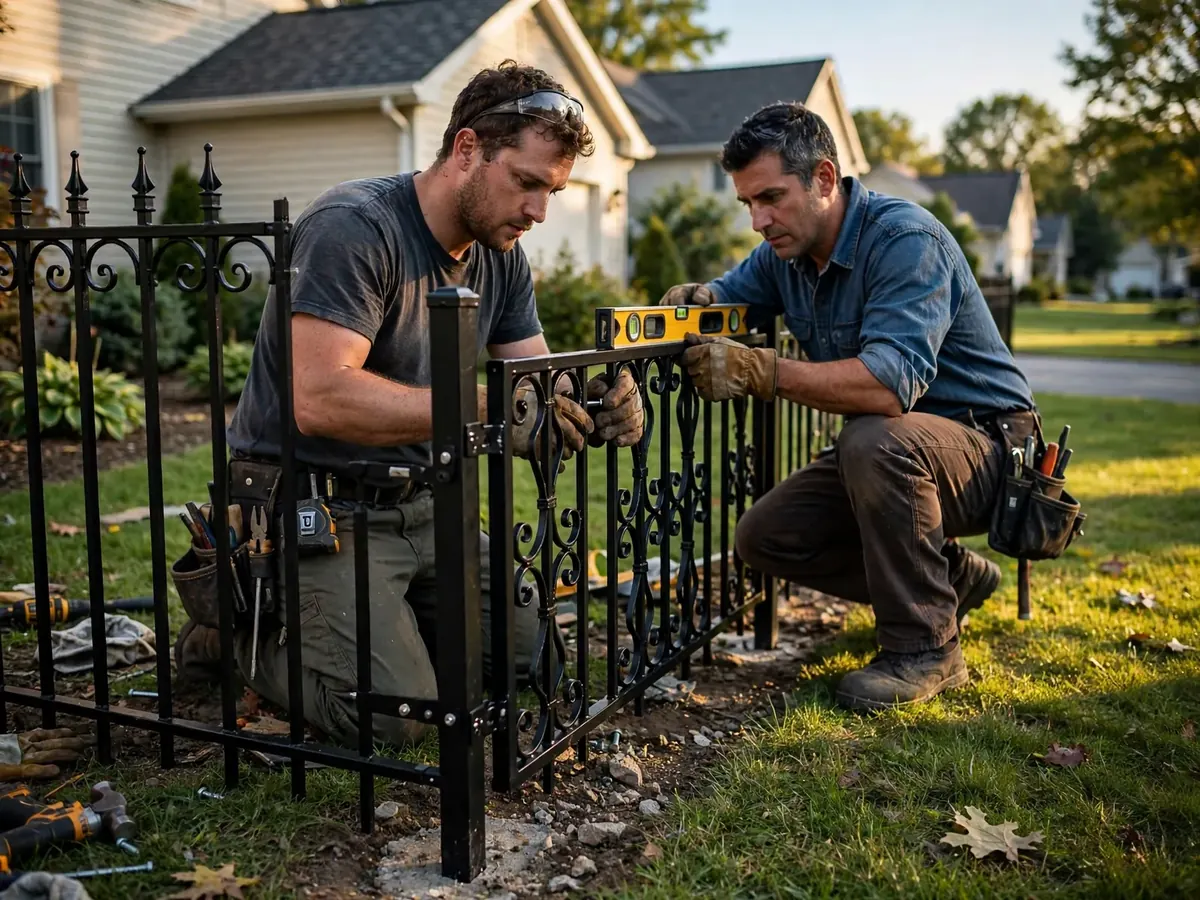
Iron and aluminum fences go up as panels between posts set in concrete. On sloped lots, panels are either racked to follow the grade or stepped. Ask which the builder recommends for your yard.
Horizontal and Modern Fence Designs
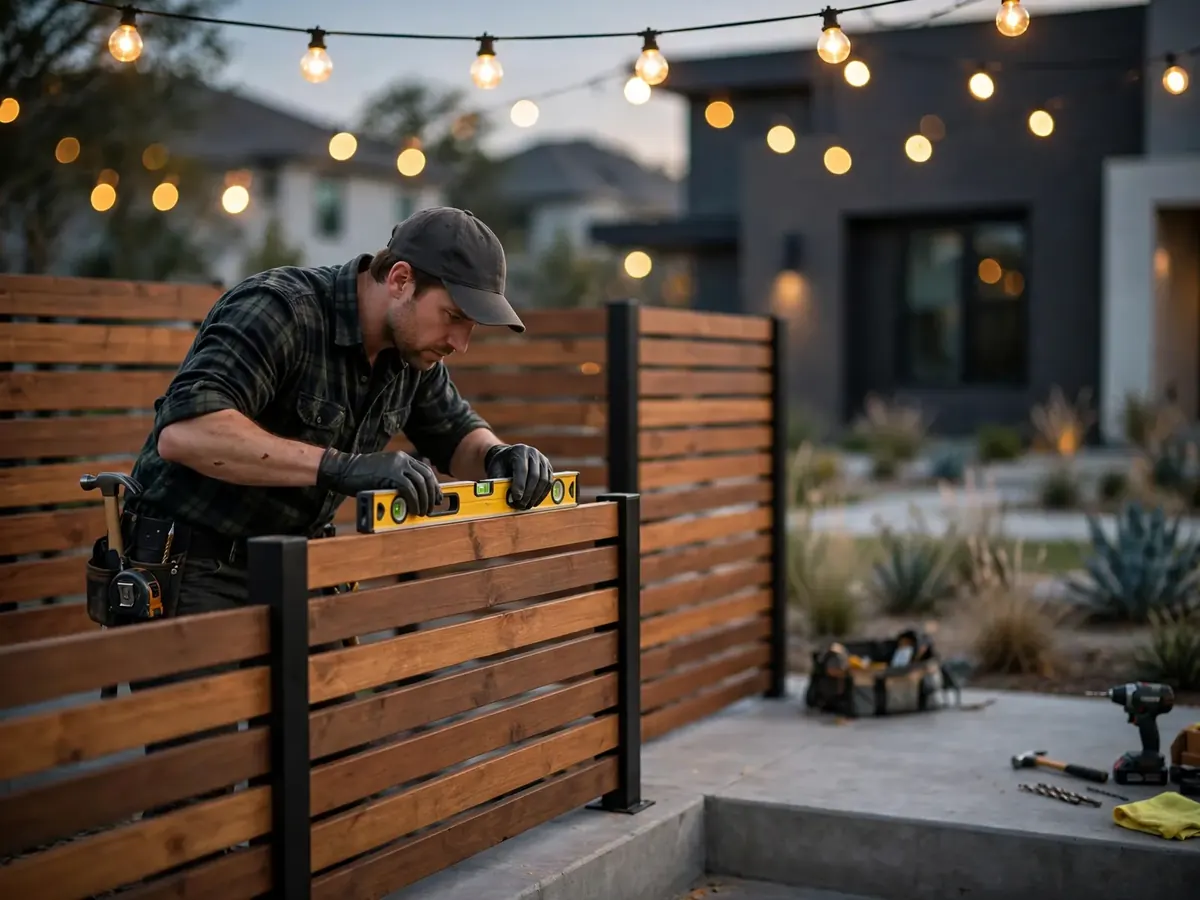
A modern fence often pairs stained wood or composite slats with black steel posts. It's more labor-intensive than a standard picket fence, and HOA approval may be needed if the neighborhood's guidelines call for vertical cedar.
Board-on-Board and Shadowbox Styles
If your fence faces strong wind, a shadowbox design takes some load off the posts by letting air pass between the pickets. Board-on-board gives complete privacy but acts more like a solid wall in a storm, so post spacing and depth matter more.
Other Fence Situations in Austin
Setting Posts in Shifting Clay Soil
Expansive clay swells and shrinks with moisture, slowly pushing posts out of plumb unless they're set deep.
Steel Posts vs. Wood Posts
Galvanized steel posts don't rot and resist movement in shifting soil; wood posts are cheaper but usually fail first.
Drilling Posts Into Limestone and Caliche
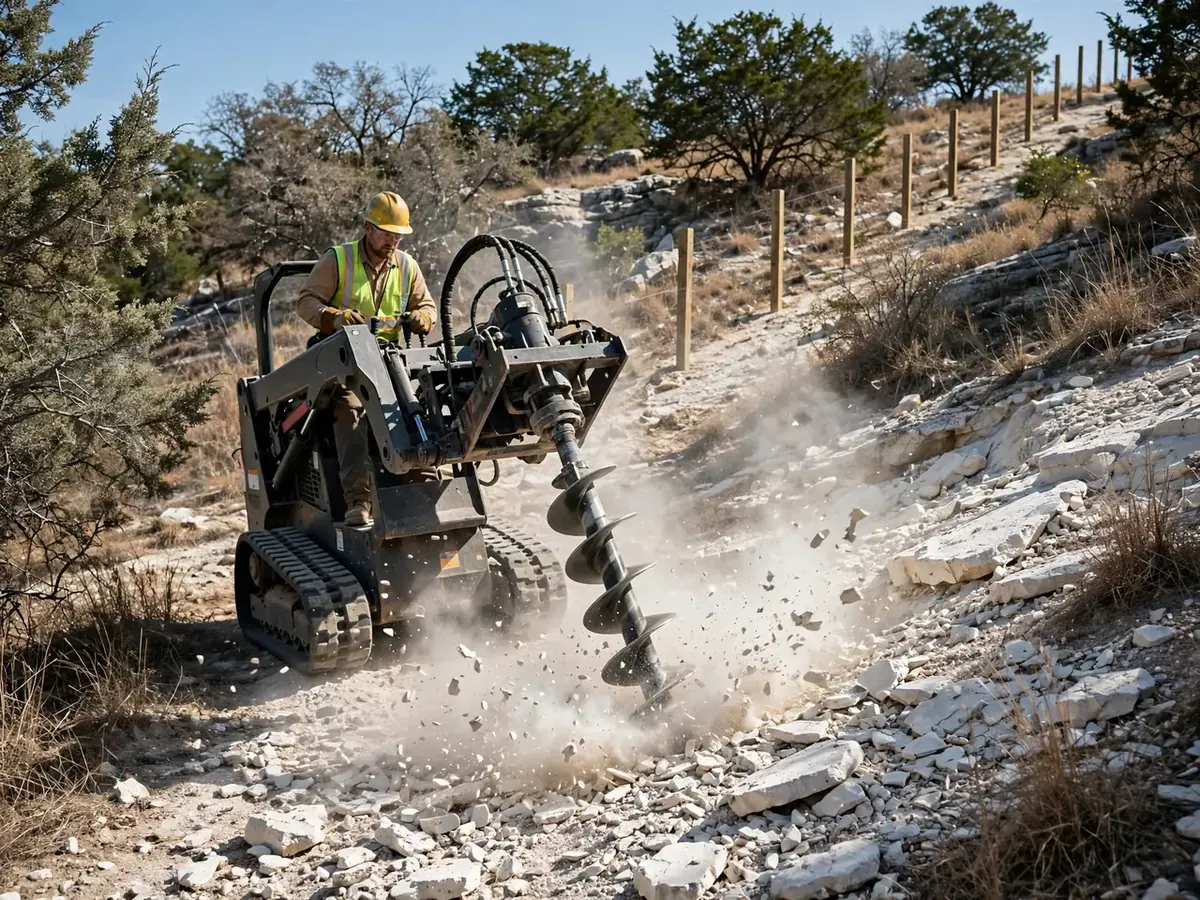
Rocky ground needs a rock auger or core drill, which changes the equipment, time and cost of setting posts.
Signs It's Time to Call in Austin
- Planning a pool, a dog or new privacy
- Moving onto acreage that needs livestock fencing
- HOA requires an approved style
- Neighbors replacing a shared fence
What to Have Ready
- Find your survey or plat showing property lines
- Check HOA fence guidelines and stain colors
- Measure the rough length of fence needed
- Call 811 to have utility lines marked before digging
- Mark gates and where you need access for mowers or vehicles
Planning Fence Installation in Austin: What to Expect
One call to 877-753-1892 gets the conversation started with a fence builder who works around Austin. Bring your measurements, photos and any HOA requirements.
877-753-1892Fence Questions From Austin Homeowners
Do I need a permit for a fence in Austin?
Texas has no statewide fence permit, but cities set rules on height, front-yard fences and masonry, and HOAs add their own. Check with your city and HOA before building.
What fence material is best near the coast?
Aluminum, vinyl and cedar with stainless or galvanized fasteners hold up best in salt air and humidity.
What should Austin homeowners know about fence projects?
Builder-installed fences in newer subdivisions often reach the end of their first life after 10 to 15 years. Shrink-swell clay moves posts every season, so post depth, footing shape and steel posts matter more than picket style. Winter Storm Uri in February 2021 brought days of hard freeze across Central Texas.