
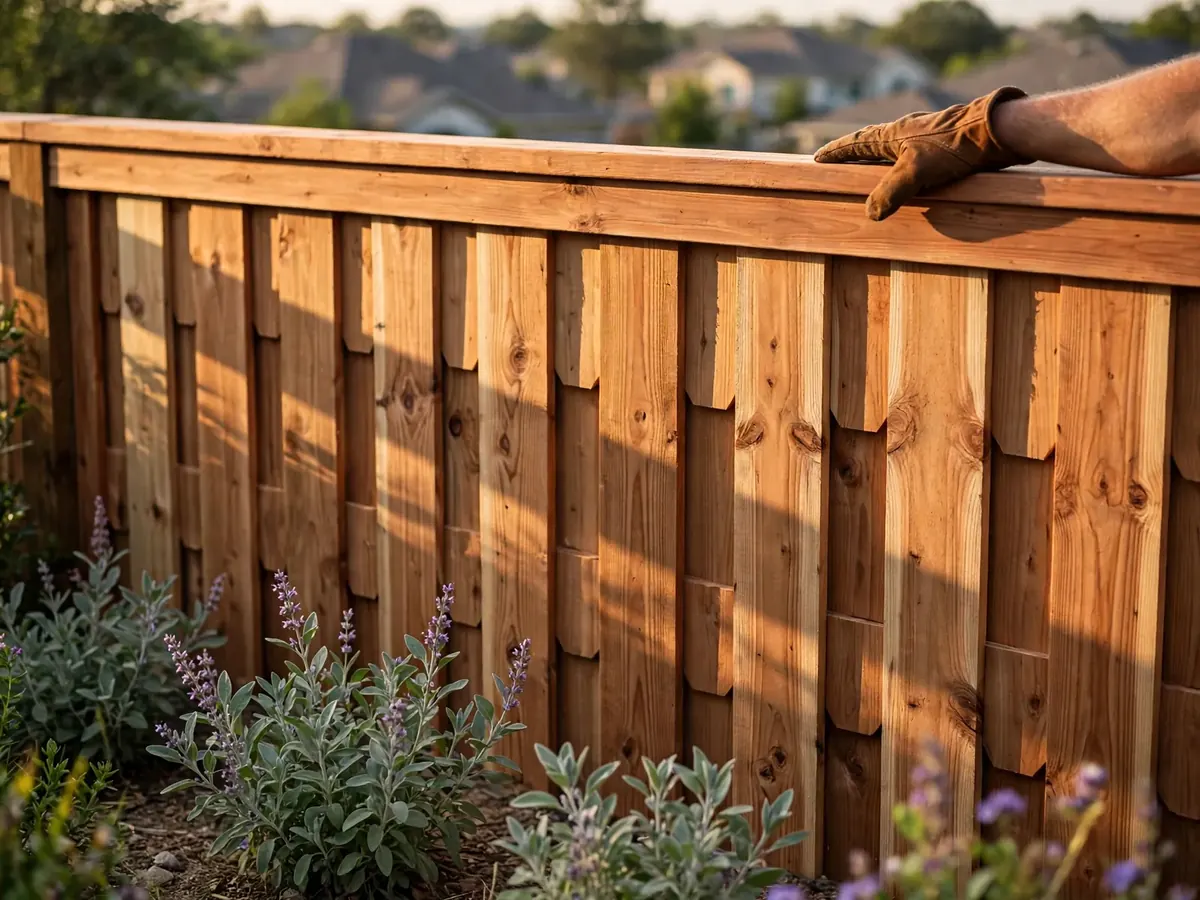
Fence Installation in Castroville: Local Conditions
Summers are long and hot, which dries out and grays wood fences quickly without stain. Beyond the city, towns like Floresville, Pleasanton, Hondo and Devine are surrounded by ranchland. North San Antonio sits on limestone and caliche, while the south and east sides have heavier clay soils.
- Cities set rules on front-yard fence height, corner-lot sight lines and masonry walls, so check before building.
- Shrink-swell clay moves posts every season, so post depth, footing shape and steel posts matter more than picket style.
Choosing Materials in Castroville
Cedar privacy fences and wrought iron in the city; pipe, wire and pipe-and-cable fencing on ranch land to the south and west.
Ranch, Pipe and Wire Fencing on Acreage
Pipe fencing is strong and long-lasting and is often welded on site. Wire fences cost less per foot but need well-built H-braces at corners and gates to stay tight. Ask the fence builder how they'll handle long runs and changes in grade.
Drilling Posts Into Limestone and Caliche
Caliche can be as hard as concrete. Where it's shallow, some crews core through it; where it's deep, they may set posts in the caliche layer itself with less concrete. Either way, it's worth asking how they plan to handle it before work starts.
Cedar Privacy Fences in Castroville
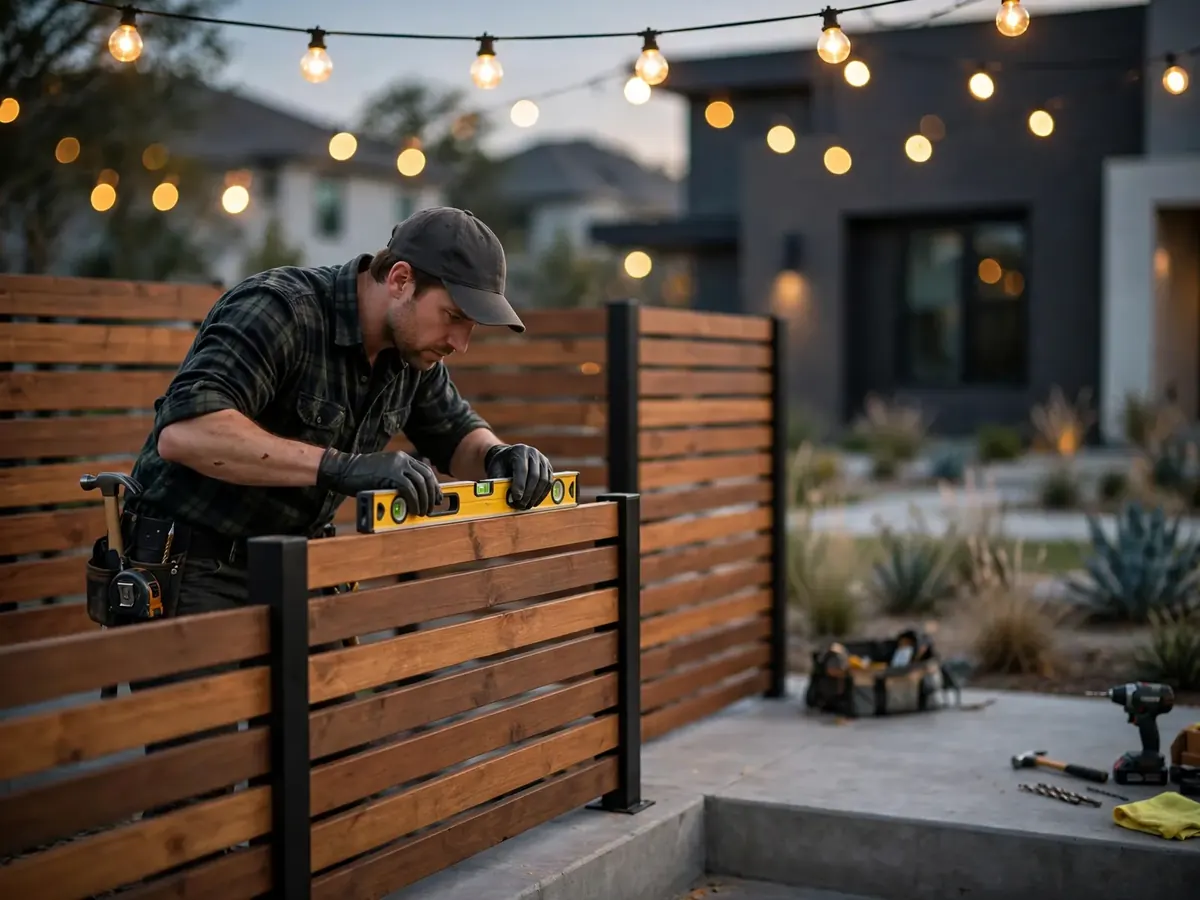
Six-foot cedar privacy fences are the standard backyard choice around Castroville. Cedar's natural oils slow rot and insects, it moves less than pine in the heat, and it takes a semi-transparent stain well. Western red cedar costs more than the more common Texas or Japanese cedar but holds its shape better; ask which species you're getting.
Setting Posts in Shifting Clay Soil
If neighboring fences in your part of Castroville lean, the soil is probably the reason. Ask the fence builder how they handle expansive clay: post depth, footing width and whether they use steel posts.
Steel Posts vs. Wood Posts
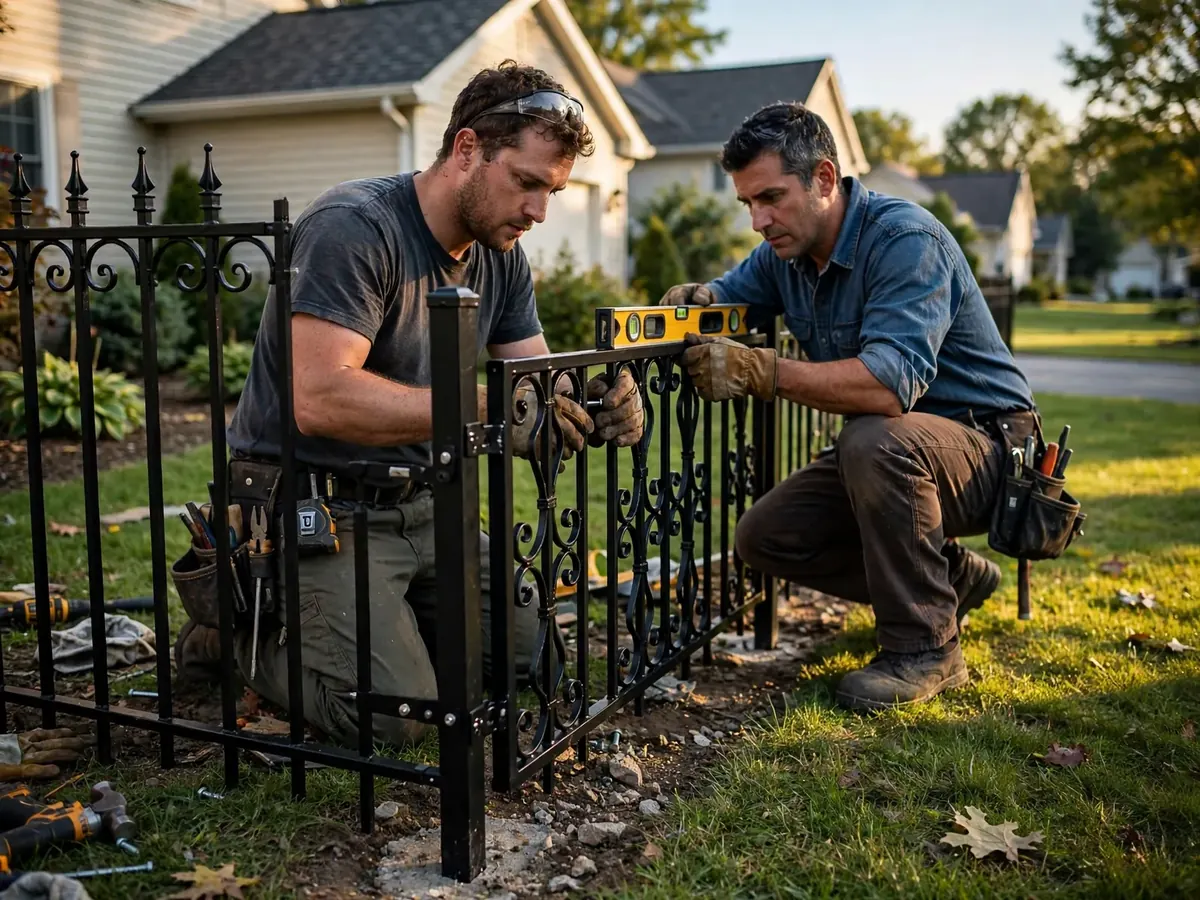
Ask how deep the posts will go and how much concrete each one gets. In shifting soil and high wind, depth matters as much as the post material. Deeper holes with a concrete footing that's crowned at the top to shed water help any post last longer.
More Fence Questions Around Castroville
Wrought Iron and Aluminum Fences
Ornamental iron and aluminum mark boundaries, secure pools and keep views open; aluminum resists rust near the coast.
Pet and Pool Fencing
Dogs need fences without gaps at the bottom or footholds to climb; pools need barriers with self-closing gates.
Vinyl and Composite Fences in Texas Heat
Vinyl and composite resist rot and insects; in sustained heat, choose products rated for high temperatures.
Signs It's Time to Call in Castroville
- Neighbors replacing a shared fence
- HOA requires an approved style
- Planning a pool, a dog or new privacy
- Moving onto acreage that needs livestock fencing
Quick Checks Before the Call
- Call 811 to have utility lines marked before digging
- Check HOA fence guidelines and stain colors
- Measure the rough length of fence needed
- Mark gates and where you need access for mowers or vehicles
- Find your survey or plat showing property lines
Fence Installation in Castroville: Talk to a Local Fence Builder
Have the details from the checklist above ready, then call 877-753-1892. A fence builder serving Castroville can tell you what the job involves, what affects the cost and whether anything needs attention right away.
877-753-1892Fence Questions From Castroville Homeowners
Are steel posts worth it?
In most of Texas, yes. Galvanized steel posts don't rot or attract termites and resist movement in clay soil better than wood posts.
What fence material is best near the coast?
Aluminum, vinyl and cedar with stainless or galvanized fasteners hold up best in salt air and humidity.
What should Castroville homeowners know about fence projects?
Hard caliche layers make post holes slow to dig and can trap water around wood posts. Rock close to the surface means posts are drilled rather than dug, which affects equipment and timing.