
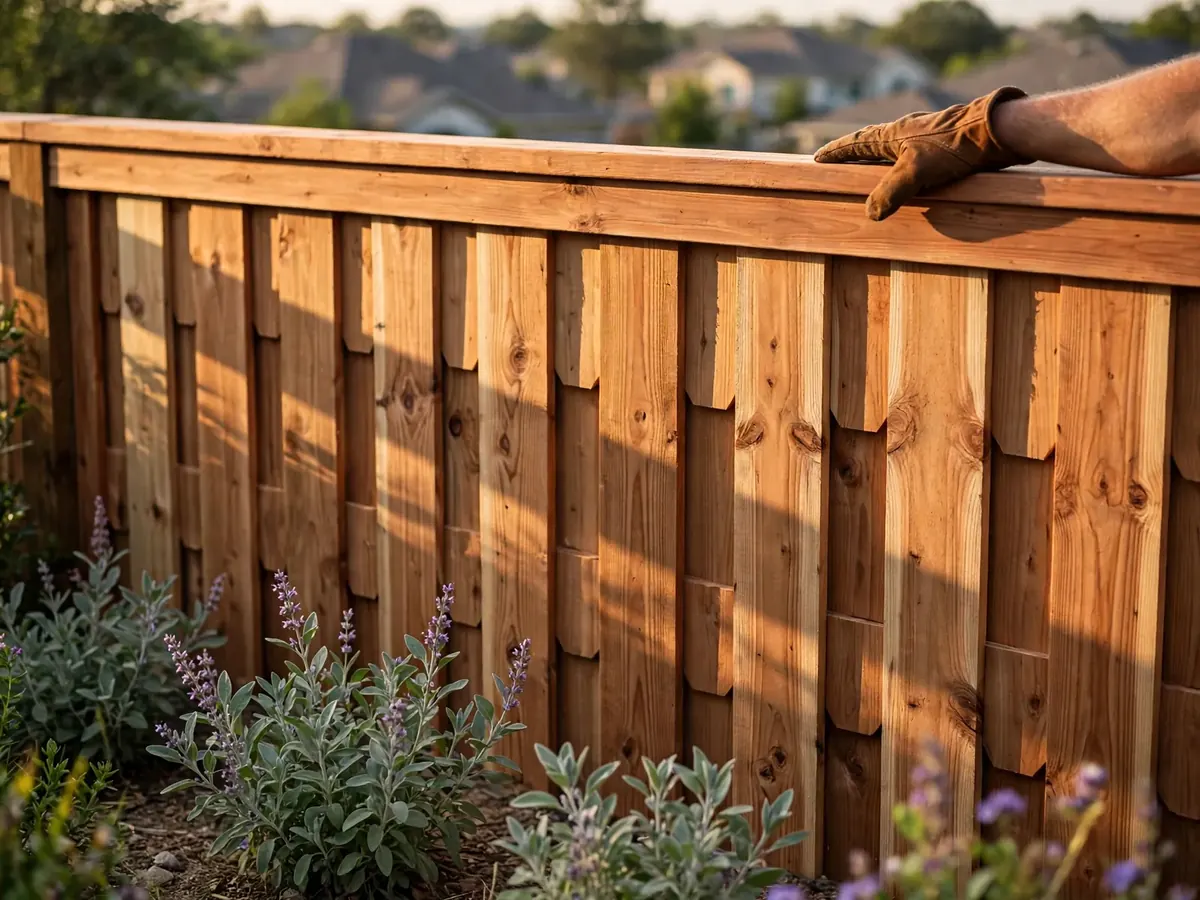
What to Know About Fence Installation in Converse
North San Antonio sits on limestone and caliche, while the south and east sides have heavier clay soils. Summers are long and hot, which dries out and grays wood fences quickly without stain. Beyond the city, towns like Floresville, Pleasanton, Hondo and Devine are surrounded by ranchland.
- Cities set rules on front-yard fence height, corner-lot sight lines and masonry walls, so check before building.
- Shrink-swell clay moves posts every season, so post depth, footing shape and steel posts matter more than picket style.
Choosing Materials in Converse
Cedar privacy fences and wrought iron in the city; pipe, wire and pipe-and-cable fencing on ranch land to the south and west.
Drilling Posts Into Limestone and Caliche
On limestone or caliche, a standard auger stops a few inches down. Fence crews use rock augers, jackhammers or core drills to reach a solid depth. It takes longer, but posts anchored in rock hold very well once they're in.
Ranch, Pipe and Wire Fencing on Acreage
For larger properties, a fence builder will walk the line, mark corners and gates, and plan around creeks, slopes and rock before quoting. Having a survey or plat helps avoid building on the wrong side of a property line.
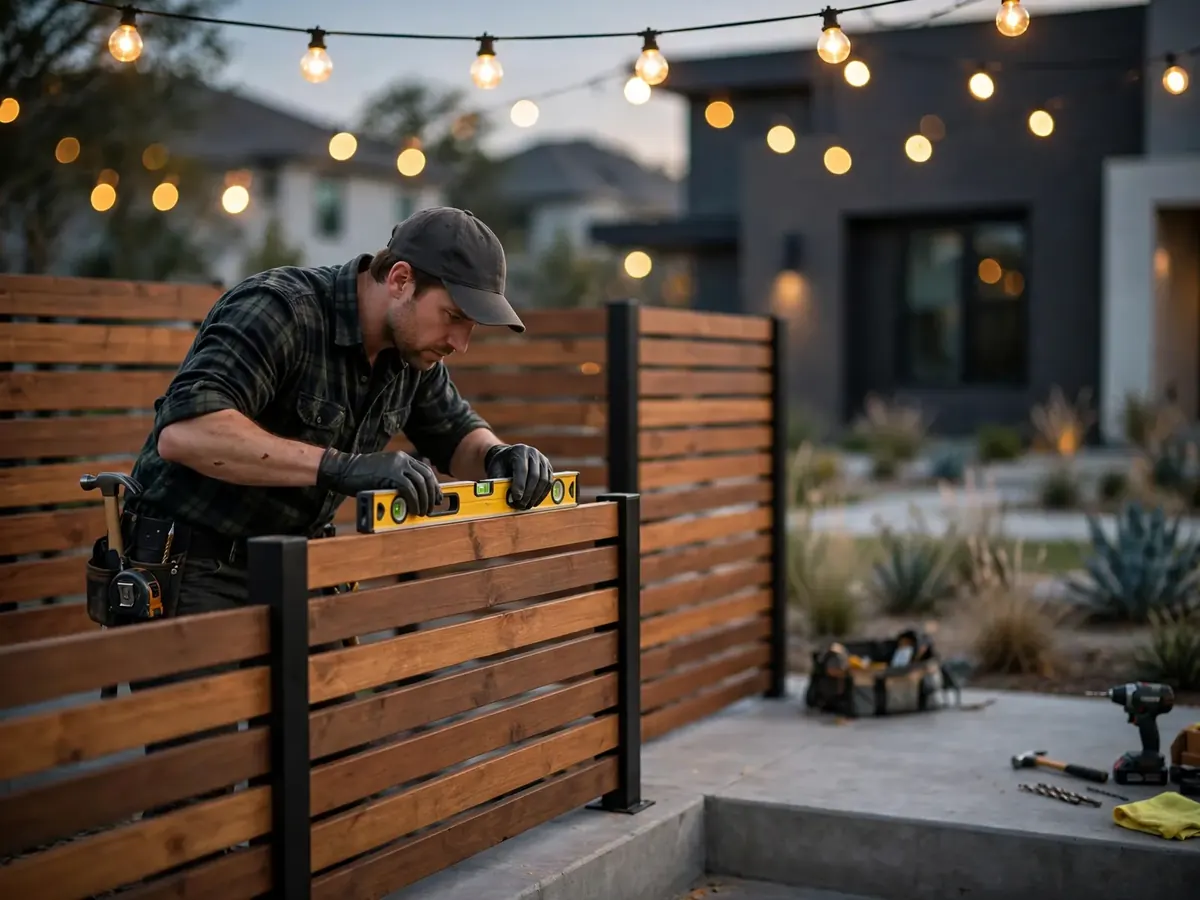
Cedar Privacy Fences in Converse
Cedar is popular for good reasons: it's lighter than pine, resists insects and rot, and weathers to a silver gray if you don't stain it. On a typical Converse lot the main decisions are picket style, rail count and whether to add a top cap and trim board for a finished look.
Setting Posts in Shifting Clay Soil
If neighboring fences in your part of Converse lean, the soil is probably the reason. Ask the fence builder how they handle expansive clay: post depth, footing width and whether they use steel posts.
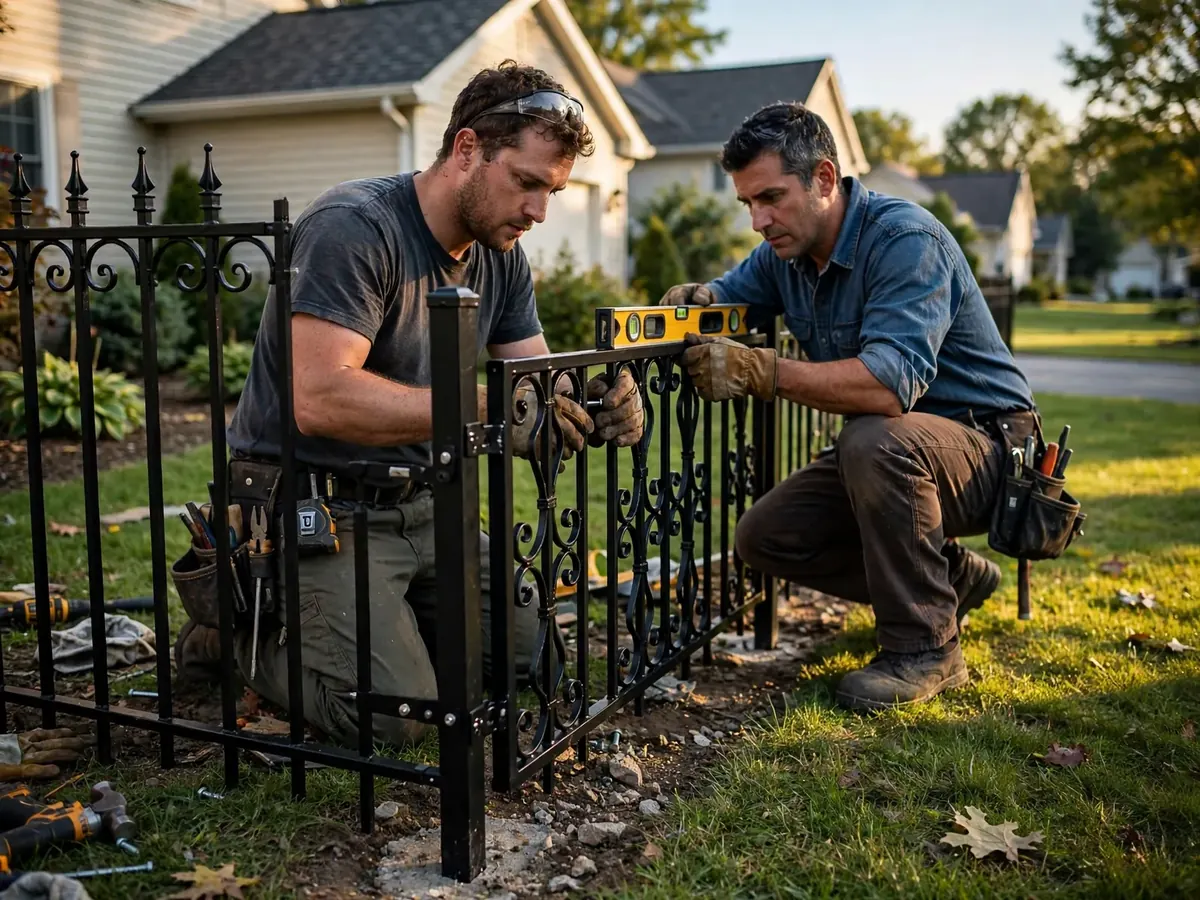
Vinyl and Composite Fences in Texas Heat
Vinyl doesn't rot or need stain, which appeals in humid areas with termites. In Texas sun, though, cheaper vinyl can sag or become brittle. Look for heavier-gauge, UV-stabilized products, and lighter colors that absorb less heat. Composite fencing is denser and handles heat better than most vinyl, at a higher cost.
Building a Fence That Stands Up to Wind
A 6-foot solid fence acts like a sail in a storm. In windy parts of Texas, closer post spacing, deeper footings, steel posts and three rails instead of two help it ride out gusts. Shadowbox or gapped designs let some wind pass through.
More Fence Questions Around Converse
HOA Rules, Permits and Property Lines
Cities set height and front-yard rules, HOAs add style and color rules, and a survey prevents building on the wrong side of the line.
Wrought Iron and Aluminum Fences
Ornamental iron and aluminum mark boundaries, secure pools and keep views open; aluminum resists rust near the coast.
Pet and Pool Fencing
Dogs need fences without gaps at the bottom or footholds to climb; pools need barriers with self-closing gates.
Common Reasons Converse Homeowners Call
- Neighbors replacing a shared fence
- Old fence leaning or sagging
- Planning a pool, a dog or new privacy
- HOA requires an approved style
Before You Call
- Mark gates and where you need access for mowers or vehicles
- Check HOA fence guidelines and stain colors
- Call 811 to have utility lines marked before digging
- Find your survey or plat showing property lines
- Measure the rough length of fence needed
Getting Fence Installation in Converse Started
Call 877-753-1892 and describe the project, your city and your timeline. You'll be pointed to a fence builder who works in Converse. Ask about scheduling, permits and how the job will be priced before work begins.
877-753-1892Fence Questions From Converse Homeowners
How long does a cedar fence last in Converse?
A well-built cedar fence often lasts many years, longer with steel posts and regular staining. Wood posts and unstained pickets in wet or shifting soil wear out sooner.
What fence material is best near the coast?
Aluminum, vinyl and cedar with stainless or galvanized fasteners hold up best in salt air and humidity.
What should Converse homeowners know about fence projects?
Hard caliche layers make post holes slow to dig and can trap water around wood posts. Rock close to the surface means posts are drilled rather than dug, which affects equipment and timing.