
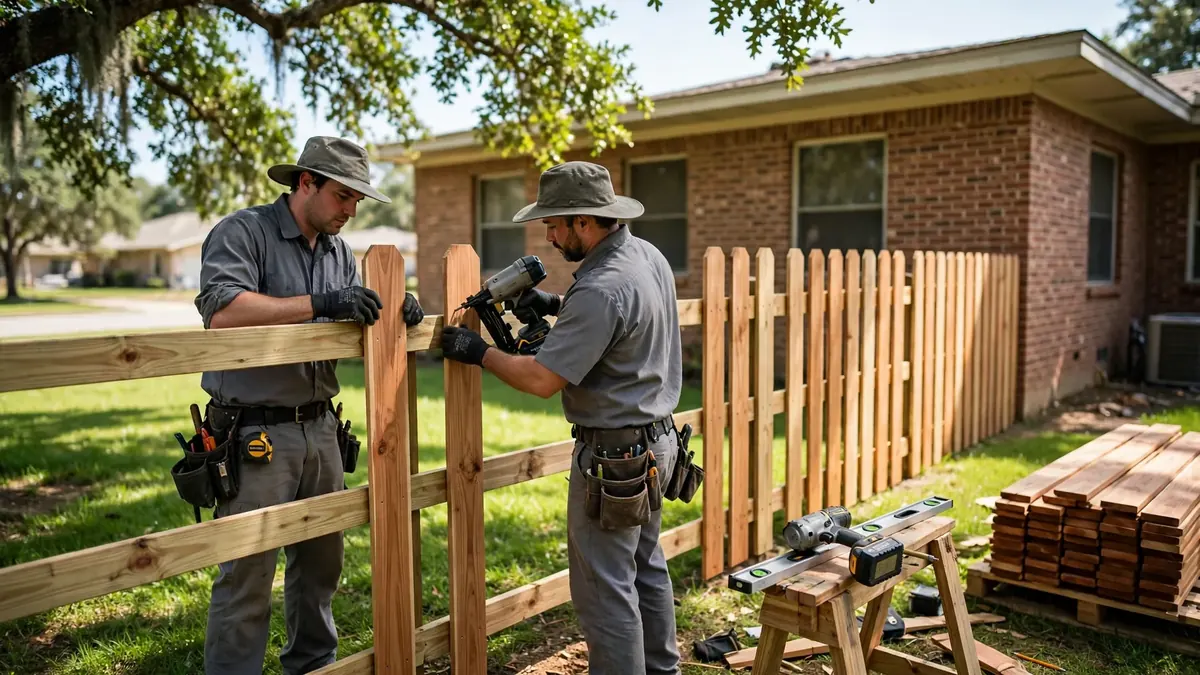
Fence Installation in Crandall: Local Conditions
The ground here is mostly Blackland Prairie clay. Black clay soils here are especially prone to shrinking and swelling, which makes post depth and concrete footings matter more.
Crandall is a Kaufman County town southeast of Dallas that has added many new subdivisions. Spring hail around Crandall makes it worth choosing materials that are easy to repair. Shifting clay is a common thread between Crandall and Italy.
- First-generation fences in newer neighborhoods are reaching the age where repairs give way to replacement.
- A privacy fence facing open ground takes the full force of the wind, so stronger posts are a sensible upgrade.
Materials That Suit Crandall
Cedar privacy fences in town, with pipe, wire and pipe-and-cable fencing on acreages; steel posts help in the shifting clay. Crandall's clay is the reason so many local fences lean; building deeper avoids joining them.
Cedar Privacy Fences in Crandall
If privacy is the goal, cedar pickets on a 6-foot frame are what most Crandall homeowners choose. The details that make it last are the post type, the number of rails (three rails reduce sagging on taller fences) and whether the bottom of the pickets sits slightly above the soil so it doesn't wick up moisture. Pre-stained or kiln-dried cedar can be stained sooner after installation than green lumber, which needs time to dry first.
A top cap and trim board add a finished look and also shed rain off the end grain of the pickets, which is where cedar takes on water first. In Crandall's newer neighborhoods, upgrades often replace the original builder materials.
One practical point: Ask who handles permits, utility locates and HOA paperwork so nothing falls through the cracks.
Building a Fence That Stands Up to Wind
In windy parts of Texas, closer post spacing, deeper footings, steel posts and three rails instead of two help it ride out gusts. Leaving a small gap at the bottom of the fence lets some wind pass and keeps pickets dry.
A solid 6-foot privacy fence catches wind like a sail, so the loads on its posts are far higher than most people expect. In windy Crandall, designs that let some air through can last longer.
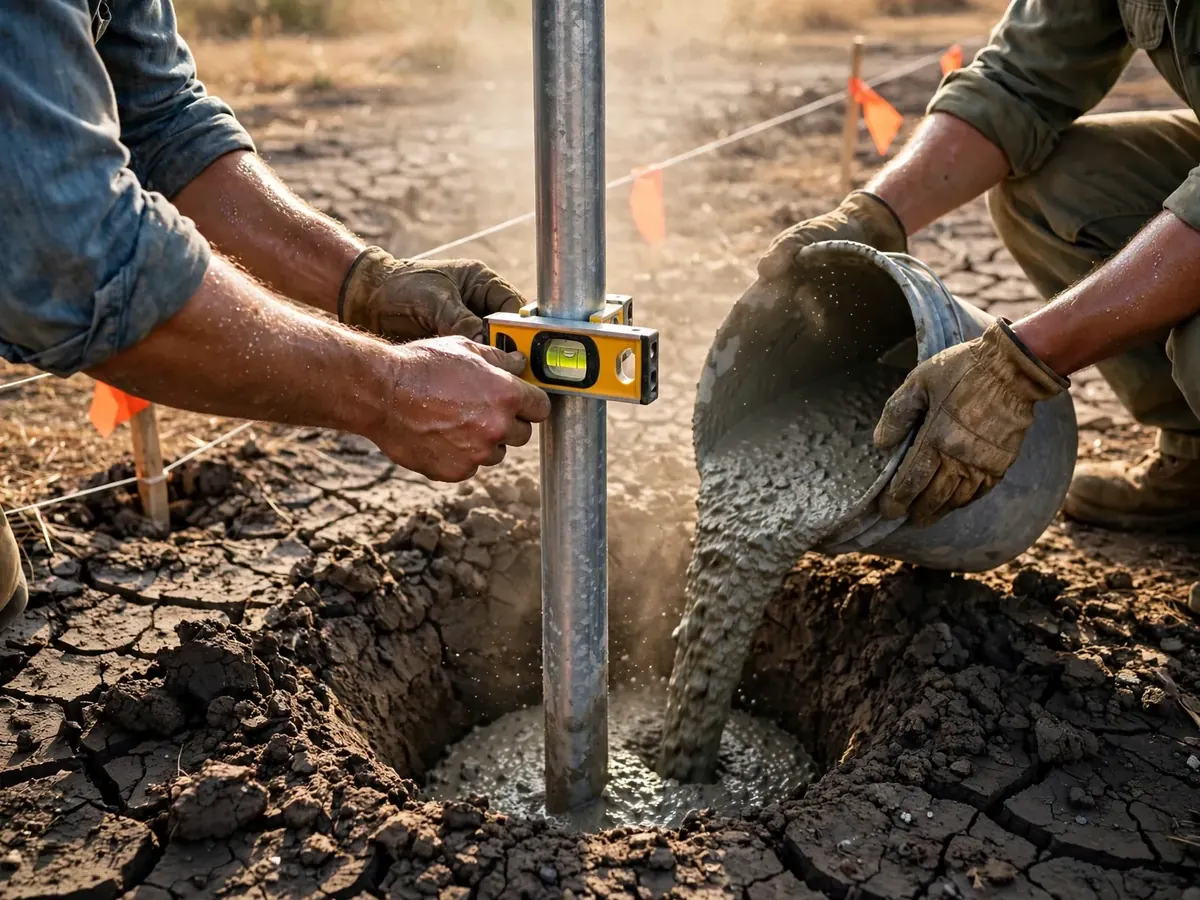
Steel Posts vs. Wood Posts
Ask how deep the posts will go and how much concrete each one gets. Steel posts connect to wood rails with brackets or lag screws, and many builders place the posts on the inside so they're hidden from the street.
Steel posts can be painted to match the stain or hidden behind a wood wrap if you don't want them to show. Because much of Crandall sits on shrink-swell clay, the details below the ground matter more here than in sandy or rocky areas.
One practical point: DIY makes the most sense for short runs and simple designs.
Ranch, Pipe and Wire Fencing on Acreage
Corner and brace posts carry the load, so they deserve the most attention. Pipe fencing is strong and long-lasting and is often welded on site.
Mixing materials is common: pipe near the house and barn where looks and strength matter, wire along back pastures where distance matters more. Rural Crandall properties often need longer runs and sturdier gates than suburban lots.
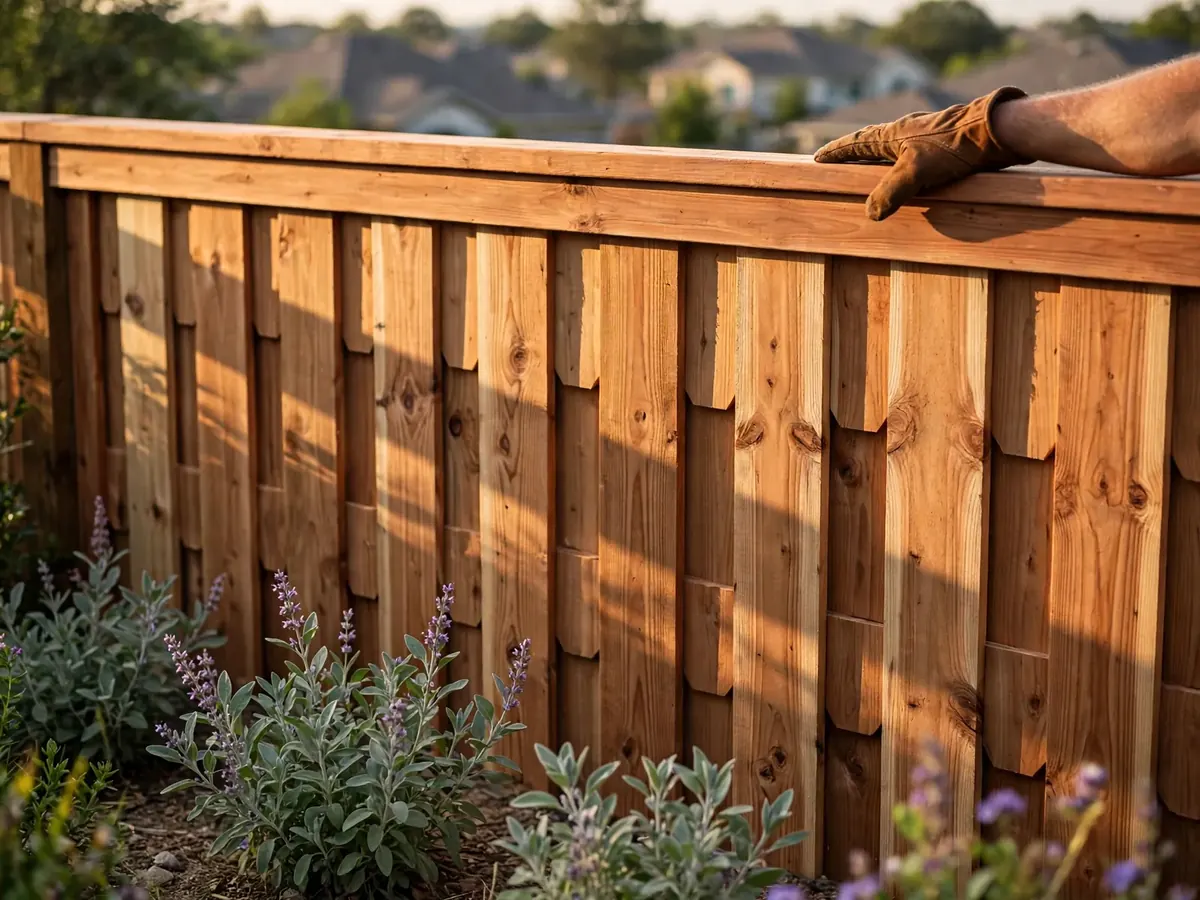
Board-on-Board and Shadowbox Styles
If your fence faces strong wind, a shadowbox design takes some load off the posts by letting air pass between the pickets. Board-on-board gives complete privacy but acts more like a solid wall in a storm, so post spacing and depth matter more.
On windy lots, shadowbox gives a little relief to the posts while still blocking most views.
A question many homeowners raise: If your HOA needs to approve the plan, start that first, since crews can't begin without it.
More Fence Questions Around Crandall
Pet and Pool Fencing
Pool safety is about layers: the fence, the gate and supervision all work together.
Horizontal and Modern Fence Designs
Mixing materials, such as horizontal cedar with black metal posts, gives a clean architectural look.
Setting Posts in Shifting Clay Soil
A post set roughly a third of its above-ground height into the ground, with a bell-shaped or wider footing, resists that seasonal heave far better than a shallow one.
Common Reasons Crandall Homeowners Call
Watch for these around your Crandall property:
- Moving onto acreage that needs livestock fencing
- Planning a pool, a dog or new privacy
- Old fence leaning or sagging
Before You Call
- Mark gates and where you need access for mowers or vehicles
- Measure the rough length of fence needed
- Call 811 to have utility lines marked before digging
- Mark where vehicles, trailers and animals need to pass
- Notice whether nearby fences or the house foundation show signs of soil movement
Getting Fence Installation in Crandall Started
One call to 877-753-1892 gets the conversation started with a fence builder who works around Crandall. Bring your measurements, photos and any HOA requirements. Whether you're ready to book or just comparing options, call today.
877-753-1892Fence Questions From Crandall Homeowners
Do I need a permit for a fence in Crandall?
There's no statewide fence permit in Texas. Cities, however, regulate height, front-yard fences and masonry walls, and HOAs often require approval, so check both before you build. Ask about this on your first call, since conditions vary across Crandall.
How can I keep a Crandall fence project within budget?
A cheaper fence that needs new posts in a few years can cost more in the end than a sturdier one built once. Sticker shock is common, but the biggest savings usually come from choosing the right height and post type, not the cheapest pickets.
What should Crandall homeowners know about fence projects?
Occasional hard freezes in Crandall are a reason to make sure water can drain away from footings. South and east of Dallas, subdivisions give way quickly to acreages and small farms, so a single town can need both a backyard privacy fence and a pasture fence.