
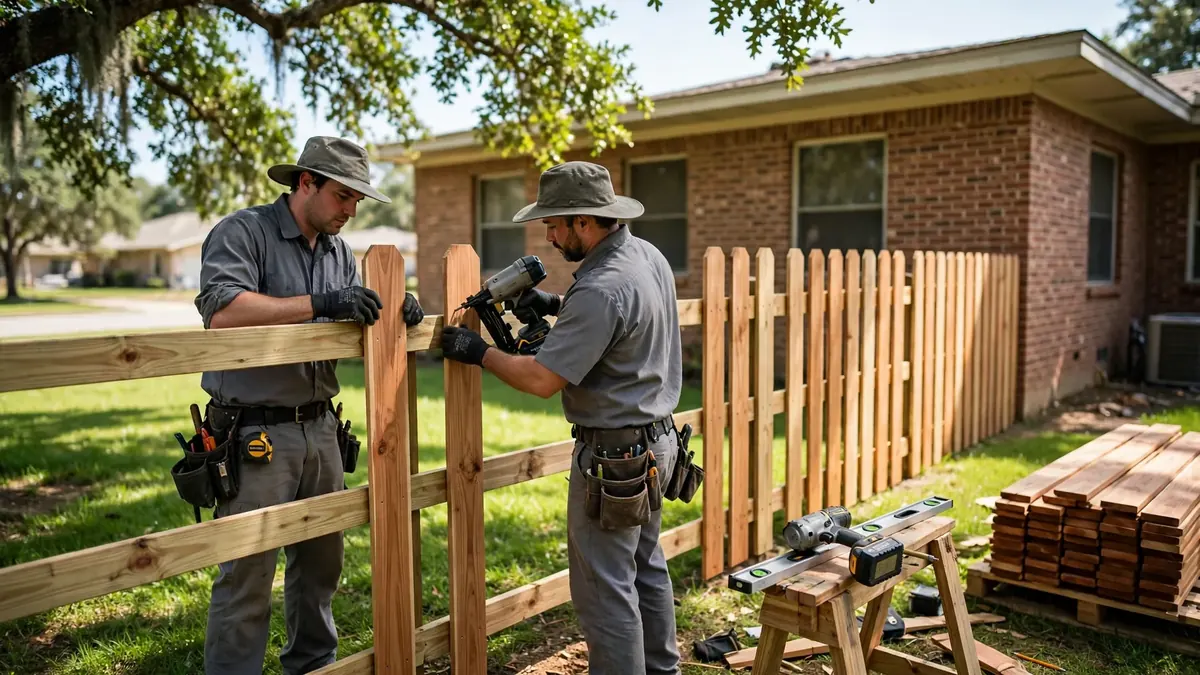
What to Know About Fence Installation in Palmer
Palmer is a small Ellis County town along Interstate 45 south of Dallas. Black clay soils here are especially prone to shrinking and swelling, which makes post depth and concrete footings matter more.
Lots are often rural or semi-rural. Open exposure in Palmer means the fence should be built for gusts. Palmer shares shifting clay with Maypearl, so solutions that work well there usually suit Palmer too.
- Many subdivision fences were built to a budget, and their posts are often the first thing to go.
- A privacy fence facing open ground takes the full force of the wind, so stronger posts are a sensible upgrade.
What Holds Up Around Palmer
Cedar privacy fences in town, with pipe, wire and pipe-and-cable fencing on acreages; steel posts help in the shifting clay. Hail storms are common enough in Palmer that many owners plan for occasional repairs.
Cedar Privacy Fences in Palmer
Cedar is popular for good reasons: it's lighter than pine, resists insects and rot, and weathers to a silver gray if you don't stain it. Western red cedar costs more than the more common Texas or Japanese cedar but holds its shape better; ask which species you're getting.
If you're comparing estimates, check whether both quote the same picket thickness and rail count; those two details explain many price differences. In Palmer's newer neighborhoods, upgrades often replace the original builder materials.
Worth knowing before you call: Spring is busy for fence crews; booking a little ahead of the season gives you more scheduling choices.
Board-on-Board and Shadowbox Styles
Board-on-board overlaps each picket so there's no see-through even after the wood dries out. Standard side-by-side pickets shrink in Texas heat and open small gaps.
On windy lots, shadowbox gives a little relief to the posts while still blocking most views.
Steel Posts vs. Wood Posts
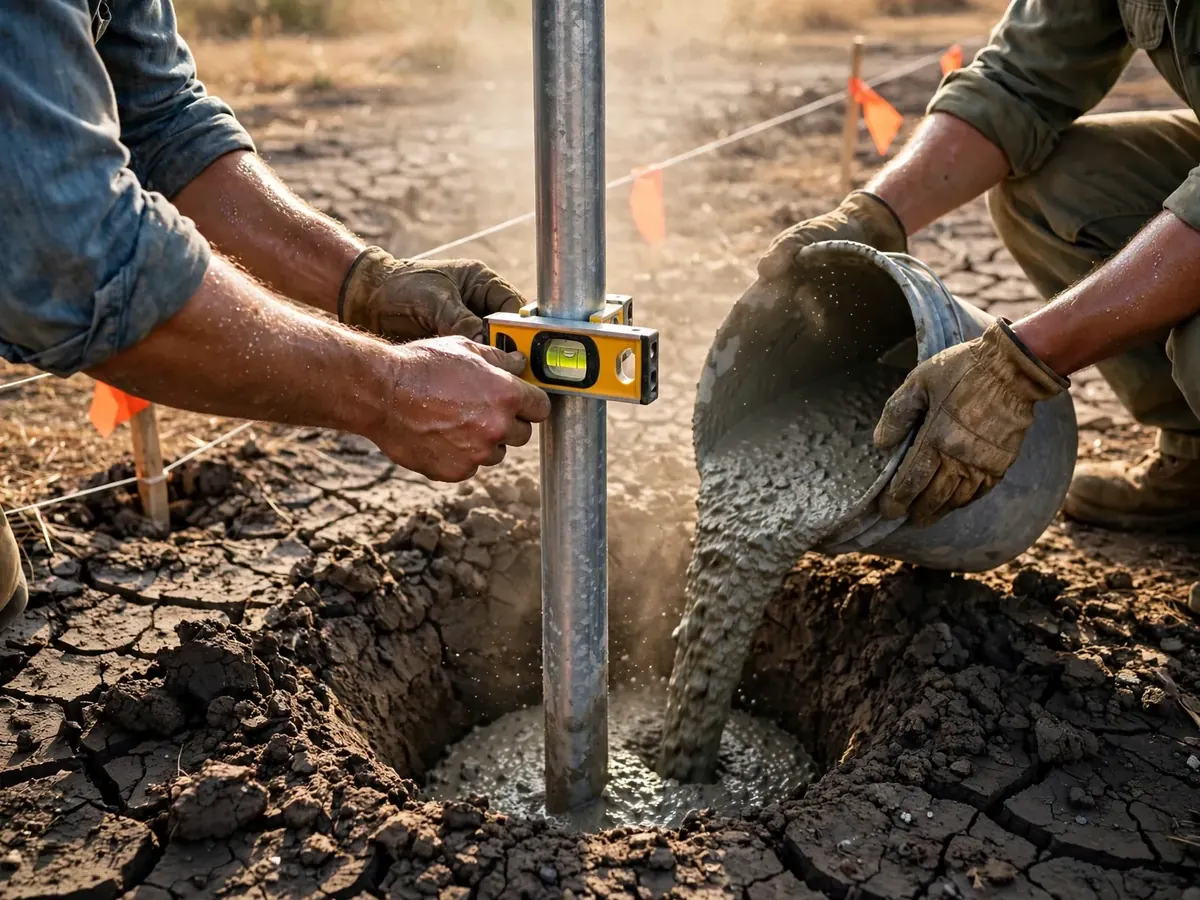
Galvanized steel posts set in concrete, with wood rails and pickets attached by brackets, are now the common upgrade and usually outlast the wood they hold up. In shifting soil and high wind, depth matters as much as the post material.
Steel posts are usually 2 3/8-inch galvanized pipe; ask about the wall thickness, because heavier-gauge pipe resists bending in a storm. In Palmer's clay, a fence that looks perfect on day one can drift out of line within a few seasons if the footings are shallow.
Something to keep in mind: DIY makes the most sense for short runs and simple designs.
Ranch, Pipe and Wire Fencing on Acreage
Pipe fencing is strong and long-lasting and is often welded on site. Pipe fence posts are usually set in concrete and spaced about 8 to 10 feet apart.
Long fences are built in stages: corners and braces first, then line posts, then wire or rails. Larger Palmer properties often need a mix of fence types for different areas.
Building a Fence That Stands Up to Wind
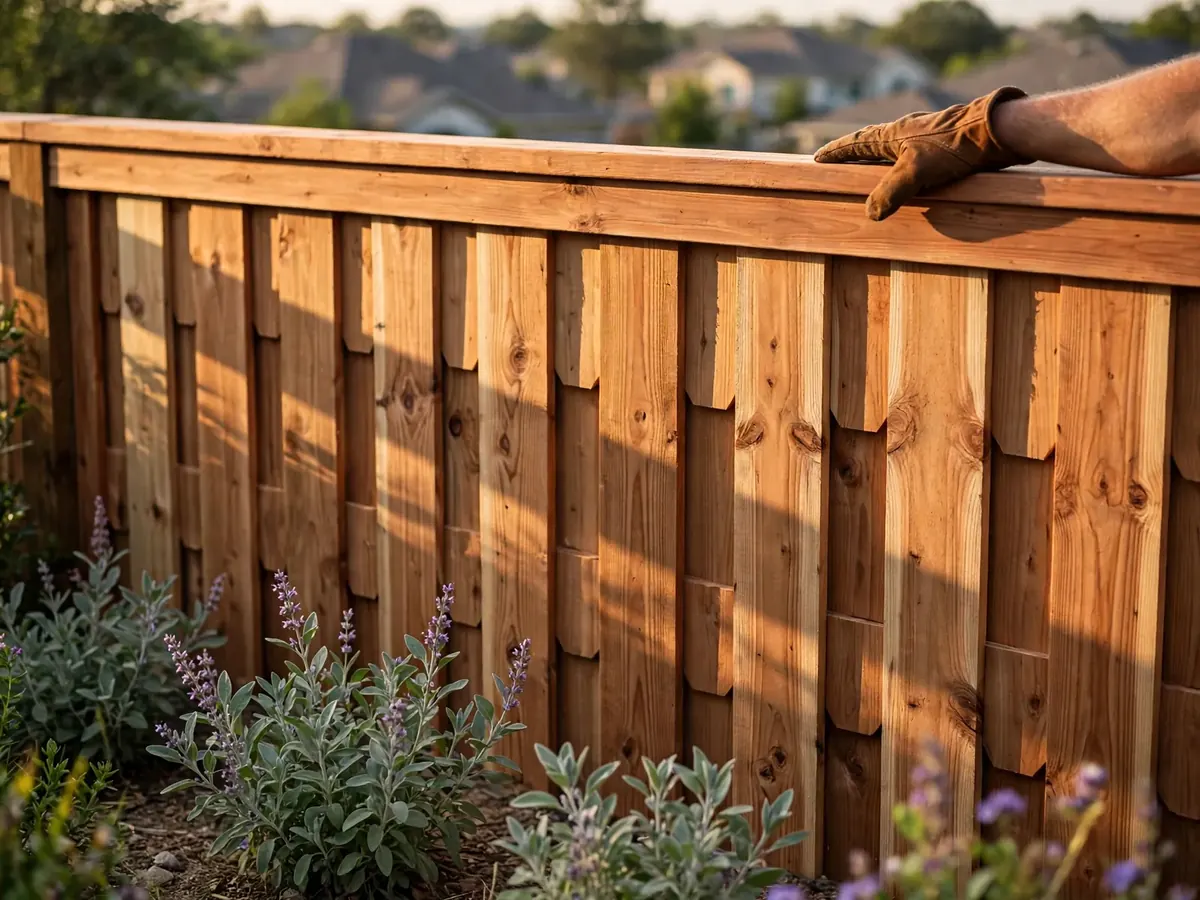
Shadowbox or gapped designs let some wind pass through. A 6-foot solid fence acts like a sail in a storm.
Closer post spacing, deeper footings and steel posts each reduce how much any single post has to resist in a gust. Spring hail around Palmer makes it worth choosing materials that are easy to repair.
One practical point: A fence on steel posts, kept stained, often outlives two fences built on wood posts.
More Fence Questions Around Palmer
Setting Posts in Shifting Clay Soil
Builders who know clay talk about depth and drainage before they talk about pickets; that's a good sign.
Horizontal and Modern Fence Designs
Horizontal slat fences give a modern look but need tighter post spacing to keep long boards from sagging.
HOA Rules, Permits and Property Lines
Cities set height and front-yard rules, HOAs add style and color rules, and a survey prevents building on the wrong side of the line.
Common Reasons Palmer Homeowners Call
If any of these sound familiar at your Palmer home, it's a good time to talk to a fence builder:
- Neighbors replacing a shared fence
- HOA requires an approved style
- Old fence leaning or sagging
What to Have Ready
- Check HOA fence guidelines and stain colors
- Mark gates and where you need access for mowers or vehicles
- Measure the rough length of fence needed
- Mark where vehicles, trailers and animals need to pass
- Notice whether nearby fences or the house foundation show signs of soil movement
Fence Installation in Palmer: Talk to a Local Fence Builder
Give 877-753-1892 a call with your Palmer address area and a rough idea of the scope. A fence builder can explain what the work involves and what to expect next. Have a question about your fence? A quick call is the fastest way to get it answered.
877-753-1892Fence Questions From Palmer Homeowners
How long does a cedar fence last in Palmer?
A well-built cedar fence often lasts many years, longer with steel posts and regular staining. Wood posts and unstained pickets in wet or shifting soil wear out sooner. In Palmer, that comes down to your lot and how the fence is built.
How can I keep a Palmer fence project within budget?
If budget is the sticking point, consider phasing the work: replace the sections that face the street or the dog run first, and finish the rest when it makes sense. Sticker shock is common, but the biggest savings usually come from choosing the right height and post type, not the cheapest pickets.
What should Palmer homeowners know about fence projects?
Occasional hard freezes in Palmer are a reason to make sure water can drain away from footings. South and east of Dallas, subdivisions give way quickly to acreages and small farms, so a single town can need both a backyard privacy fence and a pasture fence.