
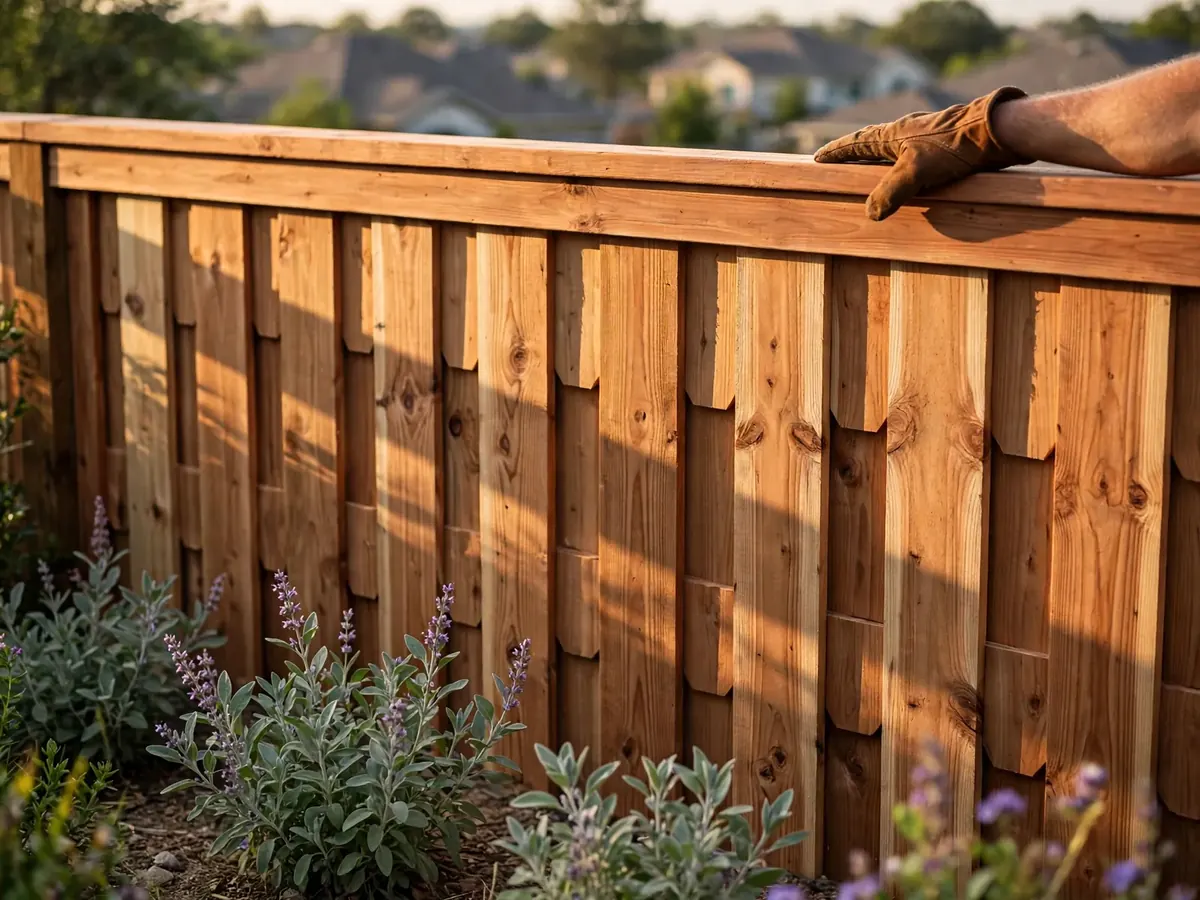
Fence Installation in Freeport: Local Conditions
Hurricane Ike in 2008 and Hurricane Harvey in 2017 caused widespread wind and flood damage here, and Hurricane Beryl hit the area in 2024. These towns sit along Galveston Bay and the Brazoria County coast, where salt air corrodes fasteners and steel faster than inland.
- Humidity keeps wood damp longer, so rot at the base of posts is the most common failure.
- Salt air near the coast corrodes ordinary nails and steel, so stainless or hot-dip galvanized hardware is worth it.
Choosing Materials in Freeport
Cedar fences with stainless or hot-dip galvanized fasteners, aluminum instead of steel for ornamental fencing, and vinyl where salt air is heavy.
Vinyl and Composite Fences in Texas Heat
If you choose vinyl or composite, ask how the panels handle thermal expansion and wind. Posts and rail connections are designed differently from wood fences, and the installation instructions matter for any manufacturer coverage.
Steel Posts vs. Wood Posts
Ask how deep the posts will go and how much concrete each one gets. In shifting soil and high wind, depth matters as much as the post material. Deeper holes with a concrete footing that's crowned at the top to shed water help any post last longer.
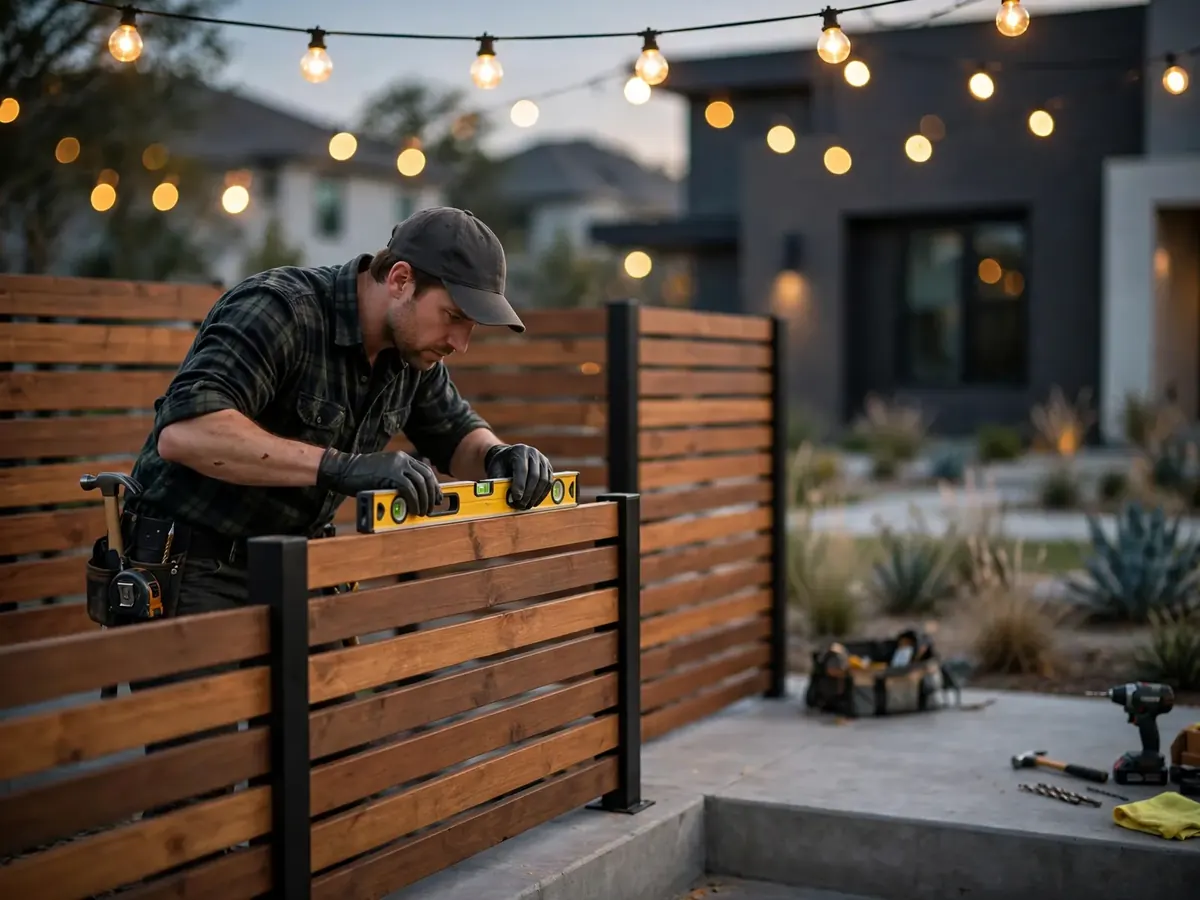
Wrought Iron and Aluminum Fences
Ornamental fencing is common in Freeport for front yards, along greenbelts and around pools. True wrought iron and welded steel are strong but need paint touch-ups to prevent rust; powder-coated aluminum never rusts and suits humid or coastal areas. Both keep views open while defining the yard.
Building a Fence That Stands Up to Wind
If fences in your part of Freeport tend to blow over in storms, the fix is in the structure: posts, footings and rails. Ask the builder how they design for wind and whether steel posts are an option.
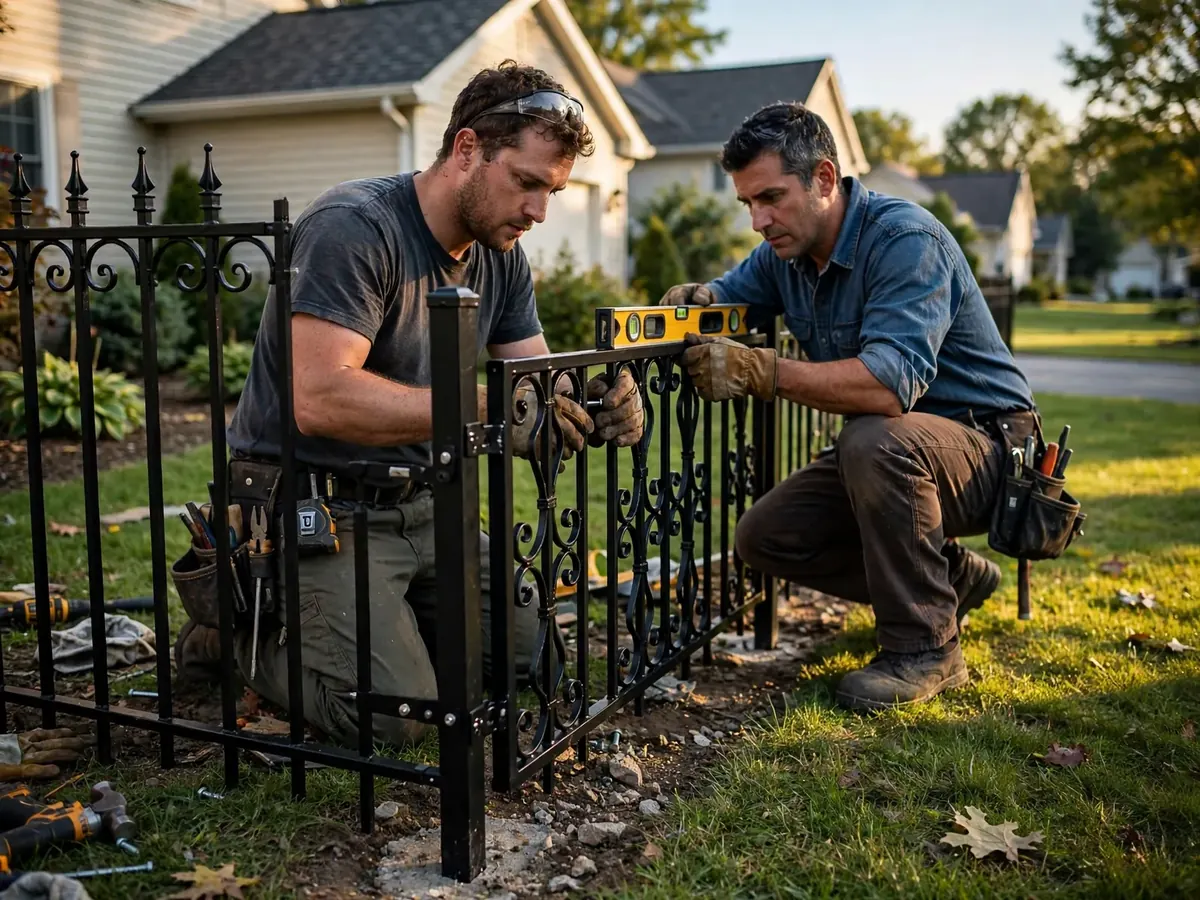
Cedar Privacy Fences in Freeport
Six-foot cedar privacy fences are the standard backyard choice around Freeport. Cedar's natural oils slow rot and insects, it moves less than pine in the heat, and it takes a semi-transparent stain well. Western red cedar costs more than the more common Texas or Japanese cedar but holds its shape better; ask which species you're getting.
More Fence Questions Around Freeport
Setting Posts in Shifting Clay Soil
Expansive clay swells and shrinks with moisture, slowly pushing posts out of plumb unless they're set deep.
Ranch, Pipe and Wire Fencing on Acreage
Acreages use pipe, pipe-and-cable, barbed wire or no-climb wire depending on livestock, pets and budget.
Board-on-Board and Shadowbox Styles
Overlapping board-on-board pickets close gaps as wood shrinks; shadowbox alternates sides so both neighbors see a finished face.
Signs It's Time to Call in Freeport
- Moving onto acreage that needs livestock fencing
- Planning a pool, a dog or new privacy
- HOA requires an approved style
- Old fence leaning or sagging
Before You Call
- Find your survey or plat showing property lines
- Mark gates and where you need access for mowers or vehicles
- Measure the rough length of fence needed
- Check HOA fence guidelines and stain colors
- Call 811 to have utility lines marked before digging
Planning Fence Installation in Freeport: What to Expect
Call 877-753-1892 and describe the project, your city and your timeline. You'll be pointed to a fence builder who works in Freeport. Ask about scheduling, permits and how the job will be priced before work begins.
877-753-1892Fence Questions From Freeport Homeowners
Do I need a permit for a fence in Freeport?
Texas has no statewide fence permit, but cities set rules on height, front-yard fences and masonry, and HOAs add their own. Check with your city and HOA before building.
Are steel posts worth it?
In most of Texas, yes. Galvanized steel posts don't rot or attract termites and resist movement in clay soil better than wood posts.
What should Freeport homeowners know about fence projects?
Termites go after wood posts in the ground, another reason steel posts are popular. Aluminum and vinyl resist the salt air better than steel ornamental fencing.