
Fence Installation in Manor: Local Conditions
Manor, east of Austin, has added many new subdivisions on Blackland Prairie clay. New homes surround a small historic downtown.
Manor is a Travis County city along U.S. 290 east of Austin. Because much of Manor sits on shrink-swell clay, the details below the ground matter more here than in sandy or rocky areas. A fence that suits Smithville's sandy soil isn't automatically right for Manor, where shifting clay matters more.
- City ordinances cover fence height, front-yard placement and sight lines at intersections.
- First-generation fences in newer neighborhoods are reaching the age where repairs give way to replacement.
Choosing Materials in Manor
Cedar privacy fences on steel posts lead, modern horizontal designs are popular closer to the urban core, and pipe or wire fencing appears on acreage to the east and northwest. Many Manor neighborhoods have HOAs, so check their guidelines before choosing styles and colors.
Cedar Privacy Fences in Manor
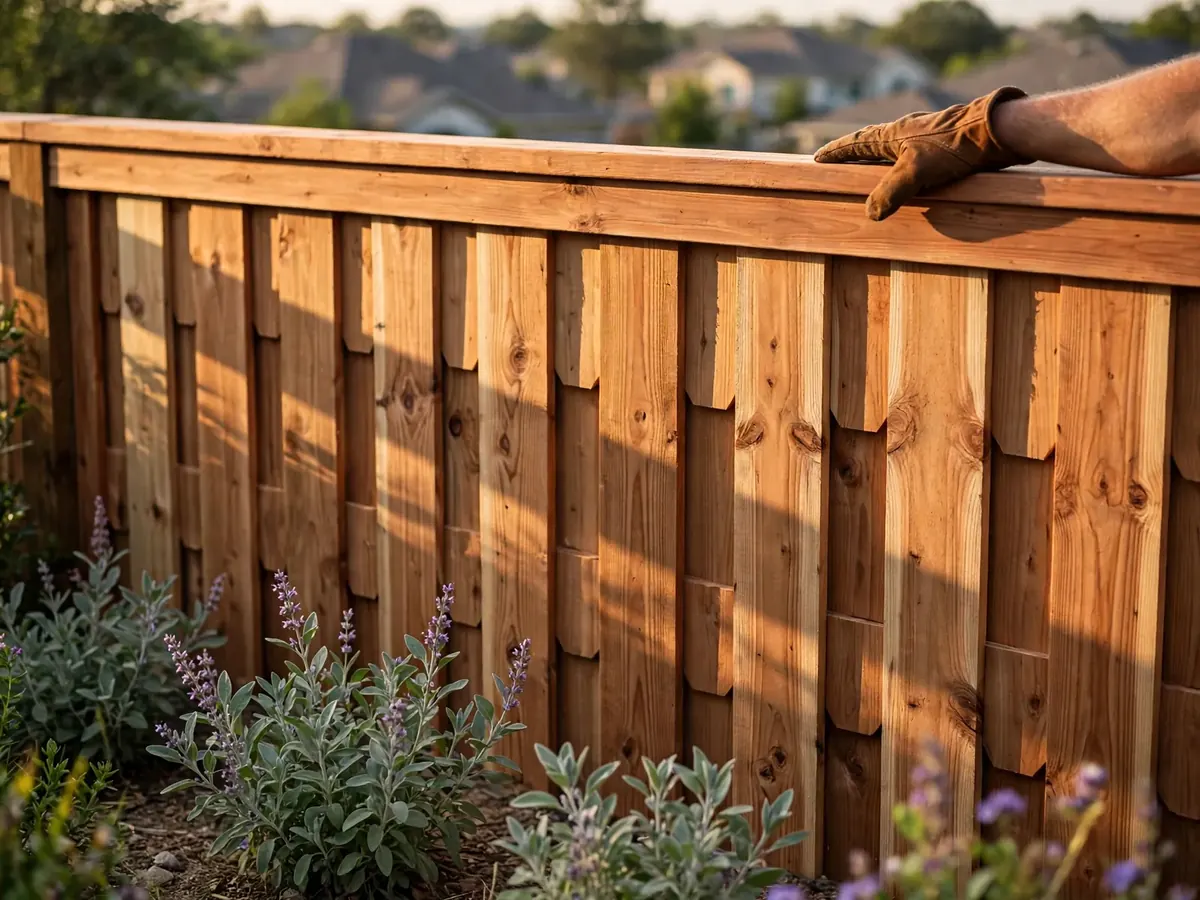
Pickets usually come in 5/8-inch or 3/4-inch thickness; the thicker board costs a little more and resists warping noticeably better. Six-foot cedar privacy fences are the standard backyard choice around Manor.
A top cap and trim board add a finished look and also shed rain off the end grain of the pickets, which is where cedar takes on water first. City codes in Manor may set limits that affect your design.
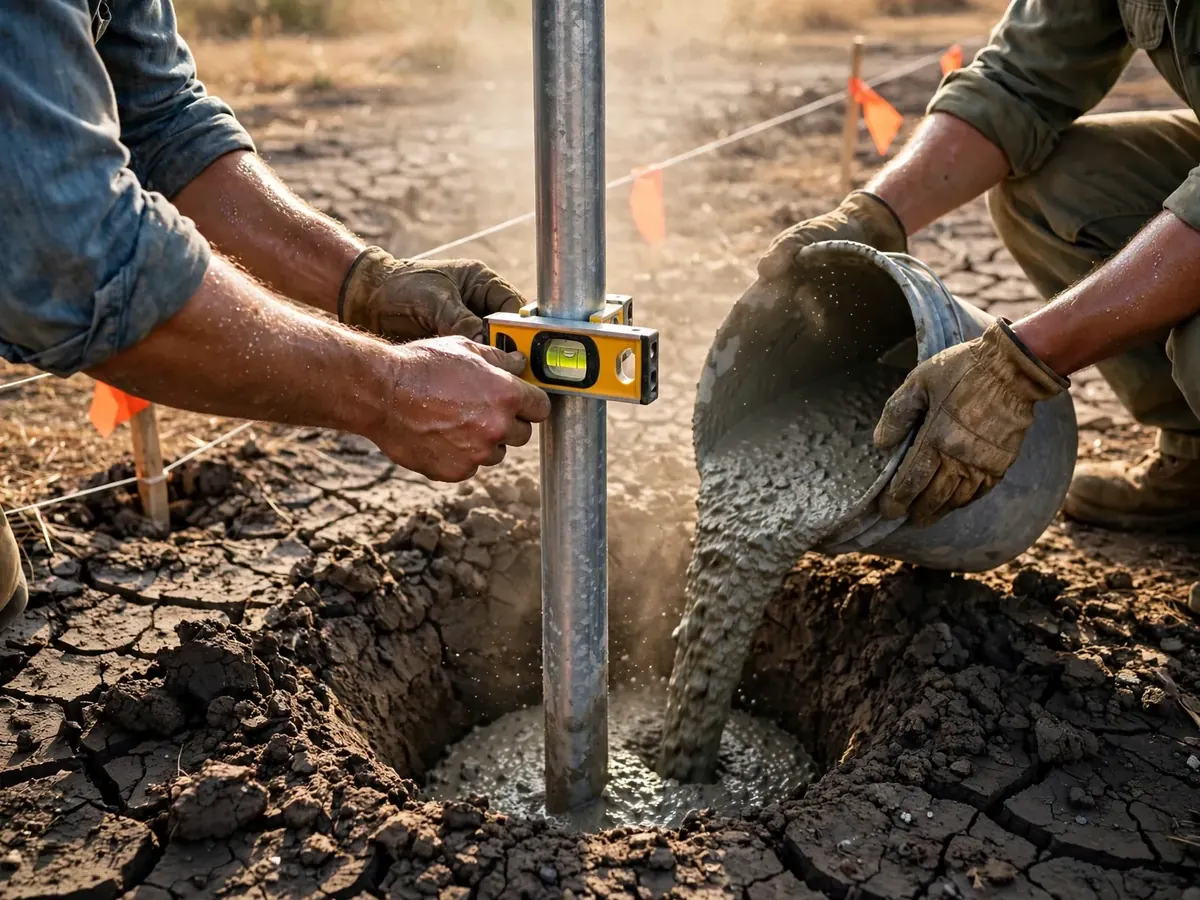
Thinking about doing it yourself? Pickets are easy; setting posts plumb and deep enough to survive the spring storm season is the part most DIY fences get wrong.
HOA Rules, Permits and Property Lines
Texas has no statewide fence permit, but cities set their own rules on height, front-yard fences, corner-lot sight lines and masonry. HOAs around Manor often add requirements for style, height and stain color.
Knowing your property line before talking to neighbors makes those conversations easier. Most Manor HOAs publish guidelines that settle style questions before you start.
Pet and Pool Fencing
Ornamental aluminum panels are a common choice because they're designed around those rules. A mow strip of concrete under the fence line stops digging and makes trimming easier.
Dogs that dig can be stopped with a buried wire apron or a concrete mow strip along the base of the fence. Builder-grade work in newer Manor subdivisions often wears out sooner than homeowners expect.
A common concern: If you're working around an event or a new pet, say so on the first call; it helps the fence builder plan materials and crew time.
Wrought Iron and Aluminum Fences
Ornamental fencing is common in Manor for front yards, along greenbelts and around pools. Ornamental panels are typically sold in 6- or 8-foot sections, so the layout is planned around those widths.
Aluminum weighs a fraction of steel, which makes it easier to install on slopes and kinder to posts in soft ground.
Board-on-Board and Shadowbox Styles
Standard side-by-side pickets shrink in Texas heat and open small gaps. With board-on-board, each picket overlaps the next by an inch or so, so even fully dried wood leaves no gap to see through.
On windy lots, shadowbox gives a little relief to the posts while still blocking most views.
Something to keep in mind: A fence on steel posts, kept stained, often outlives two fences built on wood posts.
Horizontal and Modern Fence Designs
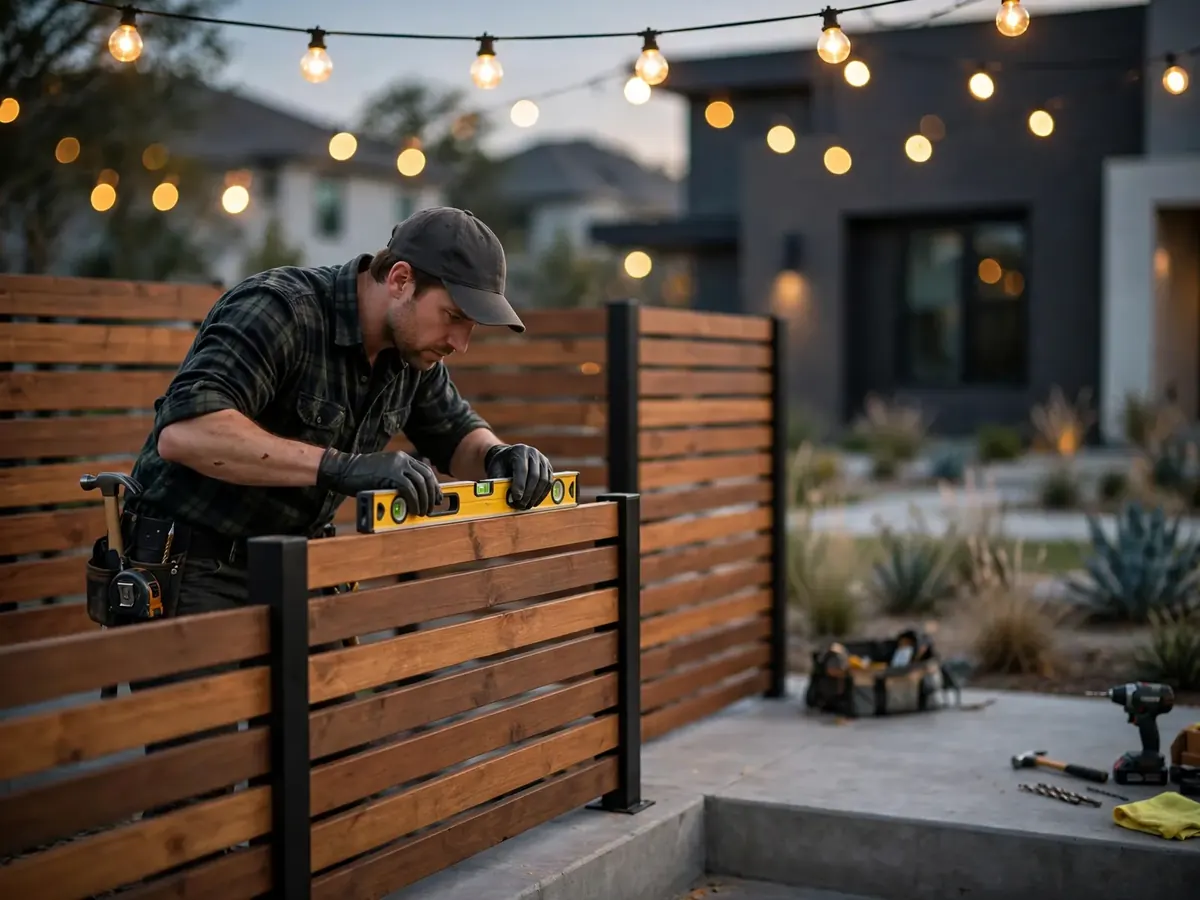
Horizontal fences often pair with matching horizontal gates, which need steel frames to stay square. Horizontal fences are popular in newer and remodeled homes around Manor.
Because the boards span between posts, a 6-foot post spacing is common for horizontal fences instead of the usual 8 feet.
Other Fence Situations in Manor
Building a Fence That Stands Up to Wind
Bracing corners and ends is especially important on long, solid runs exposed to open fields.
Steel Posts vs. Wood Posts
Galvanized steel posts don't rot and resist movement in shifting soil; wood posts are cheaper but usually fail first.
Setting Posts in Shifting Clay Soil
Expansive clay swells and shrinks with moisture, slowly pushing posts out of plumb unless they're set deep.
Signs It's Time to Call in Manor
Manor homeowners usually reach out when one of these shows up:
- Planning a pool, a dog or new privacy
- HOA requires an approved style
- Neighbors replacing a shared fence
Quick Checks Before the Call
- Call 811 to have utility lines marked before digging
- Check HOA fence guidelines and stain colors
- Measure the rough length of fence needed
- Look up your city's height and setback rules, or ask the fence builder to
- Pull your HOA's architectural guidelines and the approval form; most Manor associations want them before work is scheduled
Getting Fence Installation in Manor Started
One call to 877-753-1892 gets the conversation started with a fence builder who works around Manor. Bring your measurements, photos and any HOA requirements. Make the call today and take the first step toward a fence you can count on.
877-753-1892Fence Questions From Manor Homeowners
What fence material is best near the coast?
Aluminum, vinyl and cedar with stainless or galvanized fasteners hold up best in salt air and humidity. For a Manor home, it's worth confirming this before work starts.
How can I keep a Manor fence project within budget?
Sticker shock is common, but the biggest savings usually come from choosing the right height and post type, not the cheapest pickets. Worried a new fence will cost more than it's worth? Ask for an itemized estimate that separates posts, panels, gates and haul-off, so you can see where the money goes and trim the parts that matter least to you.
What should Manor homeowners know about fence projects?
Hail storms are common enough in Manor that many owners plan for occasional repairs. Round Rock, Pflugerville, Leander, Cedar Park, Georgetown and Hutto have grown rapidly, so many homes have builder-installed fences reaching the end of their first life. Compared with Liberty Hill, where shallow limestone is the bigger factor, Manor projects are shaped more by shifting clay.