
Fence Installation in Richmond: Local Conditions
Richmond is the Fort Bend County seat on the Brazos River. Sugar Land, Missouri City, Pearland and Manvel are large suburban areas with master-planned communities, while farther south the land turns rural.
Historic homes and new master-planned communities sit near the river. Richmond's clay is the reason so many local fences lean; building deeper avoids joining them. Like Missouri City in the same region, Richmond has to plan around constant humidity.
- First-generation fences in newer neighborhoods are reaching the age where repairs give way to replacement.
- HOA guidelines often set fence height, style, stain color and which side faces out.
What Holds Up Around Richmond
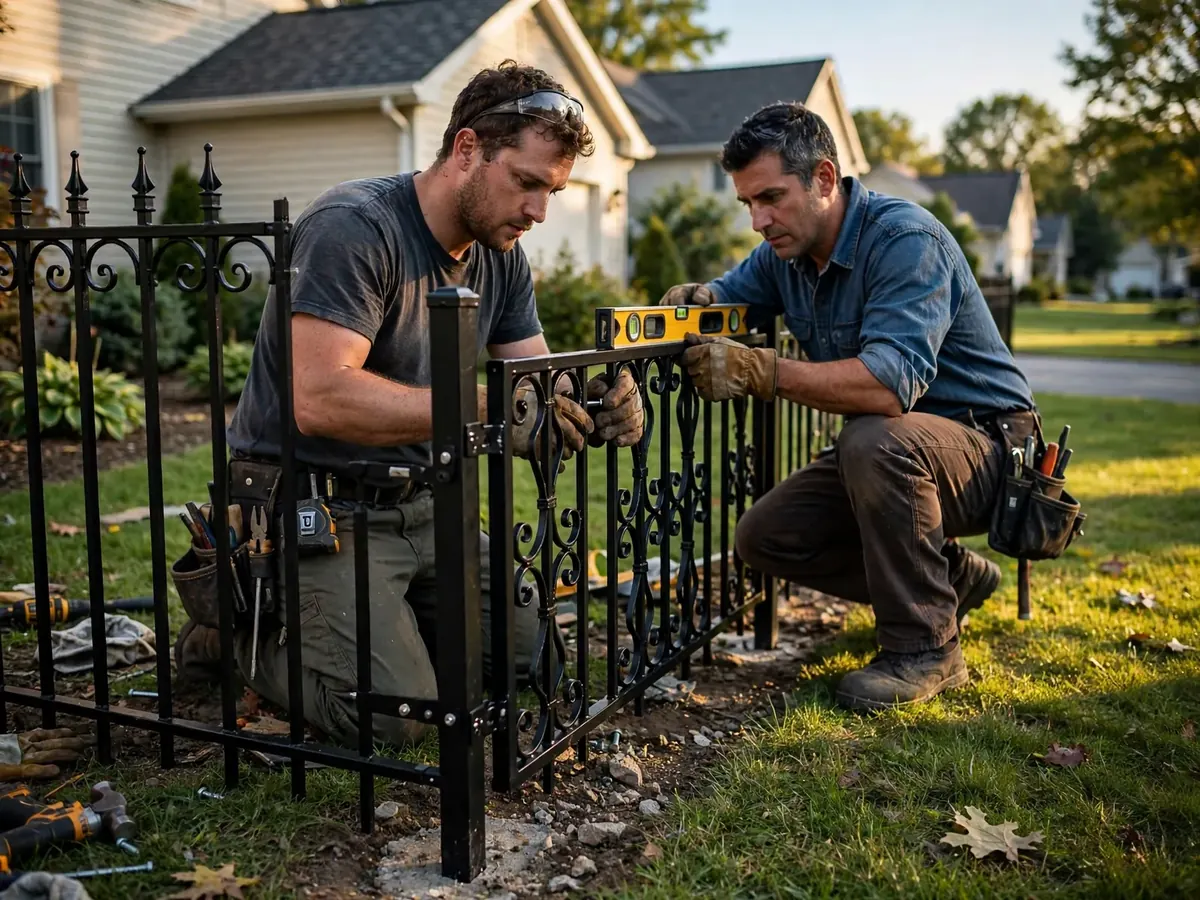
Subdivision fences are mostly cedar on steel posts, with ornamental iron along ponds and pools and wire or pipe on the acreages to the south. Most Richmond HOAs publish guidelines that settle style questions before you start.
Cedar Privacy Fences in Richmond
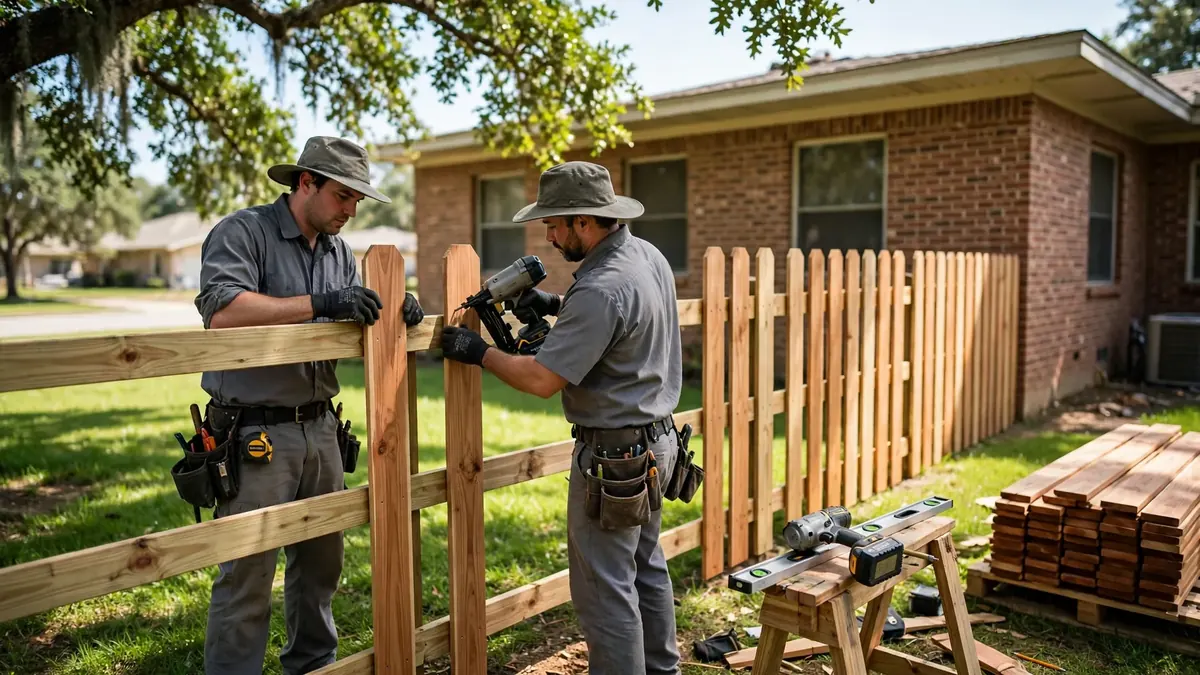
Pickets usually come in 5/8-inch or 3/4-inch thickness; the thicker board costs a little more and resists warping noticeably better. On a typical Richmond lot the main decisions are picket style, rail count and whether to add a top cap and trim board for a finished look.
Think of the pickets as the face of the fence and the posts and rails as its skeleton: you notice the face, but the skeleton decides whether it's still straight in ten years. Many Richmond neighborhoods have HOAs, so check their guidelines before choosing styles and colors.
Concerned about timing? Most of the wait is scheduling and approvals; once a crew starts, many residential fence projects take only a few days.
Steel Posts vs. Wood Posts
Steel posts connect to wood rails with brackets or lag screws, and many builders place the posts on the inside so they're hidden from the street. Concrete around a post should be crowned so rain sheds away instead of pooling against the post.
Steel posts can be painted to match the stain or hidden behind a wood wrap if you don't want them to show. In humid Richmond, pressure-treated or naturally rot-resistant materials make a real difference.
HOA Rules, Permits and Property Lines
Corner lots often have height limits near the street so drivers can see cross traffic. Many fence disputes start with a few inches.
A short email to your HOA before choosing materials can save a rejected application. In newer parts of Richmond, replacing the original builder fence is a common first upgrade.
Worth knowing before you call: If a neighbor wants to split the cost, get the agreement in writing, even an email, before the old fence comes down.
Setting Posts in Shifting Clay Soil
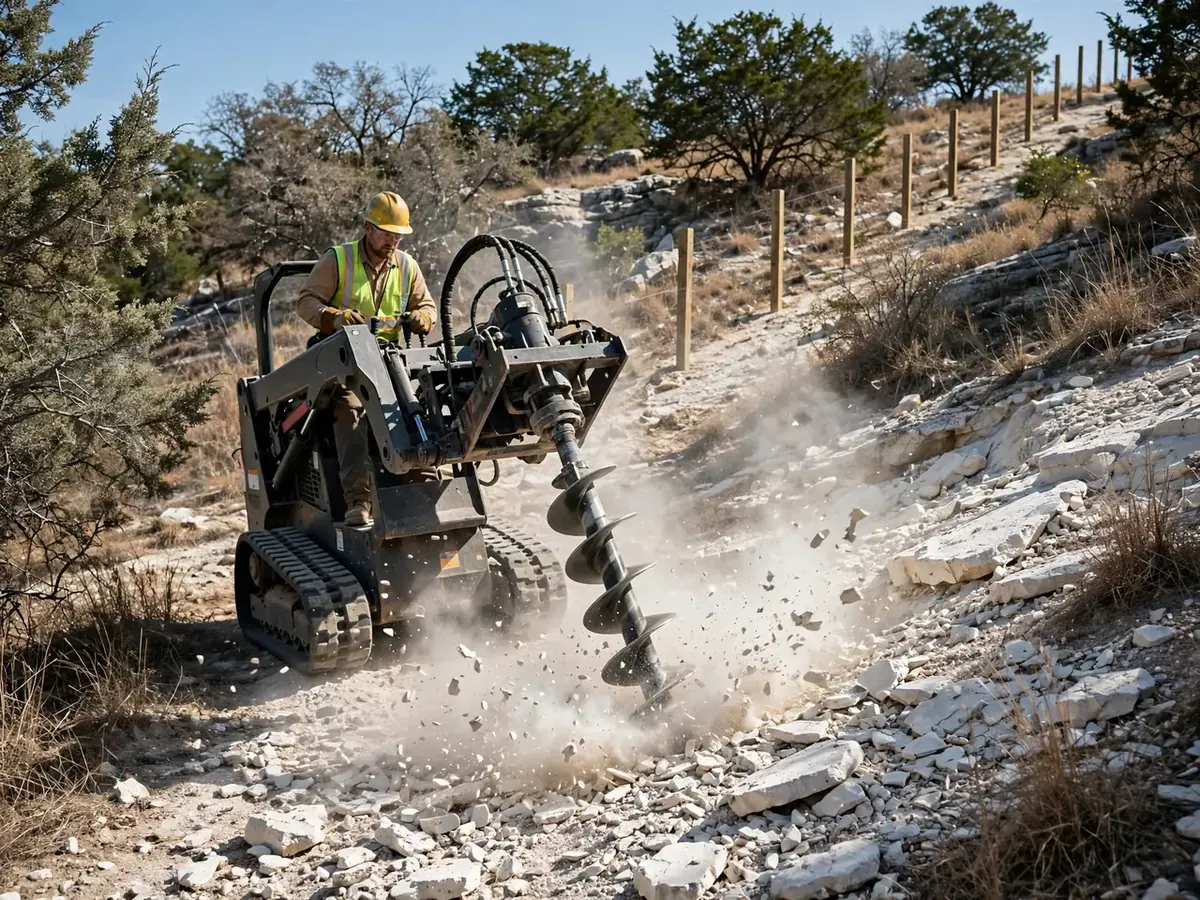
Over a few seasons that movement lifts and tilts posts, which is why so many fences around Richmond lean. Clay soil swells when it's wet and shrinks and cracks in drought.
Builders who know clay talk about depth and drainage before they talk about pickets; that's a good sign. In low parts of Richmond, drainage around footings is part of a durable build.
Pet and Pool Fencing
A mow strip of concrete under the fence line stops digging and makes trimming easier. Ornamental aluminum panels are a common choice because they're designed around those rules.
Pool safety is about layers: the fence, the gate and supervision all work together.
A frequent worry, answered: A fence that's built well and stained on schedule can last many years; one built on shallow wood posts may start leaning within a few seasons.
Board-on-Board and Shadowbox Styles
Many HOAs around Richmond specify board-on-board with a top cap and require the finished side to face the street or the neighbor. Board-on-board overlaps each picket so there's no see-through even after the wood dries out.
Think of board-on-board as overlapping shingles on a roof: the overlap is what keeps the gaps closed as each board moves.
More Fence Questions Around Richmond
Vinyl and Composite Fences in Texas Heat
Vinyl and composite resist rot and insects; in sustained heat, choose products rated for high temperatures.
Horizontal and Modern Fence Designs
Mixing materials, such as horizontal cedar with black metal posts, gives a clean architectural look.
Building a Fence That Stands Up to Wind
Solid privacy fences catch wind like a sail, so post depth, spacing and rail strength matter in storm-prone areas.
Common Reasons Richmond Homeowners Call
Watch for these around your Richmond property:
- Neighbors replacing a shared fence
- Moving onto acreage that needs livestock fencing
- HOA requires an approved style
Before You Call
- Mark gates and where you need access for mowers or vehicles
- Check HOA fence guidelines and stain colors
- Measure the rough length of fence needed
- Note your HOA's approved colors and styles so the fence builder can quote the right materials
- Note where water stands after heavy rain near the work area
Fence Installation in Richmond: Talk to a Local Fence Builder
Call 877-753-1892 and describe the project, your city and your timeline. You'll be pointed to a fence builder who works in Richmond. Ask about scheduling, permits and how the job will be priced before work begins. Pick up the phone today and get your fence project on the calendar.
877-753-1892Fence Questions From Richmond Homeowners
What fence material is best near the coast?
Salt air favors aluminum and vinyl, or cedar built with stainless or hot-dip galvanized fasteners that won't rust through. Your fence builder can tell you what applies on your specific Richmond property.
Is a new fence in Richmond worth the cost?
A cheaper fence that needs new posts in a few years can cost more in the end than a sturdier one built once. Price is usually driven by length, height, post type and gates, so a shorter run of a better fence often beats a longer run of a cheaper one.
What should Richmond homeowners know about fence projects?
In Richmond, building for tropical storm winds means deeper posts, stronger connections and closer spacing. Flat, low ground and heavy clay mean water sits around posts after storms, which speeds up rot at the base of wood posts.