
Local Conditions That Shape Fence Installation in Roanoke
New homes surround the older town center. Housing ranges from early 1900s homes near downtown Fort Worth to newer master-planned communities to the north.
Roanoke is a small Denton County city known for its restaurant district. Occasional hard freezes in Roanoke are a reason to make sure water can drain away from footings. Compared with Keller, where estate-size lots is the bigger factor, Roanoke projects are shaped more by larger acreage lots.
- City ordinances cover fence height, front-yard placement and sight lines at intersections.
- Associations commonly dictate fence height, style, stain color and the side facing out, so approval comes first.
What Holds Up Around Roanoke
Backyards are mostly cedar privacy; ornamental iron and aluminum handle front yards and pools, and the most upscale areas favor iron with masonry. Many Roanoke neighborhoods have HOAs, so check their guidelines before choosing styles and colors.
Cedar Privacy Fences in Roanoke
Pickets usually come in 5/8-inch or 3/4-inch thickness; the thicker board costs a little more and resists warping noticeably better. A kickboard, a horizontal board along the bottom, keeps pickets off the soil and is easy to replace when it eventually wears.
Rot starts where wood stays wet longest, so a small gap between the pickets and the soil does more for lifespan than any single product. Roanoke has its own rules on height, setbacks and permits, so check before building.
A frequent worry, answered: A fence that's built well and stained on schedule can last many years; one built on shallow wood posts may start leaning within a few seasons.
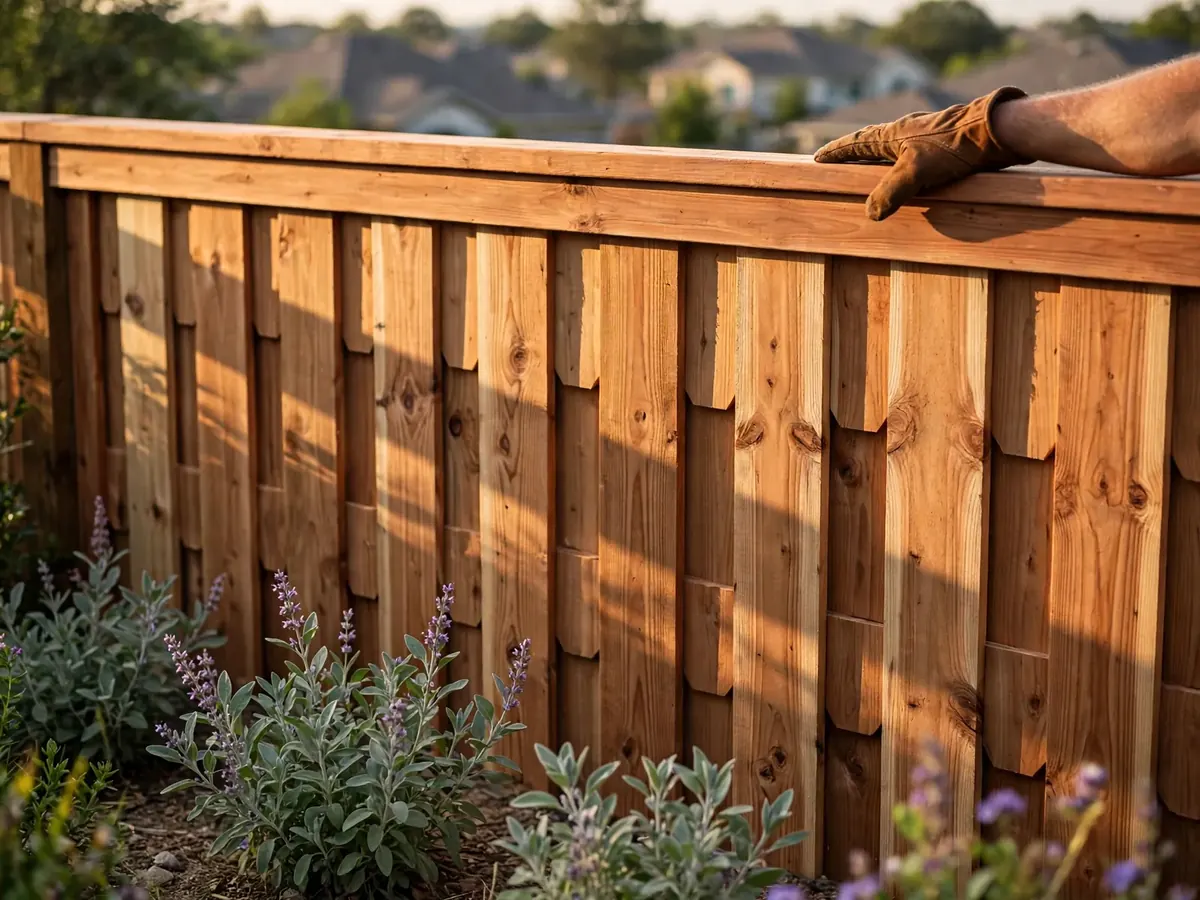
Board-on-Board and Shadowbox Styles
If your fence faces strong wind, a shadowbox design takes some load off the posts by letting air pass between the pickets. Check your HOA's fence guidelines before choosing a style; they often list the approved stain color too.
On windy lots, shadowbox gives a little relief to the posts while still blocking most views. Most Roanoke HOAs publish guidelines that settle style questions before you start.
HOA Rules, Permits and Property Lines
Fences belong a few inches inside your property line unless you and your neighbor agree otherwise. Before the crew sets the first post, confirm the line, any easements along the back of the lot and whether your city requires a permit for the height you want.
Knowing your property line before talking to neighbors makes those conversations easier.
Worth knowing before you call: If your HOA needs to approve the plan, start that first, since crews can't begin without it.
Steel Posts vs. Wood Posts
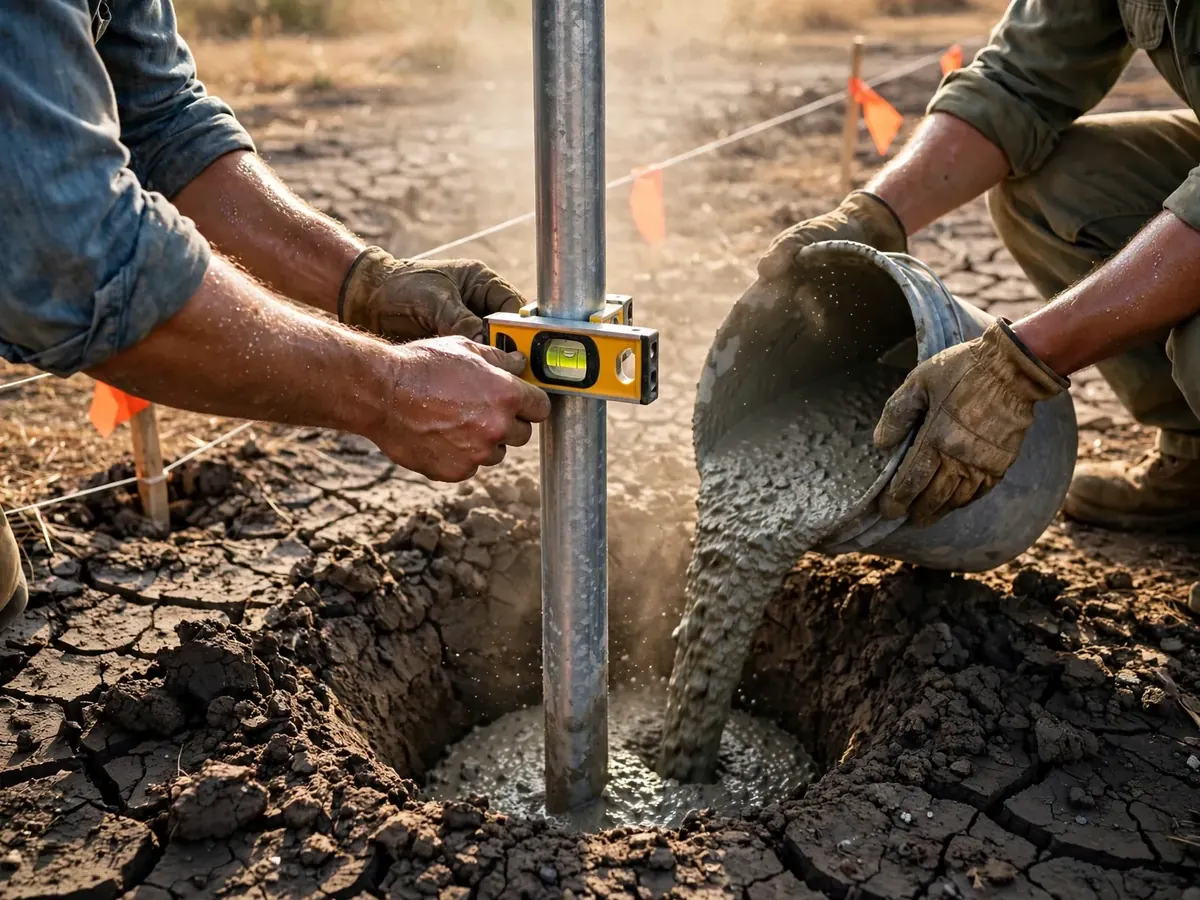
In shifting soil and high wind, depth matters as much as the post material. In Roanoke, where the ground and the weather work against posts, steel is worth the added cost over the life of the fence.
If the budget is tight, some homeowners use steel only at corners, ends and gate openings, where the loads are highest, and wood for the line posts in between. Roanoke's clay is the reason so many local fences lean; building deeper avoids joining them.
Pet and Pool Fencing
Pool fences usually need a specific height, limited gaps between pickets and a gate that closes and latches on its own. If you're fencing for a pool, check your city's pool barrier rules for height, gaps and self-closing, self-latching gates.
Dogs that dig can be stopped with a buried wire apron or a concrete mow strip along the base of the fence.
Before you decide: Many neighbors are happy to share the cost of a shared fence when asked early.
Other Fence Situations in Roanoke
Wrought Iron and Aluminum Fences
Ornamental fencing is a good fit where you want security without blocking breezes or views.
Ranch, Pipe and Wire Fencing on Acreage
Mixing materials is common: pipe near the house and barn where looks and strength matter, wire along back pastures where distance matters more.
Building a Fence That Stands Up to Wind
Solid privacy fences catch wind like a sail, so post depth, spacing and rail strength matter in storm-prone areas.
When to Pick Up the Phone
Roanoke homeowners usually reach out when one of these shows up:
- Planning a pool, a dog or new privacy
- Old fence leaning or sagging
- Neighbors replacing a shared fence
Quick Checks Before the Call
- Mark gates and where you need access for mowers or vehicles
- Measure the rough length of fence needed
- Find your survey or plat showing property lines
- Note any original features you want to keep or match
- Walk the property line or gate location and note slopes, creeks and rock outcrops
Getting Fence Installation in Roanoke Started
Pick up the phone and dial 877-753-1892. A fence builder familiar with Roanoke can talk through materials, timing and what affects the price. Booking is a phone call away; call today and lock in a time that suits you.
877-753-1892Fence Questions From Roanoke Homeowners
What fence material is best near the coast?
Aluminum, vinyl and cedar with stainless or galvanized fasteners hold up best in salt air and humidity. In Roanoke, that comes down to your lot and how the fence is built.
What should I ask a fence builder before hiring?
Get the scope, materials and cleanup in writing before work begins, so everyone agrees on what's included. A good fence builder will tell you what they don't know until they start digging, such as rock or roots.
What should Roanoke homeowners know about fence projects?
Spring hail around Roanoke makes it worth choosing materials that are easy to repair. Fort Worth and the Mid-Cities share North Texas clay soils and some of the heaviest spring hail in the state. A fence that suits Colleyville's estate-size lots isn't automatically right for Roanoke, where larger acreage lots matters more.