
What to Know About Fence Installation in Sherman
North Texas storms here bring hail, high winds and the occasional tornado. Grayson County towns near Lake Texoma sit on the Oklahoma border and are growing quickly as the Dallas suburbs push north.
- Builder-installed fences in newer subdivisions often reach the end of their first life after 10 to 15 years.
- Strong winds push on solid privacy fences, so closer post spacing and steel posts help them stay upright.
Materials That Suit Sherman
Cedar privacy fences in new subdivisions and pipe or wire fencing on the many acreages.
Ranch, Pipe and Wire Fencing on Acreage
For larger properties, a fence builder will walk the line, mark corners and gates, and plan around creeks, slopes and rock before quoting. Having a survey or plat helps avoid building on the wrong side of a property line.
Board-on-Board and Shadowbox Styles
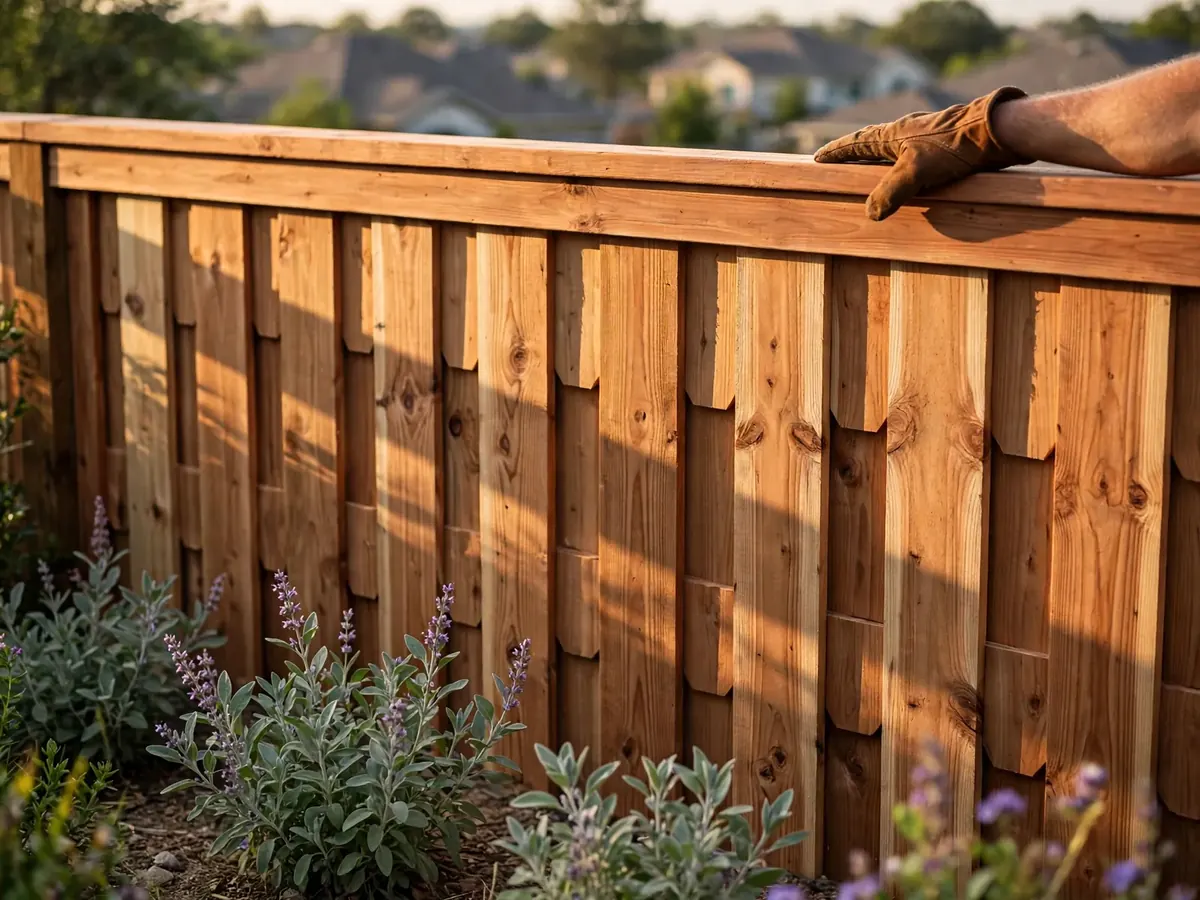
If your fence faces strong wind, a shadowbox design takes some load off the posts by letting air pass between the pickets. Board-on-board gives complete privacy but acts more like a solid wall in a storm, so post spacing and depth matter more.
Cedar Privacy Fences in Sherman
Six-foot cedar privacy fences are the standard backyard choice around Sherman. Cedar's natural oils slow rot and insects, it moves less than pine in the heat, and it takes a semi-transparent stain well. Western red cedar costs more than the more common Texas or Japanese cedar but holds its shape better; ask which species you're getting.
Steel Posts vs. Wood Posts
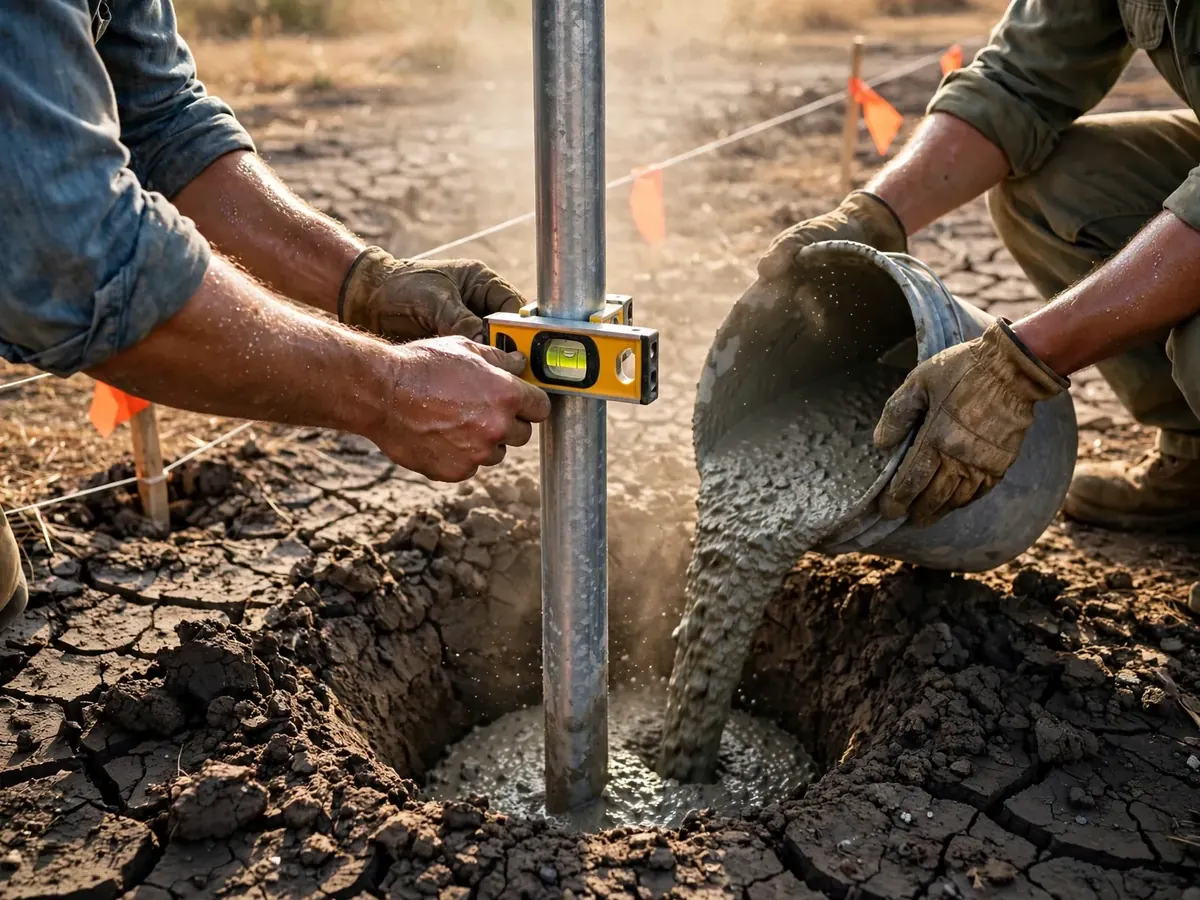
Ask how deep the posts will go and how much concrete each one gets. In shifting soil and high wind, depth matters as much as the post material. Deeper holes with a concrete footing that's crowned at the top to shed water help any post last longer.
Building a Fence That Stands Up to Wind
A 6-foot solid fence acts like a sail in a storm. In windy parts of Texas, closer post spacing, deeper footings, steel posts and three rails instead of two help it ride out gusts. Shadowbox or gapped designs let some wind pass through.
Horizontal and Modern Fence Designs
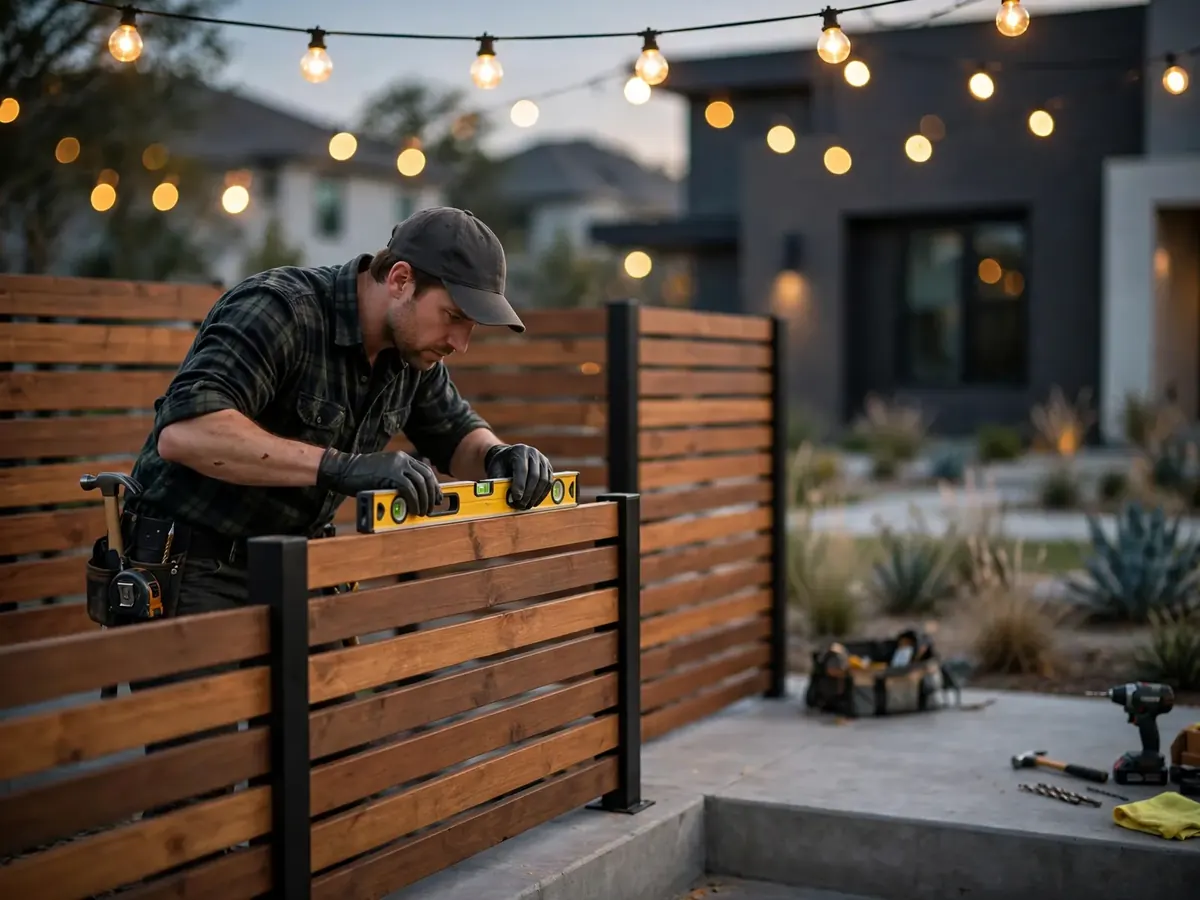
Horizontal fences are popular in newer and remodeled homes around Sherman. Long horizontal boards sag more than vertical pickets, so posts are usually spaced closer together, and many builders use steel posts or a hidden steel frame. Spacing between boards can be tight for privacy or wider for airflow.
Other Fence Situations in Sherman
Setting Posts in Shifting Clay Soil
Expansive clay swells and shrinks with moisture, slowly pushing posts out of plumb unless they're set deep.
HOA Rules, Permits and Property Lines
Cities set height and front-yard rules, HOAs add style and color rules, and a survey prevents building on the wrong side of the line.
Pet and Pool Fencing
Dogs need fences without gaps at the bottom or footholds to climb; pools need barriers with self-closing gates.
Signs It's Time to Call in Sherman
- HOA requires an approved style
- Planning a pool, a dog or new privacy
- Moving onto acreage that needs livestock fencing
- Neighbors replacing a shared fence
Before You Call
- Find your survey or plat showing property lines
- Mark gates and where you need access for mowers or vehicles
- Measure the rough length of fence needed
- Call 811 to have utility lines marked before digging
- Check HOA fence guidelines and stain colors
Getting Fence Installation in Sherman Started
Call 877-753-1892 and describe the project, your city and your timeline. You'll be pointed to a fence builder who works in Sherman. Ask about scheduling, permits and how the job will be priced before work begins.
877-753-1892Fence Questions From Sherman Homeowners
What fence material is best near the coast?
Aluminum, vinyl and cedar with stainless or galvanized fasteners hold up best in salt air and humidity.
How long does a cedar fence last in Sherman?
A well-built cedar fence often lasts many years, longer with steel posts and regular staining. Wood posts and unstained pickets in wet or shifting soil wear out sooner.
What should Sherman homeowners know about fence projects?
Shrink-swell clay moves posts every season, so post depth, footing shape and steel posts matter more than picket style. Spring hail splits and pits pickets and dents metal fencing, so storm repairs are routine.