
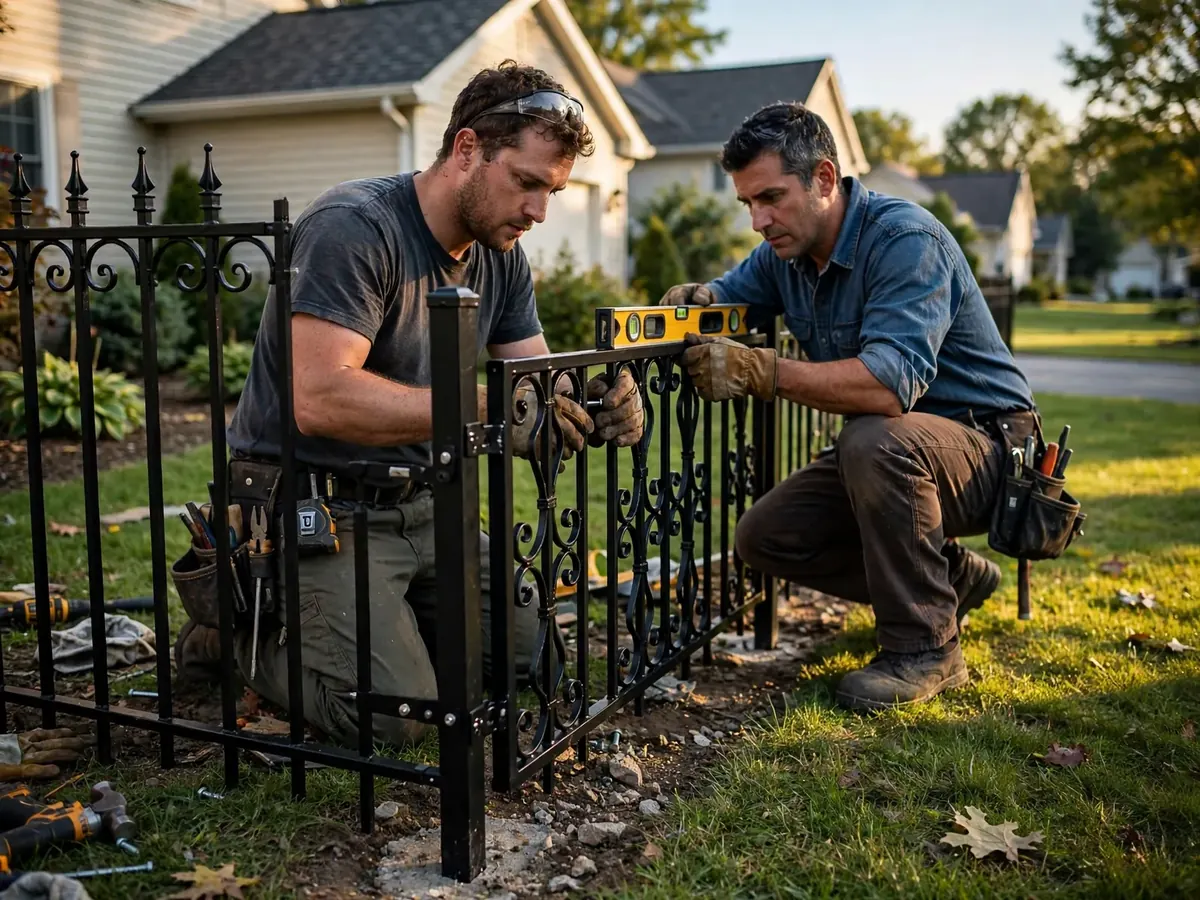
What to Know About Fence Installation in Webster
Hurricane Ike in 2008 and Hurricane Harvey in 2017 caused widespread wind and flood damage here, and Hurricane Beryl hit the area in 2024. These towns sit along Galveston Bay and the Brazoria County coast, where salt air corrodes fasteners and steel faster than inland.
- Humidity keeps wood damp longer, so rot at the base of posts is the most common failure.
- Salt air near the coast corrodes ordinary nails and steel, so stainless or hot-dip galvanized hardware is worth it.
Choosing Materials in Webster
Cedar fences with stainless or hot-dip galvanized fasteners, aluminum instead of steel for ornamental fencing, and vinyl where salt air is heavy.
Vinyl and Composite Fences in Texas Heat
Vinyl doesn't rot or need stain, which appeals in humid areas with termites. In Texas sun, though, cheaper vinyl can sag or become brittle. Look for heavier-gauge, UV-stabilized products, and lighter colors that absorb less heat. Composite fencing is denser and handles heat better than most vinyl, at a higher cost.
Steel Posts vs. Wood Posts
If you want the look of wood all the way down, steel posts can be wrapped or hidden behind the pickets. In Webster, where the ground and the weather work against posts, steel is worth the added cost over the life of the fence.
Wrought Iron and Aluminum Fences
Iron and aluminum fences go up as panels between posts set in concrete. On sloped lots, panels are either racked to follow the grade or stepped. Ask which the builder recommends for your yard.
Building a Fence That Stands Up to Wind
If fences in your part of Webster tend to blow over in storms, the fix is in the structure: posts, footings and rails. Ask the builder how they design for wind and whether steel posts are an option.
Cedar Privacy Fences in Webster
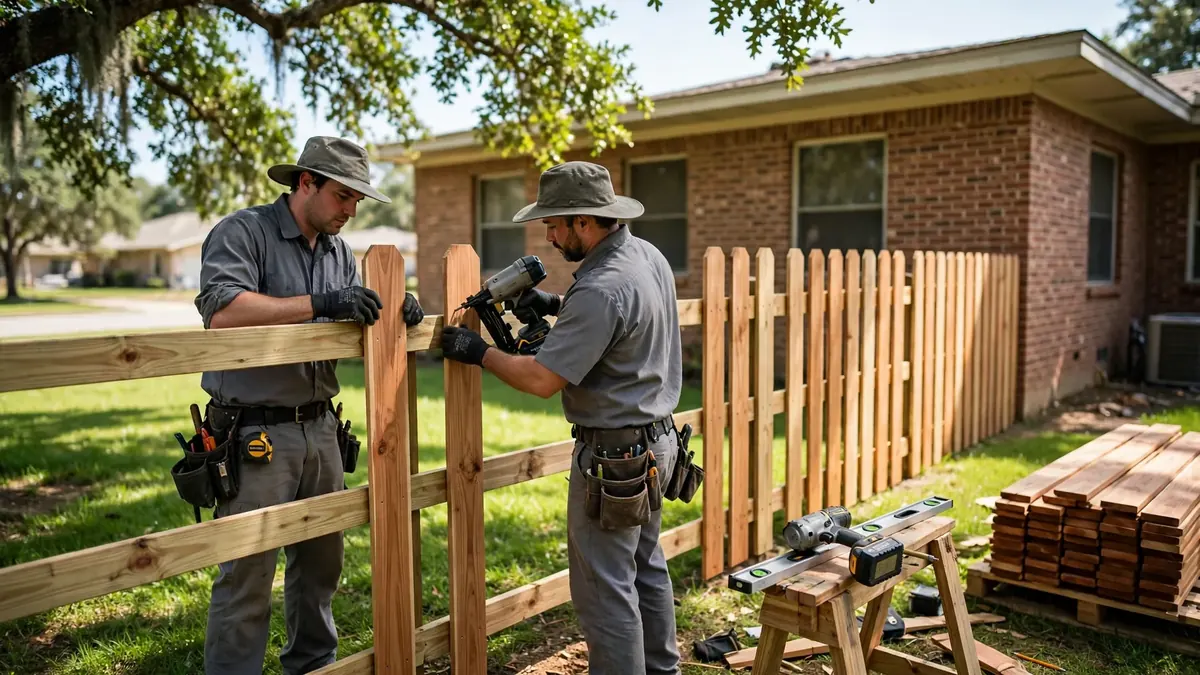
If privacy is the goal, cedar pickets on a 6-foot frame are what most Webster homeowners choose. The details that make it last are the post type, the number of rails (three rails reduce sagging on taller fences) and whether the bottom of the pickets sits slightly above the soil so it doesn't wick up moisture.
Setting Posts in Shifting Clay Soil
Clay soil swells when it's wet and shrinks and cracks in drought. Over a few seasons that movement lifts and tilts posts, which is why so many fences around Webster lean. Deeper post holes, concrete footings that sit below the most active layer and a little gravel at the bottom for drainage all help.
More Fence Questions Around Webster
Drilling Posts Into Limestone and Caliche
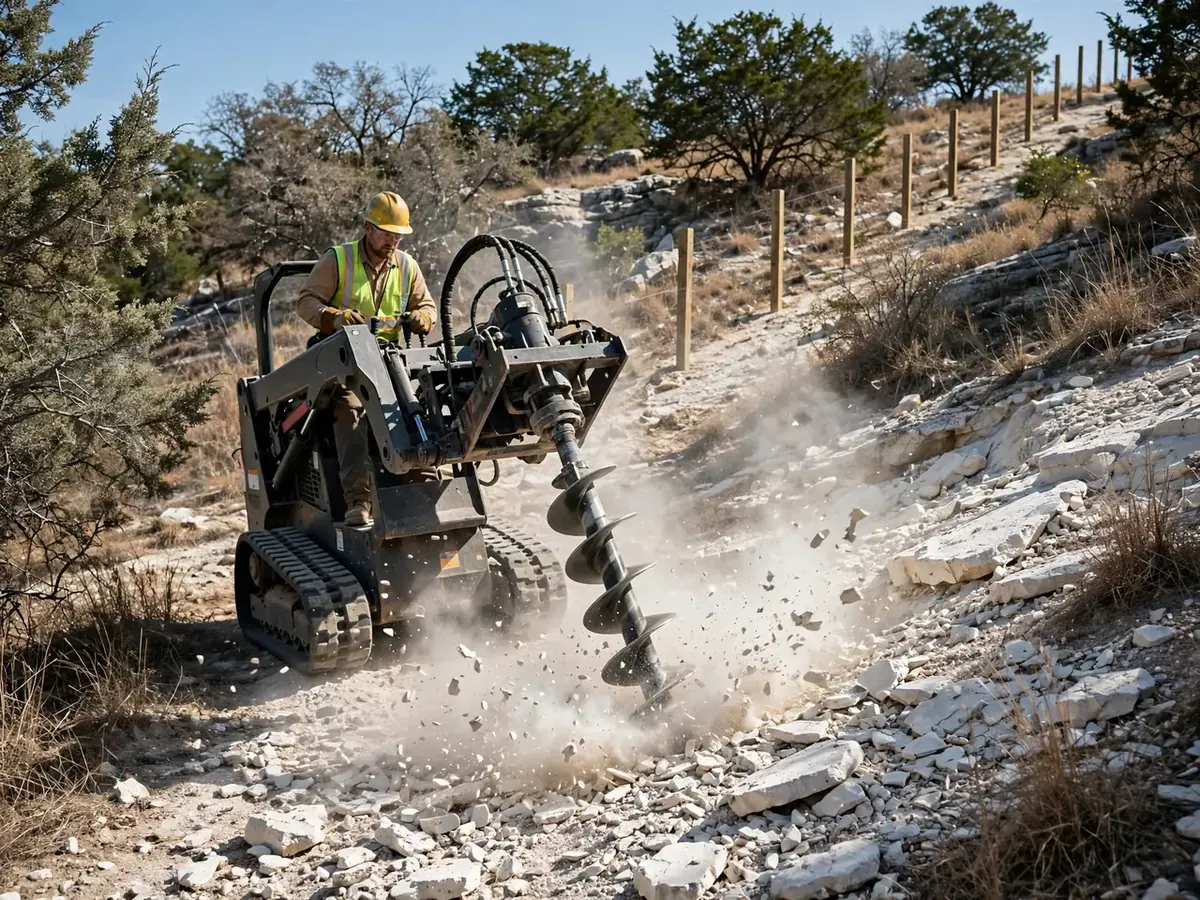
Rocky ground needs a rock auger or core drill, which changes the equipment, time and cost of setting posts.
Horizontal and Modern Fence Designs
Horizontal slat fences give a modern look but need tighter post spacing to keep long boards from sagging.
Ranch, Pipe and Wire Fencing on Acreage
Acreages use pipe, pipe-and-cable, barbed wire or no-climb wire depending on livestock, pets and budget.
Common Reasons Webster Homeowners Call
- HOA requires an approved style
- Old fence leaning or sagging
- Moving onto acreage that needs livestock fencing
- Neighbors replacing a shared fence
What to Have Ready
- Mark gates and where you need access for mowers or vehicles
- Check HOA fence guidelines and stain colors
- Call 811 to have utility lines marked before digging
- Measure the rough length of fence needed
- Find your survey or plat showing property lines
Getting Fence Installation in Webster Started
One call to 877-753-1892 gets the conversation started with a fence builder who works around Webster. Bring your measurements, photos and any HOA requirements.
877-753-1892Fence Questions From Webster Homeowners
Do I need a permit for a fence in Webster?
Texas has no statewide fence permit, but cities set rules on height, front-yard fences and masonry, and HOAs add their own. Check with your city and HOA before building.
Are steel posts worth it?
In most of Texas, yes. Galvanized steel posts don't rot or attract termites and resist movement in clay soil better than wood posts.
What should Webster homeowners know about fence projects?
Aluminum and vinyl resist the salt air better than steel ornamental fencing. Low ground that stays wet after storms speeds up rot at the base of wood posts.