
Fence Installation in Hurst: Local Conditions
Most homes date from the 1960s and 1970s. Housing ranges from early 1900s homes near downtown Fort Worth to newer master-planned communities to the north.
Hurst is a mid-cities suburb in northeast Tarrant County. Open exposure in Hurst means the fence should be built for gusts. Shifting clay is a common thread between Hurst and Crowley.
- HOA guidelines often set fence height, style, stain color and which side faces out.
- Cities set rules on front-yard fence height, corner-lot sight lines and masonry walls, so check before building.
Choosing Materials in Hurst
Cedar privacy fences dominate backyards, with wrought iron and aluminum in front yards and around pools; Southlake, Colleyville and Westlake lean toward ornamental iron and masonry. In established Hurst neighborhoods, matching the character of the street matters.
Cedar Privacy Fences in Hurst
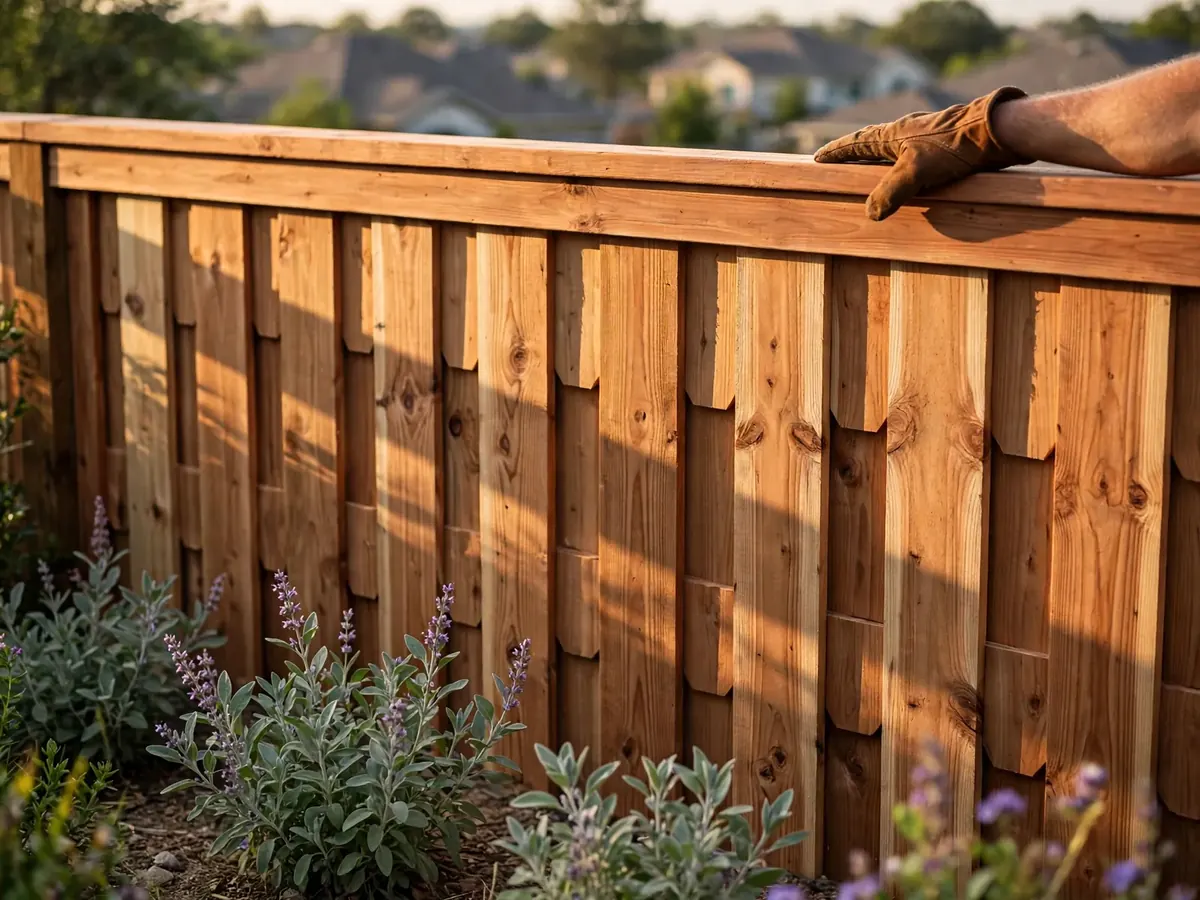
Six-foot cedar privacy fences are the standard backyard choice around Hurst. A kickboard, a horizontal board along the bottom, keeps pickets off the soil and is easy to replace when it eventually wears.
Think of the pickets as the face of the fence and the posts and rails as its skeleton: you notice the face, but the skeleton decides whether it's still straight in ten years. Hurst has its own rules on height, setbacks and permits, so check before building.
A common concern: If the fence is on the property line, talk to your neighbor before work starts about access and debris.
Pet and Pool Fencing
Ornamental aluminum panels are a common choice because they're designed around those rules. Dog owners often choose taller fences or add a lean-in top on sections where jumping is a problem.
Pool fencing is a safety barrier, so gate hardware that self-closes and self-latches matters as much as the fence itself. Many Hurst neighborhoods have HOAs, so check their guidelines before choosing styles and colors.
Wrought Iron and Aluminum Fences
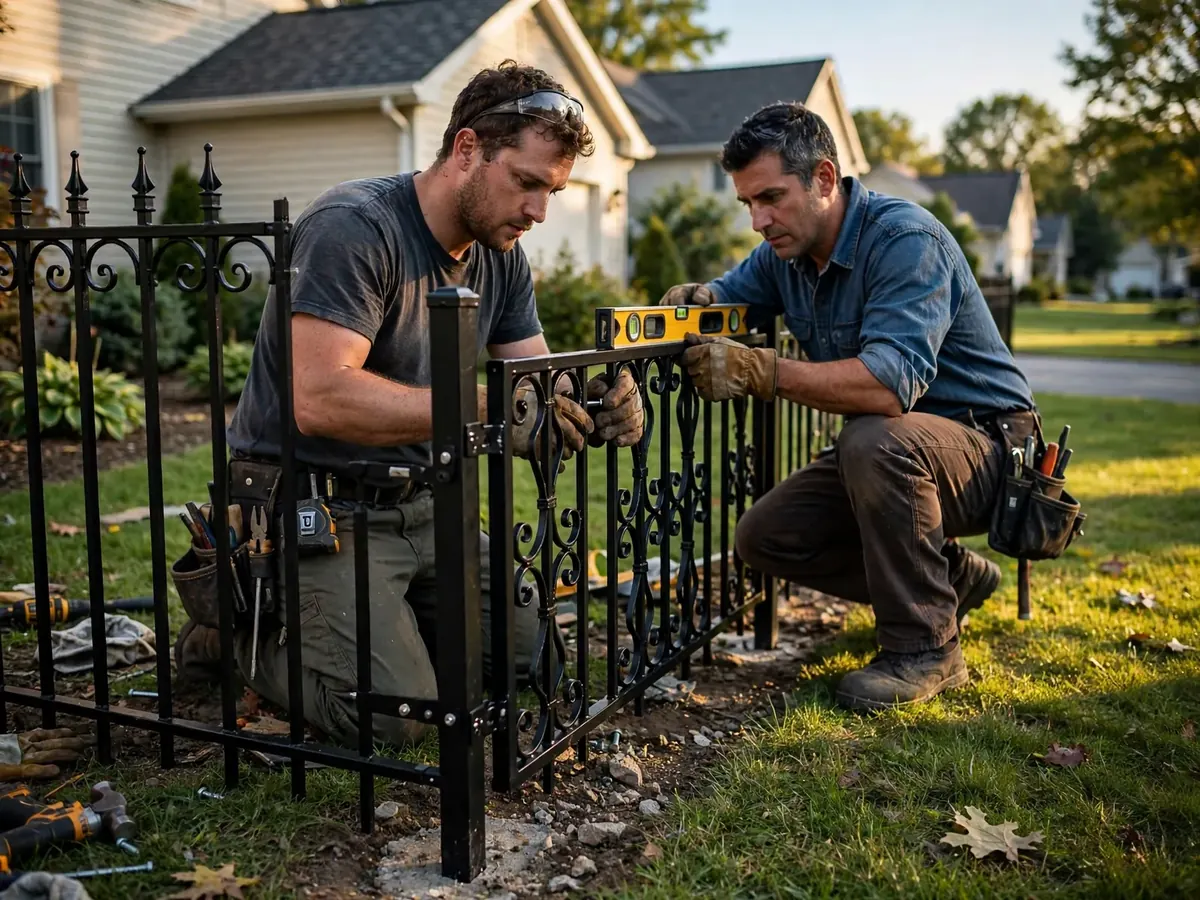
Iron and aluminum fences go up as panels between posts set in concrete. Ornamental panels are typically sold in 6- or 8-foot sections, so the layout is planned around those widths.
Aluminum weighs a fraction of steel, which makes it easier to install on slopes and kinder to posts in soft ground.
Thinking about doing it yourself? Pickets are easy; setting posts plumb and deep enough to survive the spring storm season is the part most DIY fences get wrong.
Building a Fence That Stands Up to Wind
Steel posts at closer spacing are the most reliable upgrade for windy sites. Wind loads rise sharply with fence height, so an 8-foot fence needs much stronger posts than a 6-foot one.
Leaving a small gap at the bottom of pickets and choosing shadowbox styles can let some wind through and ease the strain. Hail storms are common enough in Hurst that many owners plan for occasional repairs.
Steel Posts vs. Wood Posts
Deeper holes with a concrete footing that's crowned at the top to shed water help any post last longer. Galvanized steel posts set in concrete, with wood rails and pickets attached by brackets, are now the common upgrade and usually outlast the wood they hold up.
Steel posts can be painted to match the stain or hidden behind a wood wrap if you don't want them to show. Because much of Hurst sits on shrink-swell clay, the details below the ground matter more here than in sandy or rocky areas.
A frequent worry, answered: Good fence builders explain how they'll set posts and handle your soil without being asked; vague answers are a warning sign.
Board-on-Board and Shadowbox Styles
Board-on-board overlaps each picket so there's no see-through even after the wood dries out. Board-on-board gives complete privacy but acts more like a solid wall in a storm, so post spacing and depth matter more.
Shadowbox is often the friendliest choice on a shared property line, because neither neighbor ends up looking at the rails.
More Fence Questions Around Hurst
HOA Rules, Permits and Property Lines
A short email to your HOA before choosing materials can save a rejected application.
Horizontal and Modern Fence Designs
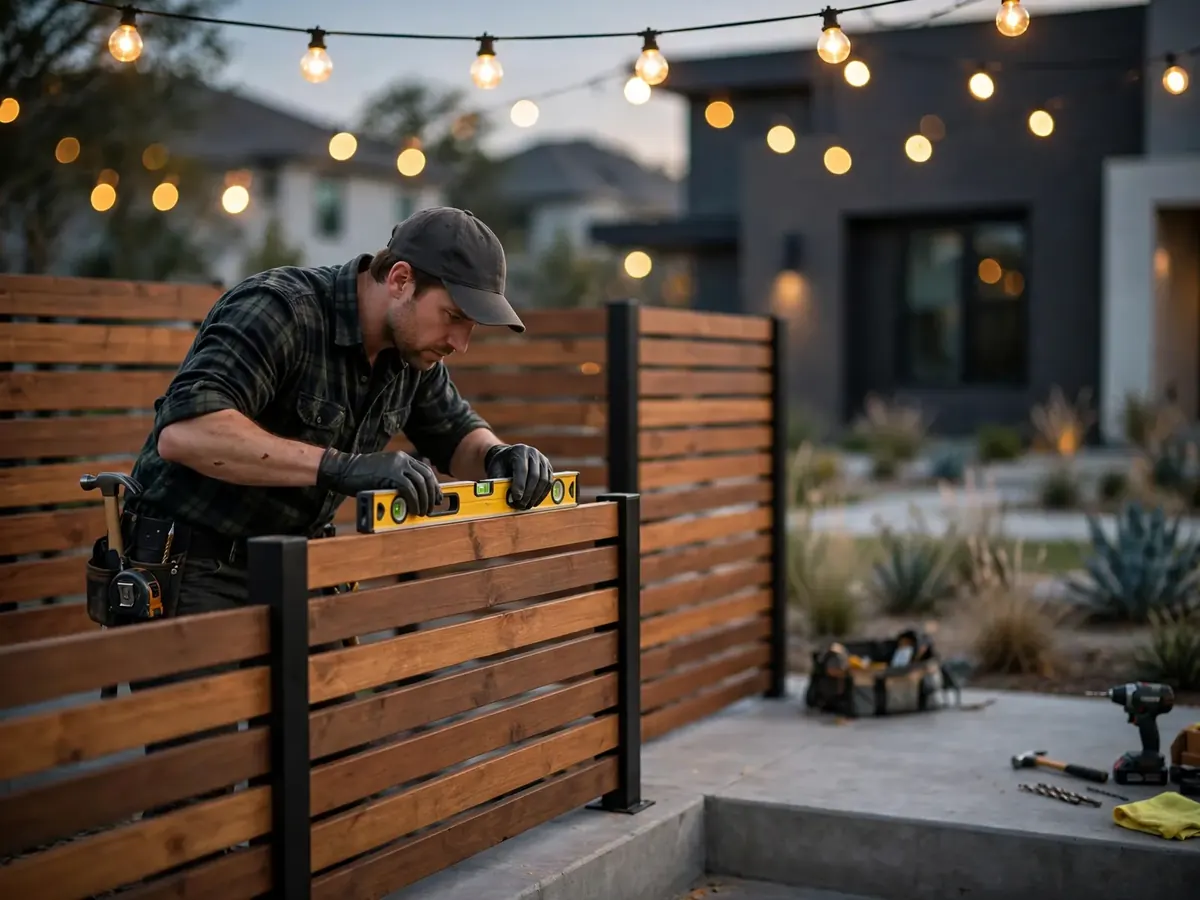
Mixing materials, such as horizontal cedar with black metal posts, gives a clean architectural look.
Ranch, Pipe and Wire Fencing on Acreage
Mixing materials is common: pipe near the house and barn where looks and strength matter, wire along back pastures where distance matters more.
When to Pick Up the Phone
In Hurst, these are the signs that most often lead to a call:
- Neighbors replacing a shared fence
- HOA requires an approved style
- Old fence leaning or sagging
What to Have Ready
- Measure the rough length of fence needed
- Call 811 to have utility lines marked before digging
- Check HOA fence guidelines and stain colors
- Mention any leaning or settling you've seen nearby
- Pull your HOA's architectural guidelines and the approval form; most Hurst associations want them before work is scheduled
Getting Fence Installation in Hurst Started
Call 877-753-1892 when you're ready. Sharing photos and a rough measurement of your Hurst project makes the conversation more specific. Pick up the phone today and get your fence project on the calendar.
877-753-1892Fence Questions From Hurst Homeowners
What fence material is best near the coast?
Salt air favors aluminum and vinyl, or cedar built with stainless or hot-dip galvanized fasteners that won't rust through. In Hurst, that comes down to your lot and how the fence is built.
Is a new fence in Hurst worth the cost?
Sticker shock is common, but the biggest savings usually come from choosing the right height and post type, not the cheapest pickets. If budget is the sticking point, consider phasing the work: replace the sections that face the street or the dog run first, and finish the rest when it makes sense.
What should Hurst homeowners know about fence projects?
In established Hurst neighborhoods, matching the character of the street matters. Fort Worth and the Mid-Cities share North Texas clay soils and some of the heaviest spring hail in the state.