
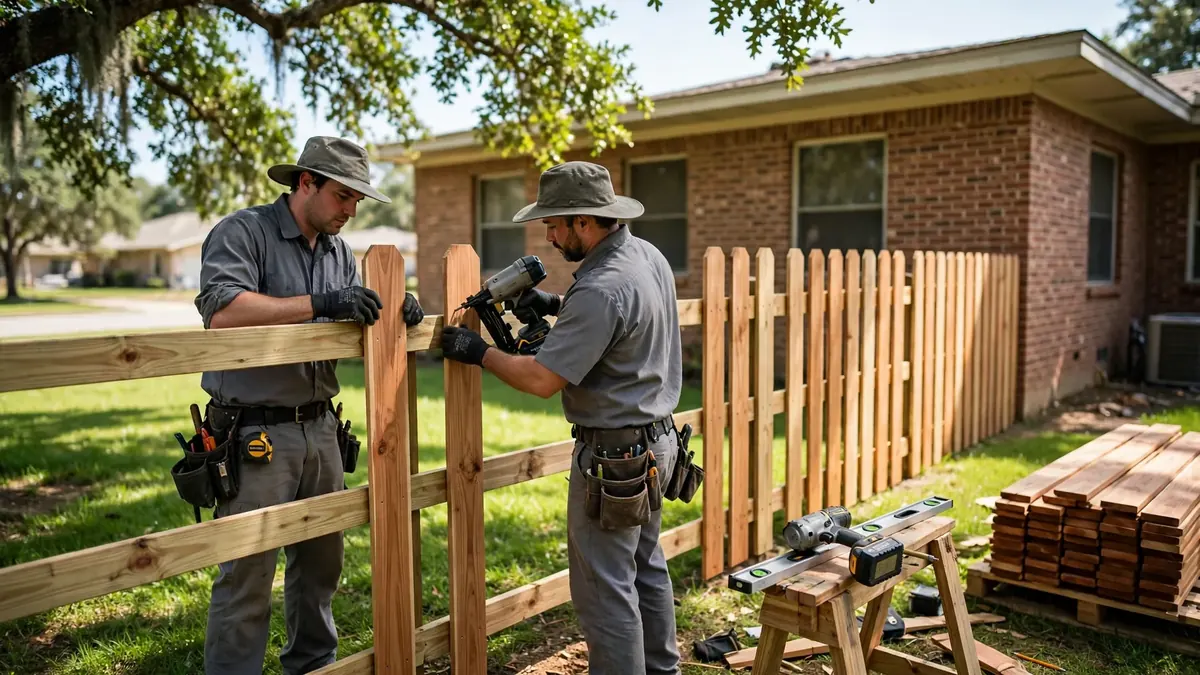
Fence Installation in Cibolo: Local Conditions
Cibolo is a fast-growing Guadalupe County suburb northeast of San Antonio. Beyond the city, towns like Floresville, Pleasanton, Hondo and Devine are surrounded by ranchland.
New subdivisions here often have HOA fence rules. City codes in Cibolo may set limits that affect your design. Hard caliche is a common thread between Cibolo and Seguin.
- Municipal codes cover height, setbacks and visibility at corners, which can change a fence plan.
- Blackland-type clay can move an inch or more between wet and dry seasons, enough to tilt a shallow post.
What Holds Up Around Cibolo
The city mixes cedar privacy fences with wrought iron, while ranch land to the south and west relies on pipe, wire and pipe-and-cable. Caliche under Cibolo lots can slow digging and hold water around footings, so drainage matters.
Drilling Posts Into Limestone and Caliche
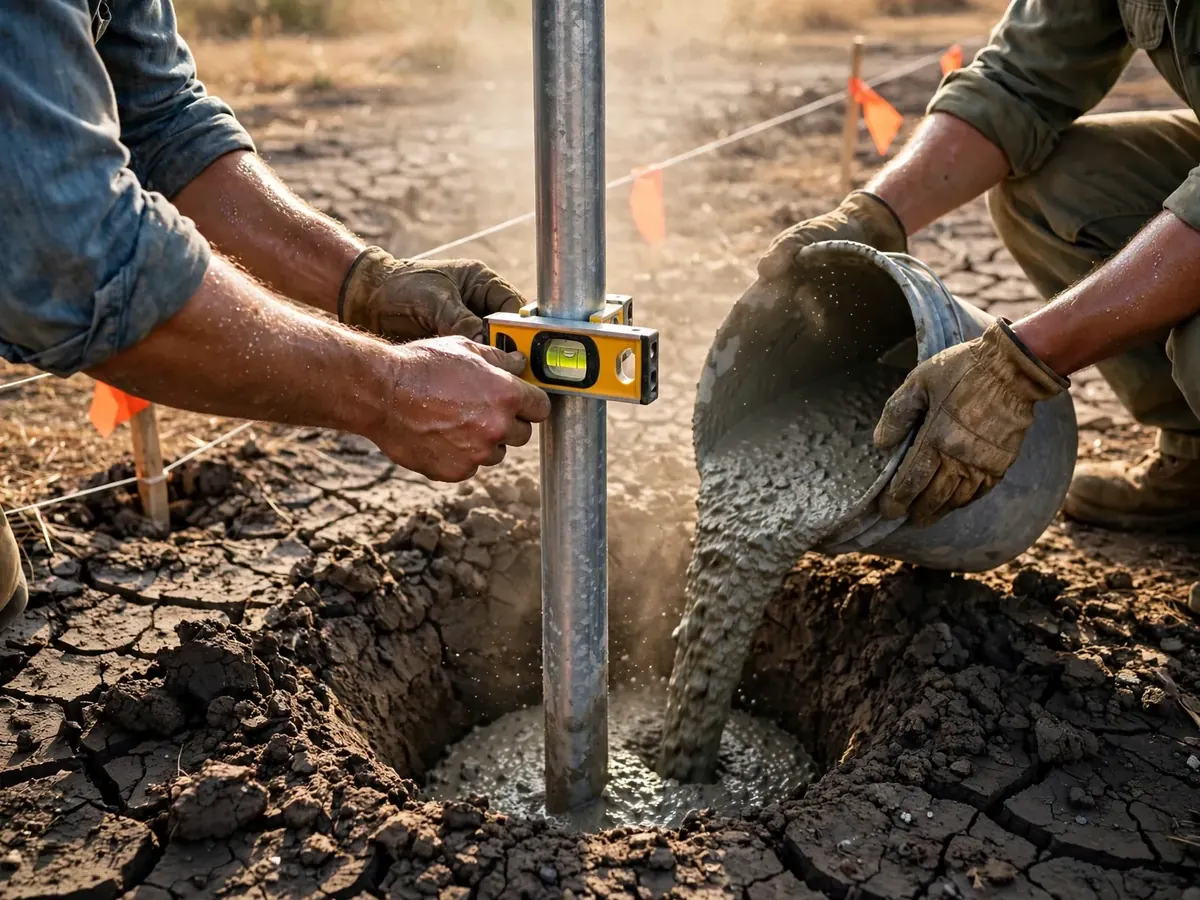
On limestone or caliche, a standard auger stops a few inches down. Where rock lies under a few inches of soil, crews often set posts shallower but anchor them into the rock itself.
Rock changes the schedule more than the design: a crew may set half as many posts in a day on solid limestone as it would in clay. Cibolo's limestone holds footings firmly once they're set, which is one advantage of the hard digging.
Something to keep in mind: If budget is the sticking point, consider phasing the work: replace the sections that face the street or the dog run first, and finish the rest when it makes sense.
Ranch, Pipe and Wire Fencing on Acreage
Wire fences cost less per foot but need well-built H-braces at corners and gates to stay tight. On acreage near Cibolo, the right fence depends on what it needs to hold.
For long runs, plan gates where animals and equipment actually move, such as near water troughs, barns and the driveway, rather than where it's convenient to build. Rural Cibolo properties often need longer runs and sturdier gates than suburban lots.
Cedar Privacy Fences in Cibolo
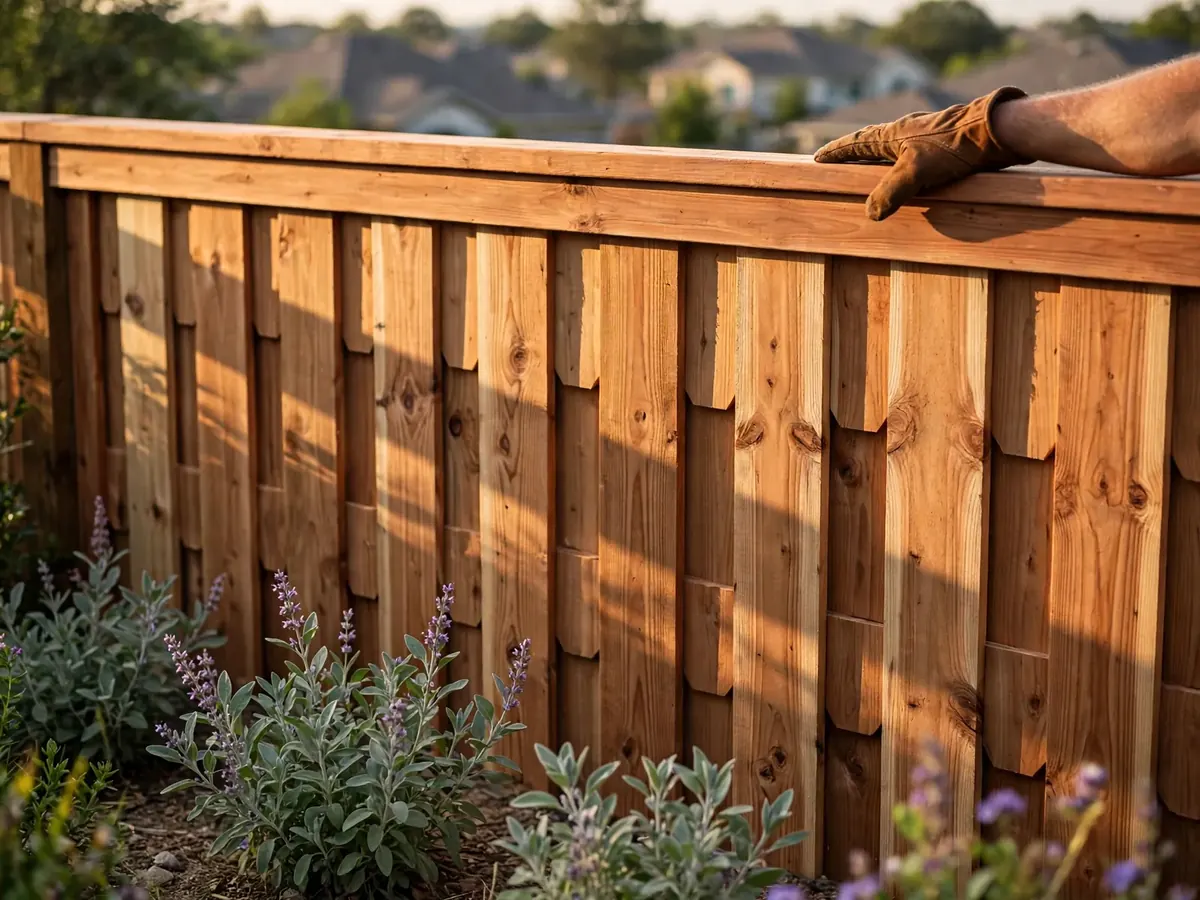
Cedar's natural oils slow rot and insects, it moves less than pine in the heat, and it takes a semi-transparent stain well. A kickboard, a horizontal board along the bottom, keeps pickets off the soil and is easy to replace when it eventually wears.
Rot starts where wood stays wet longest, so a small gap between the pickets and the soil does more for lifespan than any single product. On Cibolo's clay, it's worth asking how deep each footing will go before comparing anything else.
A frequent worry, answered: Lifespan comes down to water: keep wood dry at the ground line and the fence lasts.
Building a Fence That Stands Up to Wind
Steel posts at closer spacing are the most reliable upgrade for windy sites. A 6-foot solid fence acts like a sail in a storm.
Closer post spacing, deeper footings and steel posts each reduce how much any single post has to resist in a gust. Hail storms are common enough in Cibolo that many owners plan for occasional repairs.
Vinyl and Composite Fences in Texas Heat
If you choose vinyl or composite, ask how the panels handle thermal expansion and wind. Composite fencing is denser and handles heat better than most vinyl, at a higher cost.
Ask to see a vinyl or composite fence that has been up for several Texas summers before you choose a product. Cibolo's sun is hard on finishes, so plan on regular maintenance.
Worth knowing before you call: A good fence builder will tell you what they don't know until they start digging, such as rock or roots.
Steel Posts vs. Wood Posts
If you want the look of wood all the way down, steel posts can be wrapped or hidden behind the pickets. In shifting soil and high wind, depth matters as much as the post material.
Steel posts can be painted to match the stain or hidden behind a wood wrap if you don't want them to show.
Other Fence Situations in Cibolo
Setting Posts in Shifting Clay Soil
Fences on clay that are watered evenly through droughts tend to move less than those left to dry out.
Wrought Iron and Aluminum Fences
Ornamental fencing is a good fit where you want security without blocking breezes or views.
HOA Rules, Permits and Property Lines
A short email to your HOA before choosing materials can save a rejected application.
Signs It's Time to Call in Cibolo
These are the moments that push Cibolo homeowners to pick up the phone:
- HOA requires an approved style
- Moving onto acreage that needs livestock fencing
- Old fence leaning or sagging
Before You Call
- Find your survey or plat showing property lines
- Measure the rough length of fence needed
- Check HOA fence guidelines and stain colors
- Mention any leaning or settling you've seen nearby
- Mark where vehicles, trailers and animals need to pass
Fence Installation in Cibolo: Talk to a Local Fence Builder
Have the details from the checklist above ready, then call 877-753-1892. A fence builder serving Cibolo can tell you what the job involves, what affects the cost and whether anything needs attention right away. Whether you're ready to book or just comparing options, call today.
877-753-1892Fence Questions From Cibolo Homeowners
How long does a cedar fence last in Cibolo?
A well-built cedar fence often lasts many years, longer with steel posts and regular staining. Wood posts and unstained pickets in wet or shifting soil wear out sooner. Ask about this on your first call, since conditions vary across Cibolo.
Should I build the fence myself?
If you DIY, consider hiring out just the posts and footings, which is where experience matters most. DIY makes the most sense for short runs and simple designs.
What should Cibolo homeowners know about fence projects?
Expect heavier equipment where caliche is close to the surface around Cibolo. North San Antonio sits on limestone and caliche, while the south and east sides have heavier clay soils.