
Fence Installation in Orange: Local Conditions
Orange is the Orange County seat on the Sabine River at the Louisiana line. Heavy rainfall, humidity and termites make rot-resistant materials and good drainage at post bases important.
Low ground, humidity and hurricanes are part of life. In low parts of Orange, drainage around footings is part of a durable build. Salt air is a common thread between Orange and Port Neches.
- With humidity this high, rot at the ground line is the usual way wood fences fail.
- Salt air near the coast corrodes ordinary nails and steel, so stainless or hot-dip galvanized hardware is worth it.
What Holds Up Around Orange
Treated pine and cedar privacy fences with galvanized hardware are common, while aluminum and vinyl shrug off the humid, salty air. Around Orange's big trees, plan for falling limbs and root growth.
Vinyl and Composite Fences in Texas Heat
In Texas sun, though, cheaper vinyl can sag or become brittle. Composite fence boards are often made from recycled wood fiber and plastic and come in wood-like colors.
Vinyl expands in heat noticeably more than wood, so panels are designed with room to move; if they're forced tight, they can bow on a hot afternoon. In Orange, moisture management matters as much as the material itself.
Not sure who to trust? Ask how long they've worked locally, whether they carry insurance, and who you'll deal with once work starts.
Steel Posts vs. Wood Posts
Concrete around a post should be crowned so rain sheds away instead of pooling against the post. Steel posts connect to wood rails with brackets or lag screws, and many builders place the posts on the inside so they're hidden from the street.
Over a fence's life, the cost difference between wood and steel posts is often smaller than the cost of replacing failed wood posts once. Termites are active around Orange, so keeping wood off the soil and using treated lumber helps.
Wrought Iron and Aluminum Fences
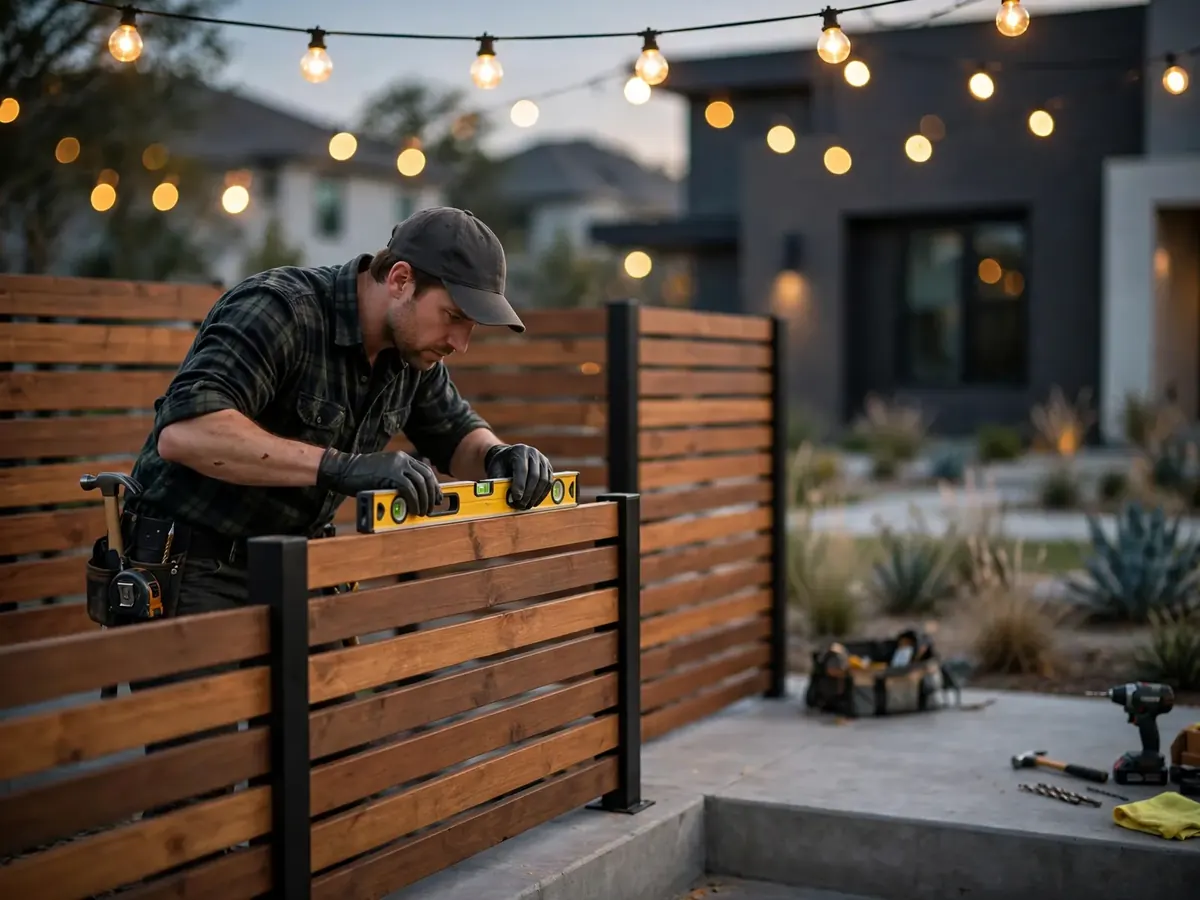
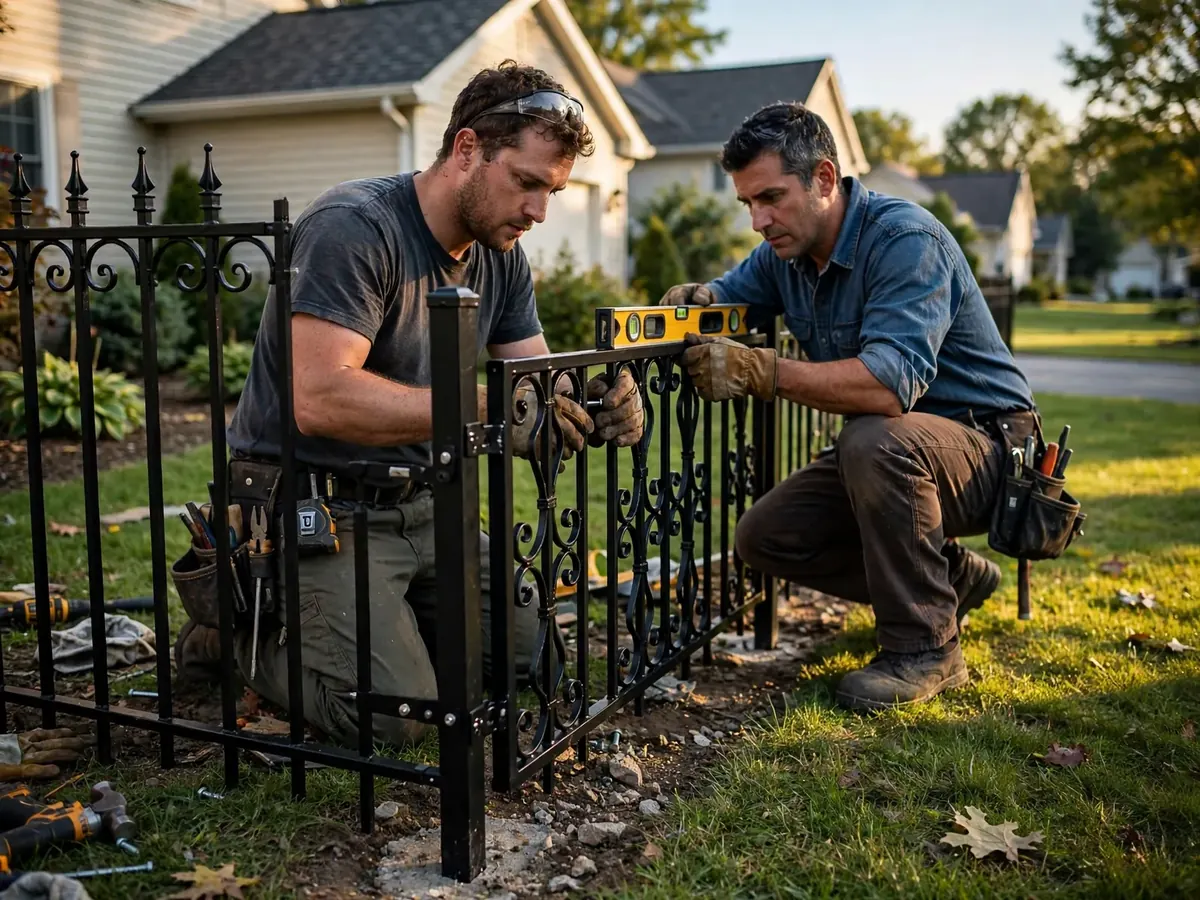
Ornamental panels are typically sold in 6- or 8-foot sections, so the layout is planned around those widths. If the fence surrounds a pool, it usually has to meet pool barrier rules for height, picket spacing and self-closing gates.
Choosing taller posts than the panels lets you add masonry caps or lights later. Near the coast, Orange's salt air shortens the life of ordinary fasteners, so stainless or hot-dip galvanized hardware pays off.
A question many homeowners raise: If you DIY, consider hiring out just the posts and footings, which is where experience matters most.
Building a Fence That Stands Up to Wind
In windy parts of Texas, closer post spacing, deeper footings, steel posts and three rails instead of two help it ride out gusts. Ask the builder how they design for wind and whether steel posts are an option.
Leaving a small gap at the bottom of pickets and choosing shadowbox styles can let some wind through and ease the strain. In Orange, building for tropical storm winds means deeper posts, stronger connections and closer spacing.
Setting Posts in Shifting Clay Soil
Deeper post holes, concrete footings that sit below the most active layer and a little gravel at the bottom for drainage all help. Ask the fence builder how they handle expansive clay: post depth, footing width and whether they use steel posts.
Builders who know clay talk about depth and drainage before they talk about pickets; that's a good sign.
Before you decide: Price is usually driven by length, height, post type and gates, so a shorter run of a better fence often beats a longer run of a cheaper one.
Cedar Privacy Fences in Orange
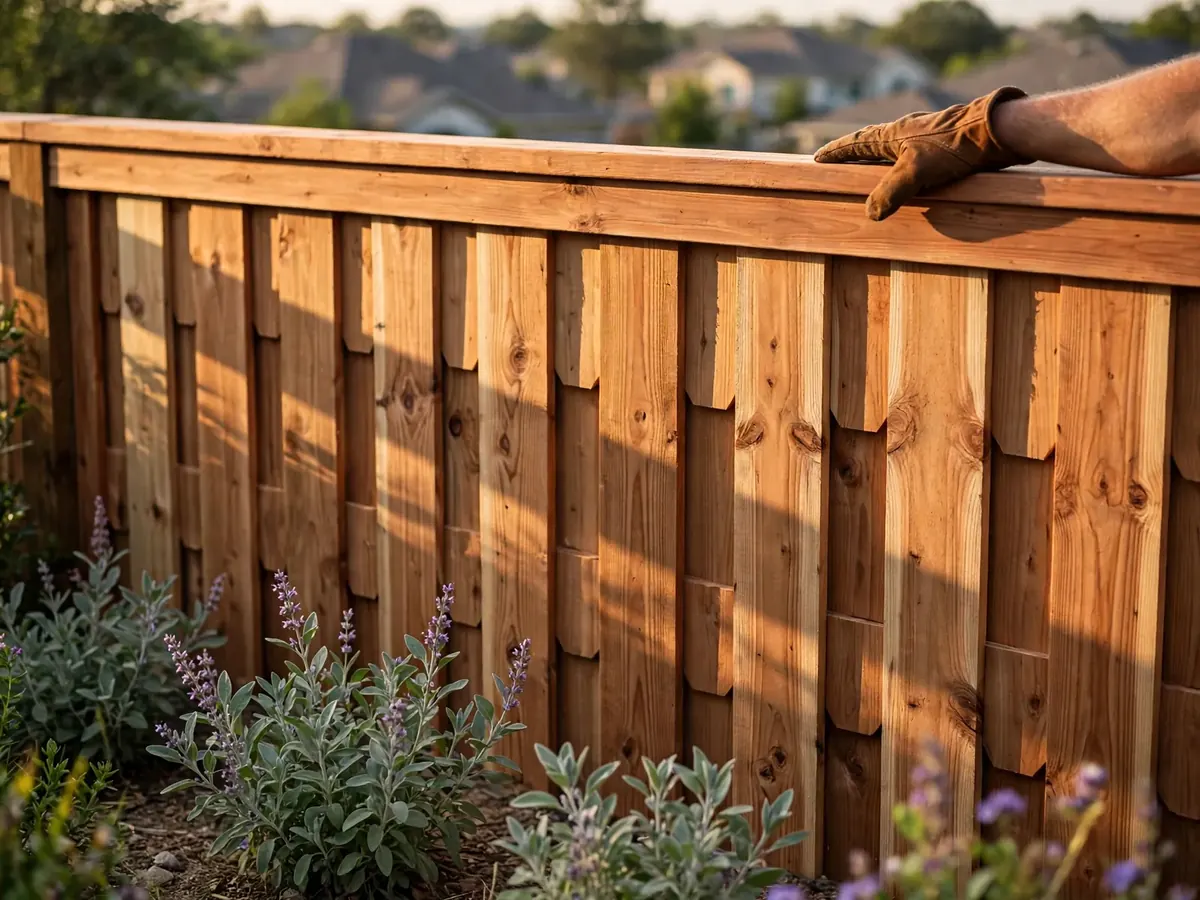
Six-foot cedar privacy fences are the standard backyard choice around Orange. Western red cedar costs more than the more common Texas or Japanese cedar but holds its shape better; ask which species you're getting.
A top cap and trim board add a finished look and also shed rain off the end grain of the pickets, which is where cedar takes on water first.
More Fence Questions Around Orange
Board-on-Board and Shadowbox Styles
On windy lots, shadowbox gives a little relief to the posts while still blocking most views.
Horizontal and Modern Fence Designs
Horizontal fences highlight any unevenness in the ground, so grading before building helps.
Pet and Pool Fencing
For climbers, avoid horizontal rails on the outside of the fence, since they act like a ladder.
Common Reasons Orange Homeowners Call
In Orange, these are the signs that most often lead to a call:
- Moving onto acreage that needs livestock fencing
- Neighbors replacing a shared fence
- HOA requires an approved style
Quick Checks Before the Call
- Call 811 to have utility lines marked before digging
- Find your survey or plat showing property lines
- Check HOA fence guidelines and stain colors
- Note how close the area is to the water and how exposed it is to salt spray
- Note where water stands after heavy rain near the work area
Planning Fence Installation in Orange: What to Expect
One call to 877-753-1892 gets the conversation started with a fence builder who works around Orange. Bring your measurements, photos and any HOA requirements. Questions about materials, timing or scheduling? Call and get answers today.
877-753-1892Fence Questions From Orange Homeowners
How long does a cedar fence last in Orange?
It depends mostly on the posts and upkeep. Cedar pickets on galvanized steel posts, stained every few years, outlast the same pickets on wood posts in damp or shifting ground by a wide margin. In Orange, that comes down to your lot and how the fence is built.
What if my neighbor shares the fence?
Many neighbors are happy to share the cost of a shared fence when asked early. Sharing a fence with a neighbor? A short conversation before work starts about style, height and which side faces out heads off most disputes.
What should Orange homeowners know about fence projects?
Around Orange, choose finishes and hardware rated for salt exposure. Southeast Texas was hit by Hurricane Rita in 2005, Hurricane Ike in 2008 and Hurricane Laura in 2020, and Harvey's flooding in 2017 was severe here.