
Local Conditions That Shape Fence Installation in Santa Fe
Santa Fe is a Galveston County city with many rural and semi-rural lots. These towns sit along Galveston Bay and the Brazoria County coast, where salt air corrodes fasteners and steel faster than inland.
Flat, low ground drains slowly after storms. In Santa Fe's older neighborhoods, many structures are near the end of their life and due for replacement. Santa Fe shares salt air with Friendswood, so solutions that work well there usually suit Santa Fe too.
- Near the coast, the fasteners often fail before the wood does unless they're rated for salt.
- Wet, slow-drying conditions mean wood at ground level stays damp for days after rain.
Choosing Materials in Santa Fe
Cedar fences with stainless or hot-dip galvanized fasteners, aluminum instead of steel for ornamental fencing, and vinyl where salt air is heavy. Salt in the air around Santa Fe is hard on unprotected steel.
Vinyl and Composite Fences in Texas Heat
Vinyl panels slide into routed posts, so the posts must be set precisely to keep panels from binding. In Texas sun, though, cheaper vinyl can sag or become brittle.
Dark-colored vinyl absorbs more heat than white or tan, which is why light colors are the safer choice under strong Texas sun. Santa Fe's humidity keeps wood damp longer, so rot resistance and airflow deserve extra attention.
If you're weighing it up: Ask what the fence builder expects to fail first on your lot, and how they've built to delay it.
Steel Posts vs. Wood Posts
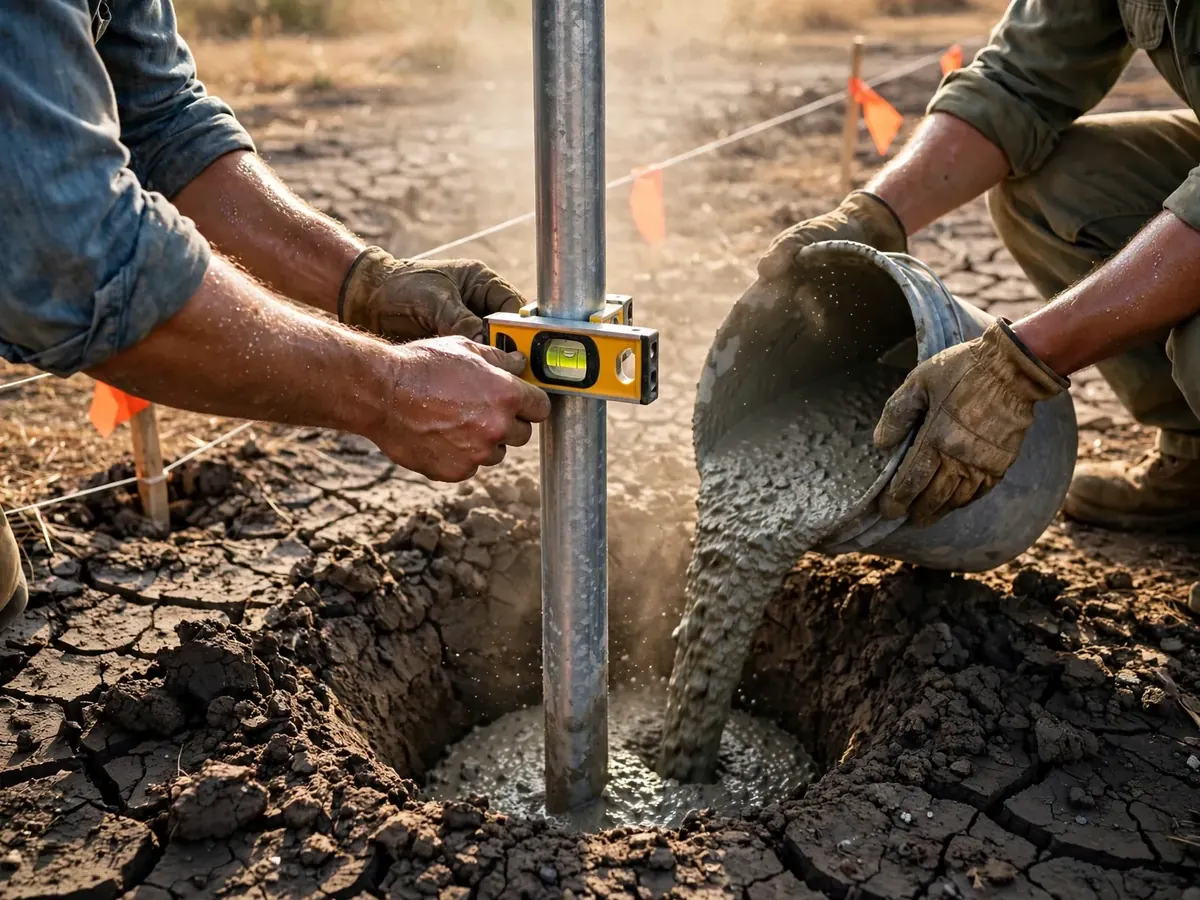
Steel posts connect to wood rails with brackets or lag screws, and many builders place the posts on the inside so they're hidden from the street. In shifting soil and high wind, depth matters as much as the post material.
Steel posts are usually 2 3/8-inch galvanized pipe; ask about the wall thickness, because heavier-gauge pipe resists bending in a storm. Termites are active around Santa Fe, so keeping wood off the soil and using treated lumber helps.
Wrought Iron and Aluminum Fences
Iron and aluminum fences go up as panels between posts set in concrete. Black is the most common finish, but bronze, white and other colors are widely available in powder coat.
Aluminum weighs a fraction of steel, which makes it easier to install on slopes and kinder to posts in soft ground. Coastal air in Santa Fe corrodes steel faster, which tilts the choice toward aluminum, vinyl or well-coated metal.
Before you decide: DIY makes the most sense for short runs and simple designs.
Building a Fence That Stands Up to Wind
Leaving a small gap at the bottom of the fence lets some wind pass and keeps pickets dry. If fences in your part of Santa Fe tend to blow over in storms, the fix is in the structure: posts, footings and rails.
If neighboring fences have blown over, ask your builder what they'll do differently on yours. Hurricane season makes wind resistance a practical concern in Santa Fe, not just a design detail.
Setting Posts in Shifting Clay Soil
Some builders bell the bottom of the footing, making it wider below than above, so clay can't easily lift it. Clay soil swells when it's wet and shrinks and cracks in drought.
Fences on clay that are watered evenly through droughts tend to move less than those left to dry out. In low parts of Santa Fe, drainage around footings is part of a durable build.
A frequent worry, answered: Many neighbors are happy to share the cost of a shared fence when asked early.
Other Fence Situations in Santa Fe
Cedar Privacy Fences in Santa Fe
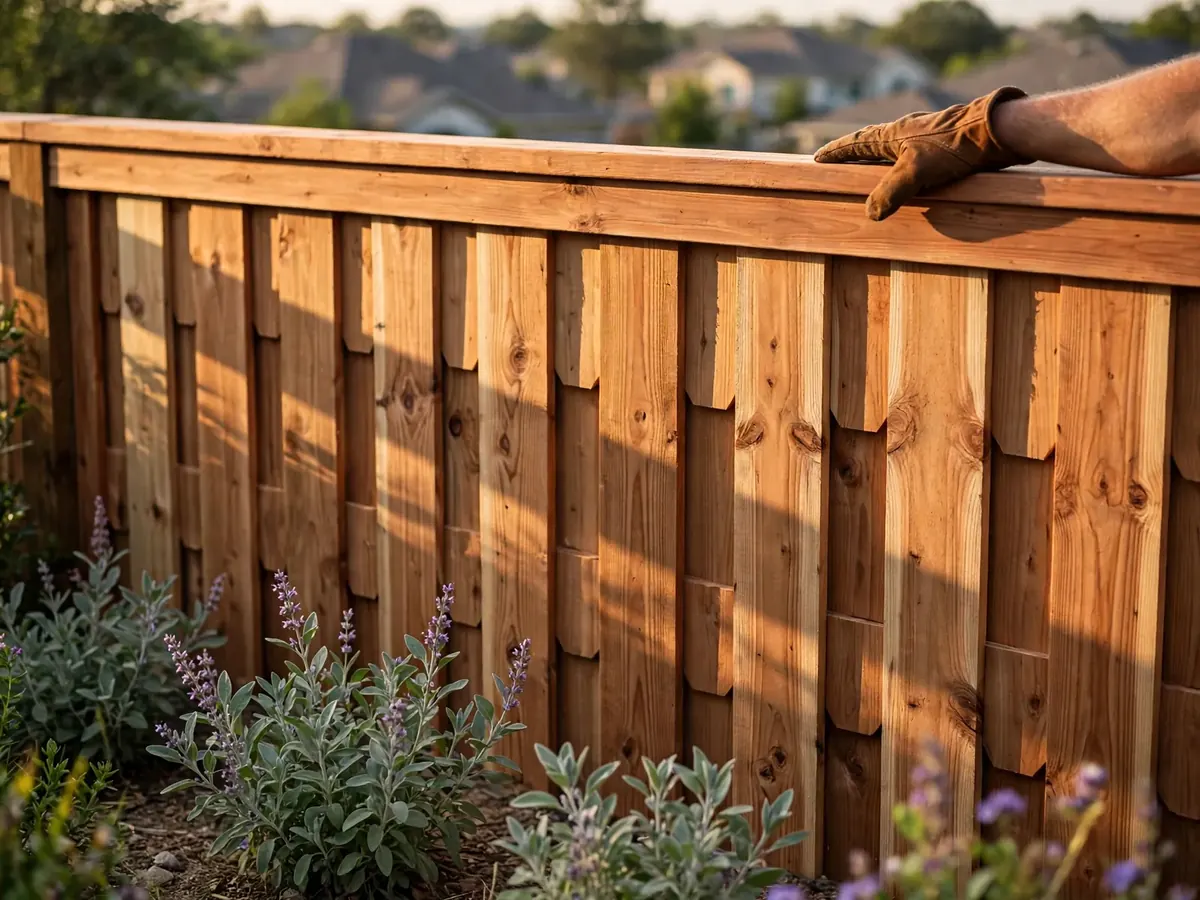
Cedar is the most common privacy fence in Texas because it resists rot and insects better than pine and takes stain well.
Ranch, Pipe and Wire Fencing on Acreage
Mixing materials is common: pipe near the house and barn where looks and strength matter, wire along back pastures where distance matters more.
Horizontal and Modern Fence Designs
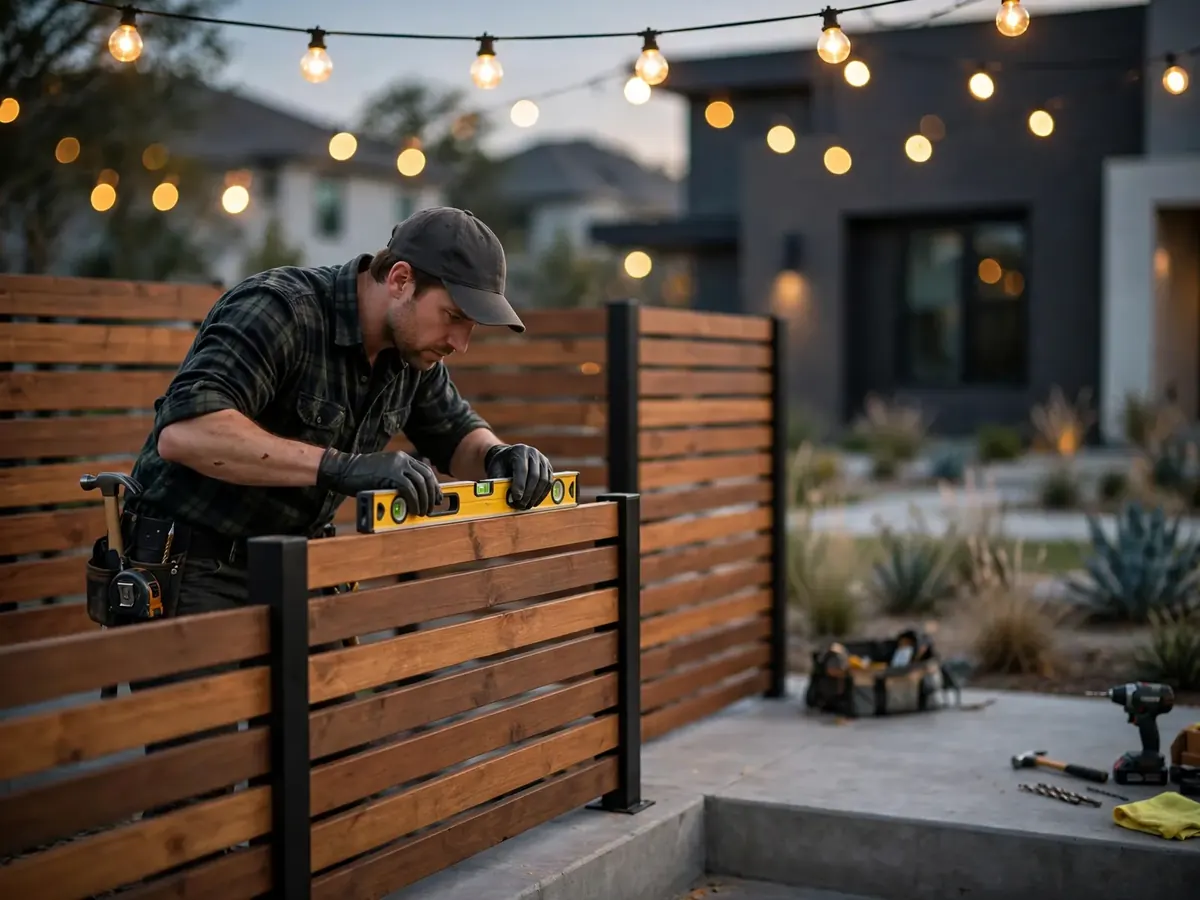
Because the boards span between posts, a 6-foot post spacing is common for horizontal fences instead of the usual 8 feet.
Common Reasons Santa Fe Homeowners Call
If any of these sound familiar at your Santa Fe home, it's a good time to talk to a fence builder:
- Moving onto acreage that needs livestock fencing
- HOA requires an approved style
- Neighbors replacing a shared fence
Quick Checks Before the Call
- Measure the rough length of fence needed
- Check HOA fence guidelines and stain colors
- Mark gates and where you need access for mowers or vehicles
- Mark where vehicles, trailers and animals need to pass
- Mention any rusted hardware on the existing structure
Planning Fence Installation in Santa Fe: What to Expect
Calling 877-753-1892 puts you in touch with a fence builder who knows Santa Fe. Expect questions about length, height, access and soil; the more you can answer, the more useful the conversation. Questions about materials, timing or scheduling? Call and get answers today.
877-753-1892Fence Questions From Santa Fe Homeowners
What fence material is best near the coast?
Salt air favors aluminum and vinyl, or cedar built with stainless or hot-dip galvanized fasteners that won't rust through. Your fence builder can tell you what applies on your specific Santa Fe property.
What should I ask a fence builder before hiring?
Good fence builders explain how they'll set posts and handle your soil without being asked; vague answers are a warning sign. Not sure who to trust? Ask how long they've worked locally, whether they carry insurance, and who you'll deal with once work starts.
What should Santa Fe homeowners know about fence projects?
Around Santa Fe, choose finishes and hardware rated for salt exposure. Hurricane Ike in 2008 and Hurricane Harvey in 2017 caused widespread wind and flood damage here, and Hurricane Beryl hit the area in 2024.