
Fence Repair in Austin: Local Conditions
Austin splits along I-35: rocky Hill Country limestone to the west and Blackland Prairie clay to the east. Winter Storm Uri in February 2021 brought days of hard freeze across Central Texas. West of I-35, Austin sits on Hill Country limestone that often needs a rock auger to set posts; east of I-35, Blackland Prairie clay swells and shrinks.
- Cities set rules on front-yard fence height, corner-lot sight lines and masonry walls, so check before building.
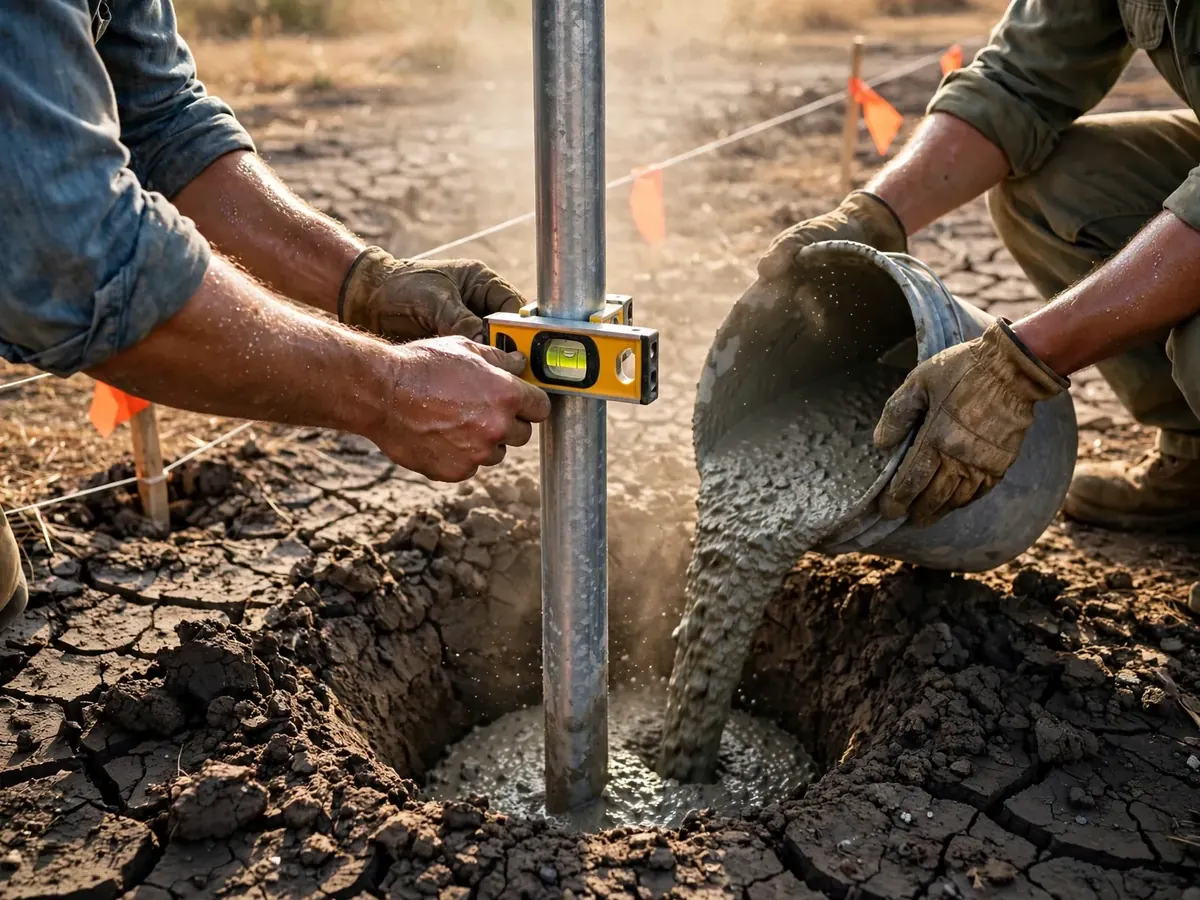
- Shrink-swell clay moves posts every season, so post depth, footing shape and steel posts matter more than picket style.
Materials That Suit Austin
Cedar privacy fences dominate, often on steel posts; horizontal modern fences are popular in central Austin, and pipe or wire fencing appears on acreages toward Elgin, Bastrop and Liberty Hill.
Repair or Replace?
A quick way to decide: count the posts that move at the base. If it's one or two, repair. If it's most of them, the money is better spent on a new fence with steel posts.
Storm-Damaged Fences in Austin
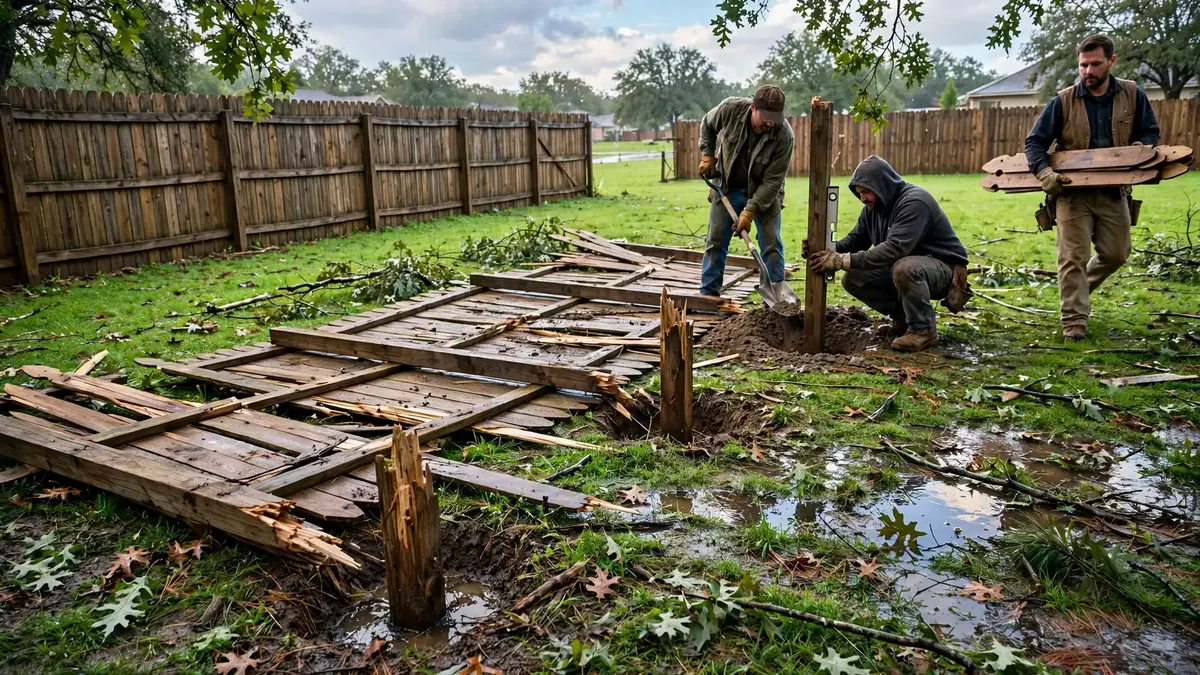
When a whole run goes down in a storm, the posts on either side are often weakened too. Have the neighboring posts checked before reattaching panels.
Leaning Fences and Shifting Posts
A fence that leans a little more each summer is telling you something about the ground underneath. Resetting the worst posts deeper, or switching them to steel, usually stops the drift without replacing the whole run.
Broken Pickets, Rails and Sagging Sections
Loose pickets usually come from nails that rusted or backed out as the wood dried. Refastening with exterior screws and replacing cracked boards keeps the fence tight without a full rebuild.
Fence Damage From Trees and Roots
If a neighbor's tree damaged your fence, Texas law and your insurance policy determine who pays; take photos and talk with your insurer.
Rotted Post Replacement
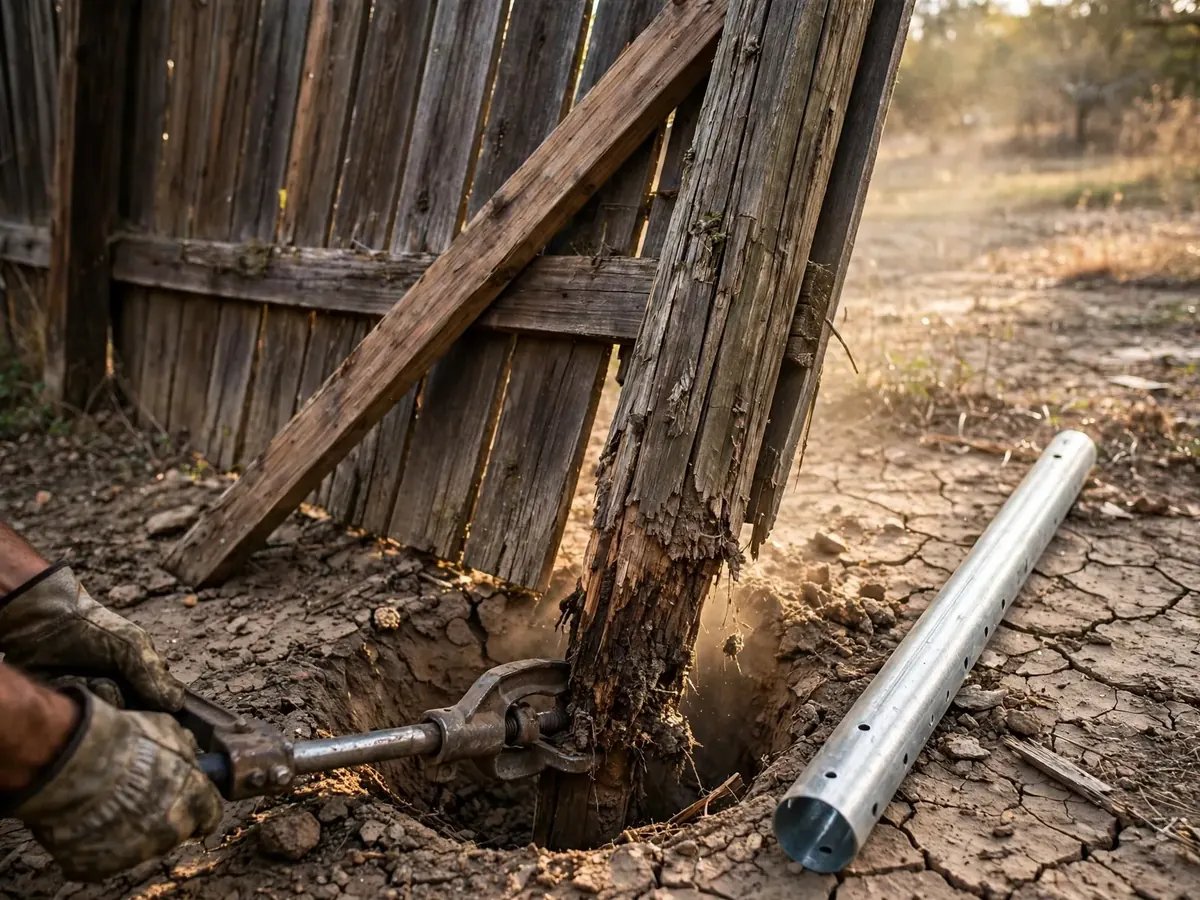
Termites and moisture are the main reasons wood posts fail early in humid parts of Texas. Steel posts with brackets are a common replacement that won't rot again.
When to Pick Up the Phone
- Storm or tree damage
- Sections leaning or swaying
- Posts loose at the base
- Broken or missing pickets
What to Have Ready
- Photograph damaged sections
- Note how many posts and feet of fence are affected
- Find your survey if posts must be moved
- Check whether pets can get out
Planning Fence Repair in Austin: What to Expect
Call 877-753-1892 and describe the project, your city and your timeline. You'll be pointed to a fence repair pro who works in Austin. Ask about scheduling, permits and how the job will be priced before work begins.
877-753-1892Fence Questions From Austin Homeowners
Why does my fence keep leaning?
Rot at the base of wood posts and shifting clay soil are the usual causes. Deeper footings or steel posts fix it.
Can one rotted post be replaced without replacing the fence?
Usually. The panels are detached, the old post and concrete are removed, a new post is set and the rails are reattached.
What should Austin homeowners know about fence projects?
Spring hail splits and pits pickets and dents metal fencing, so storm repairs are routine. Builder-installed fences in newer subdivisions often reach the end of their first life after 10 to 15 years. Round Rock, Pflugerville, Leander, Cedar Park, Georgetown and Hutto have grown rapidly, so many homes have builder-installed fences reaching the end of their first life.