
Screened Porch Installation in Austin: Local Conditions
Austin splits along I-35: rocky Hill Country limestone to the west and Blackland Prairie clay to the east. Austin is the state capital and the Travis County seat, on the Colorado River.
Older central bungalows, hillside homes to the west and new subdivisions to the east and north all call for different approaches. In newer parts of Austin, replacing the original builder screened porch is a common first upgrade. A screened porch that suits Taylor's older homes isn't automatically right for Austin, where shallow limestone matters more.
- Many newer homes have small patios that can be extended into covered porches.
- HOAs typically require approval for porch additions.
Screening an Existing Covered Patio in Austin
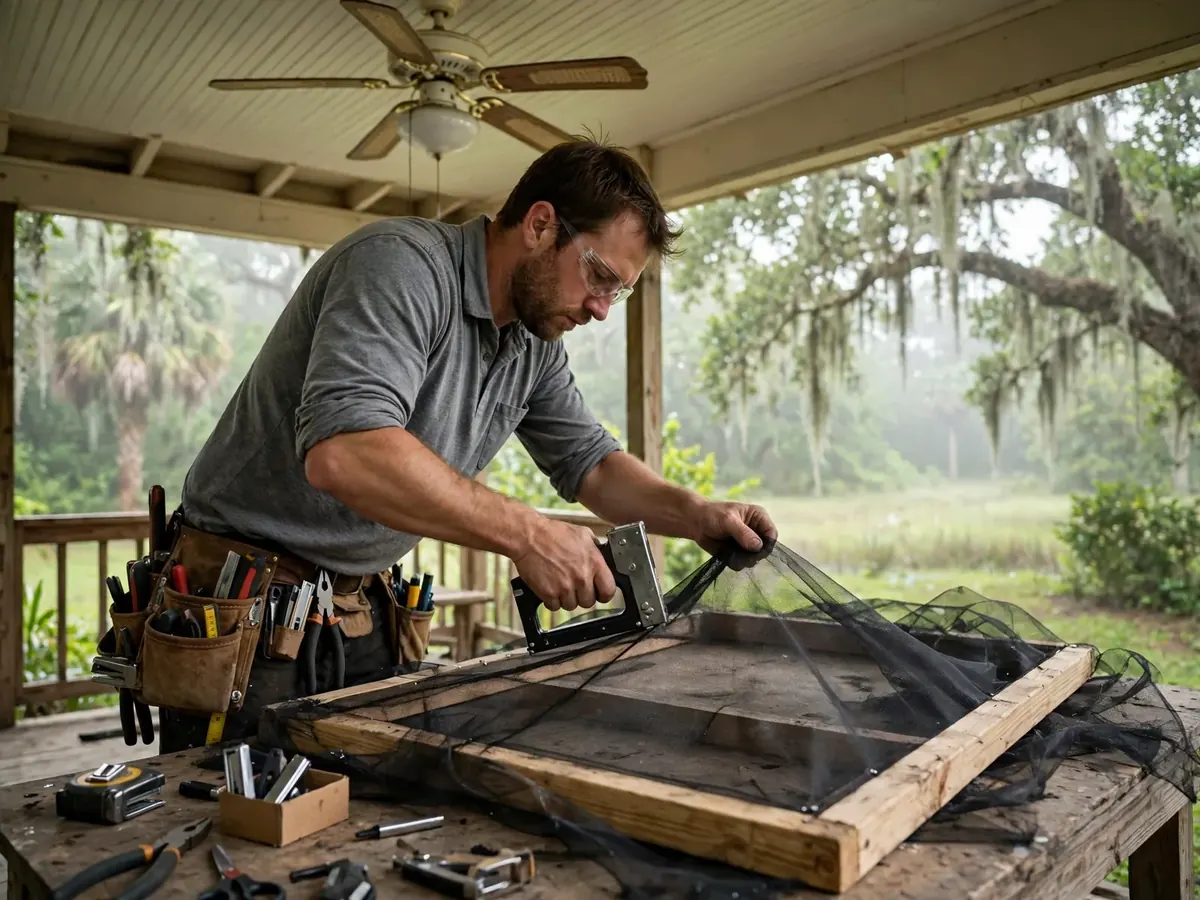
If you already have a covered patio around Austin, screening it in is often the fastest route to a screened porch. Screen systems can be custom framed in wood or installed with aluminum channels.
Screening a patio that already has a roof is often the quickest way to add a bug-free outdoor room. In HOA communities around Austin, approval comes before scheduling a crew.
If you're weighing it up: Permits for roof additions are common and usually straightforward.
Choosing Screen for Pets and Bugs
Solar screen cuts heat and glare on sunny sides but also reduces airflow and visibility. Pet-resistant screen is much tougher against claws.
Solar screen blocks some sun and heat while keeping a view.
Building a New Screened Porch
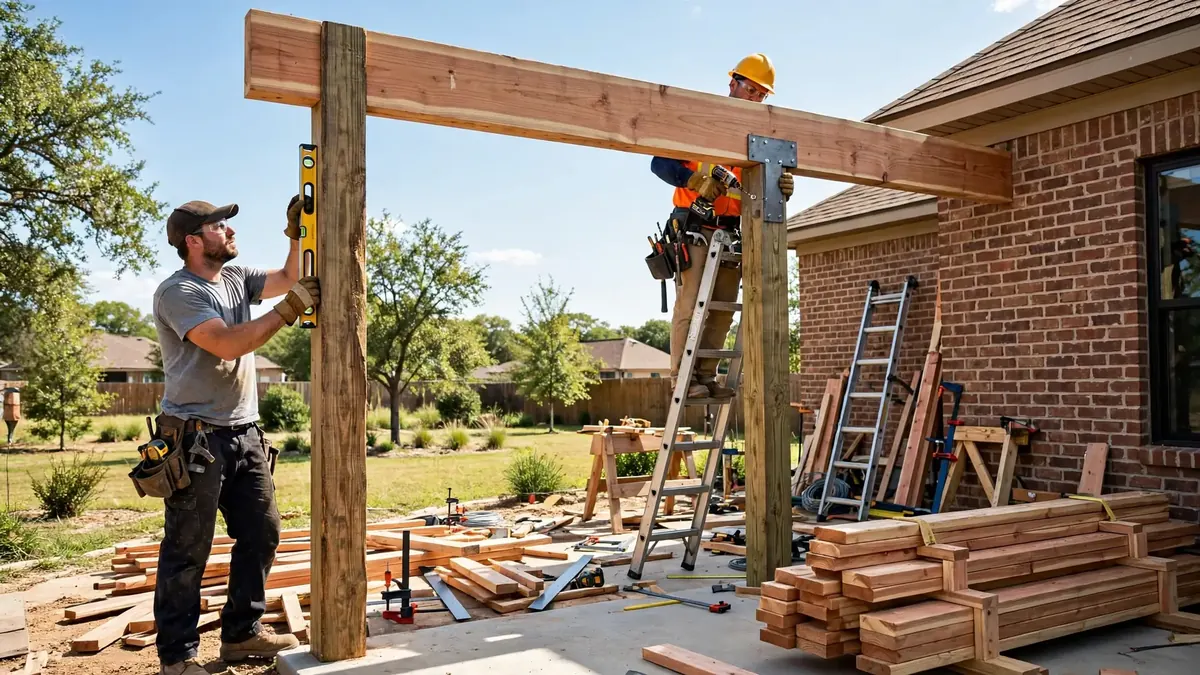
A screened porch adds outdoor living space without full enclosure. A new screened porch is essentially a covered porch designed for screens: posts spaced to suit screen panels, a solid roof tied into the house and a floor that drains.
A knee wall at the bottom protects screens from feet and furniture.
If you're weighing it up: Matching roofing materials to the house can take time to source.
Fans, Lighting and Comfort
Wet-rated fans are built for areas exposed to rain. Lights on dimmers set the mood for evening use.
Outdoor outlets let you add heaters or small appliances.
Floors, Drainage and Wind-Driven Rain
Furniture should be outdoor-rated. Screens keep bugs out, not rain.
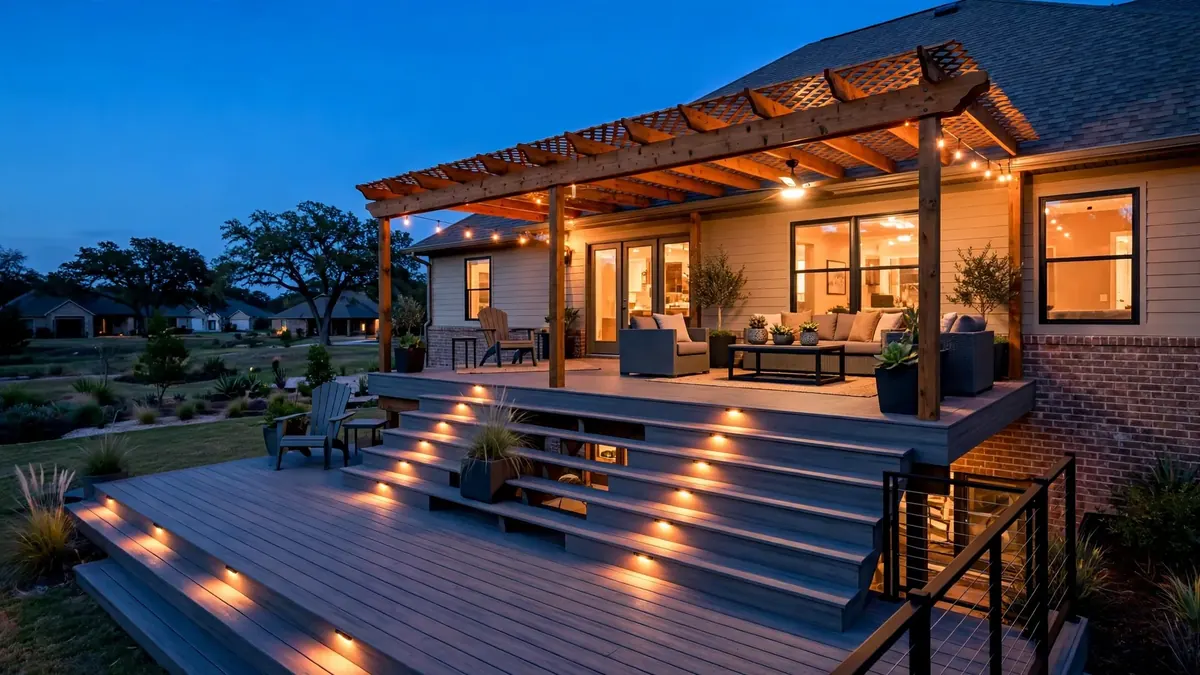
Floors should slope so rain that blows in drains away.
A common concern: Roof tie-ins and structural posts are best left to experienced builders.
Signs It's Time to Call in Austin
In Austin, these are the signs that most often lead to a call:
- Mosquitoes keep you inside in the evening
- Pets that need an outdoor space
- Covered patio that's rarely used
Before You Call
- Note where pets and kids will use the space
- Measure the porch openings
- Decide on screen type
- Pull your HOA's architectural guidelines and the approval form; most Austin associations want them before work is scheduled
- Notice whether nearby screened porchs or the house foundation show signs of soil movement
Getting Screened Porch Installation in Austin Started
Give 877-753-1892 a call with your Austin address area and a rough idea of the scope. A porch builder can explain what the work involves and what to expect next. Pick up the phone today and get your screened porch project on the calendar.
877-753-1892Screened Porch Questions From Austin Homeowners
Will rain get into a screened porch?
Wind-driven rain can blow in, so floors should slope and furniture should be outdoor-rated. In Austin, that comes down to your lot and how the screened porch is built.
How long will a screened porch last in Austin?
Good flashing at the house wall prevents most porch problems. Painted or sealed wood needs touch-ups every few years.
What should Austin homeowners know about screened porch projects?
Austin's limestone holds footings firmly once they're set, which is one advantage of the hard digging. Winter Storm Uri in February 2021 brought days of hard freeze across Central Texas. Unlike Cedar Park, where estate-size lots drives most decisions, in Austin it's shifting clay that deserves the closest attention.