
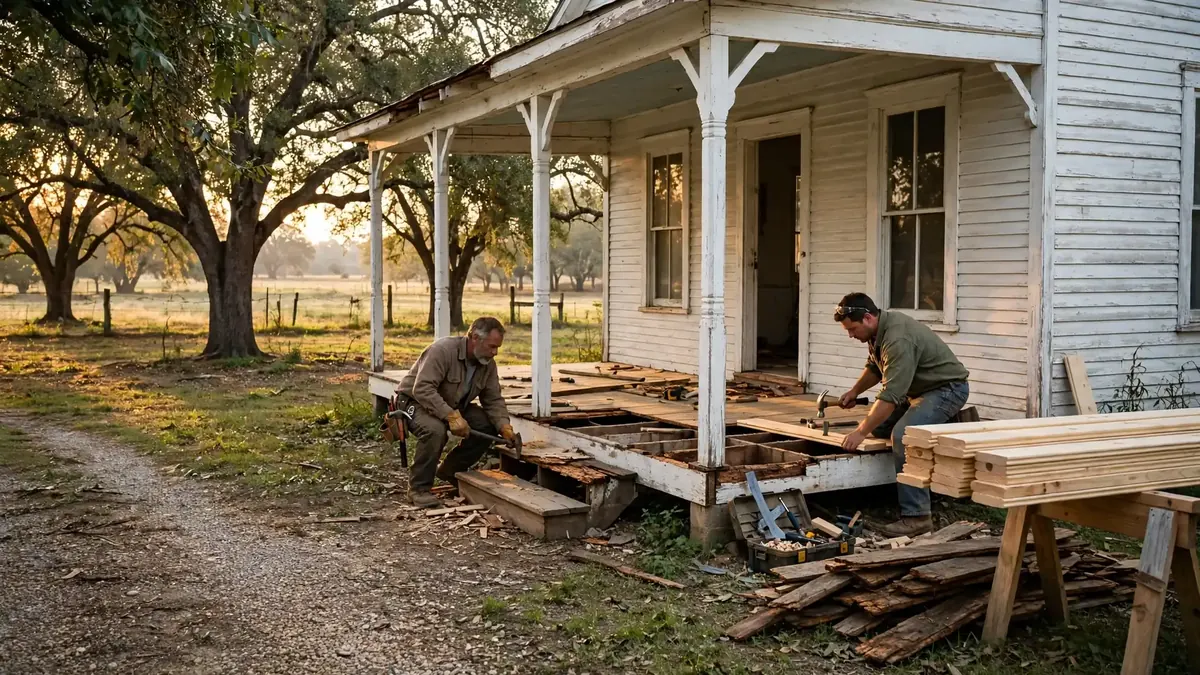
Local Conditions That Shape Porch Repair in Austin
Austin splits along I-35: rocky Hill Country limestone to the west and Blackland Prairie clay to the east. Austin is the state capital and the Travis County seat, on the Colorado River.
Older central bungalows, hillside homes to the west and new subdivisions to the east and north all call for different approaches. Builder-grade work in newer Austin subdivisions often wears out sooner than homeowners expect. Compared with Thorndale, where older homes is the bigger factor, Austin projects are shaped more by shallow limestone.
- Clay soil can settle porch posts and steps unevenly.
- Small builder patios on newer homes are often extended into covered porches.
Sagging Steps and Stairs
Front steps take the most traffic and often sit directly on soil. Adding a handrail during a step repair makes the stairs safer for everyone.
Replacing stringers is often a smaller job than it looks. Because much of Austin sits on shrink-swell clay, the details below the ground matter more here than in sandy or rocky areas.
A common concern: Weather in the spring storm season can delay roofing and painting.
Replacing Worn Screens and Doors
Rescreening one panel at a time as they wear out keeps a screened porch in good shape without a big project. Rescreening panels and adjusting or replacing the screen door restores a screened porch quickly.
Door closers and hinges wear out and are easy to replace.
Failing Posts, Columns and Beams
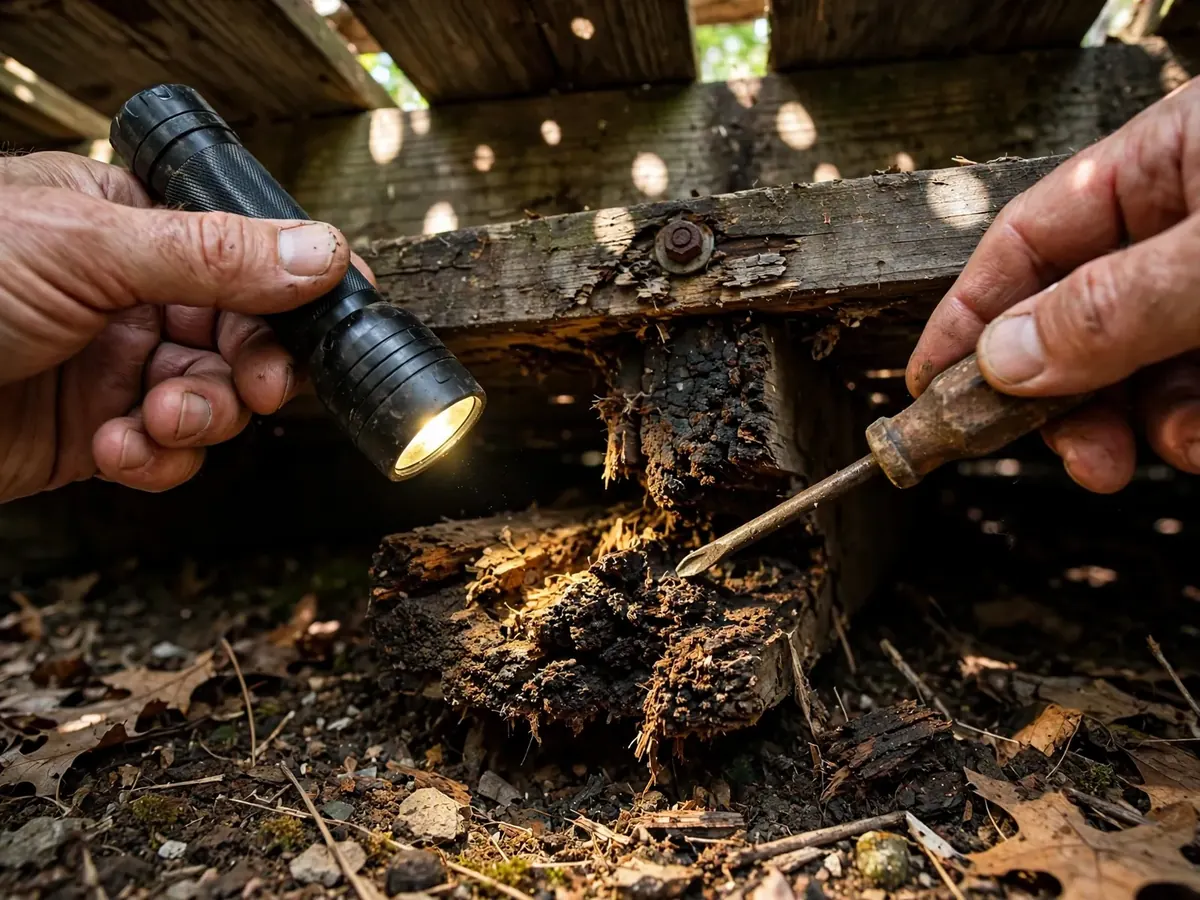
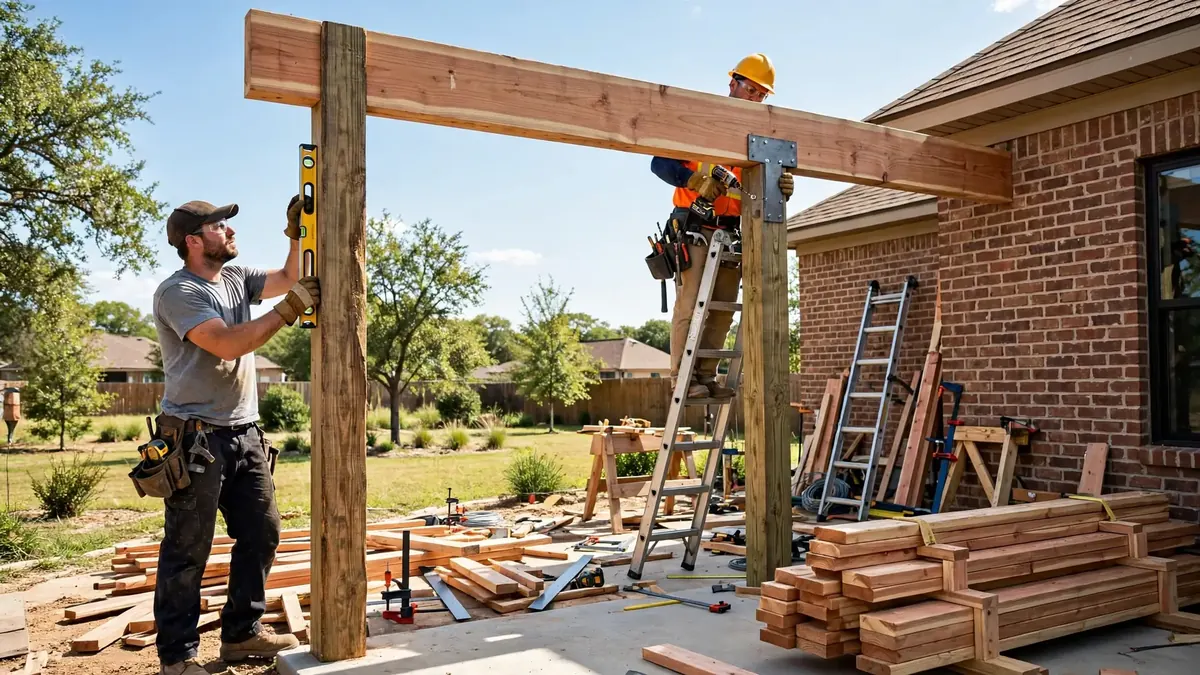
Decorative columns are often hollow covers around a structural post, and the post inside can rot unseen. Replacing a column usually means temporarily supporting the beam it holds.
Hollow columns can hide rot until it's advanced, so check their bases.
One practical point: Electrical work for fans and lights should be done by a licensed electrician.
Rotted Porch Floorboards in Austin
Check the boards nearest the steps and the outer edge first; that's where rain splashes and puddles most. Tongue-and-groove porch flooring locks together, so replacing a few boards means carefully cutting out the damaged ones first.
Replacing only damaged boards keeps the repair simple when the framing is sound.
Termite Damage
Mud tubes and hollow-sounding wood are signs. Treatment comes first, then damaged wood is replaced. Damaged framing should be replaced, not just treated, if it has lost strength.
Mud tubes on the foundation are a sign of termites.
Something to keep in mind: A good porch builder will discuss wind uplift, drainage and permits.
When to Pick Up the Phone
These are the moments that push Austin homeowners to pick up the phone:
- Soft or spongy porch boards
- Sagging or uneven steps
- Torn screens
Quick Checks Before the Call
- Note whether the porch is covered or open
- Photograph problem areas
- Keep people off unsafe steps
- Note your HOA's approved colors and styles so the porch repair pro can quote the right materials
- Note corner-lot sight lines if your property is on a corner
Getting Porch Repair in Austin Started
Calling 877-753-1892 puts you in touch with a porch repair pro who knows Austin. Expect questions about length, height, access and soil; the more you can answer, the more useful the conversation. Make the call today and take the first step toward a porch you can count on.
877-753-1892Porch Questions From Austin Homeowners
Can screens be replaced without replacing the frame?
Yes, rescreening the existing frame is common. Your porch repair pro can tell you what applies on your specific Austin property.
How long will a porch last in Austin?
Painted or sealed wood needs touch-ups every few years. Good flashing at the house wall prevents most porch problems.
What should Austin homeowners know about porch projects?
In rocky parts of Austin, drilling rather than digging is normal, and it's worth asking how the crew handles it. West of I-35, Austin sits on Hill Country limestone that often needs a rock auger to set posts; east of I-35, Blackland Prairie clay swells and shrinks. A porch that suits Rockdale's older homes isn't automatically right for Austin, where shallow limestone matters more.